




In wholesale, the biggest decisions are often made long before a product reaches the shelf. Behind every bestselling vape line, fast-moving impulse SKU or depot activation is a constant balancing act between trends, margins, legislation and retailer demand.
Few people understand that complicated world better than United Wholesale Scotland Senior Trading Director Chris Hewitt.
Having started out on the wholesale checkout at the age of 17 before working across operations, sales and trading, Hewitt has built his career from the depot floor upwards.
Today, at Scotland's largest independent wholesaler, Hewitt oversees some of the sector’s most commercially significant and dynamic categories from tobacco and vapes to wider impulse and soft drinks.
In this exclusive Q&A with Asian Trader, Hewitt discussed everything from vape margins and retailer buying behaviour to functional drinks, supplier relationships and the growing challenge of legislation.
He also explains why retailers are becoming far more selective with space allocation and why, in today’s market, it’s no longer enough for a product to simply trend; rather, it must earn its place.
AT: Tell us a bit about your journey. How did you enter wholesale buying?
Hewitt: I started in the wholesale sector when I was 17, working part-time on the checkouts at Parfetts. Even from a young age, I took a real interest in the sales figures for both my sector and the depot overall. I always felt I was making a difference, however small that was at the time.
I’ve done almost every job that exists in wholesale, including operations and sales, but it is the commercial side of the business which has always been my passion.
I was eventually given the opportunity to work with the head office trading team, and from that moment I was hooked.
Today at United Wholesale Scotland, that same passion still drives me every day, looking at how we grow categories, support retailers, and stay ahead of trends in a very fast-moving market.
AT: What does your typical day look? What are the key decisions you are making on a daily or weekly basis?
Hewitt: I start every day looking at reports, starting with daily sales and availability reports. After that, I almost always log into our data platform, TWC, to prepare for the meetings ahead.
I also spend time catching up with the wider buying team to make sure we are aligned and set for the day ahead, whether that’s availability, promotions, supplier activity, or any issues that need quick decisions.
I try to limit my meetings to three a day, although with so many categories to look after, that doesn’t always go to plan.
Supplier meetings are usually focused on how we drive the business forward together. Once we agree a plan, I like to move quickly and put it into action, whether that’s supplier takeovers, depot activations, or our unique “Spin to Win” mechanic across both wholesale and retail.
The opportunities to engage with retailers and consumers are endless, and building plans that help grow the category for everyone is something I genuinely enjoy every day at United Wholesale Scotland.
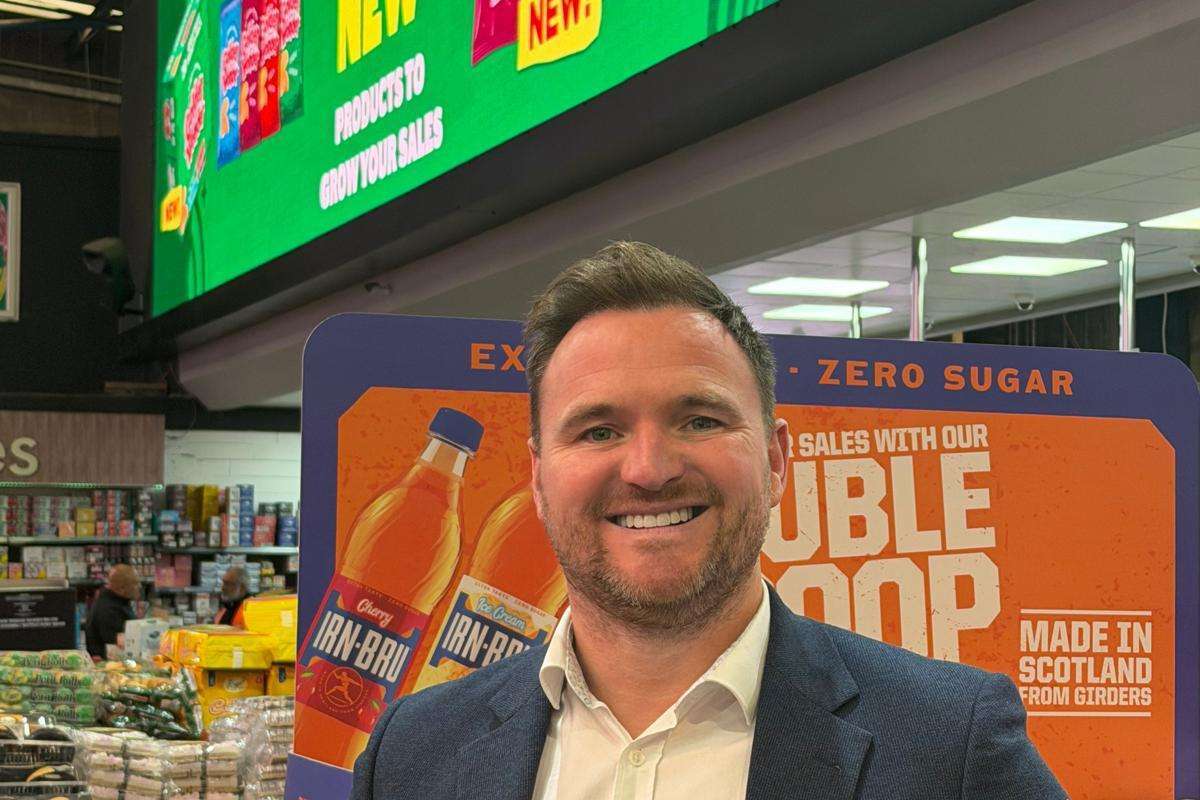
 Chris Hewitt explains the challenges and opportunities facing wholesale buyers in today’s fast-changing retail landscape.United Wholesale Scotland
AT: What do you consider before listing and delisting a product?
Hewitt: First and foremost, for listing, I look at what’s the USP of the product. I also take a pause to contemplate do we already have something similar in the category, or is it genuinely adding value.
At United Wholesale Scotland, we work very closely with suppliers, and I’d like to think the partnerships are built around supporting what’s important for both businesses.
When it comes to delisting, it’s usually a frank and honest conversation with the supplier. If a product isn’t performing, then it’s taking up space that could be used for something that is.
Space is always limited and, inevitably, when new products are listed, something usually has to come out.
AT: What does a typical margin look like across your categories, both at the wholesale and retail end? How much room is there to negotiate, and where do you see the most pressure on margins today?
Hewitt: Margins differ massively from category to category, so it can be a bit of a minefield quoting specific figures.
Confectionery has traditionally operated on some of the lowest margins across impulse, although that has improved slightly in recent years. We’ve recently seen another major confectionery supplier announce a further increase in shared margin.
The cost to serve is undoubtedly much higher than it was when most retailers visited the cash and carry themselves, and employment costs continue to rise. Every part of the supply chain is under pressure, including suppliers, but there still needs to be fairness across the board.
Vapes, on the other hand, have typically commanded margins of 60–70%, and that category helped turn things around for a lot of retailers during the cost-of-living crisis.
AT: Vape remains one of the strongest growth categories in convenience despite tighter regulation. What trends are currently driving growth — flavours, big puff devices, refillables, nicotine pouches, or something else?
Hewitt: Vapes are a very challenging market. We’ve already seen a hit to value sales since the disposable ban, as more consumers are moving towards bigger puff devices and pod systems.
Before the ban, not many people thought replacement pods would outsell kits, but in some cases, pods are now outselling kits by 10 to 1.
Consumers are looking for value more than ever and that will become even more apparent after the duty increases in October. At £2.20 per 10ml, some of the larger puff devices could become out of reach for certain consumers.
My prediction is that manufacturers will move towards more mid-range puff devices to maintain competitive price points, while nicotine pouches will continue to see rapid growth.
AT: The tobacco and vape landscape is changing faster than ever. From your perspective, what are the biggest shifts you are seeing in retailer buying behaviour right now??
Hewitt: If the disposable ban taught us anything, it’s that consumers can change their shopping habits extremely quickly and retailers are very aware of that. It creates even more uncertainty within the category.
Retailers are definitely becoming more cautious and selective. They’re paying much closer attention to rate of sale, POR, and overall value rather than simply chasing the latest trend.
There’s also far more focus on compliance and making sure ranges are future-proofed against upcoming legislation. At the same time, retailers are adapting much faster than before.
They know consumer habits – especially within vaping – can change almost overnight, so they’re trying to remain flexible with both range and space allocation.
AT: With the UK government having passed the Tobacco and Vapes Bill, how concerned are you about the long-term future of the tobacco category?
Hewitt: My main concern is that if vaping becomes too expensive, less visible, and potentially loses some flavour options, consumers may turn to the illicit trade, which would harm both wholesalers and retailers.
There’s also the possibility of some consumers moving back to smoking, which would be disastrous considering how far the industry has come in helping people move away from cigarettes.
AT: From your experience, what are some common mistakes retailers make when buying or merchandising products in your category?
Hewitt: We have very switched-on retailers Shopping here at United Wholesale Scotland, from our Day-Today estate to our U-Save retailers. They’re ahead of the curve when it comes to NPD and trends.
One thing I would always encourage retailers to do is check their PORs and understand exactly how much margin they need to make to justify the space on the shelf.
Sometimes less is more and it’s only a good deal if it sells and turns into cash profit.
AT: What are the biggest trends currently shaping your category, and how should independent retailers respond?
Hewitt: In soft drinks, energy, water, and functional products are going to shape the category over the next five years. Energy has been a major growth driver for years now and we’re still seeing strong double-digit growth.
Opening our new depot in Rainham really opened our eyes to the scale of the water category. While water is already strong in Scotland, bottled water consumption in London is on another level entirely.
Functional drinks, although still relatively small, are definitely one to watch. We’ve had the launch of Boost Hydration this year, which could become one of the biggest launches in the category. We’re also seeing more products entering the market that are focused on gut health and wider wellbeing benefits.
Whatever the benefit though, I always say to suppliers that in convenience, taste still has to come first.
AT: What are some of the biggest challenges category buyers face today?
Hewitt: The sheer volume of NPD is probably the biggest challenge. Q1 was exceptionally busy owing to the new launches.
Communication from suppliers is absolutely key, especially when we have several new products landing every single week. The challenge is always understanding how each launch stands out and earns its space to shine.
At United Wholesale Scotland we also send a weekly newsletter to our retailers covering new products, availability issues, and de-lists. These communications help operations minimise friction in depot should we face manufacturing delays or supply issues.
Confessions of a Category Buyer
A self-confessed snack lover with a soft spot for “The Big Bang Theory”, Chris Hewitt opens up on the personal side and why removing samples from his office is sometimes harder than managing margins
- Top brand/supplier in your category – We’re a Glasgow-based wholesaler, so it has to be Irn-Bru.
- Most underrated product retailers should stock – Always have a strong “better for you” offering like protein bars, protein drinks, and functional products
- An industry figure you admire – Greg Suszczenia, my old MD at Parfetts who taught me so much. Sadly, he’s no longer with us, but I still use a lot of what he taught me every day and think about him often.
- One trend you believe will dominate the next five years – I sound like a broken record, but functional drinks.
- If you could ban one industry buzzword forever, what would it be? – “Circle back.” Nobody has ever said “let’s circle back” and improved anybody’s day.
- Comfort food and comfort watch? – I love chocolate and crisps, which can be dangerous with the number of samples constantly sitting in my office. My biggest daily challenge isn’t margin management; it’s getting the samples out of the office before I eat them all myself. For TV, I always go back to The Big Bang Theory. It’s easy watching and the short episodes suit my attention span perfectly.