



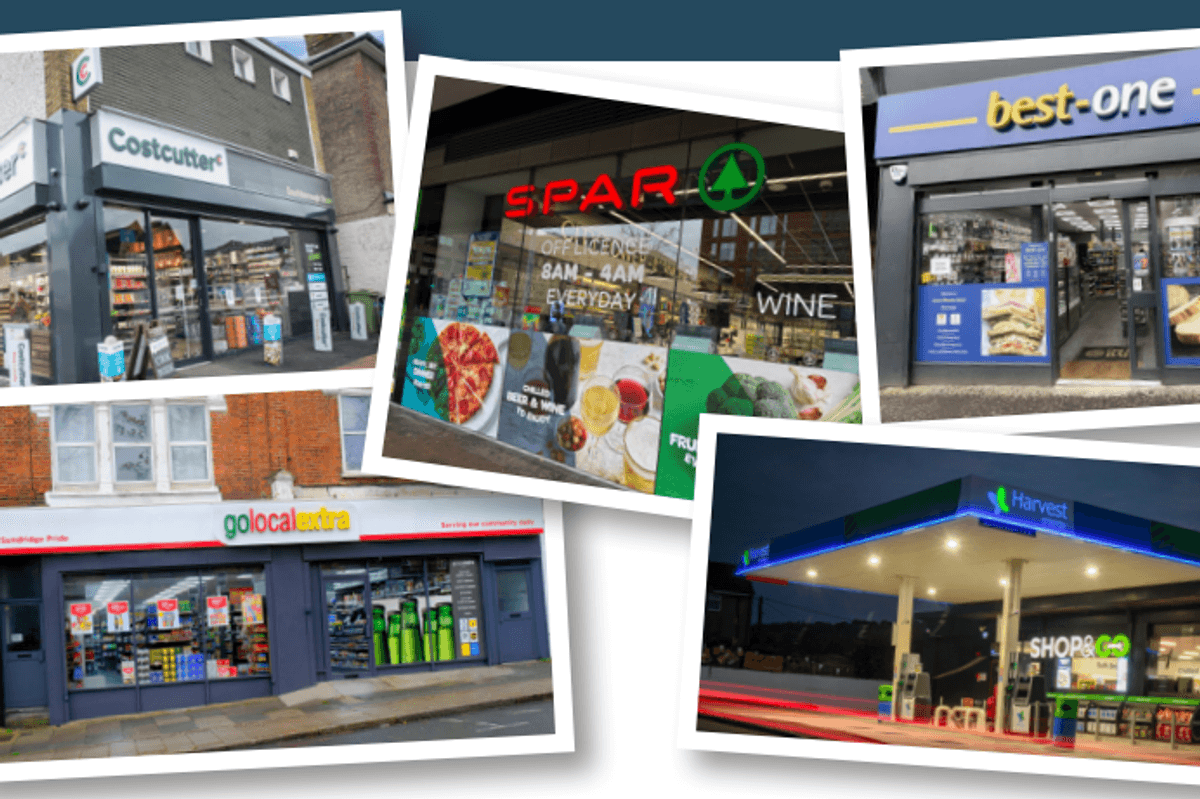

It would be remiss of us, as a magazine dedicated to independent retailers, not to speak bluntly about what is happening in the convenience channel.
It is not a case of “all news is bad news”, but it is important to outline – especially in a feature such as this, which showcases the advantages of joining a symbol or fascia group – the pressures and impositions that have affected indies over the past year or two.
It is common knowledge that the ongoing, seemingly endless cost-of-living crisis, with stagnant wages undermined by persistent inflation, is constraining shopper spend and shrinking c-store baskets.
Those factors are now being joined by creeping unemployment figures, especially among graduates and the young (increasingly being blamed on AI, which is deleting entry-level office positions), who form an important section of consumer impulse sales.
Immediate knock-on effects include a fall in employment in the channel, about to be exacerbated by the incoming Employment Rights Bill, which will substantially raise the cost of employing even current staff, never mind taking on more. At present the fall is slight – merely a rounding error of around half a percentage point, but a cliff edge might soon appear.
Lower revenues mean less capital available for investment – a 10 per cent drop, according to ACS, alongside a slightly lower sales revenue (about one per cent). But lower commercial confidence also inhibits the appetite for investment and pushes the channel directionally down. Added to this are other administrative costs which simply constrain much of the ability of retailers to grow and develop their businesses, such as increases in duties and taxes, National Insurance, National Living Wage and variable cost overheads such as energy and security/insurance, the latter impacted by the crime epidemic.
The level of business rates has also risen as the government reduced reliefs from 75 per cent to 40 per cent, with more cost increases on the horizon through the incoming business rates revaluation.
The impact of Employer NICs rises, the National Living Wage increase and business rates increases alone will cost independent retailers an additional £612m in 2026, without even thinking about the inflation squeeze on margins.
Retailers have also had to deal with the additional cost of vape recycling in their business, and most recently the impact on their sales from the introduction of a ban on disposable vapes.
In October the new Workers Rights Bill will become law, introducing a wide tariff of extra costs, including flexible working rights, that will be disproportionately shouldered by small business and indie retailers.
Lobbying by the multiples, meanwhile, has further threatened the livelihoods of indies by drawing the government's attention to the possibility of extending Sunday opening hours for large supermarkets, extinguishing the advantage enjoyed by smaller stores on that day – an advantage c-stores depend on.
Despite all these measures on the part of government – increasingly seen as hostile to independent retailers, the number of convenience retailers has risen a little, hovering between 50,000 and 51,000, but it is the composition of these new stores – and the change in the configuration of existing ones – that needs to be examined.
Mults moving in
The most dramatic and noticeable change over the past year or so is the march of the multiples into the convenience sector. According to IGD, their share of the channel accounted for roughly 60 per cent of incremental value growth in 2025. That means the multiples have now bitten off for themselves an unprecedented 25 per cent of convenience revenues (unaffiliated indies account for about 16 per cent and symbols 38 per cent – with Co-ops on 11 per cent and forecourts on nine per cent).
In plain language, the channel is being invaded by corporate giants who, suffering setbacks and ongoing strategic frustration in their war with the discounters, have turned their attention to what they see as an easier field to subdue – and where the margins are higher.
The multiples clearly plan to grow the convenience sector but must do this by usurping its long-term inhabitants – independent retailers. It’s been happening marginally for many years, and so far defences have mostly held up, but the signs are that 2026 will see a wide-front advance by the supermarkets’ local and neighbourhood chains into traditional indie territory.
In 2024 Tesco announced it would be opening 300 new Tesco Express stores over the next three years, meaning we are in the middle of its expansion campaign, and there are currently just over 2,000 Tesco of them. Last week, it announced that all was on target (boosted by the acquisition of five former Amazon Fresh stores in London), and that it opened 60 new Tesco Express stores in 2025 and is on track to deliver over 70 more before March 2027. The blanketing of the British Isles with Tesco Express stores is nearly complete in terms of commercial reach, with an estimated 77 per cent of shoppers within a 10-minute drive of a Tesco Express.
Sainsbury Local has a smaller footprint, with between 800 and 850 neighbourhood stores, but just over a year ago announced a major overhaul of its convenience estate to increase value and competitiveness.
Asda is also on the move, recently passing the 500-store milestone and starting 2026 by opening two new Asda Express stores in Bradford and Salford, with corporate communications stressing a continued focus on delivering “unbeatable value” in high‑footfall locations nationally.
The multiple only entered the convenience channel four years ago, perhaps after feeling the hot breath of Aldi and Lidl on its neck, and now has the independent retailers’ lunch squarely in its sights, matching its supermarket prices on selected everyday essentials.
Morrisons has also been making an aggressive push into the impulse zone, but differs from the other multiples in trying to convert independent retailers to its brand through franchising operations – a new strategy offering apparently good terms, although time will tell whether this constitutes a true fascia enterprise, or a more locked-in gobbling up of indies who will find themselves part of the corporate structure.
Morrisons had already bought the bankrupt McColl’s estate in 2022, and around 1000 stores have been converted to Morrisons Daily sites. An additional 700 are now run by independent franchisees, and the target for 2026 is another 170, with the south and Midlands forming the epicentre of this drive – which means Morrisons Daily is fast catching up with Tesco Express, expanding without the need to commit serious amounts of capital to purchasing new premises. It tempts indie retailers with fascia-like offers of volume rebates (currently six per cent) and very cleverly has introduced a loyalty scheme – its "More Card" – attracting customers with special prices in local franchise stores, and in late January (to 8 February), doubling the points accrued per purchase. Morrisons is clearly playing hard ball in its attempt to trounce its multiple competitors in the neighbourhood c-store arena.
Indies fight back
But what of the existing independent retailers? What is the best defensive action to take? Being independent offers some inherent advantages over the march of the mults. For example, you are independent – you have entrepreneurial flair and energy, and you have a personal connection to the local community and your customers that a cookie-cutter neighbourhood big name shop could never achieve. Your decisions are your own, not sent down from corporate HQ as marching orders, telling you how to run your store. You shop is an expression of your own personality, it’s bespoke and has a wide field of opportunity to be unique and attractive in a way that a Tesco or Sainsbury never could.
However, there are vulnerabilities that come from being alone, and symbols and fascias exist partly to mitigate these – to give you some of the protections and tools the big chain neighbourhood stores have – without compromising your independent spirit and free scope of course and action.
Backed up by these organisations and fascias, and by a thriving independent wholesale sector increasingly integrating stores into their own symbol organisations, a thriving indie sector economy can stand up to the corporate behemoths. It is important to remember that they are encroaching on the convenience sector because they have to an extent already suffered defeats in the large supermarket sector at the hands of discounters such as Aldi and Lidl – which shows the mults can be beaten back and even beaten outright.
Twice a year, Asian Trader provides a summary of the convenience landscape within the larger grocery sector, while looking at the best options for independent retailers in case they wish to join one of the symbol, franchise or fascia groups, which promise safety in numbers, economies of scale, support and branding, own-label ranges and a host of other advantages that offer the individual a bit of four-wheel drive in a rough and slippery market environment.
In exchange there might be fees, standards, minimum order obligations and rules to follow – these are generally not too onerous and enable the symbol to carry on its work in helping its members. For some die-hard indies, any rules will always be too many – and for them, maybe the halfway house of a buyers’ club might be more suitable – or simply the old-fashioned cash-and carry existence!
Whatever the personality and situation of individual retailers, it appears that each year more of them decide to join some sort of symbol group. This year, taking into account the circumstances we have discussed, it might be the most attractive period yet in which interested or wavering indies might profitably contemplate joining the symbol universe.
Symbol security
For the hesitant, SPAR UK’s Retail and Brand Development Director, Ian Taylor, explains that SPAR, for example, is built on a simple principle: independent retailers remain truly independent.
“Retailers today are looking for a careful balance between freedom and support. They want to retain control of their businesses and the ability to tailor their offer to local shoppers, while also benefiting from the scale and backing of a strong symbol group,” he says, adding that key considerations include the strength and trustworthiness of the consumer brand, access to competitive buying terms and a credible own-label range and practical support with legislation, technology and compliance.
“Every SPAR store is locally owned and tailored to its community, combining the agility and insight of independent retailing with the buying power, marketing strength and operational support of a national brand,” he says, adding that as a symbol group, SPAR encourages retailers to shape their own stores, ranges and services to meet local shopper needs, while benefiting from own label development, promotions, store branding, retail technology, IT systems and logistics support.
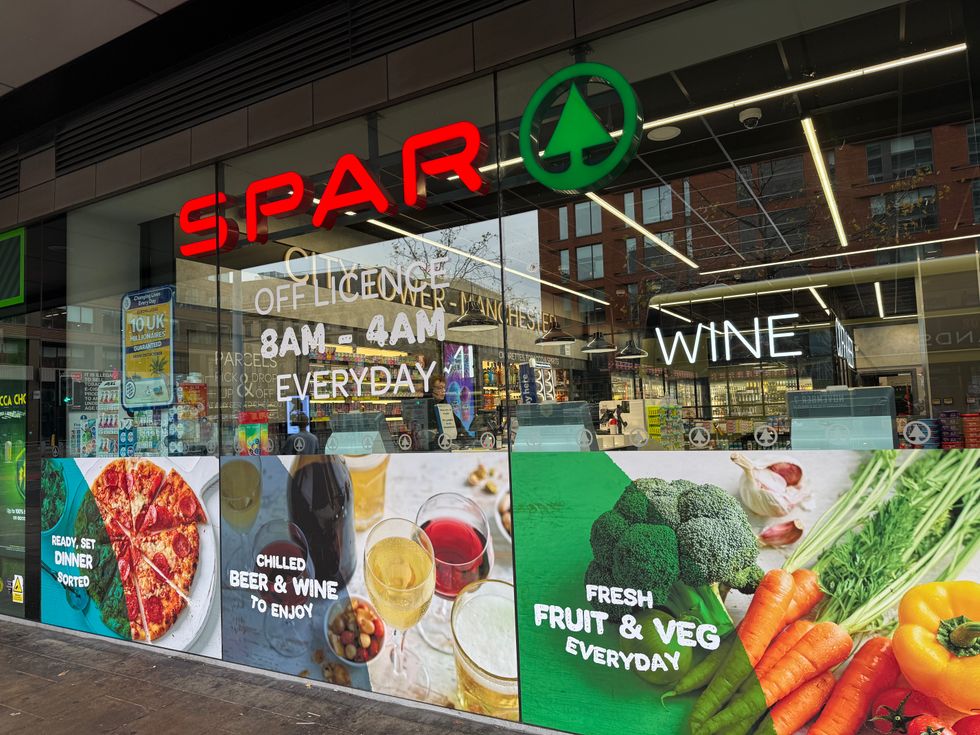 Photo: Handout
It is this kind of support that that provides the kind of firepower unavailable to the lone trader. The retailer must weigh in the balance whether affiliation erodes independence beyond the advantages of solidarity and leverage offered by a fascia – although as you can see from the information in this supplement, the obligations of membership are hardly burdensome, while the benefits are many.
“Increasingly, retailers also value relationships built on partnership rather than prescription, where guidance is informed by data and insight, but local expertise is respected,” Taylor says. “Independent retailers want to remain entrepreneurs [but] simply want to do so with the right support behind them.”
Taylor rehearses the SPAR model and its history, pointing out that SPAR UK is owned by five regional distribution centres (RDCs), most of which are family-owned businesses still led by the founders’ descendants. “These RDCs invest heavily in logistics, warehousing and technology, supplying stores and providing hands-on business support so retailers can focus on running profitable, community-focused stores.”
He concludes that the result is a model that combines local ownership with national scale, giving independent retailers the confidence, capability and flexibility to compete and thrive.
Bestway on the other hand is a private, family-owned business. Its Retail Director Jamie Davison says that Bestway prides itself on being the most supportive brand in the convenience store sector.
“Bestway Retail is becoming the symbol of choice for retailers wishing to take their stores to the next level, renowned for value, range, and affordability,” he says. “Put simply, better pricing and availability equals stronger profits for the retailer.
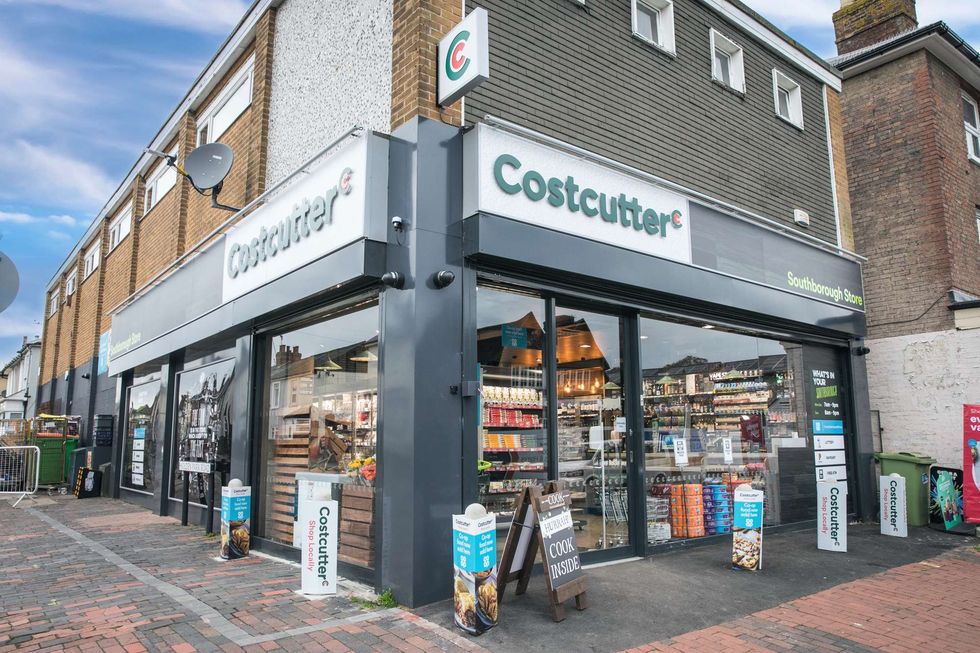 Photo: Handout
Its various fascias – best-one, Costcutter, Bargain Booze – offer one of the most attractive reward programmes in independent retail, where committed best-one members can earn up to five per cent rebate on their purchases through My Rewards, while Costcutter offers up to six per cent rebate. This reward can then be re-invested in store development. It’s the profile of a company that started out as retailers before taking the depot route back in the 1970s, and Bestway retains a special connection and feeling for the indie storeowner borne out in their symbol-store success.
“At Bestway, we understand the challenges independent retailers face in competing with the multiples, and other competitors,” Davison says. “To support them, we have focussed strongly on providing competitive pricing, exclusive promotions, and access to a diverse range of products tailored to evolving consumer trends. We have focussed on our Collect offer to ensure the very best pricing and during 2025 have increased cash & carry share to 57per cent versus delivered (43 per cent).”
Davison explains that by leveraging its scale, Bestway offers strong trade promotions and price-marked packs (PMPs) that help indies build trust with their customers while maintaining healthy margins.
“Additionally, we provide insights into emerging consumer trends – such as the rise of health-conscious products and social media-driven demands so that independent retailers can stock what shoppers are looking for,” he says.
As a Bestway retail symbol member, the indie is empowered with business support, digital solutions, and marketing initiatives and helped by online ordering platforms, delivery services, and EPOS integrations to ensure convenience and operational efficiency.
“Our best-one and Costcutter symbol groups and Xtra Local Retail Club provide branding, merchandising, and in-store support to help independents create a strong local presence,” adds Davison. “By offering tailored advice, access to exclusive ranges, and promotional campaigns, we help independent retailers not only compete but thrive in an increasingly competitive market.”
Bestway has also focused strongly on its “collect” deals during 2025, ensuring the best prices for retailers with a £10m investment in core staples to keep prices low and margins high.
Meanwhile, as an example of a depot-based, regional wholesaler making a massive impression on the convenience sector as it grows its symbol stores and expands from its northern base across the country, Parfetts cannot be bettered.
Down through the Midlands and into the far south of the country, Parfetts’ geographical advance has been striking. Last August saw the first Go Local open in Bristol, in the west, with retailer Kokil Rasaratham testifying, “The support from Parfetts has been brilliant, from merchandising to launch planning and ongoing advice. The process was smooth, and I’m excited to build on what we’ve started, especially as we introduce more value-driven promotions and expand our range.”
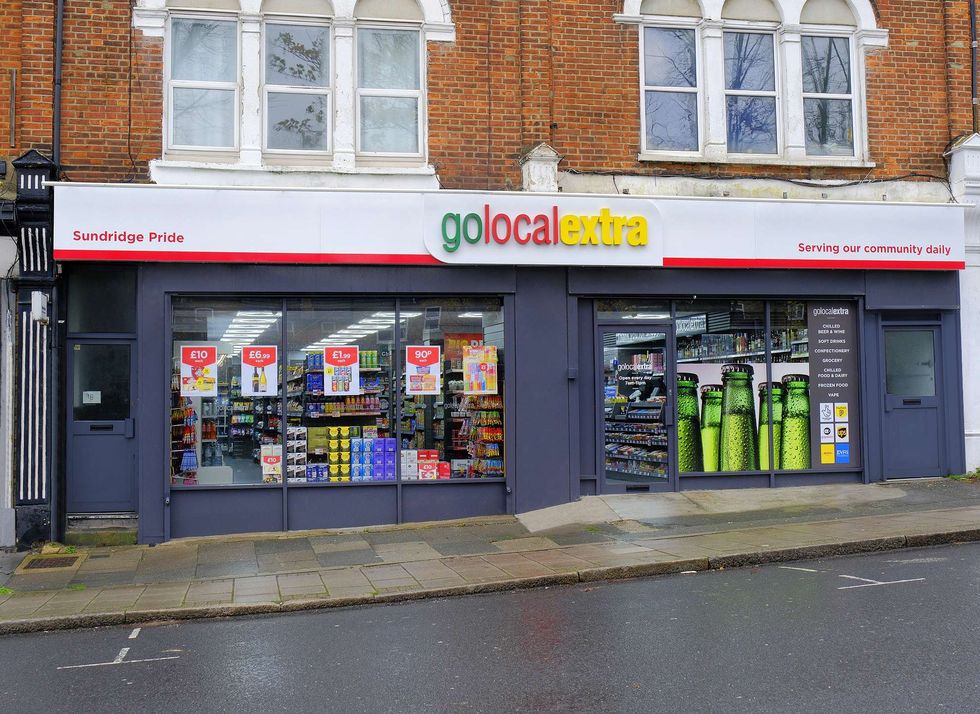 Photo: Handout
The next month Southampton was reached, with retailer Ashish Gajjar – owner of six stores locally – deciding to add a Go Local to his stable. "I am so grateful to the Parfetts team for their support in helping me open in under four weeks," he said. “From the start, they’ve been there with advice and guidance, and the result has exceeded all expectations.”
In October, Milton Keynes joined the club, with Jay Karavadra seeing his weekly turnover jumping swiftly by 50 per cent since the Parfetts makeover as a Go Local Extra.
The same month saw another Go Local Extra opening in Portsmouth, with sales immediately increasing by £1000 per day for a delighted Jose Santiapillai, prompting Parfetts joint MD Guy Swindell to remark, "The success of our southern expansion, through both new stores and the Southampton depot” – Parfetts’ ninth, a massive 113,000 sq ft site which opened in September – “underlines the strength of the Parfetts model and our ambition to be a truly national wholesaler.”
Another opened last month in Gosport, this time a Shop and Go forecourt, marking a key milestone for the employee-owned wholesaler: the first Shop & Go outlet to be supplied from its Southampton depot. Innovation is everywhere.
Future trends
In keeping ahead of the wider grocery sector, innovation is the watchword in convenience, and here the symbols are forging ahead. Bestway recently developed its "‘shop within a shop" model, focussing on the different customer demographics and having the right offer and proposition that meets the needs of local customers in a particular catchment area. Each store has a point of difference through what it offers and being dual supply the store benefit from sourcing from a much wider network than any other symbol operator.
“We believe that our new concept stores define the future of convenience,” said Davison. “This innovative and pioneering concept brings together the strength of the Costcutter or best-one convenience offer with the leading beers, wines, and spirits lines available from Bargain Booze or Wine Rack to make a fantastic proposition for both retailers and consumers alike.”
The thing to bear in mind when considering the symbol offer and opportunity is this responsiveness, leverage and – for want of a more technical word – creativity that fascias can bring as organisations to independent retailers.
The number of symbols and fascias stores has increased by around 1,800 in the past three years, as more retailers decide that “shared support, stronger supplier relationships, core range advice, better promotions and improved commercial terms” are worthwhile.
TWC analysis shows that fascia stores outperform unaffiliated independents across almost every key performance metric – including average turnover per store per year. This is important as the average indie c-store is taking £28k a year less in 2025 than in 2024.
ACS research also found that fascia growth is key to future success, and that he ongoing shift towards fascia affiliation gives independent retailers the best chance to succeed in a competitive marketplace.
Taking the plunge
Do not fear headlines that suggest convenience store sales are slipping and that shopper missions are shifting. How much this trend can be extrapolated is uncertain (nothing goes in a straight line), and the fact that all the mults are desperate to get into the c-channel in a bigger way hardly suggests impulse is doomed. In fact, there is evidence of “bulk buying” strategies emerging in response to inflation– with shoppers stocking up on commodities at warehouses such as Costco, then shopping daily and locally for higher value items to cook – and “High and Low” trends, where own brands (again, for household items and ambient staples) are bought at the cheapest price from discounters, and then, again, high value gourmet and artisan goods and ingredients locally and more choosily.
Tom Fender of TWC pointed out that letting the big boxes take the strain of stocking massive ranges could help convenience: "As a comparison, Costco warehouse outlets tend to be 130,000 sq ft and have fewer than 4000 SKU s in them. We suspect the average independent could probably remove 25+ per cent of their SKUs and make more money as a result."
Both these trends – bulk buying and High and Low purchasing – can benefit convenience if approached correctly, and again, it is symbol groups, with strategic planning and economies of scale, that can help individual retailers to feel as if they are part of a powerful force.
SPAR’s Ian Taylor says that looking ahead to 2026, the focus is shifting to adaptation, investment and long-term resilience. “Shoppers will continue to prioritise value, quality and service, with own label playing an increasingly important role alongside trusted national brands. With greater clarity on policy changes such as employment cost increases and the introduction of DRS, retailers are better placed to plan ahead.
“Above all, 2026 will be a year where partnership and scale matter more than ever,” so think about it: could this year be the one that means a symbol group for you?
See the findings of an exclusive survey of retailers conducted for this feature here.