



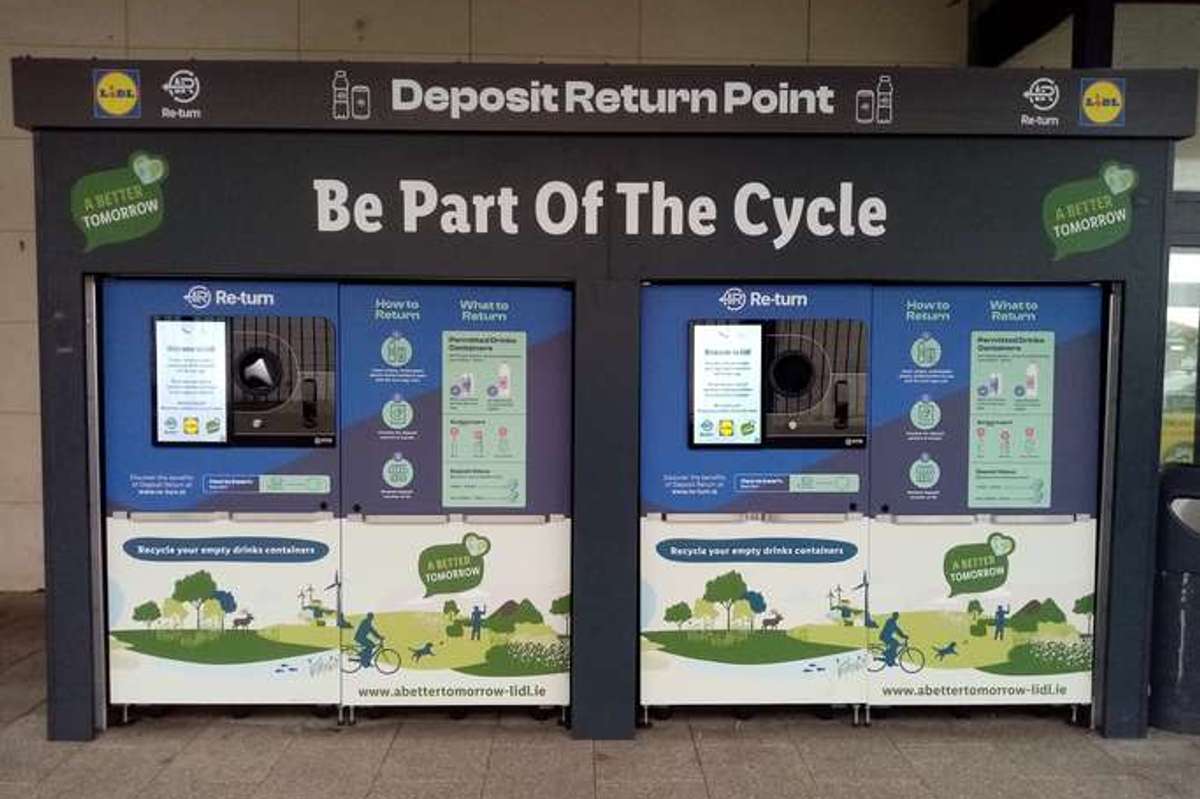

As the UK’s Deposit Return Scheme (DRS) comes closer to moving from policy to implementation, independent convenience retailers are gearing up to make some huge and irreversible changes in their stores.
From October 2027, one of the most ambitious environmental programmes in the country’s history will come into effect, under which grocery retailers, who sell soft drinks in single-use plastic and metal containers, will be obligated to charge a deposit on each container at the point of purchase and required to host return points.
Those going for manual collection will need to refund the customer once they bring back the containers. In a store with reverse vending machine (RVM), customers will receive a voucher upon depositing bottles which they can redeem at the till.
The scheme, branded Exchange for Change and administered by the UK Deposit Management Organisation, will target a 90 per cent container return rate within three years of launch.
The ambition is clear. The timeline is fixed. What remains a little less clear, for more than 50,000 convenience store owners, is how the scheme will work in practice and whether it will pay.
The space equation
Positioned at the centre of the scheme, British convenience retailers are expected to play a key role in this wider scheme. However, ground realities of the convenience sector are expected to pose some challenges.
About 50 per cent of independent convenience stores in the UK are less than 1000 sq ft, while about 40 per cent fall in 1,000–1,999 sq ft bracket, according to ACS Local Shop Report 2025.
The average store carries around 4,580 product lines. In that context, every square foot is generating revenue.
Introducing an RVM into that environment will not be an add-on. It will be a trade-off.
An RVM will compete directly with chilled fixtures, promotional bays and confectionery runs, each with a measurable and immediate impact on sales.
Alkesh Patel, who operates a 1,200 sq ft “narrow and long” store in a West Sussex town, is among many retailers now facing such a trade-off.
“If I decide to put in an RVM, I will need to create space within my store as I have no means to install it outside the shop,” Alkesh told Asian Trader.
“I need to consider what I need to give up for this space and at what cost. Having an RVM will also require additional staff time to handle the day-to-day operations, and it is difficult to gauge that as of now,” he said.
While Alkesh is still figuring things out, retailer Kersheaup Vagadia, running an 1,800 square foot Costcutter Bargain Booze store in Bolton, is considering going for a manual collection.
“We have not yet made a final decision, as we are still carefully considering all available options to determine what will best meet both our business requirements and ease of serving our customers,” Vagadia told Asian Trader.
“Ideally, we would implement a simple and accessible drop-off point near the till, allowing customers to return empty containers and receive their refund quickly.”
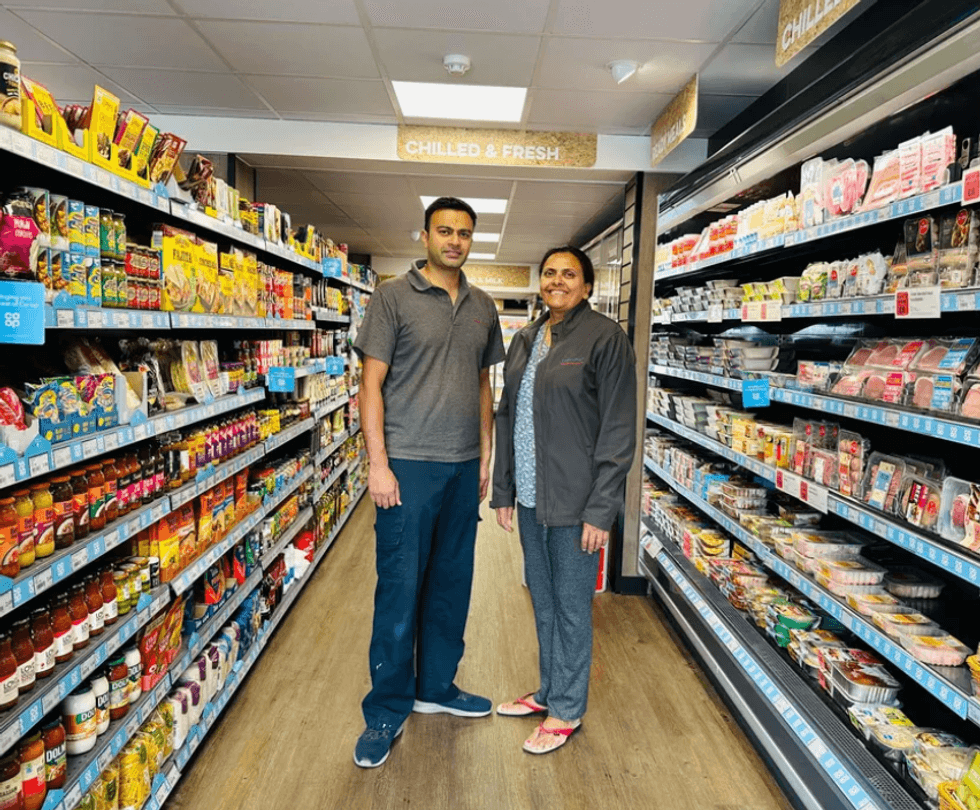 Retailer Kersheaup VagadiaImage from Kersheaup Vagadia
At this stage, Vagadia is viewing DRS as “an additional in-store service rather than a net gain activity”, with the commercial outcome dependent on how efficiently it can be integrated into daily operations.
Noteworthy here is that Exchange for Change says it is making provisions for smaller set-ups.
Under the regulations, retailers in “urban areas with a retail space under 100m² (1076 sq ft)” will be automatically exempt from operating a return point. These retailers will not be required to apply for an exemption, although they may choose to operate a return point.
Additionally, Exchange For Change is exploring the introduction of additional conditions under which other retailers will be able to apply for an exemption such as proximity to alternative local return points, and the lack of ability of a store to host a return point due to physical space and layout constraints, health, safety or hygiene risks.
It is intended that all urban retailers between 100m² (1076 sq ft) and 199m² (2142 sq ft) of sales area and rural retailers under 200m² (2152 sq ft) of sales area would be able to apply on this ground for exemption based on physical space limitations.
Net gain or net cost?
Despite the provision, seeking exemption, even if available, is not emerging as a preferred way forward among retailers.
Once DRS is embedded in consumer behaviour, they argue, shoppers will simply gravitate towards stores that offer a return point, combining their recycling trip with their grocery shop. The retailer without a return point risks becoming the one that customers pass on the way to somewhere else.
For retailer Bobby Singh in West Yorkshire, seeking an exemption is out of question. He believes offering a return point will drive repeat visits.
"Right now, we’re focusing on the cost and viability of either manual collection or a reverse vending machine, and also whether we realistically have the space in store to make either option work,” Singh said.
“We just want to make sure we choose something practical that works for both customers and the day-to-day running of the shop.”
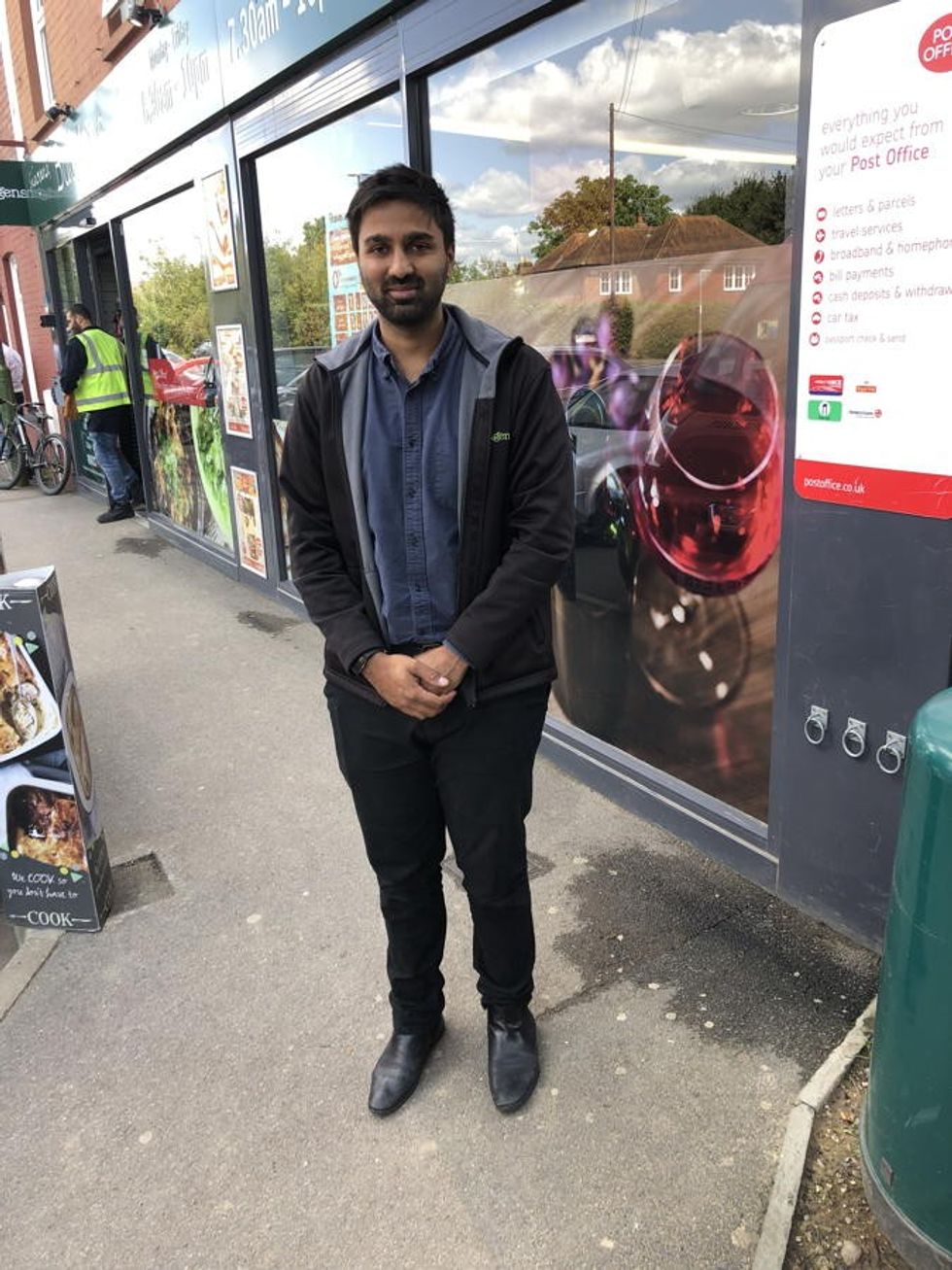 Retailer Alpesh ShingadiaImage from Alpesh Shingadia
In Horsham, Alpesh Shingadia, owner of the 1,200 sq ft Budgens Southwater store, has done his own arithmetic based on widely reported industry speculation of £0.03 per container. He is considering starting with a manual return point before making any larger commitment.
"It sounds reasonable on paper,” Shingadia told Asian Trader. “But if a store is receiving 500 containers a day, which is on the higher side, that equates to roughly £5,500 a year. But then does that cover your revenue-generating SKU?”
Higher volumes could justify participation, Shingadia said, but lower return levels may place pressure on margins once labour and operational costs are factored in.
However, he also believes stores seeking exemption might lose out on footfall.
“I don’t see people taking their bottles and cans to multiples and discounters. I feel a lot of volume will come to local convenience stores, which is a good thing as it will bring us more footfall and hopefully some extra trade,” he said.
Learning from early adopters
Not every retailer will be starting from scratch. Kaual Patel in London and Shahid (Mo) Razzaq in Glasgow already have RVMs in their respective stores, offering a glimpse into how the scheme could function in practice.
Award winning retailer Pete Patel, a multi-site operator with more than ten convenience stores across the south of England, is also one of the pioneer in this recycling scheme.
Speaking with Asian Trader, Pete shared his experiences so far, “We took a proactive approach to DRS and installed our first RVM three years ago at our Brockley store well ahead of any legislative requirement.
“The aim was to familiarise our customers early and embed the habit of returning containers in-store.”
At Pete’s stores, RVMs are mostly positioned near the entrance, making them visible and accessible while keeping returns separate from the main retail flow.
The containers are automatically processed, compacted, and stored within the machine, significantly reducing manual handling. Staff involvement is limited to routine checks, emptying, and basic maintenance, he informed.
However, Pete agrees that space is a real constraint in convenience stores.
“Every square foot has a value, so integrating an RVM means carefully balancing retail space against operational requirements. This is why a one size-fits-all approach will not work across all stores,” he said.
Even with early adoption, Patel says the financial case remains unclear.
"We have done some high-level modelling, but there are still too many unknowns, particularly around the final handling fees, logistics, and ongoing servicing costs,” he explained.
“From what we can see so far, it is unlikely to be a significant profit driver. In fact, depending on final costs, it could easily become a net cost once you factor in space loss, operational disruption, and staff time.
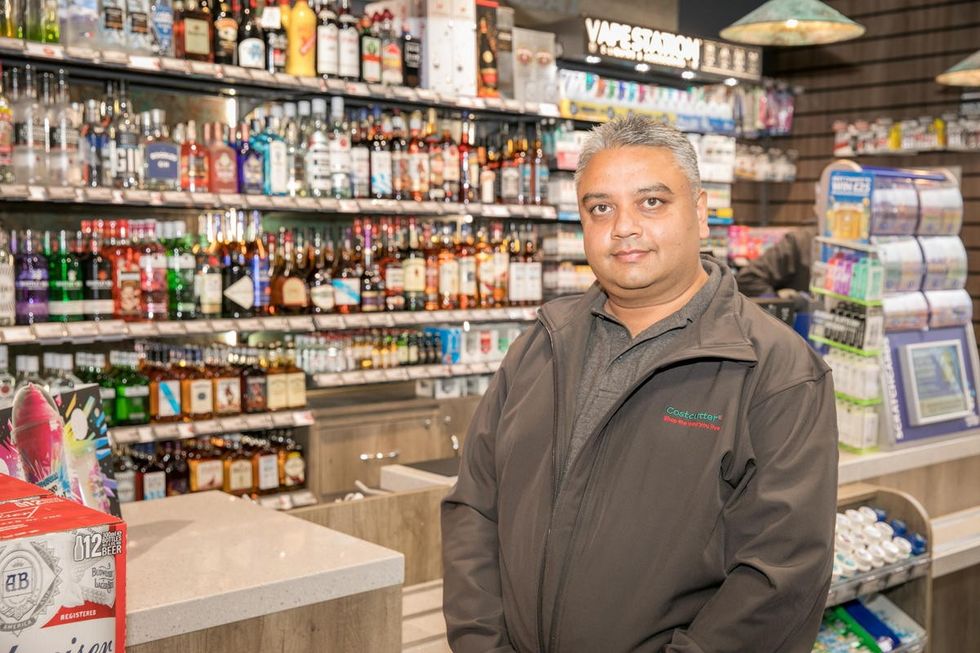 Retailer Pete Patel Image from Pete Patel
“In addition, practical support around logistics – particularly collection frequency and reliability – will be critical. If stores are left holding excessive volumes, it will create operational pressure very quickly.”
For a glimpse of what the national scheme could look like in practice, West Suffolk offers the closest thing to a living case study the UK has.
In February 2024, Janne Jarvis – district councillor for Newmarket North – launched England's first council-led reverse vending machine and recycling rewards initiative, more than three years ahead of the national scheme.
The initiative now spans multiple sites across West Suffolk and has since expanded to Cambridge. Over two years, more than 10,000 residents signed up, and 32,000 containers were recycled across the network.
Sharing his firsthand insight into what challenges can emerge, Jarvis told Asian Trader, “At grassroots level, space is a real issue.
“We are behind countries like Scandinavia, where reverse vending machines are already part of the built environment. They’re integrated into walls of stores and supermarkets so take up less space. We don’t have that yet.”
For Jarvis, the convenience of the operation will make or break the scheme. Machines need to be easy to access, ideally located right by shops, allowing customers to return containers, receive a voucher and spend it immediately.
Unlike countries such as Finland, many UK convenience stores will have to manage storage and cleanliness within already tight footprints.
Reliability, clear servicing and customer understanding are equally critical. Confusion over accepted materials, rejected items or faulty machines could quickly create friction at store level.
“Collections need to be timely,” he added. “If machines aren’t emptied regularly, the stores will run into overflow and hygiene issues very quickly.”
Jarvis also pointed to operational pressure inside stores. Large return volumes can disrupt shop flow, while staff may be pulled away from core tasks to assist customers or troubleshoot issues.
Role of symbol groups and others
With less than 18 months to go, symbol groups and wholesalers are being looked at as the critical intermediaries between policy and practice.
The feedback from retailers suggests many are yet to see meaningful support on the ground.
Vagadia, of Costcutter-Bargain Booze, is still looking forward to some guidance from his symbol group. He feels “greater clarity from the symbol group on how the scheme will operate in practice would make a significant difference, particularly around the procedures needed to integrate it smoothly into our store”.
“Practical guidance, along with real-world case studies from similar stores already running the scheme successfully, would help us better understand how to implement it efficiently and turn it into a positive impact,” he said.
Meanwhile, Bestway Wholesale is working closely with suppliers and manufacturers to explore practical solutions for its retailers, including options that can help reduce the cost and complexity of implementation.
Dawood Pervez, Managing Director, Bestway Wholesale, said, “[The solution] includes looking at potential group arrangements and scalable models that make participation more accessible, particularly for smaller stores.
“Alongside this, we will continue to support our retailers with clear guidance, operational advice and ongoing communication as more detail becomes available. Early planning will be key, and we would encourage retailers to start thinking now about the most appropriate approach for their store format, space, and customer profile.”
Pervez is calling on the government and the DMO to engage closely with the convenience sector to ensure the final model is “proportionate, properly funded and delivers environmental benefits without placing undue burden on independent businesses”.
“Our focus is very much on securing the best possible outcome for our members – particularly around areas such as fair handling fees, efficient collection models, and clear, consistent guidance on retailer obligations and exemptions,” Pervez added.
Parfetts, the home of Go Local and Go Local Extra, also confirmed that it is working closely with its retailers to provide simple checklists covering whether they are obligated to host a return point, what’s required for exemptions, how refunds will be handled, and what changes are needed in-store.
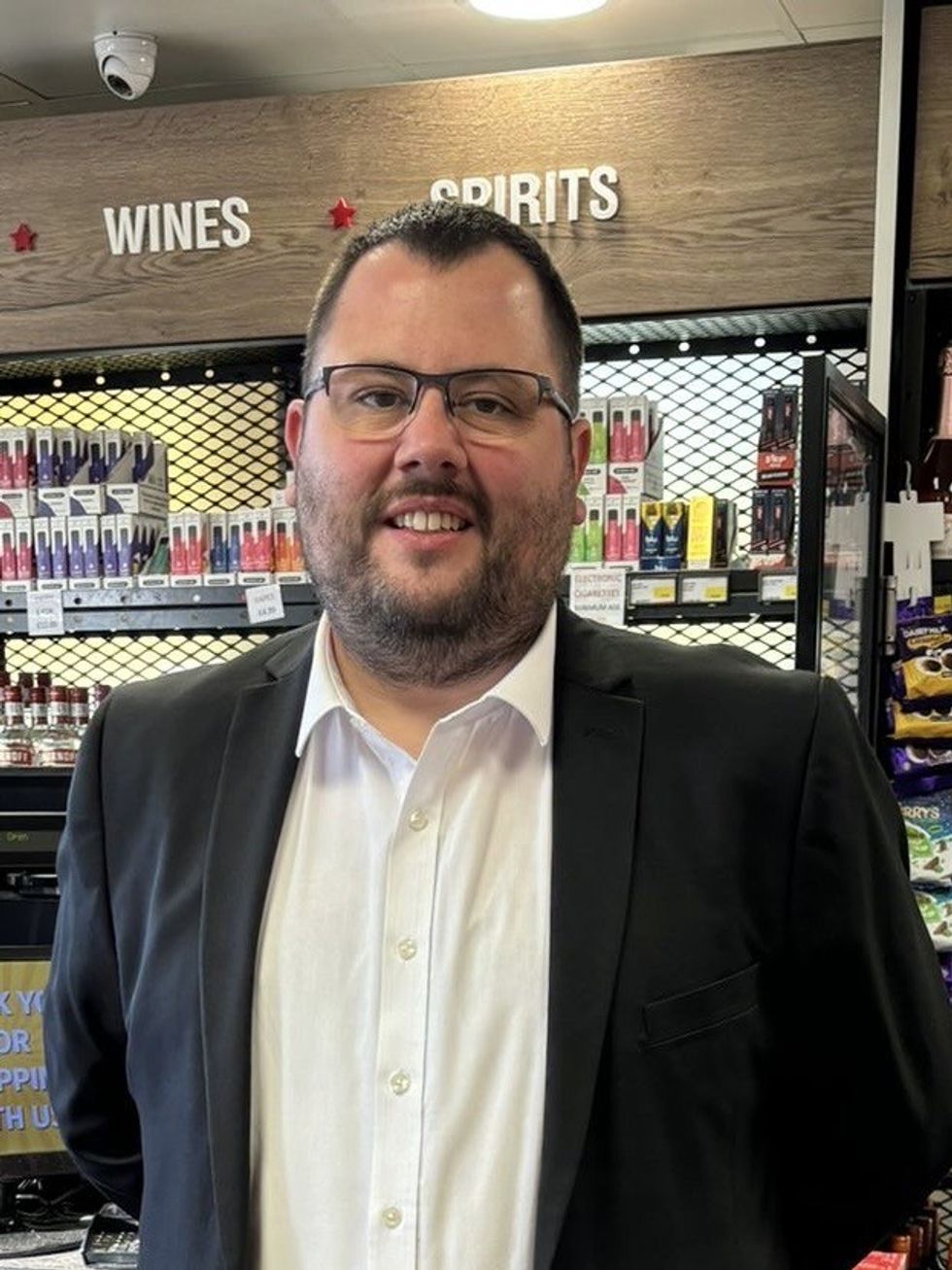 John O'Neill Image from Parfetts
John O’Neill, retail operations controller at Parfetts, told Asian Trader, “We are also helping retailers think through the real-world implications – space, staffing, storage and cash flow – so they can plan early and avoid disruption closer to launch.
“Our role is to help retailers assess the options (through RVM or manual) early and choose the route that fits their business.
“As more detail emerges from the DMO, we will continue to review opportunities to support retailers, including where scale can help reduce costs.”
Newspaper wholesaler Smith News is also proactively keeping retailers informed and empowered ahead of DRS roll out.
Since Smiths News’s daily visits to stores would allow it to pick up DRS returns frequently, the wholesaler is also putting up a proposal to be a logistic partner in the scheme.
Smith News is also set to offer “smart bins” to independent shops, a lower-cost compact version of RVM.
“DRS is going to be the biggest consumer and social change for many years and we want to encourage retailers to be part of the scheme,” Adam Wylie, Managing Director of Smiths News Recycle said.
“This will ensure the protection of footfall which is essential to protect independent retailers. Education, ongoing support and efficient operational delivery are essential for a successful scheme.”
More clarity, much sooner
Earlier this month, Exchange for Change announced that it will set aside a total of £60 million to provide grants to small independent retailers over the first three years of scheme operation.
Recognising that for some small, independent retailers, the upfront cost of RVMs can be a barrier, Exchange for Change has proposed grant level of £6,000 per site, paid over three years, structured as three annual payments of £2,000, with the first payment made approximately three months after implementation.
While welcome, retailers say key aspects like handling fees, logistics, collection frequency and operational processes remain unconfirmed.
Retailers are awaiting details to plan the months ahead.
“If someone is planning a refit in the near future, they can plan and allocate space for the RVM,” Shingadia pointed out.
Coming from a retailer who has already invested yet is still uncertain, Pete’s message to the DMO and government is perhaps the most considered
"Convenience retailers are on the front line of making DRS work. If the scheme is to succeed, it needs to be designed with real store environments in mind, not just theory,” Pete said.
As put by O’Neill from Parfetts, the success of DRS will depend on how practical it is to operate at the store level.
“Ultimately, this must work in busy, space-constrained convenience stores. If the scheme is simple, consistent, and properly funded, retailers will make it work.
“If not, the burden will fall disproportionately on independents,” he warned.
Overall, the convenience retailers are on the same page in thinking that DRS will prove a footfall magnet and a reason for customers to visit that goes beyond the weekly shop.
Councillor Jarvis offers perhaps the most grounded note of optimism.
“When we launched the West Suffolk Council scheme in February 2024, there was no discernible roadmap for a DRS, so we built our own version from the ground up,” Jarvis said.
“What we’ve learned is that these machines are not just infrastructure. They create a focal point within communities.
“They become an education hub, where people learn how the system works. If we engage the public early, the national scheme has a much better chance of getting off to a flying start.”
Asian Trader approached Booker Group for comments but had not received a response at the time of publication.
A spokesperson for Exchange for Change told Asian Trader, “Retailers are central to making the Deposit Return Scheme work. From large supermarkets to local convenience stores, they’ll form the network that allows people to return containers easily and get their deposit back.
“Right now, our focus is on making sure businesses have the information and support they need. We’re engaging widely across the sector – through trade bodies, events, webinars and direct dialogue, including structured engagement through our Industry Advisory Group and live Q&A sessions with retailers.
“Our ‘DRS 101’ webinars were delivered in partnership with key trade associations, including the Food and Drink Federation, British Retail Consortium and UK Hospitality, alongside a series of open, free-to-attend sessions earlier this year. These saw close to 1,000 attendees, with strong participation across the sector, supported by targeted outreach to help ensure retailers were aware of the sessions.
"We’d encourage retailers to stay informed by signing up to our newsletter and checking our website, where we’re sharing regular guidance and updates and guidance. We’ve recently published our proposals on exemptions and are also looking into additional exemption criteria that could apply to small retailers based on the size of the premises. We are in discussions with regulators and hope to have more details to share by late May.
“We know awareness isn’t uniform yet, particularly among smaller and independent stores, which is why early engagement matters. The scheme doesn’t go live until October 2027, and there will be clear guidance, a registration process and support in place well ahead of that.”
DRS in Practice: Insights from West Suffolk Pilot
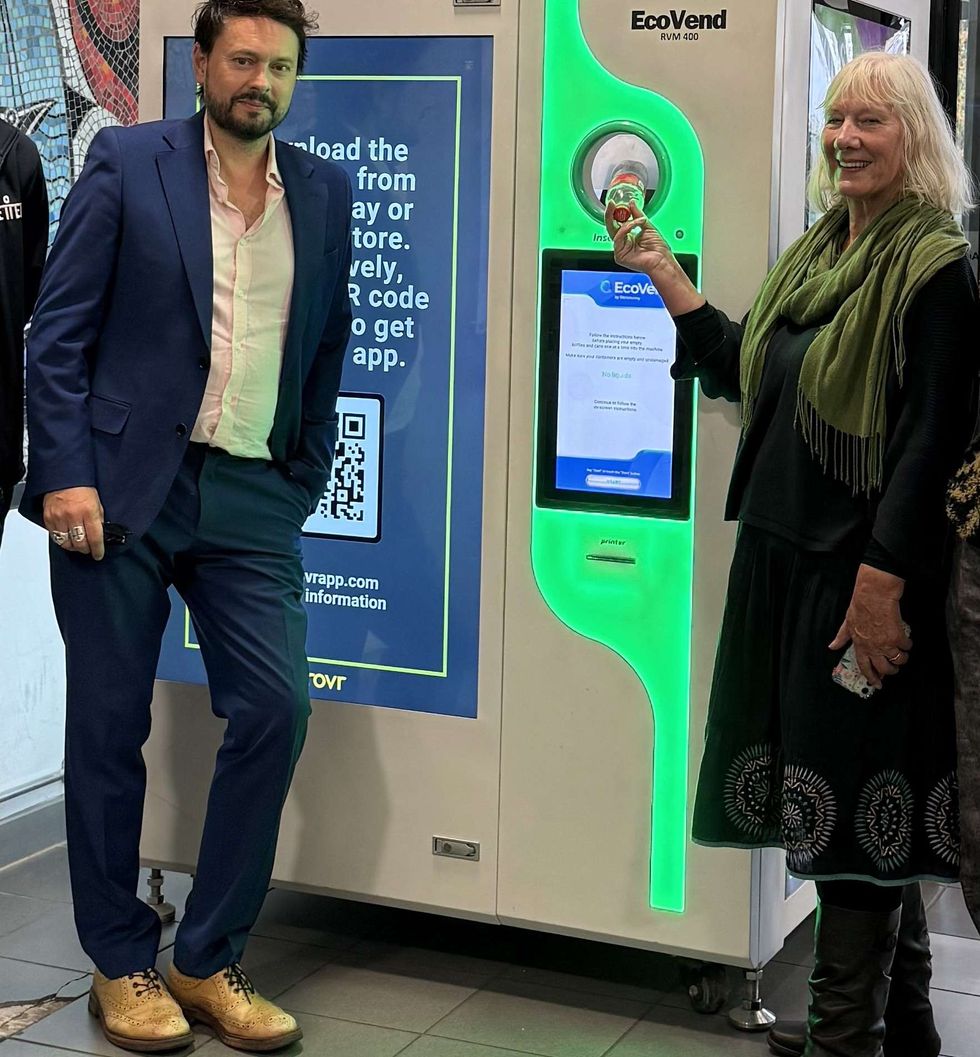 Janne Jarvis,Image from Janne Jarvis,
Firsthand feedback from Janne Jarvis, West Suffolk District Councillor for Newmarket North, involved in England’s first council-led recycling scheme:
Key challenges for retailers
- Ensuring reverse vending machines are conveniently located and easy to use
- Maintenance and keeping machines free from overflow
- Building shopper awareness on accepted materials and correct usage
- Ensuring timely collections to avoid hygiene issue
Hidden costs and operational pressures
- Loss of selling space to accommodate vending machines
- Additional staff time to assist customers and manage issues
- Storage and cleanliness challenges within limited store space
- Reliability risks as machine faults can quickly disrupt store operations