



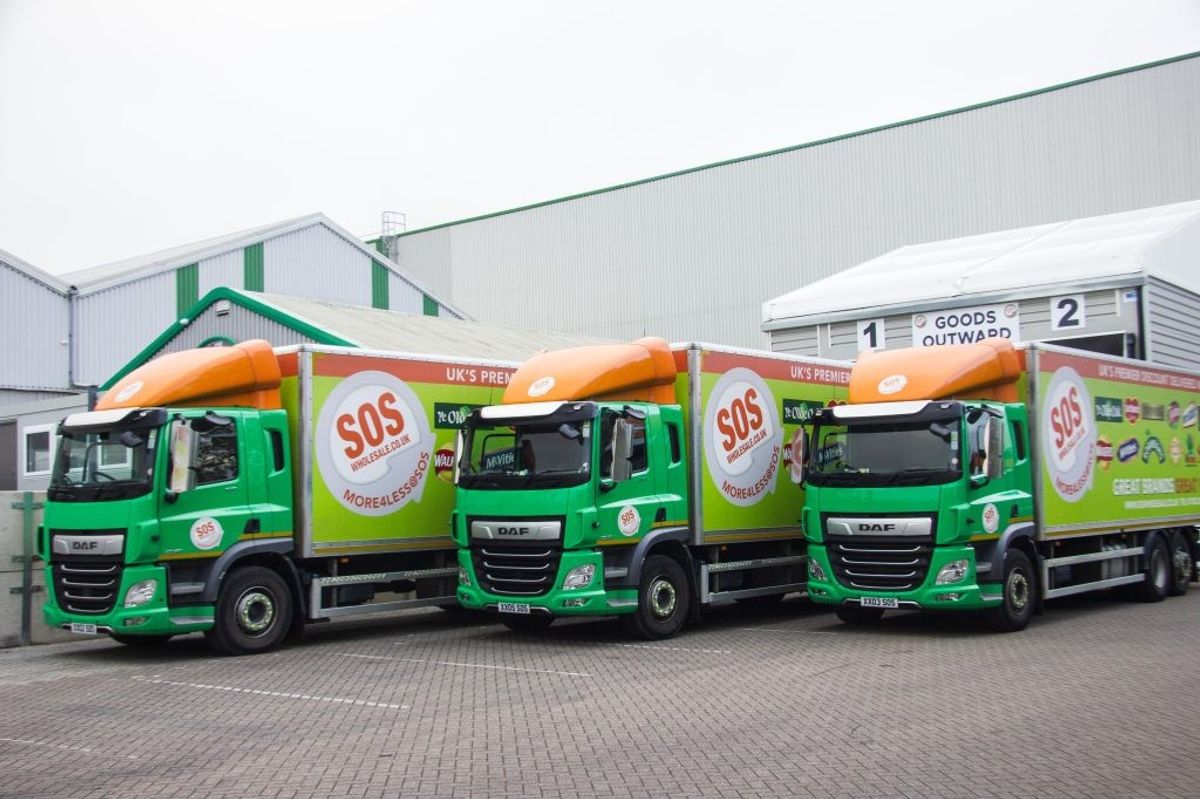

After spending more than two decades building SOS Wholesale from a small family-run clearance operation into a nationally recognised wholesaler, founder Mark Beckett says he never imagined the business would one day end in administration.
Founded by brothers Mark and Steven Beckett, SOS Wholesale grew from a small start-up – Special Offer Supplies – into a nationally recognised discount wholesaler supplying retailers across the UK and overseas.
But in September 2025, the company entered administration, with unsecured creditor claims estimated at around £6.5 million, while administrators said no distribution to unsecured creditors is currently expected.
In an exclusive interview with Asian Trader, Mark spoke in detail for the first time about the rise and collapse of the business, sharing his account of the events leading up to the company’s sale to RDCP Group in 2021 and eventual downfall in 2025.
The birth and growth years
SOS Wholesale’s roots can be traced back to Mark’s father’s traditional family butcher business where, he and his brother Steven Beckett, worked to help the family business grow.
The wholesale side of the business began almost accidentally around the late 1990s after the family started adding grocery lines to their retail operation and sourcing discounted stock from across the country.
Mark recalled, “I was bored selling meat and delicatessen, so we began adding lines to the butcher shops and market stalls.
“I travelled across the UK sourcing stock, cakes from Portsmouth and London, clearance lines from Birmingham, broken biscuits, misshapes, anything with value.
“We were overtrading, too much stock, not enough turnover, so I started wholesaling while Steven and Dad stayed focused on retail. That was the beginning of Special Offer Supplies that became SOS Wholesale.”
In 2007, the company expanded from a lock-up unit on Derby Wholesale Market into a 75,000 sq ft warehouse.
“We built SOS from nothing. We did everything ourselves. I was picking orders, loading vans, delivering.
“Dad filled shelves and served customers. Steven looked after the shops until it became just SOS, then worked the night shift. There was no hierarchy, just responsibility.
"We didn’t take wages for two years. We reinvested everything. The model was brutally simple: buy well, sell fast, make £60-£65 a pallet, repeat. Eventually, SOS became our entire lives,” Mark recalled.
By 2010, SOS Wholesale had become a well-established and recognised name within the wholesale sector.
Joining buying group Sugro proved to be a turning point, making direct relationships with major suppliers possible and helping SOS scale nationally.
“It opened the door to direct relationships with Mars, Wrigley’s and Swizzels,” Beckett said. “Through Today’s Group and later Unitas, we built a supply chain that allowed us to scale nationally. We weren’t just another wholesaler anymore. We were building something serious.”
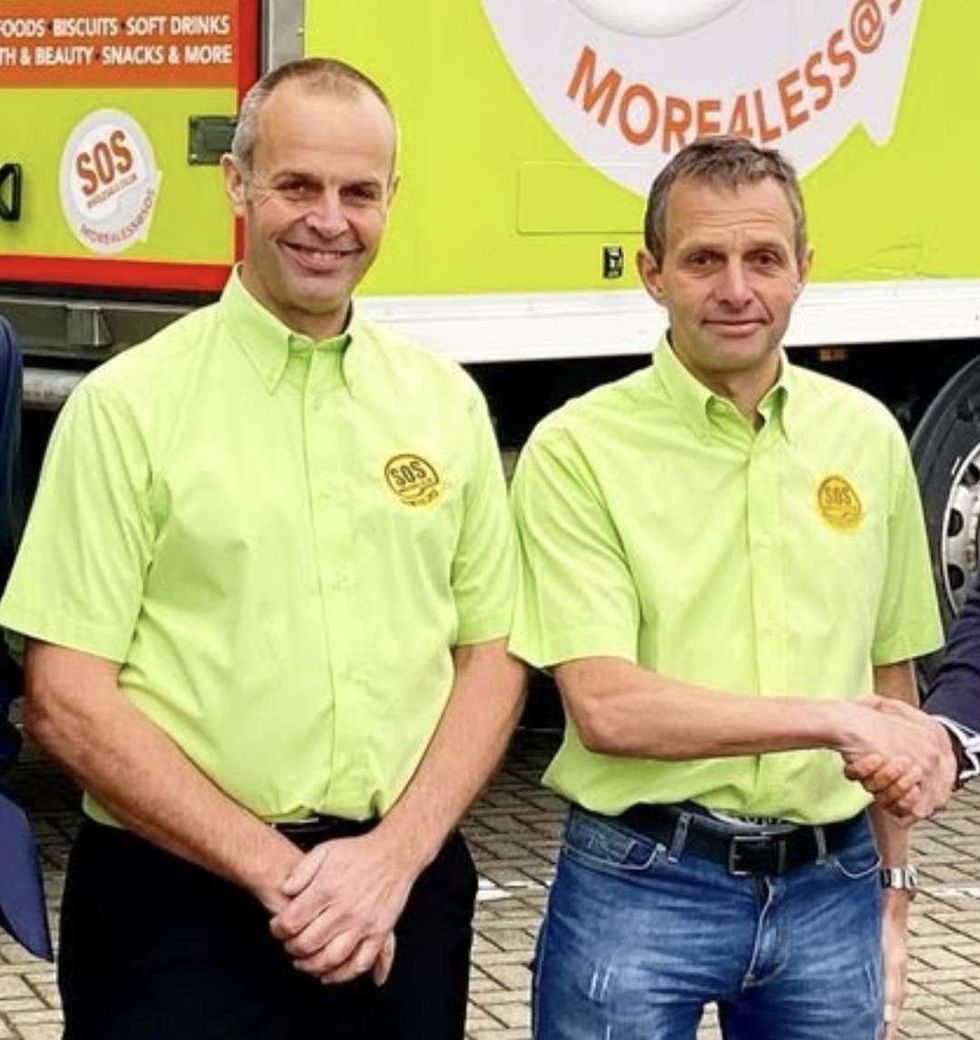 Steve and Mark BeckettMark Beckett
Mark also spoke candidly about ADHD, something that was diagnosed only a few years ago.
“It explained everything – the restlessness, the insomnia, being easily distracted, the lack of a filter, and the constant need to push forward.”
The sale
After more than two decades of seven-day working weeks, the Beckett brothers decided to sell the business.
The process, handled with advisers including Dains Accountants, attracted interest from UK and overseas buyers before the business was eventually sold to RDCP Group in late 2021.
“We chose to sell to RDCP Group, led by Sameer Rizvi. He was a widely profiled personality featured in business media.
“We were told that our family values would be respected. £2 million would be invested and the business would grow,” Mark recalled.
In July 2022, Vipin Patara was appointed to lead as MD to focus on diversification and growth.
However, according to Mark, cracks soon began emerging after the acquisition, particularly around supplier payments and cash flow pressures.
“Deferred payments were repeatedly changed. Rent was paid late. Suppliers weren’t being paid. Cash flow was constantly under pressure.
“Under the Sale and Purchase Agreement (SPA), funds were not meant to be extracted. Yet over £200,000 was connected to The Soft Drinks Company, a £1 million loan was made to IAHP, which later went into administration,” Mark argued.
“At the same time, SOS suppliers were going unpaid.”
On the other hand, RDCP's account of the post-acquisition period is markedly different.
Speaking separately and exclusively to Asian Trader, RDCP founder Sameer Rizvi has strongly disputed allegations of mismanagement and insisted the investment group made “serious and genuine efforts” to support the wholesaler before its collapse.
“Our strategy remains unchanged. RDCP is a long-term investor. Since 2015, we have backed UK businesses with capital, operational support and a long-term ownership mindset.
“Across the wider RDCP portfolio, we continue to support businesses employing approximately 2,000 people across around 40 locations in the UK.
“RDCP made every realistic effort to support the business. That included providing substantial cash support (£1m) to address working-capital pressure in 2024 and 2025 and, when the business came under further strain, seeking to provide additional funding (up to a further £1m) to stabilise the position,” Rizvi told Asian Trader.
“Unfortunately, that further support could not be implemented in the time available, because the existing lender, Novuna, did not support the proposed funding route.”
According to Rizvi, the company later came under pressure because of “a combination of supplier disruption, revenue decline, management transition and working-capital constraints”.
He said that, as with many founder-led acquisitions, the transition from the previous ownership team to new management had proved challenging.
“Like many wholesale and distribution businesses, SOS Wholesale had to operate against a backdrop of higher interest rates, increased financing costs, cost inflation and pressure on supplier and customer terms.
“SOS Wholesale operated in a sector where cash flow is heavily dependent on supplier volumes, customer demand, stock availability and invoice finance.”
Rizvi added that in the period leading up to administration, SOS Wholesale experienced pressure from changes in supplier behaviour.
"For SOS Wholesale, this meant that the loss of supplier volume and margin had a more immediate impact on cash flow than it might have done in a more benign financing environment,” he added.
Rizvi further revealed that between 2024 and 2025, RDCP injected more than £1 million into the business to help address working-capital shortfalls.
When the invoice finance position became critical, RDCP also sought to provide a further funding package of a further £1 million to replace that funding line and give the business a route through the short-term cash-flow pressure, which however could not be implemented, he stated.
The collapse
By September 2025, SOS Wholesale had entered administration, bringing an abrupt end to a business built over more than two decades.
Administrators from Interpath were appointed on 8 September 2025 after a notice of appointment was filed by Novuna Business Cash Flow as qualifying floating charge holder.
The administrators concluded it was not possible for SOS Wholesale to continue trading the business and instead pursued a managed wind-down and break-up sale of assets.
According to Interpath Advisory’s Joint Administrators’ Progress Report dated April 1 2026, seen by Asian Trader, SOS Wholesale collapsed owing millions to lenders, former owners and suppliers.
While Novuna Business Cash Flow, the company’s main secured lender, was owed around £2.2 million at the time of administration, Mark and Steven are collectively owed approximately £1.8 million in deferred payments and earn-outs linked to the 2021 sale of the business.
Unsecured creditors, mainly suppliers and trade creditors, are estimated to be owed around £6.5 million, with administrators warning that a payout to unsecured creditors is “highly unlikely”.
The report also states that more than 150 suppliers submitted claims to recover stock following the collapse.
The report further confirms that a confidential conduct assessment relating to the directors has been submitted to the Department for Business and Trade.
Interpath confirmed to Asian Trader that there is “nothing more to add” beyond what is shared in the report.
Yet Beckett further alleged that in the final period before the collapse, “stock movements” and change in leadership raised questions.
In the ten days before administration was called, all three directors — Sameer Rizvi, Vipin Patara, and Iryna Dubylovska — resigned from their roles.
Beckett alleges that a potential buyer had come forward with an acquisition offer in those final days and that the offer was not accepted.
“As funds drained, suppliers withdrew credit. Around £1.5 million in support disappeared. Cash flow collapsed. We were asked to accept one-third of what we were owed. We refused.
“Staff told me they dreaded answering the phone because of unpaid suppliers chasing money.
“At the same time, directorships across RDCP-linked companies were changing rapidly. Structures became increasingly unclear. It felt like a game of boardroom musical chairs,” Mark said.
Addressing the allegations, Rizvi dismissed the claims that RDCP intentionally mismanaged SOS Wholesale.
“We understand that Mr Beckett is disappointed by the administration of SOS Wholesale. We are disappointed as well, particularly because of the impact on employees, creditors, suppliers and the local area.
“We do not accept allegations that RDCP intentionally mismanaged SOS Wholesale, failed to support it, or acted improperly in relation to the business, its assets, its staff or its commercial opportunities.
“RDCP supported SOS Wholesale after acquisition, including by injecting more than £1 million of further capital and seeking to provide an additional funding package of a further £1 million to avoid administration.
“Against that background, we do not consider Mr Beckett’s criticism to be fair or balanced. RDCP made serious and genuine efforts to support SOS Wholesale.”
Unanswered questions
Beyond the financial figures and administration process, both sides acknowledge the human cost left behind by the collapse.
Rizvi said, “The administration of SOS Wholesale was a deeply disappointing outcome for everyone involved.
“We recognise that the consequences of an administration are significant, particularly for employees who lost their jobs, suppliers and creditors who may suffer losses, customers who relied on the business, and the wider local community. RDCP did not want this outcome.”
For Beckett, the loss came as a personal jolt. The collapse also came shortly after the death of the brothers’ father, who had helped build the business from its earliest days.
“The real loss was people,” he said. “Staff who thought they had jobs for life. Suppliers left unpaid. Export customers who prepaid and became creditors.”
While SOS Wholesale itself has collapsed, parts of the business continue under new ownership.
Beckett said Dairyfresh has since acquired the SOS brand assets and re-employed several former staff members.
“I now support them as a voluntary consultant,” he said. “They have re-employed 10 former SOS staff. That matters.”
Reflecting, Beckett said the experience had fundamentally changed how he views acquisitions and corporate growth.
“Do not rely on appearances. Check Companies House. Review directorship histories. Understand funding structures. Follow the money.
“Looking back, I’m still amazed by the audacity, the lack of transparency and the consequences. All in the pursuit of scale,” he said.
Rizvi, however, maintains that RDCP acted responsibly throughout the process and had made significant efforts to support the wholesaler before administration became unavoidable.
While both sides strongly disagree on what ultimately caused SOS Wholesale to fail, the administration process and the questions surrounding it remain very much open and ongoing. With creditor recoveries still uncertain and millions still owed across the supply chain, the collapse of SOS Wholesale is likely to remain a closely watched case within the wholesale sector.