





Arranging this interview took a few attempts. Retailers are busy people, and Vimal Pandya is busier than most.
The previous day, without warning, 25 pallets of infant formula – 1,100 boxes, each containing six cartons – had arrived at the Rotherhithe Community Kitchen and Food Bank. Each carton retails at £7.50. The delivery, entirely donated, represented close to £50,000 worth of product. Volunteers were rallied at short notice to receive, count, sort and store the lot.
“If somebody sees it and knows they have to deal with these one by one, people will say, ‘I'm going home, not doing this,’” Vimal says, with a laugh. “But all these people coming together and making sure we do everything we can to support – it's just outstanding.”
Each carton of formula will last a family with a newborn less than ten days. A family spending around £32 a month on baby milk – a significant outgoing when prices are “sky high” – will feel that donation in an immediate way. It is a window into the scale of need that Vimal and his team are addressing.
It was this spirit – and the extraordinary community initiative it drives – that won Dhanji Halai, owner of the Halai General Store (best-one) on London’s Rotherhithe Street, the Local Hero Award at the 2025 Asian Trader Awards. But the family's own description of who holds the community project together points clearly to Vimal, Dhanji's cousin, who has been involved in running the store for the past 12 years and who is the engine of everything it has become.
Third generation, same values
The Halai family has been trading on Rotherhithe Street – at one and a half miles, the longest street in London – since 1987, almost four decades, and has seen kids grow up before the counter, families change, and whole chapters of a neighbourhood unfold. “We consider ourselves rooted in our community,” he says.
Vimal has been serving there for a dozen years, but for the past two, with a trusted team running the day-to-day, his focus has shifted. “When you have people work for you, you don't really need to work,” he says. “You find ways to explore the business – explore the avenues to expand.” Uncle Dhanji, approaching retirement, has been happy to let him, and that freedom has allowed Vimal to think more expansively about what the store can be.
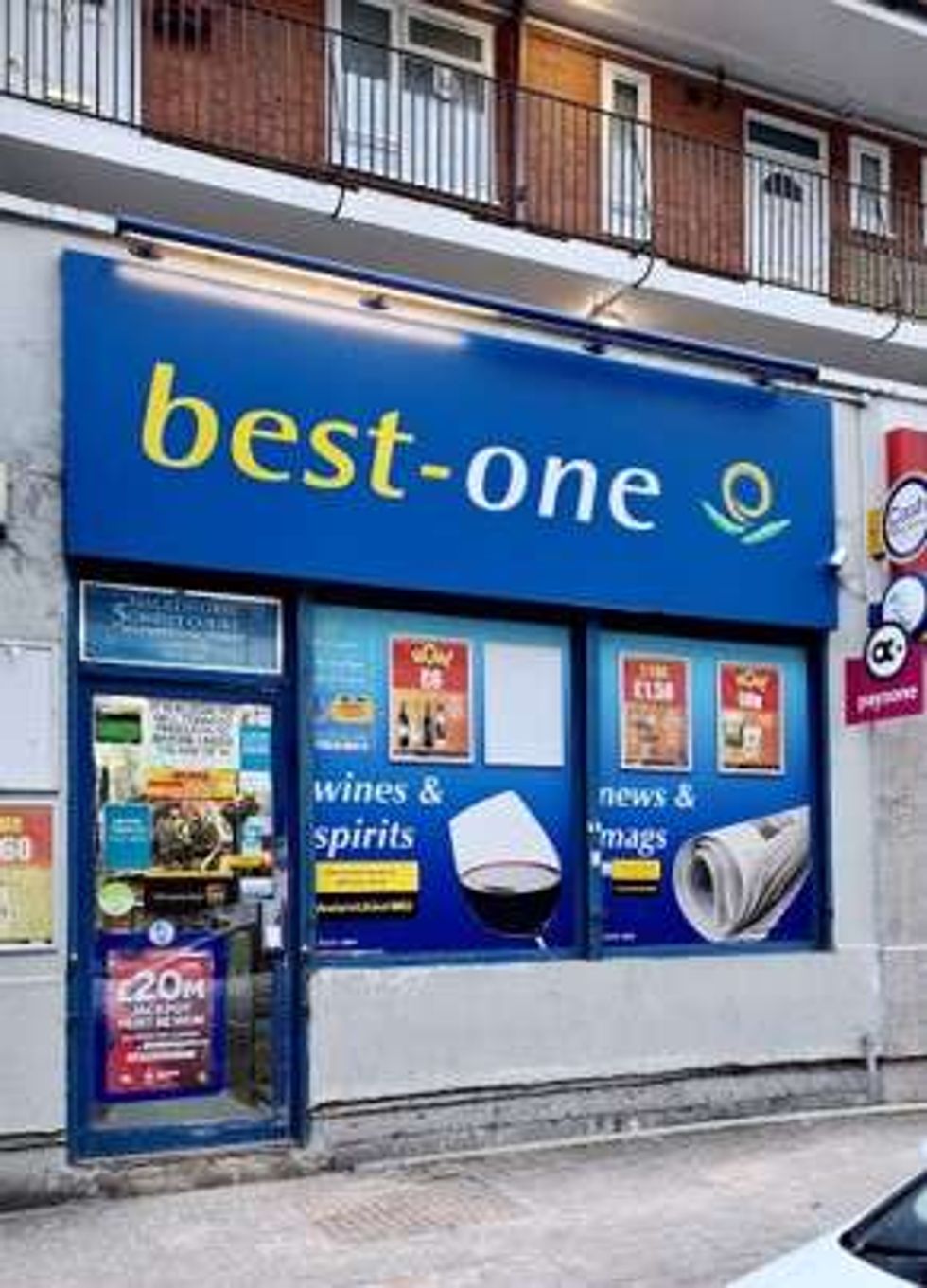 Halai General Store (best-one) on London’s Rotherhithe StreetPhoto: Handout
The philosophical frame for all of this is “seva” – selfless service. It is a concept he returns to more than once during the interview. “We believe that giving something back and helping others – we call it selfless act, seva – it has to be at the heart of everything that we do, and there has to be a portion of our earning that should go towards the seva.” It is, he adds, a value the family has carried across all three generations.
Crisis created a kitchen
The spark for the Rotherhithe Community Kitchen and Food Bank came in the summer of 2023, with rising interest rates and a cost-of-living crisis. For people who had been juggling bills with nothing to spare, it was unbearable. “For a lot of people who was struggling financially – it was putting the additional burden and a layer of unbearable, expensive life,” Vimal recalls.
“Some people were just looking forward to come and see us in the morning, just to have a friendly talk,” Vimal says. “That's what corner shops do, right? Connect people with each other.” He and his team began hearing in those everyday exchanges a quiet, dignified distress.
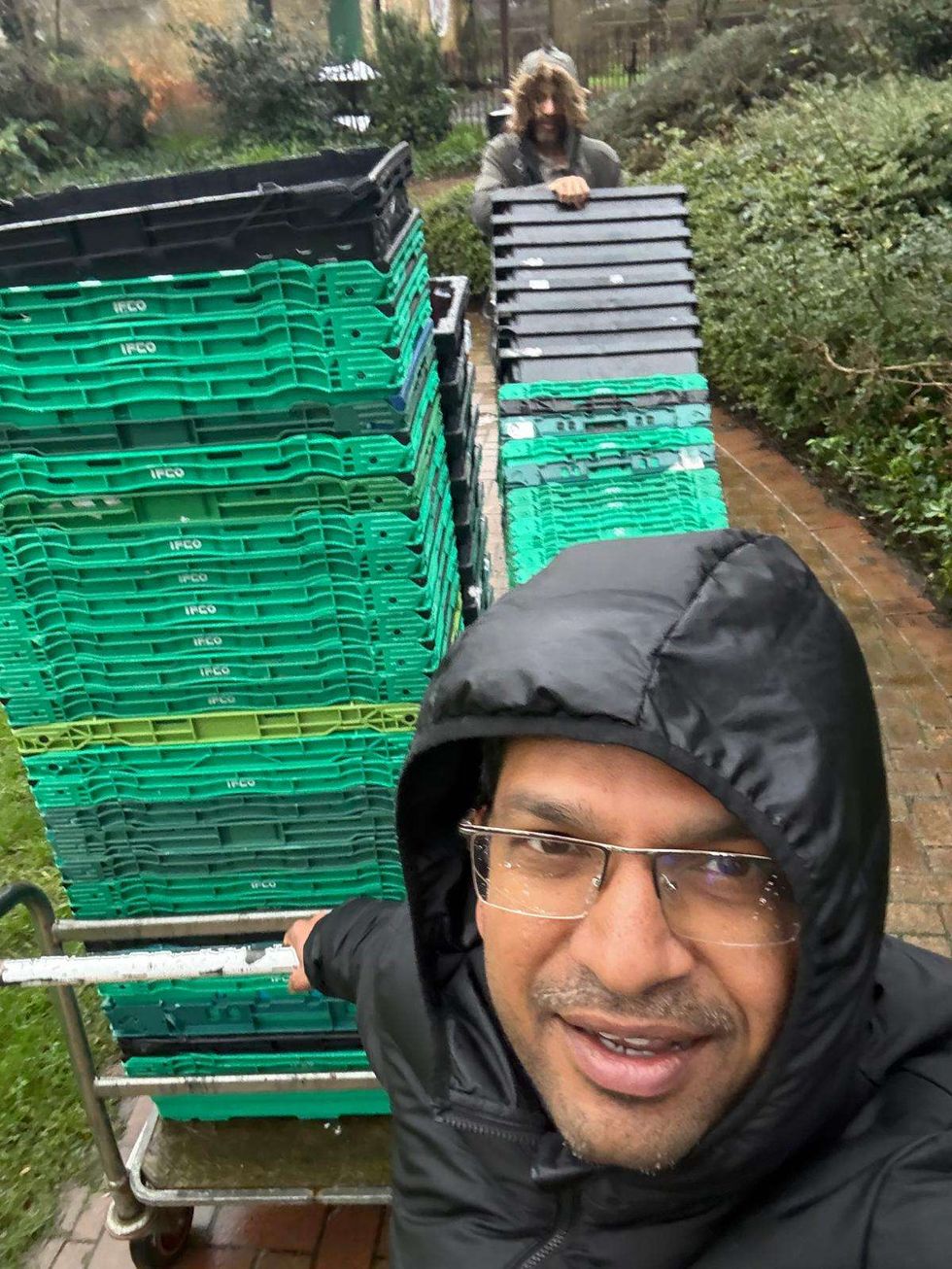 Vimal PandyaPhoto: Handout
And they did something about it. First, they reached out to the management of Peter Hills C of E Primary School in Rotherhithe, which generously allowed the use of their kitchen. Volunteers gathered. The first meal – chicken jalfrezi with rice and salad – was well received by the community. What happened next surprised even Vimal himself.
“When we started on 26 November 2023, we had no idea what this is going to be,” he says. “We had no idea we were going to start a food bank. We had no idea we were even going to register our community project on a corporate structure.”
A quiet revolution
In the period between launching in November and registering the project as a formal organisation with HMRC in April 2024, the project served 10,000 meals, entirely funded from the family's own resources. “We quietly did it. Nobody asked us to do it. It was in our heart for us to do for the community.”
The first external funding – £4,000 from the Rotherhithe Consolidated Charities – arrived a month and a half after registration. Total funding received since inception stands at £43,000. Of that, the majority has gone on van hire, since the project has no vehicle of its own, and on equipment. The entire operation is run by volunteers.
Today, the food bank supports over 500 families every week with complete food support. It distributes over 50 tonnes of food every single month. More than 100 volunteers are involved, contributing over 600 volunteering hours every week. There are three food bank collection points along Rotherhithe Street.
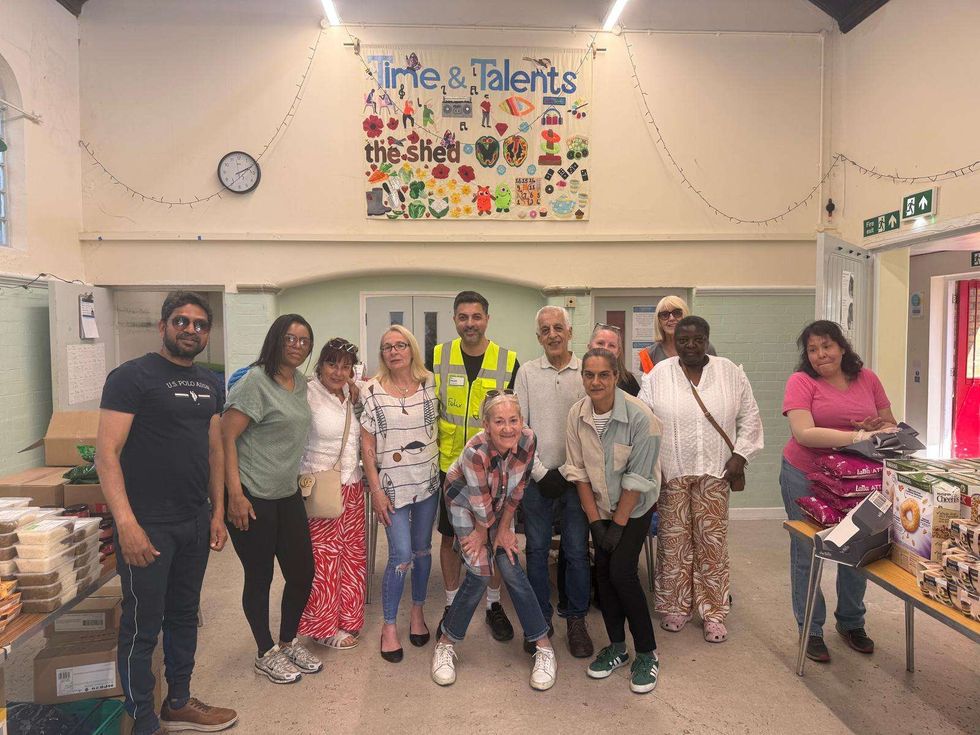 Photo: Handout
The community kitchen now runs every Friday at Appleby Blue – an alms-house for over-65s in Bermondsey – serving freshly cooked meals to around 200 people. On Sundays, the focus shifts to food education: weekly workshops run in partnership with nutritionists and dietitians from the University of Westminster's Marylebone campus, held at Paper Garden Centre.
Citizens Advice, local councils, the Jobcentre, and mental health organisations are all present at sessions, offering support to food bank users seeking to improve their circumstances.
In a rough accounting, the project has saved £1.5 million over two years, at a conservative estimate of £30 per family per week. Against total funding of £43,000, the cost-effectiveness is remarkable. “It speaks itself that out of £43,000 we still have £3000-£4000 in our account,” he says simply.
No paperwork required
One of the most distinctive features of the Rotherhithe project is also its most human. There are no forms to fill, and people are treated with dignity. The only thing asked in return is if they are happy with, to tell two more people who might benefit from it.
The reason for this approach is rooted in personal experience “There was a day when we didn't have food in our plate,” Vimal says. “We had to rely in those days on services like this, and we felt how it's like to go to the food bank or any organisation that supports with the food and any other thing. It's very important to respect somebody's mental health and serve them with dignity. Having a documented process only makes somebody feel worse, embarrassing and not helping them in coming forward for support, even if it's there.”
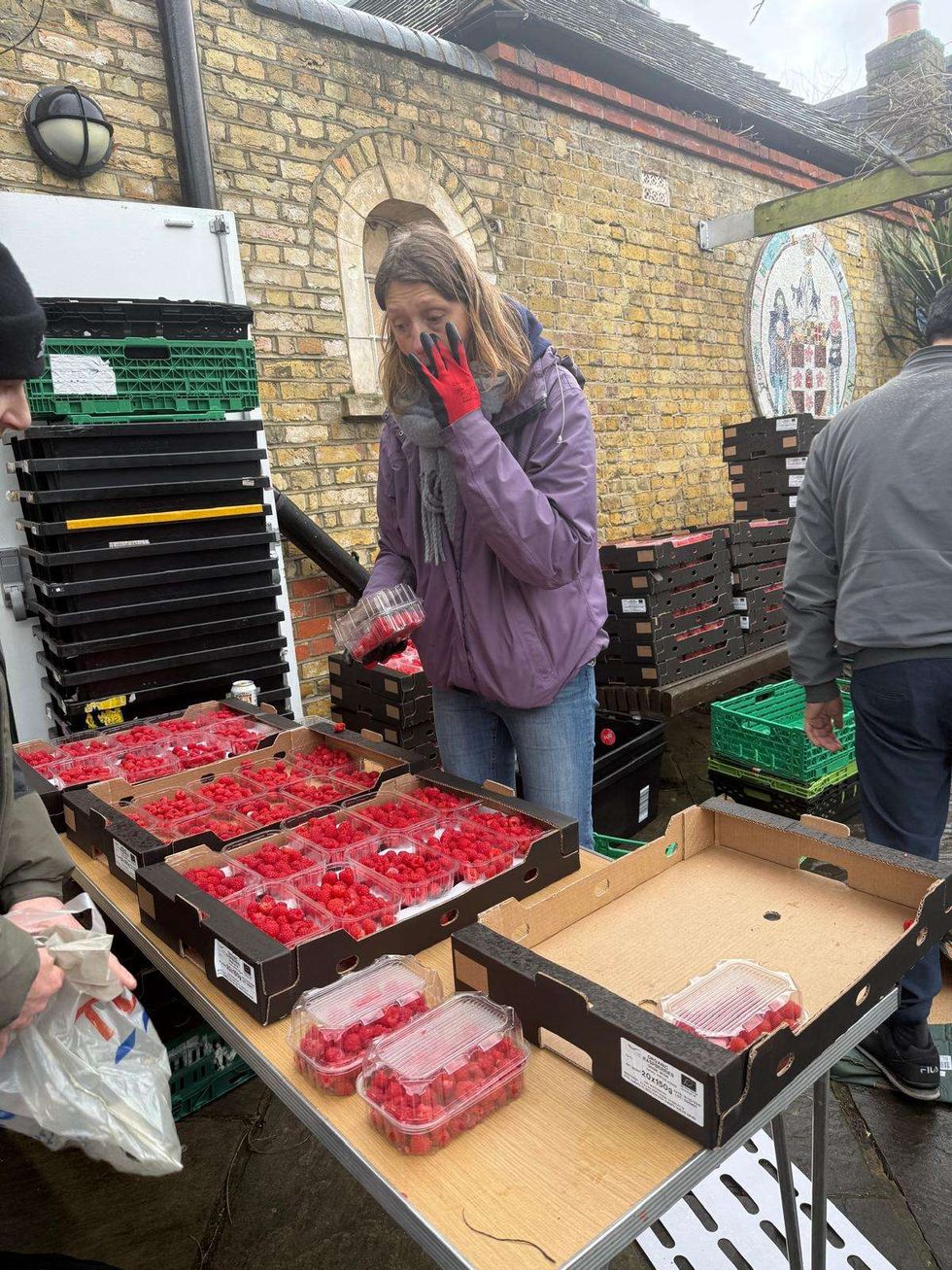 Photo: Handout
That insight shapes the culture of the project at every level, and it has built something unexpected in return. People who began as food bank users have chosen to become volunteers.
“A lot of people have mentioned this is something giving them a purpose of their life,” Vimal reflects. “Because all of us feel at a time lost in our life, right? But having that purpose and being meaningful in somebody's life – it's actually a really rewarding thing to hear.”
The most powerful room in Rotherhithe
Every Sunday, scores of people queue for an hour or two before the community kitchen opens.
“What makes me feel most happy and proud about our project is we have people coming from all different sorts of backgrounds. Every single person coming together, having that laugh and joke with each other, makes this it a very meaningful thing to do. We don't really know what's going on in the world. We just make sure that we do everything we can to bring people together.”
The project's reach beyond food was perhaps best illustrated by the Holi celebrations the store has organised for the past three years. In 2025, more than 400 people from all backgrounds gathered for an afternoon celebration, free of charge and sponsored by Halai General Store. Among those who came were the then mayor of Southwark, Naima Ali, the then high sheriff of Greater London, Millicent Grant, and the Deputy Lord Lieutenant, Lynn Cooper.
Holi 2026, again sponsored and organised by the store, drew a similarly enthusiastic crowd.
Balancing the store – and everything else
It was Halai General Store’s long-standing relationships with suppliers, its credibility in the community, and its network of contacts (Vimal has 5,000 numbers in his phone, accumulated through years of daily interaction) that made the project possible in the first place. The store also donates approximately 50-60kg of food every week – bread, milk, sandwiches, cheese, butter, bacon – that would otherwise go to waste.
As a business, the store is steady rather than spectacular. “We don't see much of a high, we don't see much of a low,” Vimal says. “We are very, very steady business.” The store does not trade heavily in fresh meat, which limits certain revenue streams, but its regulars are loyal and its reputation solid – though Vimal is quick to note that community goodwill and footfall are not the same thing, and that he has never done any of this with commercial return in mind.
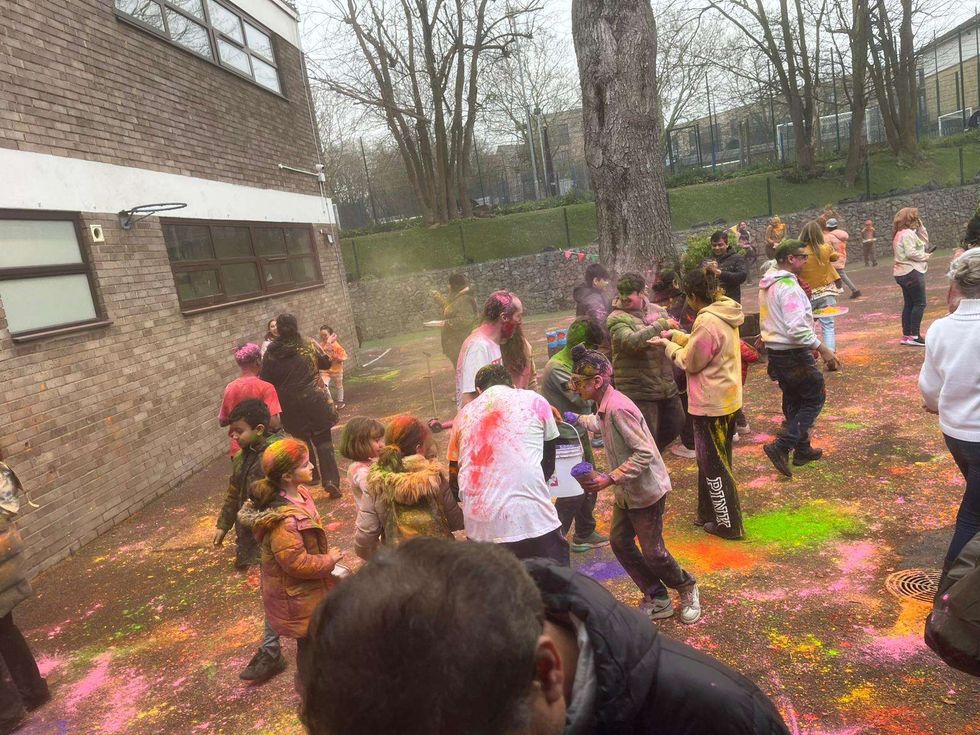 Photo: Handout
The challenges he describes are those facing independent retailers everywhere: a supermarket nearby, anti-social behaviour, shrinkage, abuse directed at staff. “Having the supermarket next to your shop is not going to help, but it's not my story alone – It's the story of every single retailer, because people in power don't want small businesses to exist.”
What he does not mention, until asked directly, is the toll it takes on his own life. The community project is, by his own description, a full-time unpaid job stacked on top of a demanding retail business. He is in a relationship of eight years, and the competing pressures have not always been easy to manage. “You can deal with the whole world, but dealing with the woman that you love is going to be very, very challenging when she's not happy.”
But he knows how lucky he is. “She knows that she is my world, and she's happy that I'm doing something meaningful – helping so many people.”
Unwinding, when it happens, is simple: old Bollywood films – Dev Anand is a favourite – walks in the woodland near the riverside. “You just open the window and you will see the Thames passing by your house,” he says. “We have nice woodland, we have Surrey Docks Farm in the area – where you will see that you've gone into the tabela,” he says, laughing. "Back home in India.” A tabela, for the uninitiated, is a cattle shed or stable – and Surrey Docks Farm, with its goats, chickens and city-fringe rusticity, apparently delivers exactly that feeling.
Rotherhithe, he will tell anyone who asks, is unlike anywhere else in London.
What comes next
The project, already large, is still growing. Vimal describes a new initiative – Iron Mom – being developed in partnership with Guy's and St Thomas' NHS Foundation Trust and Westminster University. The programme will focus on iron deficiency during pregnancy, with culturally appropriate food support for migrant mothers whose dietary needs are often poorly served by existing provision. It will run three days a week when it launches, with NHS nutritionists and dietitians involved throughout.
Vimal's message to the wider retail industry is simple: “We urge the corporates to support community projects like ours. Hundreds and thousands of people are doing good work. Support anybody you possibly can, because you don't know – your small act of kindness will make a meaningful difference to somebody's life.”