



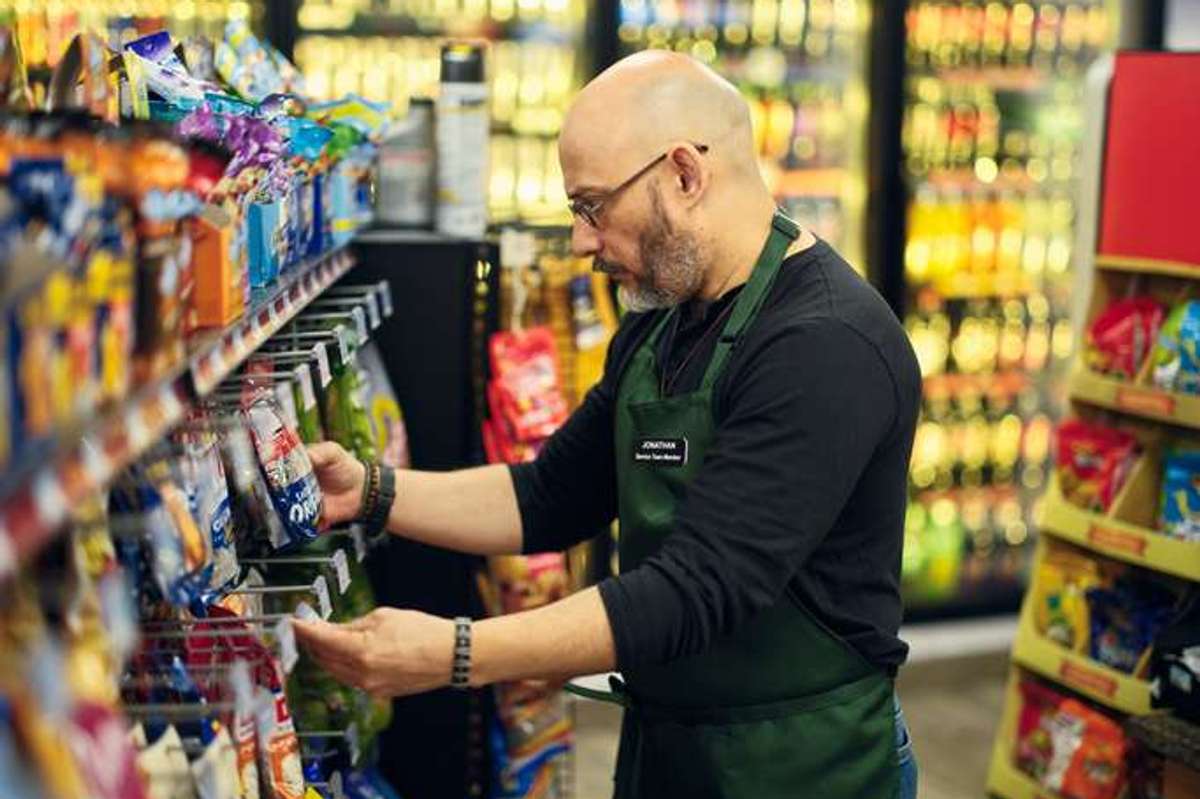

Who really decides what Britain's snack aisle looks like today? For years, the answer was obvious.
The UK's biggest FMCG companies spent millions persuading shoppers to reach for familiar names, while retailers simply opted for the brands consumers already trusted.
That relationship is beginning to change.
Independent retailers are becoming more selective than ever about what deserves valuable shelf space, judging products not only on consumer demand but also on margins, supplier support and commercial value.
At the same time, shoppers are becoming more willing to experiment with healthier and functional, lesser-known brands.
Together, these two forces are redrawing the rules of Britain's snack aisle, creating opportunities for challenger brands to win not only consumers but, increasingly, the retailers who decide what reaches those consumers in the first place.
The clearest indication came in Worldpanel's latest Brand Footprint report, which found that Britain's shoppers are becoming more deliberate, more value-conscious and increasingly driven by specific needs rather than blind brand loyalty. Health, convenience and functionality are becoming stronger purchase drivers, suggesting that even long-established brands can no longer rely on heritage alone.
According to a recent insight into consumer habits by Ocado, there is strong demand for high-protein snacks and energy snacks such as cereal bars and nut mixes.
Clearly, a packet of crisps is now competing against protein bars, roasted pulses, popcorn, nuts and a growing range of functional snacks.
The emergence of challenger brands such as Proper, Eat Real, Deliciously Ella, Bio&Me and Grenade reflects that evolution.
According to the Challenger 50 FMCG report, produced by MNC in partnership with NielsenIQ and Tracksuit, challenger brands now account for 16 per cent of total basket ownership.
The figures should not necessarily be read as a warning for Britain's established brands. However, the more interesting question is why retailers are increasingly making room for brands that barely existed a decade ago.
Winning the shelf
In convenience, where every square foot of shelving has to justify itself commercially, the decision to list a new product extends well beyond just consumer demand.
Rising labour costs, higher National Insurance contributions, soaring energy bills and increasing retail crime have transformed the economics of convenience retail. Every square foot of shelving now has to work harder, forcing retailers to judge products not only on how quickly they sell, but on the margins they deliver, the promotional support behind them and the relationship they have with the supplier.
Seasoned retailer Arjen Mehr, who runs a Londis store in Berkshire, believes the shift has as much to do with changing retailer behaviour as changing consumer behaviour.
 Arjen Mehr Arjen Mehr
“The snacking market has changed considerably and so the power of brand loyalty is not there anymore,” Mehr told Asian Trader.
“The German discounters are already demonstrating that continental brands on crisps and other FMCG products are just as good. Costco has shown the same with its own brand range. The days of own label being considered cheap are over.
“Healthy living has introduced another dynamic into the FMCG sector and consumers are making far more informed choices."
An experienced retailer from Cheshire, who asked not to be identified, says challenger brands are increasingly arriving with a proposition that appeals to both shoppers and retailers, giving him confidence to give them more shelf space.
"If a challenger brand offers better health benefits for shoppers as well as better margins and support for retailers, I'm willing to give it more space while reducing some of the mainstream brands," the retailer told Asian Trader.
"We've already done that with protein bars and healthier snacks, and it's working well for us. They deliver stronger percentage margins, better cash profit per unit and the sales have followed."
So what are the established brands getting wrong today?
When brand power isn't enough
If challenger brands are winning shelf space, it is not simply because consumers are changing their eating habits.
Many retailers believe established suppliers have inadvertently created the opportunity. Among the companies most frequently mentioned by retailers was PepsiCo UK.
Walkers remains Britain's third most chosen FMCG brand, and Doritos continues to dominate the sharing category, but Worldpanel's latest figures show its Consumer Reach Points fell by 1.3 per cent and household penetration slipped to 69.7 per cent.
While hardly a sign of decline, several retailers believe the figures reflect a wider shift in the market.
Several retailers told Asian Trader that, despite the continued strength of those brands, PepsiCo's relationship with the convenience channel no longer feels as strong as it once did.
Peterborough retailer Amit Puntambekar offers a measured explanation. He believes the wider economic environment may be forcing large suppliers to rethink how they deploy resources.
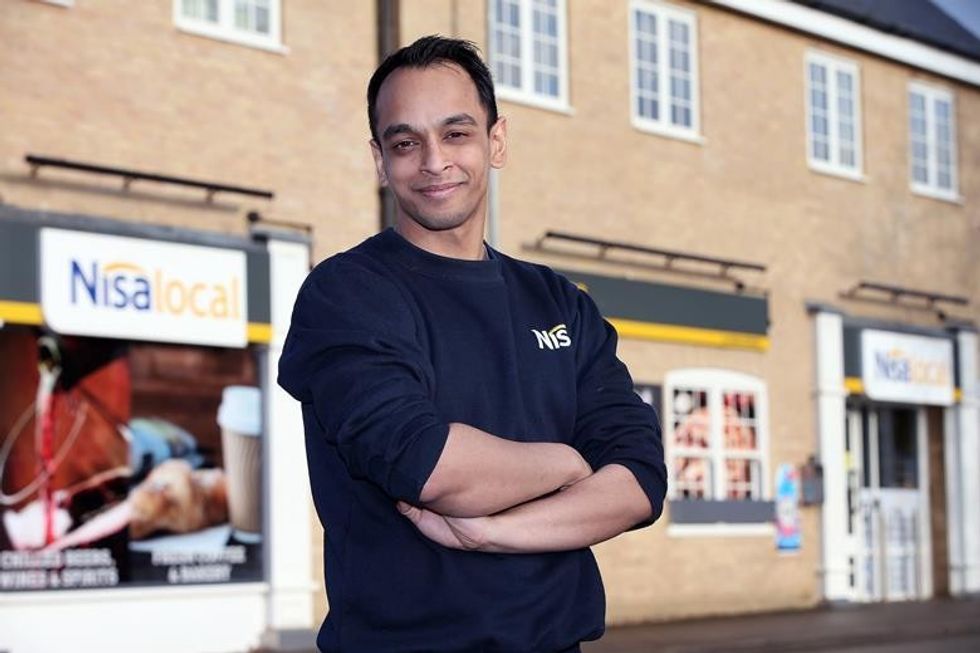 Retailer Amit Puntambekar
“Obviously to the retailer it looks like there might be less support, and this could also be the case. However, there might not be the funding available for these tertiary roles,” he said.
Other retailers are less convinced.
The experienced retailer from Cheshire (who asked not to be identified), argues that PepsiCo continues to invest heavily in marketing while overlooking the commercial realities facing independent retailers.
"PepsiCo Walkers have a lot of money to throw at marketing," he stated.
"They create these weird seasonal flavours and half of them end up in clearance. They spend money on expensive display kits, but with the size of convenience stores and the reality of British weather, those cardboard displays usually end up in the bin because we simply can't use them."
His greater concern, however, is profitability. He claims margins on PepsiCo's price-marked packs have “fallen from around 35 per cent to about 23 per cent”.
“What retailers actually need are better margins on price-marked packs and stronger promotional support. That's what will make a difference to our businesses.”
Mehr believes the issue goes beyond margins alone.
"There is no doubt supermarkets receive better deals because of their leverage," he said. "PepsiCo UK seems to have forgotten that the convenience retail community is one of their biggest customers, collectively speaking.
"I've been hearing from other retailers that field support has become quite patchy. There is also a degree of complacency. It feels like they are relying on the strength of their brands rather than strengthening their relationship with convenience retailers."
PepsiCo UK disputes that assessment. Responding to the concerns raised by retailers, Nic Storey, senior sales director at PepsiCo UK, rejected the characterisation on margin and support.
"Convenience remains an important channel for PepsiCo, and we continue to support retailers through our field sales teams, category advice, digital tools and promotional activity.
"We do not recognise the claim about a reduction in profit-on-return percentage for our core Price Marked Pack proposition. Where cost prices have changed in response to wider cost pressures, recommended PMP selling prices have been adjusted to help maintain retailer POR%.
"We've also gone further by increasing the POR% available on the base prices of our snacks PMP range, including Quavers, and we continue to invest in promotional activity and retailer support across our key bestselling lines,” Storey told Asian Trader.
The differing perspectives clearly reveal a broader tension emerging across the convenience sector.
‘Dancing to the supermarket tunes’
Many convenience retailers are also feeling overlooked as FMCG giants tend to be more focussed on multiples.
Truro-based veteran retailer Judith Smitham believes big brands have become disproportionately focused on the supermarket sector.
"The majority of FMCG companies have danced to the supermarkets' tune for so long that there is little budget or variety of offers left to pass on to the convenience channel," she said.
"Collectively we are a force to be reckoned with, but their stock is often out of stock at the cash and carry or delivered depot when it comes to us.”
 Retailer Judith Smitham Image from Judith Smitham
The field support to the convenience retailers has also deteriorated, Smitham complained.
"I've been asking around the country for a Mars Wrigley representative to call since 2020. Ridiculous! Considering the Wrigley factory is only 52 miles away.
“Our Walkers representative has been off sick since March and nobody else has called,” she told Asian Trader.
Taken individually, these may sound like operational frustrations. Together, they suggest a growing perception among independent retailers that the convenience channel no longer commands the same level of attention from major FMCG suppliers as it once did.
Despite those frustrations, Smitham does not advocate abandoning market leaders.
Instead, she believes retailers should use the space around those bestsellers to support challenger and local brands offering a stronger commercial proposition.
"There is space for protest and support to other brands, particularly local ones that could benefit as well and by doing so, fill some space previously occupied by a big-brand product," she said.
"Most FMCG companies ignore us and expect that smaller case sizes will satisfy us, when really it's better margins, availability and promotional activity that is needed.”
Smitham is calling for “deep-cut promotions” and convenience sector-specific schemes.
“Stop cycling the same offers. Switch it up a bit. Give us some variety,” she said.
Agreeing with Smitham’s views, Mehr pointed out the case of Heinz versus Tesco to call on convenience retailers to challenge suppliers mistreating the sector.
"Brand proposition has to change; we need not be slave to planograms,” he said. “The big FMCG giants think we are modern-day slaves, but they are so wrong.”
Wake-up call for the giants
Puntambekar sums the situation perfectly, saying the changing dynamics of the snacks category ultimately come down to supply and demand.
“The snacks category is a bit like the dog chasing its tail,” he said.
“The main brands have subsided pricing to hold market share but have continuously told consumers that you can eat healthier for cheap.
“At the end of the day, retailers will stock what consumers are eating, it’s a basic supply and demand relationship. If the consumer is truly pushing towards healthier options then retailers will naturally adjust ranging.
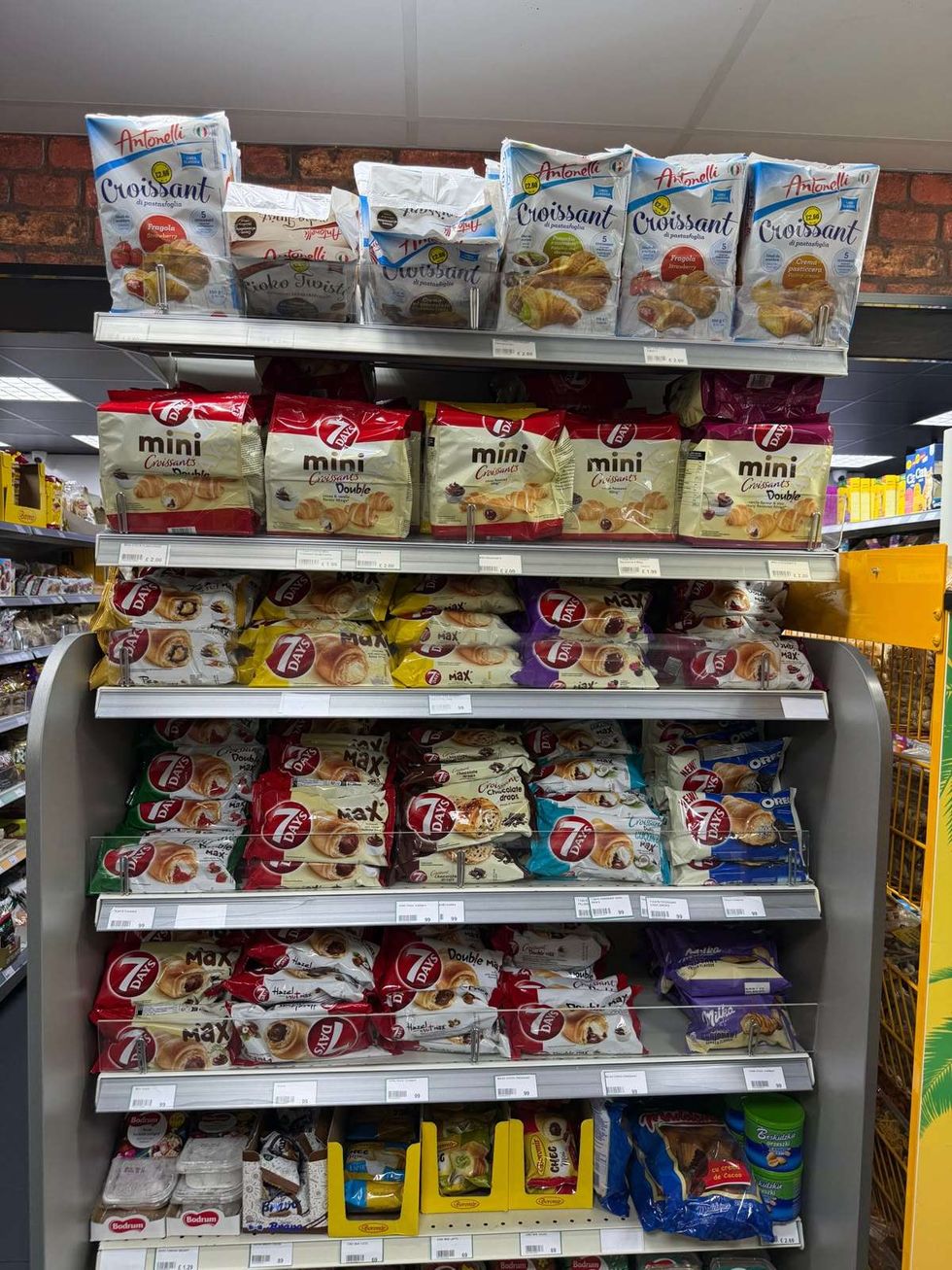 Arjen Mehr
None of the retailers Asian Trader spoke to believes PepsiCo UK’s snack brands are facing an existential threat. Afterall, brand equity built over decades cannot be eroded overnight.
Yet most retailers believe those advantages should not lead to complacency.
"I'd like to see a superior brand developed specifically for the convenience sector that offers convenience retailers a stronger commercial return,” Mehr said.
“Kodak was once the most powerful brand on the planet, but it died because it didn't read the market and failed to see the power of digital photography.
“That's a sobering thought for those taking the convenience sector for granted,” he added.
Healthier snacking may have opened the door for challenger brands. But stronger retailer relationships are helping them walk through it.
For years, Britain's biggest snack brands competed primarily for consumers. Today, they are competing for the confidence of the retailers who determine what shoppers see on the shelf.
That, perhaps, is the biggest lesson emerging from Britain's snack aisle for retail today.
Do tell us about your experience. Or simply share a thought on newseditor@amg.biz and pooja.shrivastava@amg.biz. We are listening.