



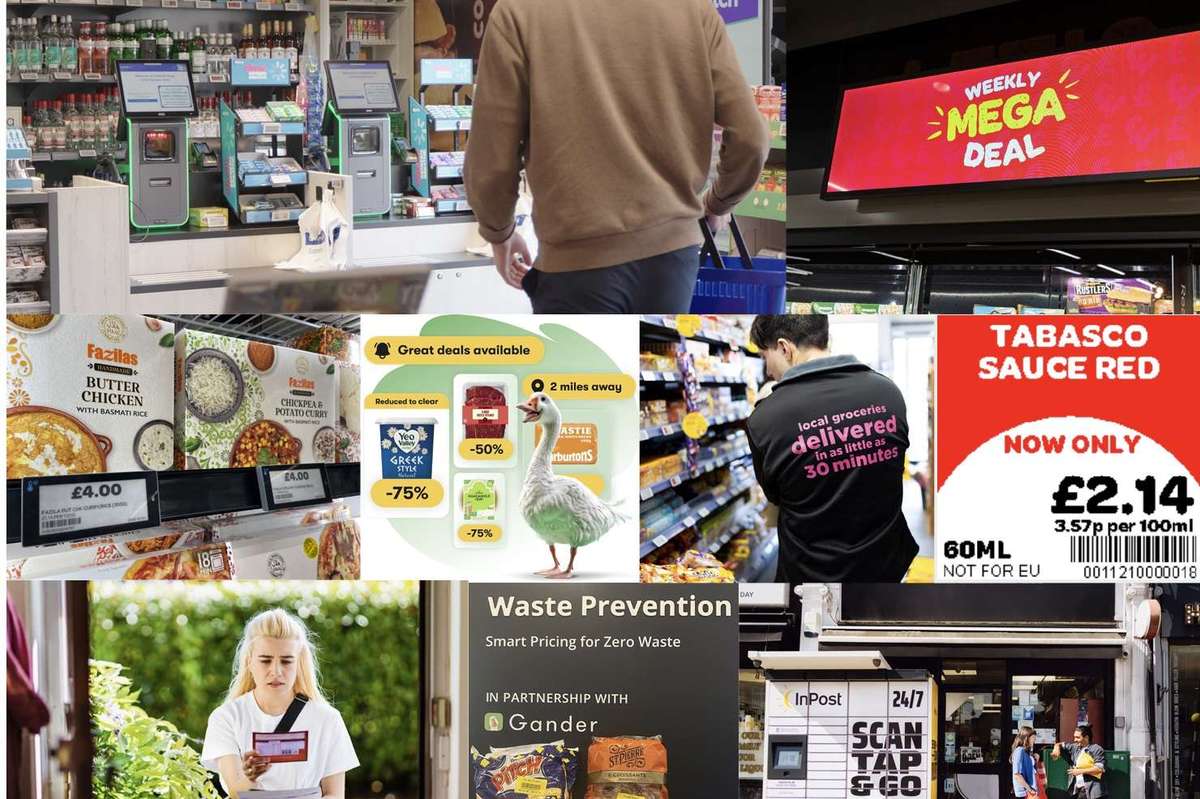

There was a time when the word “technology” in convenience retail meant little more than a reliable till and a half-decent back-office system. Today, it encompasses everything from AI-driven inventory forecasting and electronic shelf labels to gig-worker platforms, parcel lockers, age assurance software and real-time order aggregation across multiple delivery marketplaces. The question is no longer whether independent retailers need to invest in tech – it is which technologies will deliver the greatest return, and how quickly they can be implemented without disrupting the day-to-day running of a store.
Across the UK, a wave of innovation is reshaping the shop floor, the stockroom and the doorstep. Retailers who embrace it are reporting labour savings of hours per day, sell-through rates that have doubled, and delivery channels generating triple-digit growth in gross merchandise value. Those who hesitate risk being left behind in an increasingly competitive, digitally driven market.
EPOS: Building the connected store
At the heart of any modern convenience store sits the EPOS system – and today's best platforms have evolved far beyond simple transaction processing. For Darren Nickels, retail technology operations director at Henderson Technology, the EPOS is now the operational backbone of the entire store.
“A strong EPOS system is the backbone of a modern convenience store,” says Nickels. “It not only processes transactions quickly and accurately but also gives retailers full visibility of their business in real time. For independents, this means better control over margins, improved stock management, reduced waste and the ability to react quickly to changing shopper demand.”
Henderson Technology's EDGEPoS platform is continuously evolving, with a raft of new features announced in May. The latest updates include the launch of EDGEPoS Digital Media Screens, upgraded Electronic Shelf Label (ESEL) templates with a new four-colour format, and an automated Date Checking feature – all designed to reduce manual workload while enhancing the in-store customer experience.
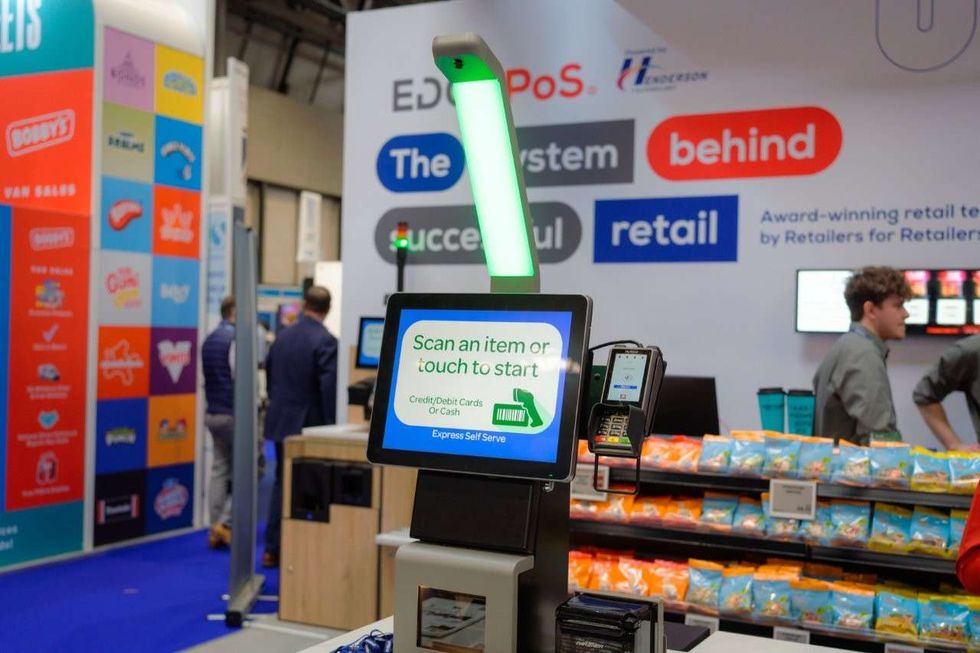 Henderson Technology's announced a raft of new features in its EDGEPoS platformPhoto: Handout
The Digital Media Screens provide retailers with a dynamic way to promote products, meal deals and in-store services throughout the day. By replacing static signage with high-quality LED displays, retailers can adapt messaging in real time – from breakfast promotions to evening meal deals – helping to drive incremental sales in high-margin areas such as food-to-go.
The automated Date Checking feature has been particularly well received. Early trials have shown stores saving a minimum of one hour per day in labour, with reductions in waste and improvements in gross profit. The feature is available with an introductory three-month free trial.
“Retailers are under constant pressure to do more with less – whether that's managing labour, reducing waste or driving additional spend in-store,” says Nickels. “These latest innovations are all about giving retailers practical tools that make a real difference day to day. Features like automated date checking take away manual processes and free up valuable time for staff. It's about using technology to simplify operations, improve efficiency and ultimately create a better experience for both retailers and their customers.”
When it comes to selecting an EPOS partner, Nickels urges retailers to look beyond the upfront cost. Ease of use, reliability at the till, quality of onboarding, ongoing support, integration capability with other technologies – including payments, ESELs and loyalty – and scalability as the business grows are all key criteria. “A good EPOS partner should act as a long-term technology partner, not just a supplier,” he says.
ESELs: The price of progress
Few technologies have gained as much traction in UK convenience retail over the past 18 months as electronic shelf-edge labels (ESELs). The ability to update pricing across an entire store at the push of a button – eliminating hours of manual ticket changing, reducing errors and presenting a cleaner, more professional shop floor – has proven compelling for independent retailers of all sizes.
James Hall & Co. Ltd recently celebrated a milestone 50th SPAR North of England store fitted with ESELs, reaching that figure in just over 18 months. Two-thirds of those stores are operated by independent retailers, demonstrating the technology's appeal right across the estate.
“I invested in ESELs as I believe they are the future,” Justin Entwistle, managing director of Darin Ltd, who installed ESELs into his forecourt SPAR store in Hambleton, Lancashire, says. “The digital displays look superb, and my prices and deals are always displayed correctly. As I can now implement price or deal changes at the click of a mouse, this has saved my retail team a minimum of eight hours of work every week which equates to a cost saving of thousands of pounds annually.”
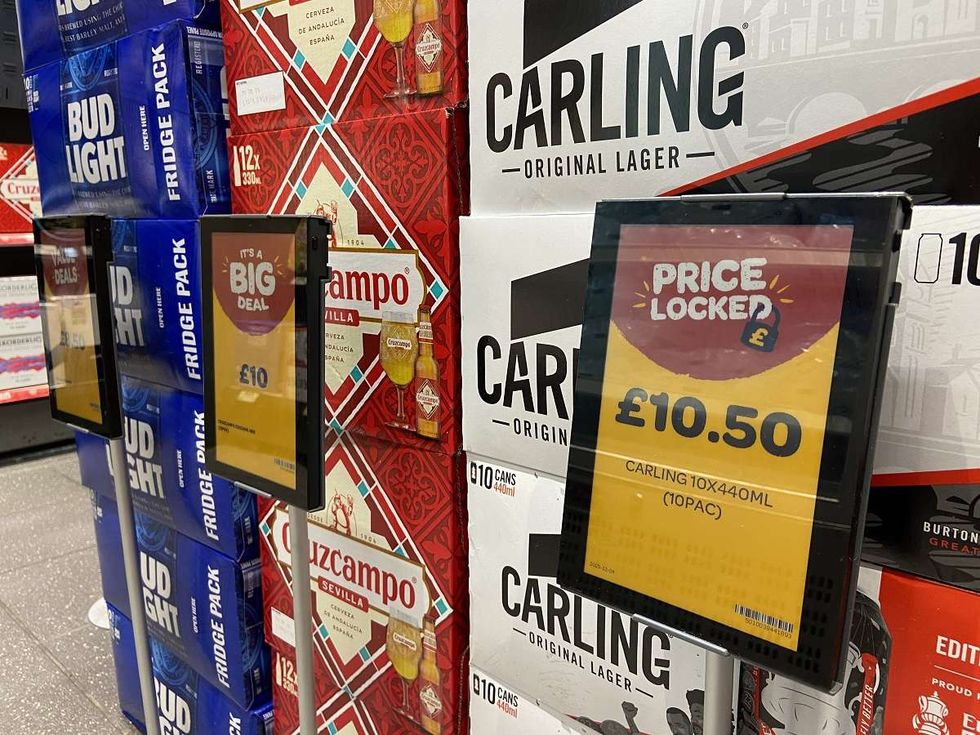 Electronic shelf-edge label in a storePhoto: Handout
For Jack Hunt, retail development director at Lawrence Hunt & Co. Ltd – which has ESELs in 10 of its 22 SPAR stores – the benefits extend beyond pure efficiency. “ESELs deliver a modern, professional feel to our stores which feel cleaner and tidier, and the integration of a deal mechanic onto the ESEL is a bonus,” he says. “As a multi-site retailer, the more we install ESELs, the more they are visible to customers who leave with the impression that you are forward thinking and competitive.”
Shaun Chandler, director of Chandler Retail Ltd, whose SPAR Pateley Bridge store became the 50th to be fitted with ESELs, is equally enthusiastic. “The ambition was to enhance the appearance of our store and save time and money with price changeovers going forward,” he says. “We are very impressed with the labels, which are easy to use and look appealing – particularly the chalkboard style ESELs which really work well in our fresh produce area.”
Peter Dodding, sales director at James Hall & Co. Ltd, says demand has exceeded all expectations. “With the rapidly changing convenience retail sector, retailers have really embraced the strengths of ESELs. From single store to multi-site, SPAR independent retailers are reaping the benefits operationally of investing in Solum’s solutions.”
Solum, which supplies the ESEL technology used by James Hall, is also involved in a major deployment at Waitrose, where ESELs are being rolled out across the entire estate, with completion expected in 2026. Lincolnshire Co-op is also rolling out ESELs across its 100 food stores as part of a £4 million technology transformation, while Asda is introducing them to 250 of its largest Express convenience stores.
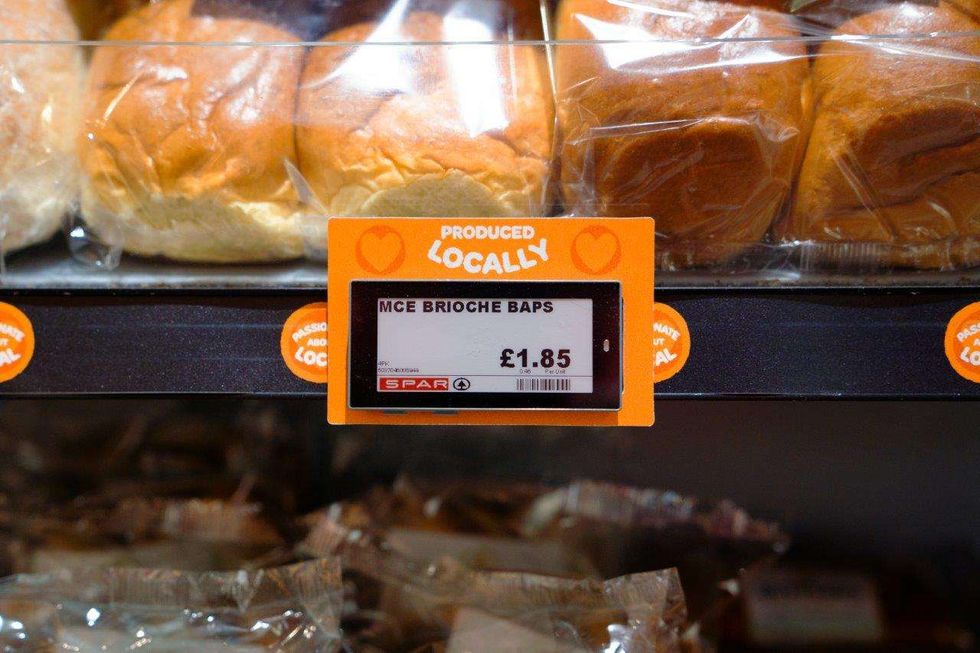 Photo: Handout
Meanwhile, Pricer has announced the successful completion of its first pilot installation of Pricer Avenue, an innovative shelf-edge communications platform, in partnership with East of England Co-op. The system adds a larger-format, battery-free powered layer to the shelf edge, extending ESEL functionality beyond pricing to support clearer promotions and richer in-aisle communication.
“Avenue is bringing new energy to our key promotional areas,” says Rob Smith, technology officer at East of England Co-op. “It's a big step toward delivering a store experience that's ready for the future. The new shared Floating Canvas feature opens up fresh ways to talk to customers – it lets us highlight specific products, deliver rich brand storytelling and drive promotional engagement right at the shelf edge.”
The pace of ESEL adoption is prompting wider industry discussion around dynamic pricing. Vaidotas Juknys, chief commercial officer at web data and automation platform Decodo, urges retailers to proceed carefully. “Electronic shelf labels are changing the way supermarkets manage pricing, stock, and efficiency,” he says. “While dynamic pricing is technically feasible, the sheer scale of grocery assortments and the transparency expectations from shoppers make it a complex challenge. A sudden jump from £2.99 to £3.99 while a shopper is still in the aisle could spark confusion, frustration, and even damage trust in the brand.”
Gabriele Vitke, senior product marketing manager at Decodo, draws on lessons from online grocery. “Even in the online grocery world where prices could theoretically change every hour, successful retailers hold steady for three to four days between changes. They've figured out that crossing below this threshold flips a switch in customers' minds – suddenly, you're not running promotions, you're playing games. This is the lesson for physical stores with digital tags: having the ability to update prices instantly doesn't mean you should.”
“The best online grocers update prices at consistent times, let you see price history, and explain why changes happen. That's the only way this works in a physical store where relationships matter even more,” she notes.
Reducing food waste
Managing short-dated stock is one of the most persistent operational challenges in convenience retail. Traditionally reliant on manual processes and limited to customers in-store, markdown execution has long been inconsistent and inefficient. A new generation of technology is changing that – and the commercial results are compelling.
Gander, the food waste reduction platform, integrates with existing EPOS systems to automatically identify reduced items and publish them externally via the Gander app, increasing visibility and accelerating sell-through. The business recently secured approval as a supplier for Morrisons Daily, enabling franchisees to access the platform with minimal operational disruption.
“Food waste reduction remains a key focus for our retailers,” Raj Takhar at Morrisons Daily commented. “Solutions like Gander offer a practical way to improve margin recovery while supporting our wider sustainability ambitions.”
The results at store level can be transformative. Alex Kapadia of Freedom Convenience in Northampton has had Gander for three years. Before introducing the platform, his store's daily sell-through rate on reduced items averaged 45 per cent. Following implementation, it rose to 70 per cent. A year later, the store began selling Gander-listed reduced items via Snappy Shopper, pushing sell-through rates to between 80 and 90 per cent.
 Gander integrates with existing EPOS systems to automatically identify reduced items and publish them externally via the Gander app. Photo: Handout
“Gander offers us a simple way to advertise our reduced food section to our customers,” says Kapadia. “It allows us to reduce waste and also be braver when listing new ranges, as we have a way to sell them through at near cost price if they don't sell.” The store has also been able to adjust its markdown strategy. “We now reduce our food by 40 per cent rather than 50 per cent, and we still achieve strong sell-through.”
Stacey Williams, business development director at Gander, emphasises the platform's simplicity. “Retailers are looking for solutions that are simple to implement but deliver measurable impact,” he says. “Gander helps stores recover value from short-dated stock, while supporting wider objectives around waste reduction and operational efficiency. Because the process is automated, there is no additional workload for store teams.”
At a larger scale, the Maple Group in Ireland has reported significant reductions in food waste alongside improved recovery on reduced-to-clear items. Independent retailer Gill Marsh Forecourts has recovered more than £65,000 of at-risk stock in six months, projecting a £26,000 annual profit uplift.
Gander has also announced a new EPOS integration with ShopMate, which serves more than 4,200 retailers across the UK – a significant step in scaling access to the platform. The integration also complements ShopMate’s existing connectivity with Snappy Shopper, helping retailers link EPOS, local e-commerce and waste reduction into a more joined-up digital ecosystem.
Further innovation in the markdown space comes from a new partnership between Gander and ESEL provider Solum. The tie-up combines Gander's expiry-based pricing intelligence with Solum's Newton ESEL platform. “Through our partnership with Solum, grocery retailers can turn every markdown decision into instant, accurate shelf-edge execution,” says Williams.
Race for on-demand dominance
Home delivery has shifted from a nice-to-have to an expectation in UK convenience retail – and the platforms competing to handle it have proliferated rapidly. For independent retailers, the challenge is no longer whether to offer delivery, but how to manage multiple channels without drowning in complexity.
Snappy Technologies has addressed this head-on with the enterprise launch of its Order Aggregation (OA) solution, developed in collaboration with Southern Co-op and Heart of England Co-operative Society. The service enables retailers to manage orders, menus, promotions and inventory across multiple online delivery marketplaces from a single central platform.
The impact at pilot retailers has been significant. Southern Co-op's Nick Smith reports: “In just five months, we've had triple digit growth to our GMV by extending into more marketplaces and implementing efficient in-store processes to meet demand. Snappy's tech and support has enabled us to fulfil more orders and solve operational and technical issues as and when they occur.”
Steve Browne, CEO of Heart of England Co-operative Society, adds: “Security and accuracy in order reconciliation across multiple channels is critical for us, and Snappy OA delivers that. By harnessing our existing EPOS investments, we've been able to simplify in-store processes, significantly reduce substitutions, and control our multi-channel pricing strategy.”
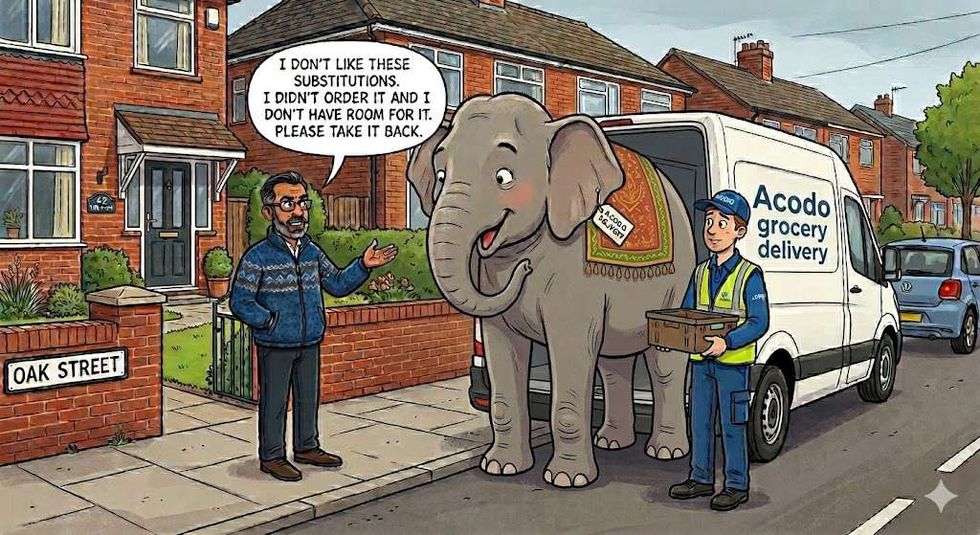 Cartoon by Andy Marino / Generated via Gemini
At a more individual store level, the results are equally persuasive. Morrisons Daily Whitehills previously managed 4,000 products manually on Just Eat – a process the retailer described as “impossible”. Since switching to Order Aggregation, sales have doubled, over 10 hours per week are saved on manual tasks, and the order rejection rate stands at just 0.45 per cent. “Margins have improved, cancellations and refunds are almost non-existent, and our sales have more than doubled,” the store reports. “It's saved us huge amounts of time and is a complete win-win.”
Mike Callachan, CEO of Snappy Technologies, says the OA launch is a landmark moment for the sector. “Retailers of all sizes offering online delivery are now able to connect into more channels and access more customers. It's a win-win! These collaborations have enabled us to deliver a fantastic solution that not only saves retailers time and money, but it also allows them to provide a better experience for their customers with faster deliveries and more accurate stock, meaning fewer substitutions.”
Meanwhile, Booker's Scoot platform has hit the 300-store milestone, just one year after launching across Premier, Londis, Budgens and Family Shopper. Retailers joining the platform receive a launch support package worth up to £2,800 and retain control over pricing, range and fulfilment.
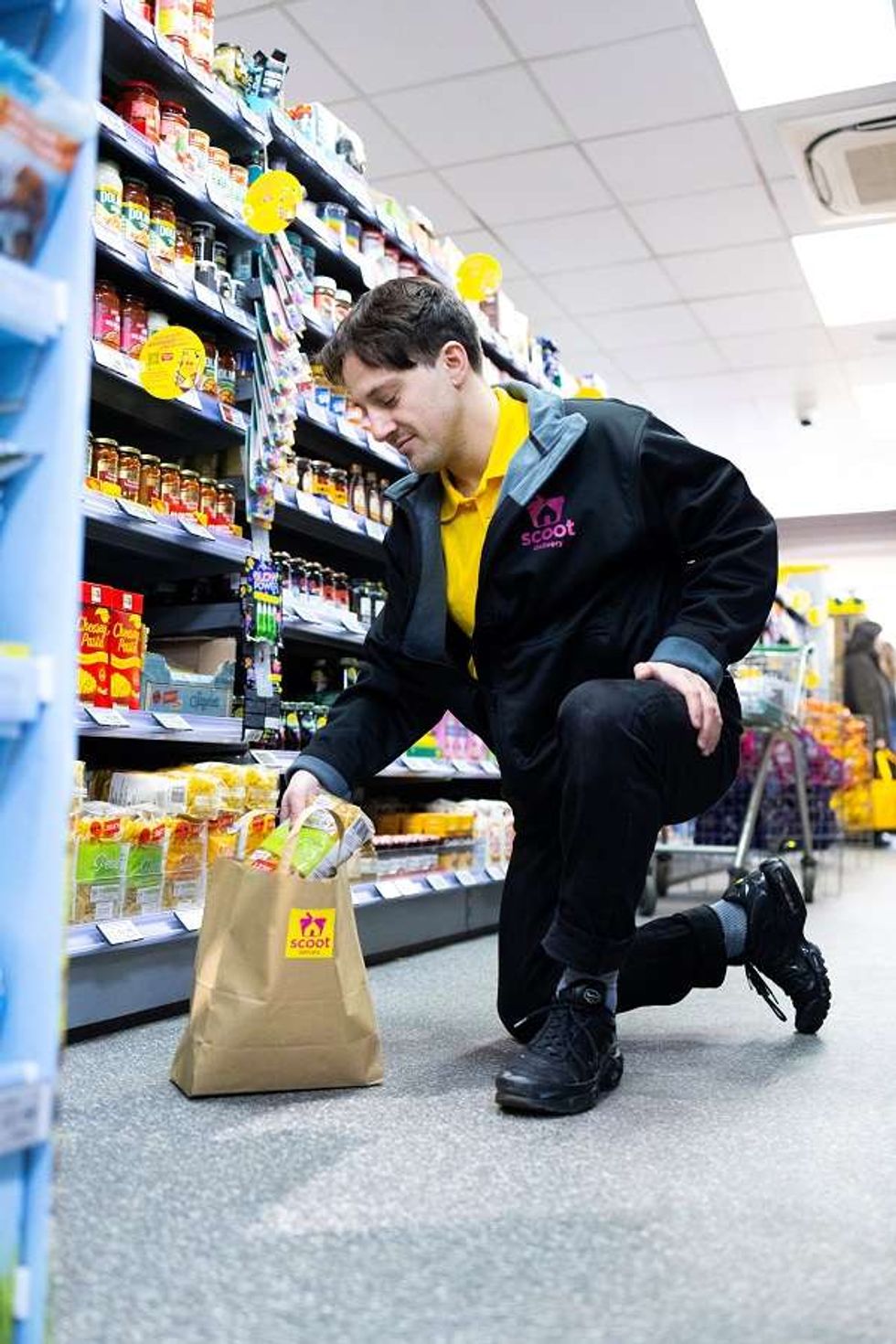 Booker's Scoot platform has hit the 300-store milestone just one year after launchingPhoto: Handout
Billy Gatt of Premier Whitehills describes Scoot as “a game-changer”, adding that it has “allowed us to reach more customers than ever before, helping us grow our business while delivering a reliable and convenient service.”
Ben Matthews of Premier Meden Vale echoes this, praising the platform's low commission rates: “Scoot has truly elevated our store. We're reaching more customers than ever with the super-easy app, boosting sales and strengthening customer loyalty. The low commission rates make it a profitable part of our business.”
Owain Hughes of Budgens Damory highlights an important benefit: customer acquisition. “Scoot brings us customers that don't use the shop, which is great for business. They find us through social media, and otherwise never would have shopped with us. It really helps to grow the business.”
East of England Co-op has expanded its Snappy Shopper service to 43 stores across the region, up from just five locations in November 2025. Orders are fulfilled in partnership with Nash, coordinating deliveries via Uber Direct, Just Eat Go and Stuart, allowing the retailer to grow its delivery offer without operating its own fleet.
For retailers looking to ensure their delivery channels are marketed effectively, Snappy Shopper has formalised a strategic partnership with digital marketing specialist Empros Retail. Empros reports year-on-year delivery sales growth of more than 70 per cent for partnered retailers, with some campaigns delivering up to 25 times return on ad spend.
Girish Jeeva of Girish's Premier is one beneficiary: “From November to December, with return on ad spend further increasing, the growth we saw was huge. The results were clear, and the value it brought during a key trading period really showed.”
Daniall Nadeem of SPAR Motherwell Road adds: “In just 30 days we've grown our online sales by 30 per cent and weekly in-store sales by 20 per cent. Visibility and awareness have been key to that success.”
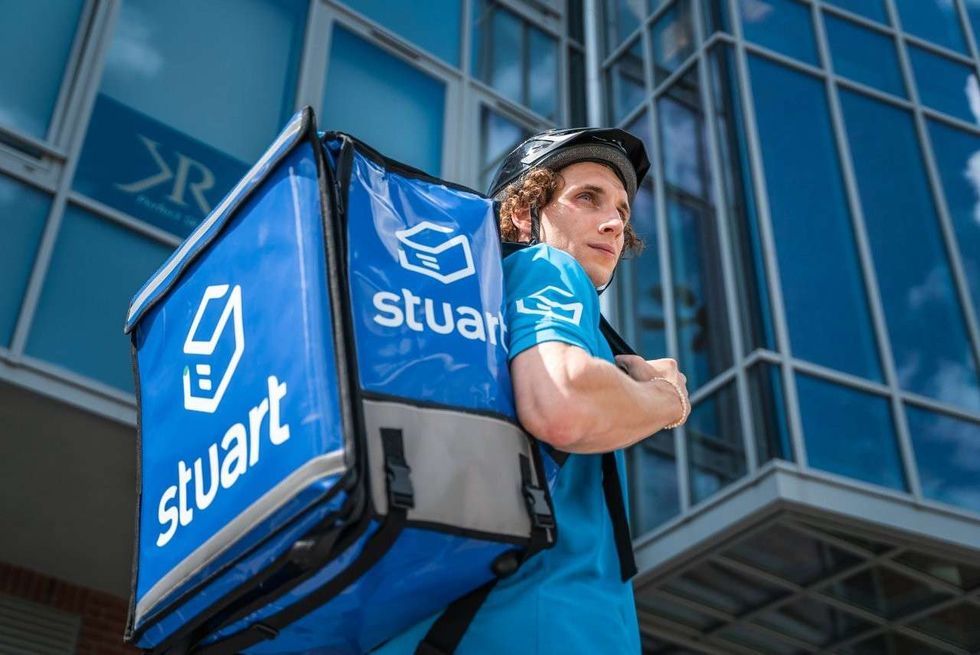 Photo: Handout
For last-mile execution, Stuart provides the courier infrastructure underpinning many of these delivery programmes. Ricardo Amorim, chief revenue officer at Stuart, says home delivery is now essential – but increasingly accessible. “Home delivery is no longer a ‘nice to have’ for convenience stores, it is a necessity. Platforms such as Stuart allow retailers to access a flexible courier network only when they need it, meaning they avoid the fixed costs and risks associated with running their own delivery operation.”
Amorim highlights a little-discussed benefit: larger basket values. “Stuart estimates that a significant proportion of potential impulse purchases, especially bulky or heavy items, never make it to the till because shoppers don't want the hassle of carrying them home. But when customers know they do not need to carry heavy or bulky items home themselves, they are more likely to trade up or take advantage of multi-buy promotions.”
Parcel lockers: footfall and loyalty
As online shopping volumes continue to rise, the parcel locker has emerged as one of the most compelling footfall-driving additions a convenience retailer can make. New research from InPost, commissioned in January 2026, found that 41 per cent of consumers now receive parcels via lockers, and 44 per cent send them this way – figures that point to a fundamental shift in delivery behaviour.
Paul Selvey, network director at InPost UK, is unequivocal about the commercial opportunity. “Our figures show that over half – 52 per cent – of locker users' visits to retail locations are to use a parcel locker, and for those whose preferred locker location is a convenience store, 65 per cent of visits are prompted by the presence of the locker,” he says. “Not only are the lockers pulling shoppers to a store, but they're also driving repeat visits, with 68 per cent visiting a convenience store more often because of the lockers.”
The in-store spending triggered by locker visits is equally impressive. InPost data shows that 73 per cent of locker users frequently make a purchase during their visit, spending an average of £11.90 – and £5.20 even when they had no intention of buying anything.
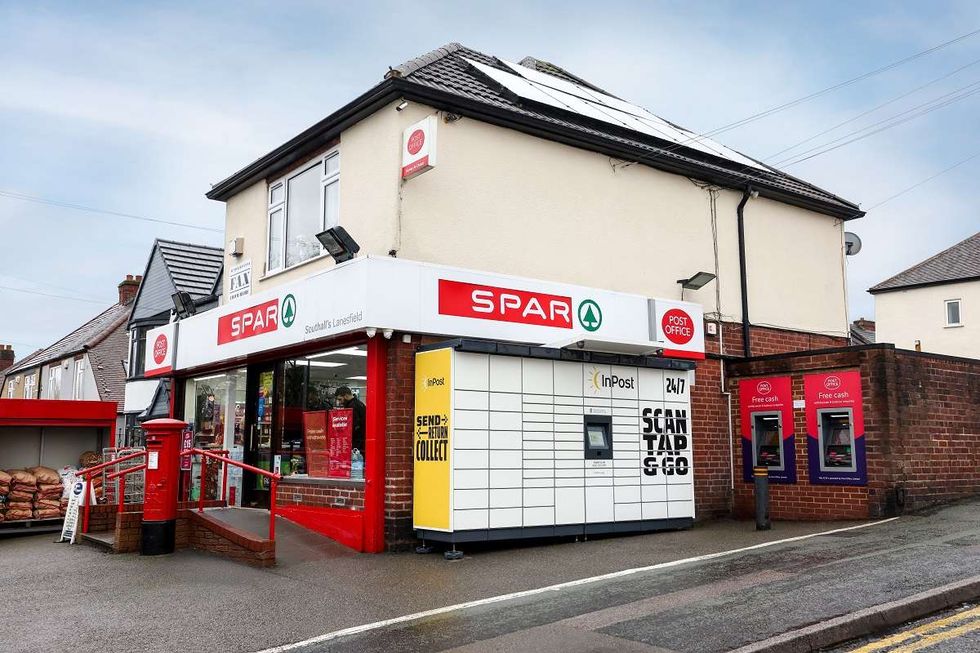 InPost lockers outside the SPAR store and post office at Lanesfield, WolverhamptonPhoto: Handout
Selvey stresses the simplicity of the proposition for retailers. “One of the many benefits of InPost Lockers is that, thanks to their self-service convenience, no staff training is required at all. Parcels can be safely collected and sent by consumers 24/7 with no staff intervention needed, and we handle all the installation and maintenance, so there's zero hassle for retailers and maximum benefits.”
For independents looking to compete with the multiples, Selvey argues that lockers can be a decisive differentiator. “Lockers set a new standard for customer loyalty – 56 per cent of locker users say they have a more positive opinion of a store because of the lockers, and 83 per cent would switch stores if they were removed.” Retailers also benefit from a guaranteed rental income stream from InPost.
The locker user profile is also attractive: two-thirds of InPost users are Gen Z and Millennials with an average income of over £49,000. Selvey's advice is to tailor in-store ranging accordingly – food-to-go, coffee, meal-for-tonight occasions – to maximise spend from this high-value demographic.
The convergence of parcel services and EV charging is opening up a new frontier. PayPoint's Collect+ brand recently opened a Royal Mail Shop at the Gridserve Stevenage Electric Forecourt – the first of its kind in the UK – allowing EV drivers to collect, send and return parcels while charging their vehicles.
Sam Holden, managing director of parcels and ecommerce at PayPoint, says: “Bringing parcel services closer to people was at the heart of this partnership with Royal Mail. As more people switch to electric vehicles, they're looking for convenient places to charge while getting on with their day.”
Banking, payments, essential services
PayPoint continues to expand its role as a critical community infrastructure provider. In April, PayPoint and Nationwide Building Society announced a new cash deposit service, enabling Nationwide customers to pay cash into their accounts at more than 3,000 PayPoint BankLocal locations, with money appearing in the account within minutes.
Jo Toolan, MD network services at PayPoint, said the move represents “the future of front-line banking access in the UK and gives communities across the UK greater access to cash services.”
With 99.5 per cent of the UK population living within a mile of a PayPoint store, the network's convenience credentials are formidable. The service also directly benefits retailers, boosting footfall and providing an opportunity to earn additional commission revenue.
Elsewhere in the PayPoint Group, Merchant Rentals has announced a partnership with global payments platform FreedomPay to deliver flexible financing solutions for POS technology. The first joint client is already live across more than 1,000 terminals. Mark Latham, managing director of Handepay & Merchant Rentals, says: “This collaboration reflects our mission to make payment solutions more accessible and adaptable for businesses of all sizes.”
AI-powered retail intelligence
Artificial intelligence is moving from buzzword to business tool across convenience and grocery retail, with practical applications now reaching store-level operations.
Square has launched Square AI in the UK – a free, conversational AI assistant built into its POS platform, enabling retailers to interrogate their own sales data using natural language. Users can ask questions such as “How did revenue compare to this day last year?” and receive instant, AI-generated answers, charts and insights – all without needing a data analyst.
The launch follows research showing that while 53 per cent of UK small businesses have used AI, only 30 per cent use it regularly. John O'Beirne, CEO and executive director of Square International, says: “UK businesses are operating in a tough environment right now, with rising costs, staffing pressure, and little margin for wasted time. Where Square AI comes in is backing everyday decisions with clarity and confidence, while giving owners meaningful time back each week.”
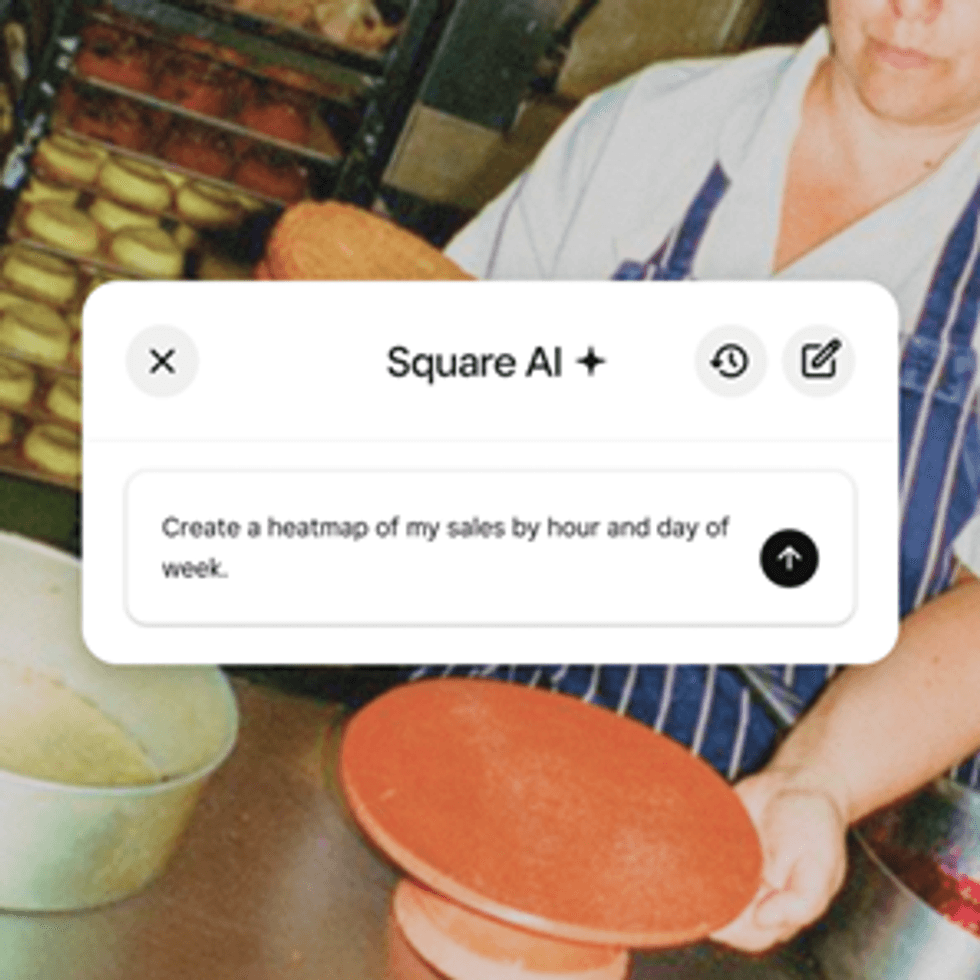 Photo: Handout
One early user, Jayke Mangion of Brickwood Coffee & Bread in South London, describes Square AI as “really useful for owner-operators, because it gives you quick answers to straightforward questions. Whether it's: 'how many croissants did we sell last week?' or 'how did revenue compare to this day last year?', you can get the insights instantly and can make decisions faster.”
At a supply chain level, frozen food and grocery retailer Iceland has partnered with invent.ai to transform its inventory and replenishment operations using multi-agentic AI. The platform automates replenishment decisions across thousands of SKUs, factoring in seasonal demand, promotions, new product launches and one-off anomalies.
“AI is giving us the visibility and control we've never had before,” Matt Downes, supply chain director at Iceland Foods, says. “We can now keep shelves consistently stocked with the products our customers want, reduce lost sales and improve the overall shopping experience across every store and distribution centre.”
With product availability overtaking price as the primary loyalty driver among UK grocery shoppers, the commercial case for AI-driven replenishment is increasingly hard to ignore.
Self-Checkout and POS: The hybrid revolution
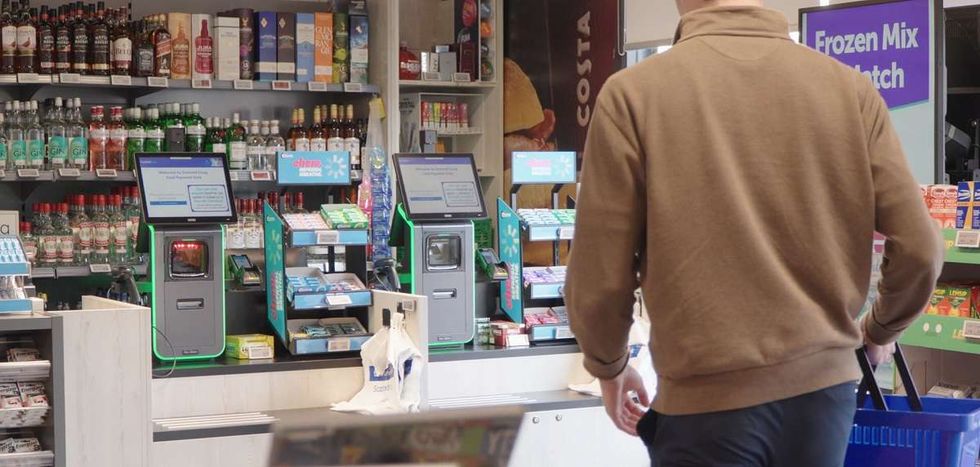
Scotland's largest independent co-operative, Scotmid, has completed the rollout of a modular, hybrid self-checkout solution from 4POS across 90 per cent of its Scotmid Food stores and Semichem discount health and beauty locations, representing an investment of more than £3.5 million.
The hybrid model allows shoppers to operate self-checkouts independently, while dual colleague-facing screens enable staff to step in proactively – maintaining the personal service that defines the co-operative while delivering the speed and efficiency that modern shoppers demand.
Allan Robertson, Procurement & Sustainability manager at Scotmid Co-op, was particularly impressed by the platform's modular flexibility. “The fact that the same core hardware could be used across traditional tills and SCO created real flexibility, allowing us to model different store configurations and future-proof the estate,” he says. “Even at the proof-of-concept stage, our customers were confidently using the solution. We set a clear utilisation target of 30 per cent across all transactions on assisted checkouts. We have achieved our target and are focused on growing from that position.”
The deployment also incorporated loss-prevention technology, with customer video captured on-screen and a purple indicator light alerting colleagues when a payment is in progress. The high-quality screens have additionally laid the foundation for retail media and advertising revenue at the point of sale.
 Hybrid self-checkout solution at a Scotmid storePhoto: Handout
Craig Bevan, UK&I country manager at 4POS, places the development in a broader strategic context. “POS architecture now influences far more than checkout performance, acting as the lynchpin that defines the cost structure of store operations, the speed at which new technologies can be deployed and the resilience of frontline infrastructure.”
East of England Co-op has separately invested over £600,000 in a self-checkout replacement programme in partnership with Trust Retail, piloting new units at its Vernon Street store in Ipswich before rolling out across the estate. The new SCOs feature more intuitive user interfaces, integrated camera technology to improve shrinkage control, and advanced age verification technology.
“Using technology to improve the customer experience in our Food stores is incredibly important to us,” Rob Smith, technology officer at East of England Co-op, says. “This partnership with Trust Retail alongside a substantial investment from the business ensures that we're doing just that as well as providing technology that can create further efficiencies and compliance improvements in the future.”
Age assurance
As the UK prepares for the Tobacco and Vapes Act – due to come into force in 2027 – age verification at the point of sale is becoming a more complex and consequential challenge for convenience retailers. With different products carrying different age requirements, and regulatory scrutiny intensifying, the case for automated, reliable age assurance technology has never been stronger.
SafetyTech company Privately SA has launched AgeAI+, a new retail age assurance solution designed to help retailers manage these requirements without compromising privacy or customer convenience. The system is fully offline, processes all data on-device, and supports more than 2,500 document types.
Trials across European stores produced striking results: 96 per cent of consumers chose to complete the automated check themselves, with age estimation completed in a median of 0.63 seconds, and ID scanning in 5.1 seconds.
Nicolas Sierro, product manager at Privately SA, explains the thinking behind the product: “While [age-control] rules may appear manageable on paper, applying them consistently at the till is a major challenge for retailers, particularly in convenience and high-throughput store environments. AgeAI+ was built to solve that problem, and does so in a way that preserves privacy and is utterly frictionless for the customer.”
A critical differentiator is the offline capability. Sierro says: “We’ve been speaking with some of the UK’s largest retailers as well as independent stores about this, and what comes up consistently across them all is the lack of reliable network connectivity and managing the complexity of regulation execution. AgeAI+ addresses these directly, while protecting customer privacy and maintaining a seamless shopping experience.”
Stuart's Ricardo Amorim also highlights age verification as a growing concern for retailers expanding into alcohol delivery. “For age-restricted deliveries, we offer a robust Challenge 25 verification technology which is essential. Independently audited compliance tools can significantly outperform manual processes, helping retailers protect their licence as they expand into categories such as alcohol.”
In-store communications
Behind the scenes of every well-run convenience store is a team that communicates quickly, consistently and clearly. For value food retailer Heron Foods – which operates over 340 stores with 6,000 staff and plans to open up to 30 new locations per year – achieving that at scale required a technological solution.
Heron Foods has deployed x-hoppers, the AI-enabled in-store communications platform from Wildix, which combines wireless headsets with a mobile app to connect area managers, regional representatives and frontline store teams.
“The headsets extend functionality beyond our previous solution, improving team collaboration, enhancing CX with prompt service and increasing colleagues' sense of safety,” Jon Newson, head of information technology at Heron Foods, says. “The real value we see from x-hoppers extends beyond just colleagues talking. It's the deep integration with our systems, the field-based communication and collaboration it enables, and how it aligns with our future roadmap – that makes it incredibly powerful.”
A key integration is with StaffSafe, an always-on security solution providing real-time two-way connectivity to manage in-store incidents. Every team member can access the StaffSafe helpline via their headset, improving safety on the shop floor. Looking ahead, Heron Foods will explore new agentic AI features within the x-hoppers headsets – enabling staff to check real-time inventory and access procedural guidance by voice, providing a new level of AI-powered operational intelligence on the front line.
Gig economy comes to convenience
Labour costs remain one of the most significant pressures facing convenience retailers, particularly in the wake of higher National Living Wage levels and the increase in employer National Insurance contributions. A new model – pay-per-task gig working – is beginning to gain traction in the UK market as a way to manage operational fluctuations without the commitment of fixed headcount.
Traxlo, a platform that has worked with 60 per cent of Europe's largest grocery retailers over the past three and a half years, delivering more than 300,000 completed tasks, launched in the UK in January this year, with Manchester established as its first UK hub. Retailers set task pricing in advance, tasks are distributed via Traxlo's tasku.app to verified local gig workers, and Traxlo manages all right-to-work checks, training and quality control.
Paul Vezelis, CEO and co-founder of Traxlo, frames the proposition clearly: “Brexit is just one challenge for the UK. There are plenty of reports and statistics about declining retail staff morale, a worsening labour market and the impact of higher wage costs and tax increases. Having tested and refined our model in Europe for the last few years, we are now in exactly the right position to empower UK retailers to manage a flexible, specialised, trained human resource on a pay-per-task basis. This model brings with it a time and cost reduction but also enables internal staff to focus on core, high-value tasks and improves a store’s local community engagement as it becomes recognised as both a place to earn as well as spend.”
The most frequently completed tasks include shelf restocking and replenishment, gap scanning, pallet handling, inventory control, product expiry management and e-commerce order picking – precisely the activities many retailers find hardest and most expensive to staff consistently.
EV Charging: The next forecourt frontier
The rapid growth of EV adoption – electric cars accounted for 23.4 per cent of new UK registrations in 2025, according to Zapmap data – is creating a significant new opportunity for forecourt and convenience retailers. As drivers seek convenient charging options during their journeys, the forecourt has a natural role to play.
Certas Energy, owner of the Gulf UK and Pace brands, has entered the EV charging market with the launch of Evolo Rapid Charge, and is constructing its first owned-and-operated charging hub at the Gulf service station in Ebbw Vale, Wales. Evolo chargers feature HD touchscreens with animated guides and multiple payment options including card and a dedicated app.
“We know first-hand how frustrating charging at service stations can be and were resolute that our EV offer needed to be simple to use with easy, straightforward payment options,” Gerry Welsh, head of e-mobility at Certas Energy, says. “We spent time researching and listening to EV drivers and businesses to find out what they want and need when it comes to charging their vehicles – and we believe Evolo is a first-class product designed to meet those needs.”
The bottom line
The breadth and pace of technological change across convenience retail can feel daunting for independent operators who are already stretched. But the evidence from retailers who have embraced these tools is consistent: the returns – whether measured in labour hours saved, food waste reduced, delivery sales grown or customer loyalty strengthened – are real, measurable and often rapid.
The technologies that are gaining the most traction share common characteristics. They integrate with existing systems rather than replacing them wholesale. They reduce complexity for staff rather than adding to it. They deliver measurable commercial benefits that justify the investment. And they position the independent convenience store not as a local corner shop, but as a connected, data-driven, community-focused retail business that can hold its own against the multiples.
As Amorim puts it: “A modern store needs connected systems that provide real-time insight into sales, stock and customer behaviour. Retailers increasingly need technology that enables them to extend their offer beyond the store while retaining ownership of their customer data and brand experience.”
The tech revolution in convenience retail is not coming. It is already here.
Choose tech wisely
Ricardo Amorim, chief revenue officer at Stuart, explains how retailers can assess whether a technology is right for their store – and what to ask before signing up
Is this technology right for my store?
- Retailers should assess how easily the solution fits into daily operations. If implementation requires major disruption or excessive staff training, it may struggle to deliver long-term value.
- Flexibility is also critical – solutions that scale with demand allow retailers to grow sustainably.
- Retailers should understand exactly what they are paying for and what commercial uplift the technology is designed to deliver.
What should I ask before choosing an in-store service?
- Focus on three areas: commercial return, operational fit and compliance.
- Ask yourself: Will this increase footfall or basket size? Does it integrate smoothly into my store routines? And does it protect my reputation and licence?
- The right partner will offer transparent pricing, clear onboarding support and a model that allows retailers to scale as demand grows.
Beyond the till
Darren Nickels, retail technology operations director at Henderson Technology, on why choosing an EPOS partner is about far more than upfront cost.
Retailers should look beyond just the upfront cost and consider the long-term value a system delivers. Key factors include:
- Ease of use for both staff and management
- Reliability and speed at the till
- Quality of training and onboarding
- Ongoing support and responsiveness
- Integration with other technologies (e.g. payments, ESEL, loyalty)
- Scalability as the business grows
A good EPOS partner should act as a long-term technology partner, not just a supplier – providing continuous updates, innovation and support.