



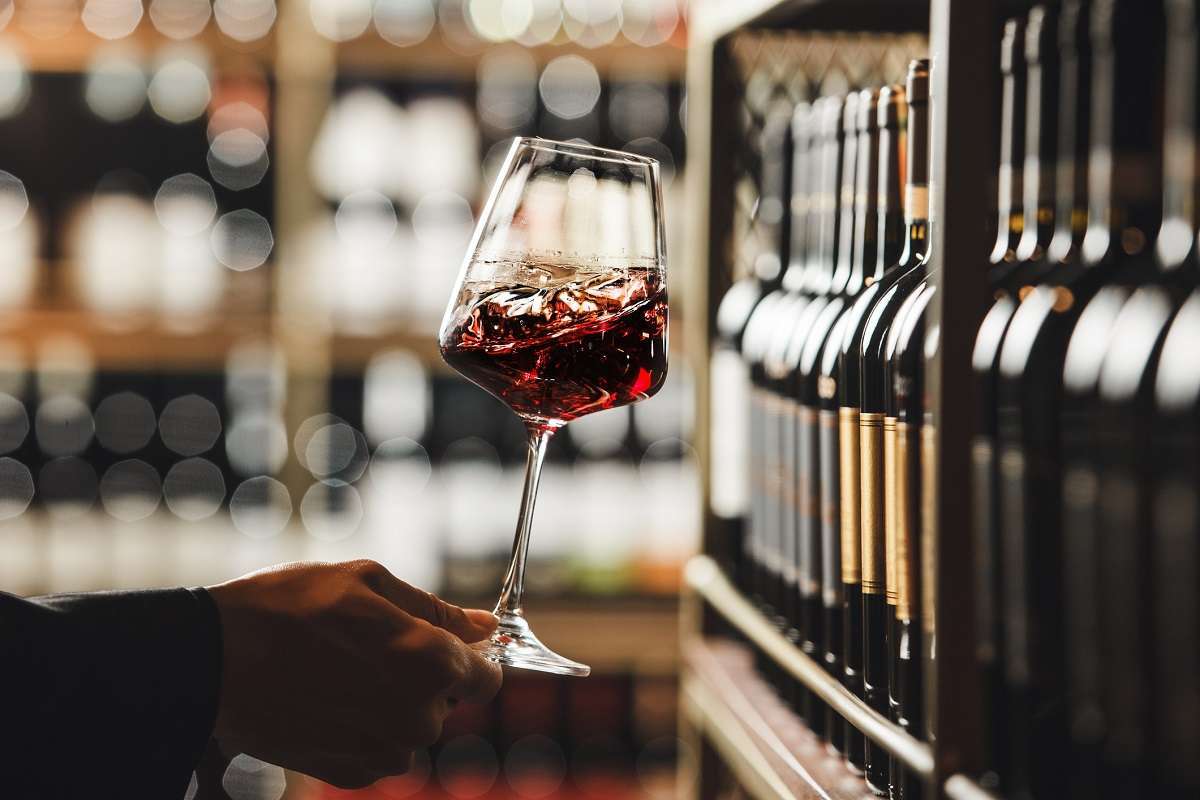

2026 has proved to be a pivotal year for wine in the UK, marked by records at home, shifting habits among younger drinkers, and a wave of investment from brands determined to win space on independents’ shelves. From a record-breaking English harvest to the rise of no- and low-alcohol alternatives, flavoured cans, smaller formats and premium rosé, the category is being reshaped from every angle – and convenience is very much part of the story.
Nowhere is that transformation more visible than in the English and Welsh wine sector, which has enjoyed one of its strongest years on record.
New data from the Food Standards Agency (FSA), based on production declarations from across the industry, showed UK wine production reached more than 124,000 hectolitres in 2025 - equivalent to over 16.5 million bottles. That marked a 55 per cent increase on 2024 output, reflecting both favourable growing conditions and continued structural growth in English and Welsh wine. White wine was the standout performer, with production volumes rising by more than 131 per cent year on year.
The number of registered vineyards rose to 1,158 in 2025, a 4.3 per cent increase on the previous year, while employment across the sector now exceeds 10,000 people, and industry value has climbed to an estimated £14 billion.
Mark Dawson, wine standards inspection team leader at the FSA, said the figures reflected both the scale of the harvest and the responsibility that comes with it. “2025 has been a truly exceptional year for English and Welsh wine, and these figures reflect just how far the industry has come,” he said. “Our role is to ensure that the wine reaching consumers is accurately labelled and meets the required standards. The growth we are seeing across the industry from vineyards to warehouses to wholesalers and traders makes our work more important than ever.”
WineGB chief executive Nicola Bates described 2025 as the UK's second-largest harvest, crediting growers and winemakers for “considerable skill and hard work” in bringing it in. Momentum has continued into this year's growing season too, despite a testing run of weather.
Speaking in August, ahead of the 2026 harvest, Bates said producers had shown “exceptional skill this season, one in which we saw frost, hailstorms and a heatwave within weeks of each other.” She added: “Their vineyard management is currently delivering healthy, high-quality fruit and whilst it's too early to definitively say the overall impact on this year's UK harvest, and what happens over the next few weeks will be crucial, the vineyards look strong and we're optimistic.”
Bates was clear, though, that the industry cannot take good years for granted. “Seasonal conditions remain variable and producers continue to adapt, so building long-term resilience plans is essential for protecting our vineyards and to future-proof English and Welsh wine,” she said.
Rise and rise of English wine
That resilience is translating into sales. In July, Waitrose reported a 10 per cent year-on-year increase in English wine sales over the past 12 months, led by a 15 per cent rise in English sparkling wine and a 14 per cent increase in English rosé. Nyetimber, Chapel Down, Ridgeview and Gusbourne were among the strongest-performing brands, with several products posting double- and triple-digit sales growth, the retailer said.
Emma Penman, English wine buyer at Waitrose, said locality was now a genuine driver of purchase decisions. “Locality has become a major driving force for our shoppers, with people increasingly looking to buy English wines,” she said. She pointed to Camel Valley Cornwall Brut as a striking example of the local-provenance effect: “Our Truro store is just 25 miles away from the vines, and it sells 2.4 times more than our second best-selling branch. Our customers are passionate about supporting home-grown businesses, and because English fizz can offer fantastic quality and value for money compared to other traditional method sparkling wines, it's a win-win.”
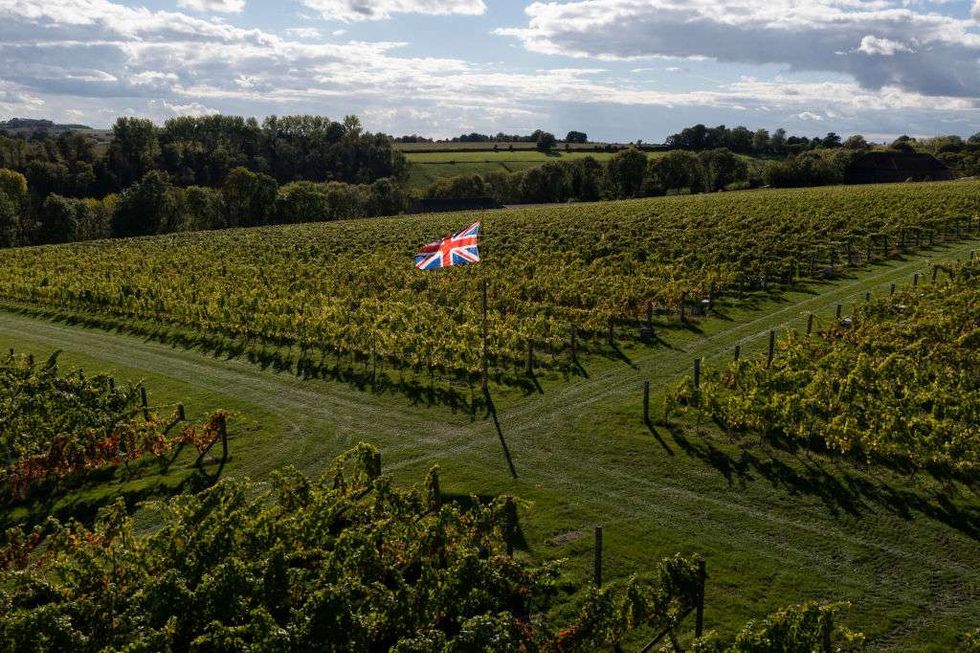 A Union flag flies above Exton Park vineyard on September 28, 2022 in Southampton, England. Photo by Dan Kitwood/Getty Images
Alexandra Mawson, sparkling wine buyer at Waitrose, said English fizz was now credibly rivalling Champagne on quality. “England is producing such premium, super-quality sparkling wine right now – the best of which absolutely rival Champagne and often offer better value,” she said. “Interestingly, southern England now enjoys the ideal climate that Champagne had back in the 1970s and 80s. Our slightly cooler British weather means the grapes stay on the vine longer and ripen slowly, which lets them develop these deep, complex fruit flavours while keeping that vibrant, crisp acidity you need for great quality fizz.”
For convenience retailers, the message from across the trade is consistent: a bumper harvest means more English wine will filter down into wider distribution, and shoppers are actively seeking it out. With the UK now home to more than 1,000 vineyards and over 200 wineries, and vineyard acreage having more than doubled over the last decade, English and Welsh wine is no longer a niche, occasional purchase – it is becoming a mainstream fixture expectation.
The virtue of moderation
While English wine celebrates growth in volume, a parallel story is unfolding at the other end of the strength spectrum, as moderation continues to reshape how – and how much – people drink.
According to new research from IWSR (International Wine and Spirits Record), the UK's no-alcohol wine market grew by 15 per cent between 2019 and 2024, driven largely by younger consumers embracing wellness-focused drinking habits [IWSR, June 2026]. All eight major wine markets IWSR tracks recorded volume growth over the five-year period, with the UK's 15 per cent compound annual growth rate surpassed only by Canada (27 per cent), Japan (26 per cent), the US (23 per cent) and Australia (18 per cent), while more mature European markets including France, Germany and Spain recorded single-digit growth.
Susie Goldspink, head of no- and low-alcohol insights at IWSR, said moderation had become a powerful force in consumer behaviour. “Driven by health awareness, wellness-focused lifestyles and shifting social norms, many consumers are choosing to drink less alcohol while still seeking suitable alternatives for everyday and social occasions,” she said. “Rather than abstaining completely, most are blending no-, low- and full-strength options, depending on the occasion.”
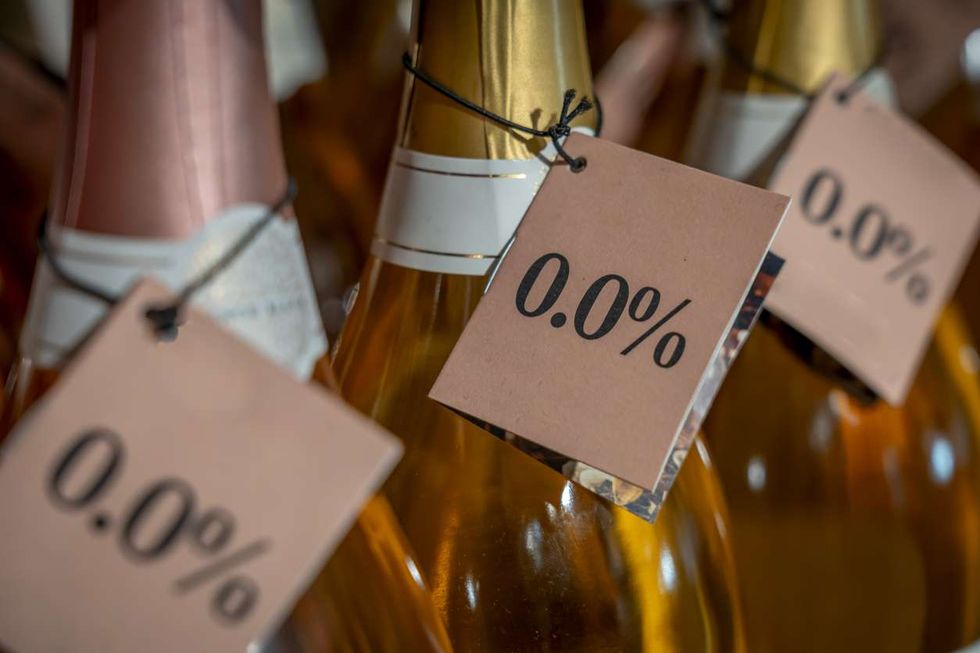 Alcohol-free wines Photo: iStock
The generational skew is pronounced. Across the eight markets IWSR studied, 60 per cent of no- and low-alcohol wine buyers are either Gen Z or Millennials – in the UK, that figure rises to 67 per cent. Millennials currently represent the largest single share of buyers across most markets, although Gen Z participation has increased significantly since 2022, including in the UK.
Encouragingly for suppliers eyeing the category's next phase, growth is increasingly being driven by existing consumers purchasing more frequently, rather than solely by recruiting first-time buyers. Challenges remain, however: consumer preference for full-strength wine continues to be the biggest barrier to purchase in most markets, and concerns around taste and competition from other no- and low-alcohol categories continue to temper growth. No- and low-alcohol wine also remains significantly smaller than the no-alcohol beer category, IWSR noted, although producers are investing heavily in innovation to close the gap.
“Beer continues to dominate the no-alcohol space in particular, but wine is benefitting from increased investment and innovation, strengthening its position within the category,” Goldspink said. “While affordability continues to be important, a growing number of consumers are willing to pay more for quality no- and low-alcohol wine, reflecting increasing confidence in the category.”
Most new product launches are occurring within the sparkling wine segment of no/low, with consumers increasingly seeking products offering authentic taste and food-pairing potential rather than simply serving as an alcohol-free substitute. For convenience retailers building or refining a no/low range, that suggests quality and occasion-relevance, not just abstinence messaging, is what will convert browsers into buyers.
The art of occasions
If moderation is reshaping strength, format and flavour are reshaping how wine fits into everyday convenience missions. Jo Taylorson, head of marketing and product management at Kingsland Drinks, argues that convenience retailers need to switch on to shifting summer occasions, from sports tournaments and festivals to impromptu barbecues and garden parties.
“Summer is a season of opportunity, from booming flavour trends to popular formats that fit into modern lifestyles,” she says, urging stores to offer “depth of choice for both impulse and planned purchases.”
Bag-in-box is one format shaking off its old reputation. “The industry, brands, press and influencers are waxing lyrical about bag-in-box wines, and slowly but surely the format is shaking off its reputation as a 'cheap' alternative,” Taylorson says, pointing to recyclability, affordability and freshness - bag-in-box wines stay fresh for up to six weeks - as key attractions. Kingsland Drinks has expanded its Australian Andrew Peace brand range with new 1.5L and 2.25L bag-in-box formats, alongside a recent upgrade to its bag-in-box facility that has taken overall filling capacity to 180 million litres across formats spanning 150ml cans, 187ml glass and cans, and 1.5L, 2.25L and 3L BiB.
 Jane Dowden in Andrew Peace marketing campaign Photo: Handout
At the opposite end of the format scale, smaller bottles are also finding favour. “They're great for having in the house for the right occasion, such as for guests who prefer particular wines, and for moderation moments where a full bottle may be too much for one evening,” Taylorson says, pointing to the launch of a 187ml Masterpeace Shiraz alongside the existing 187ml Chardonnay and Shiraz. Andrew Peace is currently the fastest-growing Australian wine brand in the UK market, with volumes and sales both up 44 per cent year on year.
Cans, meanwhile, represent what Taylorson called a format “with significant growth potential across wine, ready-to-drink cocktails and low-alcohol beverages.” Kingsland Drinks has invested in a high-speed canning line with capacity to produce 26 million cans annually, and has partnered with challenger brand Vinca to support production of its organic Sicilian wines in 187ml cans.
“Canned wines and cocktails have worked their way into the mainstream, with a loyal following among younger generations,” Taylorson says, adding that the competitive pressure on established names increasingly comes not from a single rival, but from the collective momentum of smaller challenger brands.
Kingsland Drinks has also backed emerging regions, working with Ukrainian producer Bolgrad, the country's leading brand for still wines, since 2023 to solve logistical challenges around importing into the UK. Interest in lesser-known regions such as Eastern Europe is growing among UK consumers seeking quality, value and new experiences: the region is currently outperforming the wider UK wine market, with value sales up 5 per cent and volume up 0.1 per cent, compared with a four per cent volume decline across the total UK wine market [Circana, data to 21.12.25].
Fresh and flavourful
That flavour-led momentum is playing out vividly at Echo Falls, part of Vinarchy's portfolio, which has used wholesale-exclusive launches to build early trial before wider grocery rollout. Blue Raspberry Fruit Fusion, launched into Booker, Parfetts and cash and carry depots with a three-month exclusivity window, is a nine per cent ABV product designed to bring “flavour, fun and colour” to the category. It has generated more than two million impressions in organic social media engagement and, according to Vinarchy, has sold more than two million bottles into wholesale and convenience since launch, reaching 26 per cent total market distribution and selling almost 80,000 units a week across major grocers.
Maggie Applegate, senior brand manager at Vinarchy, said the launch was about capturing shoppers discovering wine through flavour rather than tradition. “We know that more people are discovering wine differently - flavour-first, occasion-led and often outside of traditional cues,” she said. “Putting this into wholesale first has been intentional and the results speak for themselves. It allows independents to back a flavour we can already see resonating across the market and drive incremental spend from shoppers.”
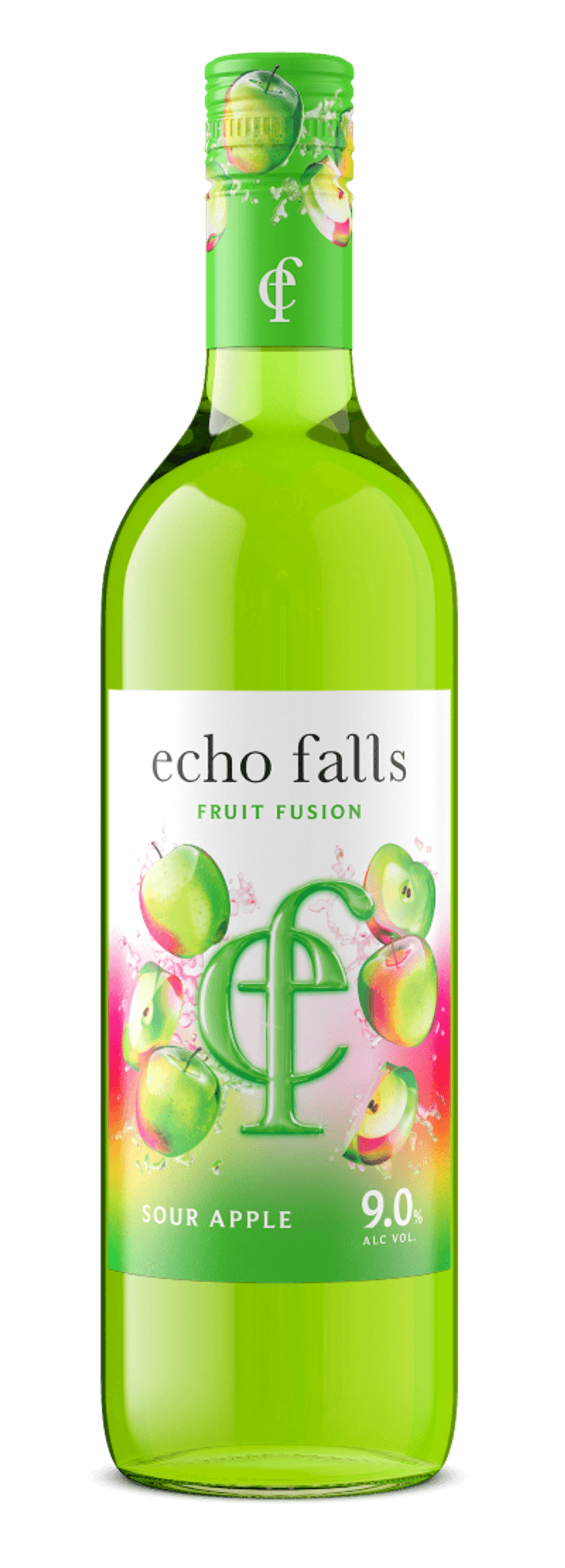 Echo Falls conjures up Sour Apple ahead of Halloween Image: Vinarchy
Building on that momentum, Echo Falls has since added Fruit Fusion Sour Apple, also nine per cent ABV, ahead of Halloween, again launching first into wholesale before a wider October grocery rollout, with a glow-in-the-dark on-pack monogram designed for shelf standout.
Tom Smith, marketing and category director - Europe at Vinarchy, said the brand had no intention of slowing down. “Echo Falls Fruit Fusions is about making the category feel more accessible, exciting and relevant to a broader range of shoppers, and we've built real equity around flavours that aren't afraid to stand out,” he said. “Two million bottles later, we're not about to start playing it safe... There's plenty more opportunity to explore from here - and we've certainly got a few tricks up our sleeve!”
Fruit Fusion as a whole is now worth £36m in RSV, according to Vinarchy, and continues to act as a bridge bringing shoppers into wine from RTDs, beer and cider.
Rosé charts path forward
Rosé continues to outperform the wider still wine market, and suppliers are racing to capture a share of a category increasingly defined by provenance, sweetness profile and shelf standout.
Gallo has rolled out nationwide distribution for its new Cabana California Rosé, with availability in more than 3,200 Premier stores via Booker. Positioned at an accessible £8.50 price point and aimed at a female-skewed 25-40 age bracket, the wine has been developed specifically for the UK market.
According to Gallo, the rosé category is outperforming UK still wine in the off-trade by 7.4 percentage points, with Californian rosé accounting for 2.2 million nine-litre cases – meaning roughly one in every four bottles of rosé sold in the UK off-trade comes from the US.
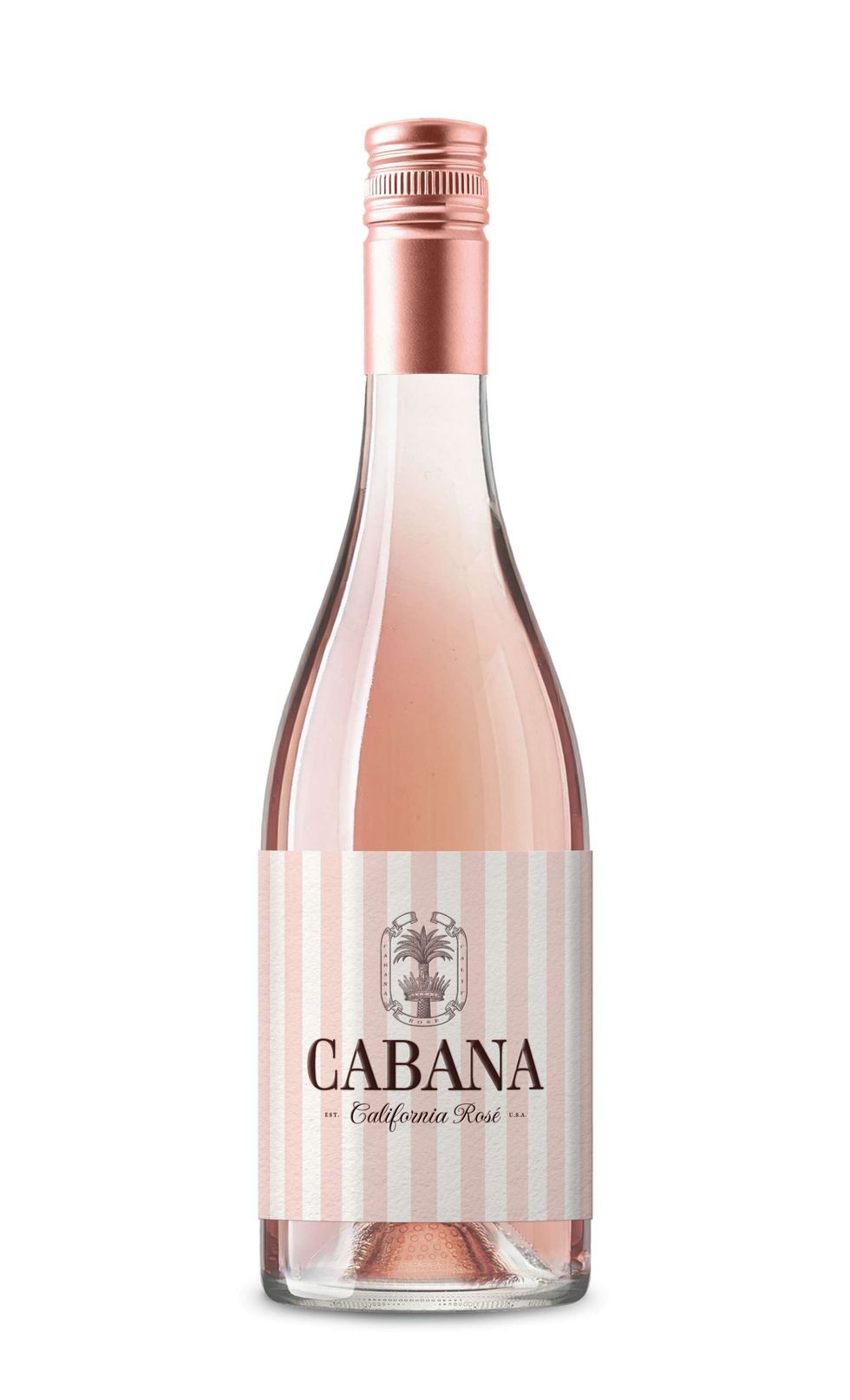 Cabana, a Californian rosé made for UK consumers Image: Gallo
Mark Stammers, senior sales director at Gallo, said early trade response had exceeded expectations. “We've seen outstanding trade response to Cabana, helping us quickly expand distribution across grocery, convenience and the on-trade,” he said. “Built for the UK rosé drinker, the brand is clearly resonating with both customers and consumers. Rosé remains key to the UK wine category, with sweeter styles attracting younger consumers. Cabana's Californian origin and tailored flavour profile leave it well placed to drive growth in this segment.”
The rollout has been supported by a partnership with Love Island and Strictly star Tasha Ghouri on a tourism-style advert designed to tap into the “armchair travel” trend.
Casillero del Diablo, the UK's third-largest wine brand by value according to VCT Europe, has also launched a new rosé, priced at an RRP of £8.50 and blending Cinsault, Carmenere and Pinot Noir grapes. Claire Raine, head of brands marketing at VCT Europe, described the wine as “fresh and vibrant, with juicy notes of strawberries and white peaches” and said it is “perfect for long lunches and picnics in the park.”
She added: “Its smart new look gives it standout appeal and Casillero del Diablo fans can trust our reputation for quality. We're expecting it to go down brilliantly from day one!”
Brands refresh
Meanwhile, Jacob's Creek has used the wider popularity of easy-drinking styles as part of a broader relaunch. Its refreshed UK range, in market since April, has been designed around lighter, more refreshing styles carrying clear taste descriptors – Juicy & Smooth, Refreshing & Lively, Vibrant & Fruity and Zesty & Fresh – intended to simplify choice in what the brand calls “a category that can often feel complex, technical, or difficult to navigate.”
Beyond flavour and format, 2026 has also been a year of heavyweight marketing investment, as major wine brands compete for share of voice – and, ultimately, of the convenience fixture.
Casillero del Diablo has revealed British actor Orlando Bloom as its new global ambassador, fronting a campaign built around the brand's “Devil's Cellar” legend. Sebastián Aguirre, global marketing director at Casillero del Diablo, called the appointment “a fresh milestone in the brand's history,” adding that Bloom embodies “sophistication, character, authenticity and a truly global outlook.”
 Casillero del Diablo has appointed Orlando Bloom as its new face in a move aimed at boosting international visibility. Image: Viña Concha y Toro
Bloom himself said: “I'm incredibly proud to be partnering with Casillero del Diablo, a brand with an extraordinary heritage and one of the most iconic stories in the world of wine.... What excites me most is the opportunity to help bring that legacy to life for a new global audience, honouring its origins while reimagining it in a way that feels fresh, cinematic, and contemporary.” The campaign is rolling out globally, including in the UK.
Barefoot, the Californian brand which holds the No.1 position in Pinot Grigio, Merlot and Sweet Rosé and ranks as the fourth largest wine brand overall in the UK according to Gallo, has refreshed its core range packaging this spring, placing its iconic footprint logo more prominently and adding taste descriptors to help shoppers navigate the fixture.
Spanish Rioja brand Campo Viejo, meanwhile, has returned to television with its biggest media investment to date – a £1.4 million campaign spanning TV, digital and in-store activation under the banner “Add Some Pasión”.
Jennifer Beale, marketing manager at Vinarchy, said the campaign was designed to build emotional relevance beyond the brand's quality credentials. “Spain represents a real sense of spontaneity, connection and Pasión, which is what we wanted to capture with this campaign,” she said. “This campaign is about bringing that Spanish spirit to the table - helping shoppers think differently about the role wine can play in those moments. And for our retail partners, it's about creating a stronger reason to choose, trade up and ultimately drive more value at shelf.”
Argentinian brand Trivento has taken a different route to cut-through, partnering with barbecue specialist Weber on a summer promotion running from 1 July to 20 September, offering shoppers the chance to win one of 75 Weber Lumin Compact Electric BBQs worth £479 each, plus 7,500 instant money-off coupons worth £2.50.
Preety Johl, senior marketing manager, said the tie-up was a natural fit. “We were looking for the perfect partner for our well-known and loved range of wines, and who better than Weber, makers of the finest barbecues,” she said. “Trivento's range of Malbecs, whether red, rosé or even white, are famous for pairing brilliantly with summer outdoor occasions, so this is the fantastic tie-up. We look forward to helping to make lots of barbecues happen.”
Fortified and tonic
Amid all the innovation elsewhere, tonic wine remains a dependable, community-rooted staple for many independent stores – and suppliers are keen to keep it that way.
Magnum Tonic Wine has leaned heavily into its relationship with independent retailers this year. Marina Santos, consumer, channel and customer marketing director at Campari Group, said the convenience channel “has always been more than a route to market” for the brand. “Independent retailers have played a central role in building the brand, keeping it visible in local communities and introducing it to new shoppers over many years,” she says.
That relationship has translated into visible, on-the-ground activity, including a branded Jeep tour that has visited more than 20 wholesale depots and independent retailers across the UK. Building on this, Magnum launched the ‘Boss! Win a Boot Load of Magnum’ competition, running until 30 September, inviting retailers to photograph their in-store Magnum displays and email the image in for a chance to win a boot-load of stock. The activity culminated in Magnum's role as an official partner of the 60th anniversary Notting Hill Carnival, where the brand took over the Powis Square Stage over the August Bank Holiday weekend.
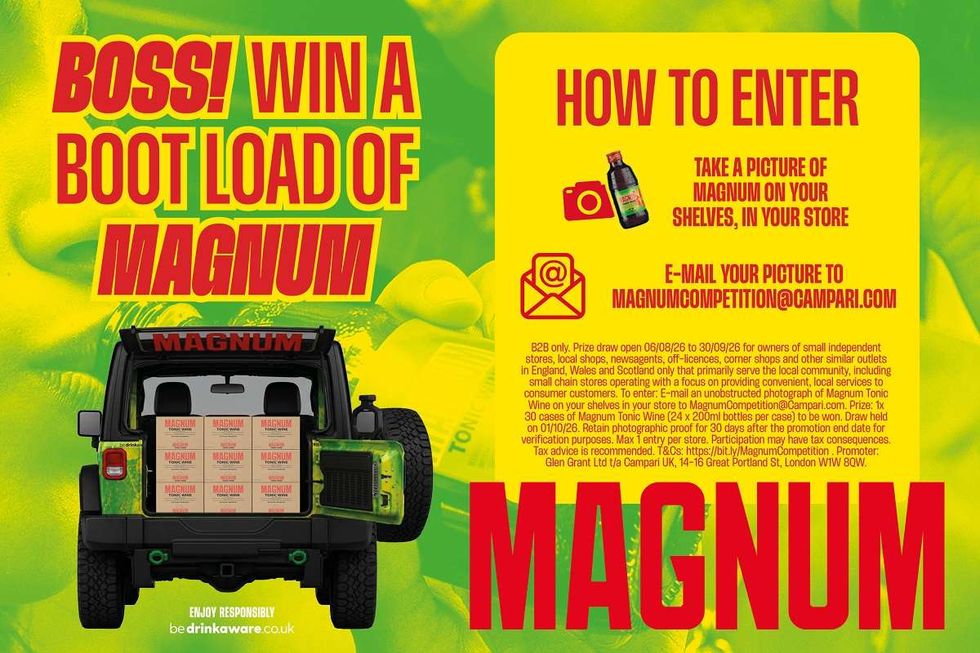 The newly launched 'Boss! Win a Boot Load of Magnum' competition rewards retailers who are ranging and merchandising Magnum Photo: Handout
“Independent retailers have always been an important part of Magnum's story,” Santos said. “They've introduced the brand to new shoppers and helped make Magnum what it is today. That relationship isn't something we ever take for granted, which is why we've spent the summer getting out and meeting retailers face to face, as well as investing in activity that keeps Magnum front of mind with shoppers. We hope this competition gives retailers another reason to get involved while recognising the role they continue to play in the brand's success - snap away!”
Eldorado Tonic Wine took a similar community-and-culture approach earlier in the year, tying its ‘No LD, No Party’ campaign to the FIFA World Cup and Scotland's qualification for the tournament, with a limited-edition £8.99 price-marked 70cl pack sold through Filshill, CJ Lang, Bestway and United Wholesale.
“Tonic wine is a mature and competitive market so Scotland qualifying for the World Cup represents a big opportunity to promote Eldorado to an audience that loves football, gets behind Scotland's National Team,” Kerr Mclaren, UK business development manager for Eldorado Tonic Wine, said.
Chris Miller, chief commercial officer at Differentiator Brands, added that the campaign was designed “to drive category growth, expand geographical distribution, and generate sales across the wholesale and retail channels.”
NPD new horizons
Alongside established brands doubling down, 2026 has also brought genuinely new propositions into the category, aimed squarely at shoppers the mainstream fixture has historically underserved.
VCT Europe, the European arm of Latin America's largest winery Viña Concha y Toro, has launched Out of Office, a range of three Chilean wines – Sauvignon Blanc, Rosé and Merlot – designed exclusively for convenience and targeted at 25-34 year-olds. The brand grew out of consumer research showing that time-poor younger shoppers often find the wine aisle overcrowded and poorly signposted for different occasions.
Heather Jones, VCT senior brand manager, said the strategy reflected how younger drinkers now approach the category. “Younger consumers are still drinking wine, but they're more selective. They're curious, open to discovery, and willing to spend more when the proposition feels relevant, modern, and worth their time,” she said. “A key occasion for wine drinkers is relaxation and unwinding – moments of switching off and recharging, and Out of Office is a fun, light-hearted brand that clearly communicates the occasion directly on the bottle.”
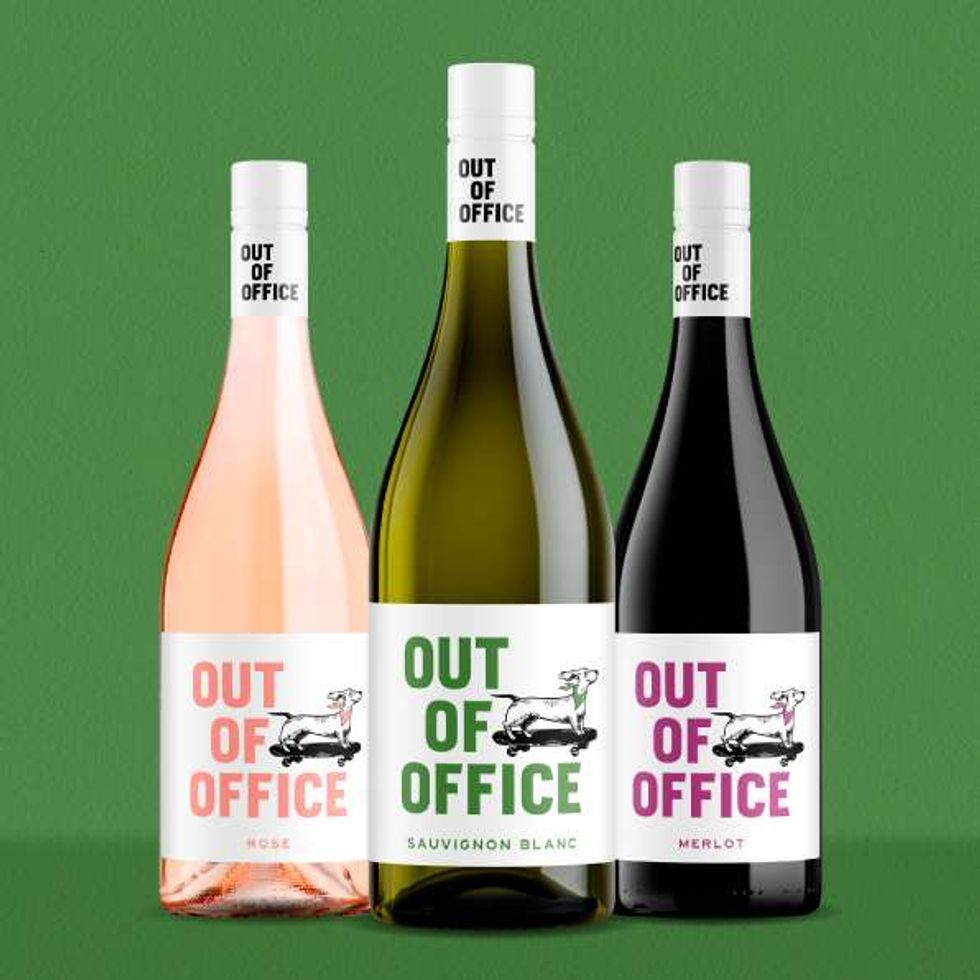 VCT Europe Launches New Wine Brand for Convenience Image from VCT Europe
Positioned at £9 RSP, the range is bottled in the UK and launched into 300 Bargain Booze stores in May. Jones said the decision to launch in convenience first, rather than grocery, was deliberate. “We have seen many of today's most successful brands begin their journeys in this channel, and it has repeatedly proven to be a strong foundation for building brand awareness, recruiting shoppers, and driving early stage growth,” she said.
A very different kind of newcomer arrived in this month, when Nabeeth Wine & Spirits launched the UK's first dedicated online shop for Palestinian wine. Founded by Palestinian chef Fadi Kattan and wine professional Anna Patrowicz, Nabeeth brings together bottles from producers including Cremisan, Taybeh, Ashkar and Jascala.
For Kattan, the launch is about giving Palestinian wine “the place and visibility it deserves within the UK wine landscape.” He said: “Palestinian wine tells a story that deserves to be tasted. Behind every bottle are people, vineyards, landscapes and generations of knowledge. Nabeeth is about creating a space for those stories in the UK and allowing people to discover Palestine through what grows from its land.”
Patrowicz, a WSET Diploma wine professional, said there was growing curiosity among UK wine drinkers for the unfamiliar. “There is a real curiosity among wine drinkers today about places and varieties they have not encountered before,” she said. “Palestinian wines can surprise people. They have their own character and sense of place, and part of our work at Nabeeth is giving people the opportunity to approach them first and foremost as wines – to open a bottle, taste it and discover where it comes from.”
The company delivers out of LCB bonded warehouses across the UK and says it is already working with a small number of independent wine shops, with ambitions to grow further in the independent retail sector. Retailers can contact the company directly for its trade portfolio and price list.
Wholesale backing
Wholesale support also stepped up to help retailers capitalise on the summer trading window. Sadly now over (although the wines of Autumn are beckoning ….) Booker's annual Wine and Cocktail Festival, which ran across its Premier, Londis and Budgens symbol groups for seven weeks from July, offered exclusive promotions and new product launches spanning bestselling names such as McGuigan, Echo Falls, Hardys VR, Barefoot, Blossom Hill, Jam Shed, Casillero del Diablo and Trivento Reserve, alongside premium and exclusive listings including Wairau Cove, Kylie Rosé, Brancott Estate Flight Sauvignon Blanc, Porta 6 Lisboa Red and Alamos City Malbec. All Good Things Shiraz, a Silver Medal winner at the 2026 International Wine & Spirit Competition and recommended by wine expert Oily Smith, also featured.
Martyn Parkinson, retail sales director at Booker, said the festivals were designed to convert seasonal footfall into sales. “Our Wine and Cocktail Festivals continue to give retailers an excellent opportunity to drive footfall and increase basket spend during the busy summer trading period,” he said. “By combining great value promotions with exciting innovation and exclusive products, we're helping our retailers offer shoppers an outstanding drinks range that caters for every occasion.”
James Davis, head of wine at Booker, said the range reflected a deliberate mix of trusted names and discovery. “We built this year's Wine Festival around quality, choice and innovation,” he said. “Alongside well-loved bestselling brands, we introduced a number of exclusive and premium wines, including exciting first-to-market launches and award-winning products. It's a range that gives retailers confidence they're offering shoppers exceptional value alongside exciting new wines they'll want to try.”
The festival also reflected the shift toward “drink less but drink better,” Booker said, highlighting flavoured wines, rosé and canned formats including Echo Falls Blue Raspberry and Wairau Cove Sauvignon Blanc cans.
Taken together, the picture for 2026 is of a wine category in motion – not shrinking, as a broader moderation narrative might suggest, but diversifying. English wine is riding a record harvest and growing shopper loyalty to provenance. No- and low-alcohol wine is finding real traction with younger, wellness-minded drinkers. Formats are multiplying, from bag-in-box to cans to single-serve bottles, to fit an ever-wider range of occasions and household sizes. Flavour is pulling in new-to-category shoppers from RTDs, beer and cider. Rosé continues to outperform. And a wave of newer, more targeted brands is proving that there is still room for genuine differentiation in a category many assumed was mature.
For independent retailers, the takeaway is less about chasing every trend and more about curating a range that reflects the breadth of occasions shoppers now bring to the wine fixture: local and premium, moderate and full-strength, familiar and new. The suppliers investing hardest in convenience this year are betting that the retailers who get that balance right will be the ones who benefit most as the category keeps evolving.