



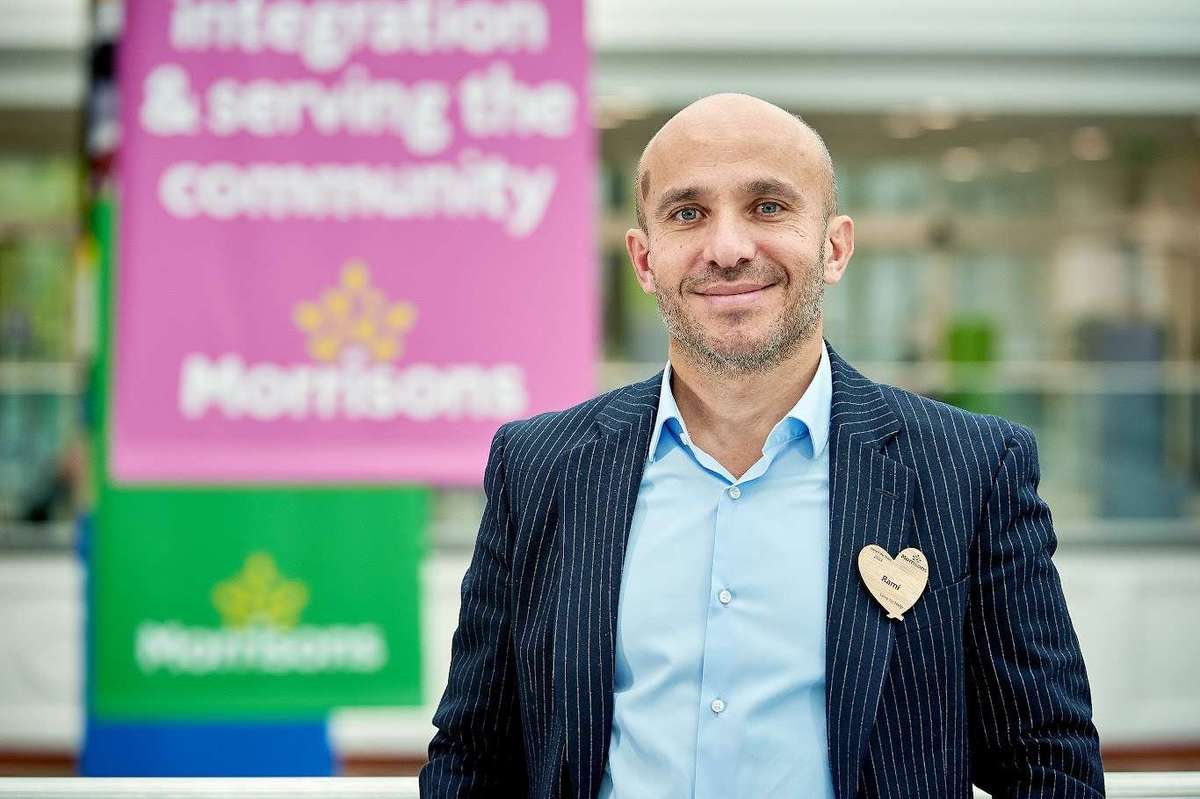
“It's a family,” says Morrisons CEO Rami Baitiéh. He is talking about a franchised Morrisons Daily store near Manchester, and about what he found there.
On a visit, he went to use the restroom. Inside, he found a bed and a shower.
“What is this?” he asked. They told him it was for the night shift and the day shift.
“You go to a normal traditional store. No, 5pm. Thank you very much. Close. The last customer says, 'Can I just get this?' No, we close. A franchise will never say to a customer, no, we are closing.”
That back room sums up his thinking. Morrisons, the 127-year-old Bradford grocer, is no longer chasing bigger supermarkets. It wants more families like that one running Morrisons Daily stores, and Rami has a plan to win them.
The banker who wanted people
Nothing in Rami's past suggests a shopkeeper's champion. He grew up in Lebanon, during wartime. At 11, he heard bombs overnight and went to school in the morning to find it destroyed. Some friends were almost happy, he recalls. Rami was shocked. He went to another school and asked to be admitted. “Hello, have you got any place for me?”
They took him whenever pupils were off sick. He studied about three days a week for three or four years and still emerged among the country's top three students. A French scholarship followed, then a job approving small-business loans at Société Générale. He was good at it. Something was missing. “I love interaction with people,” he says.
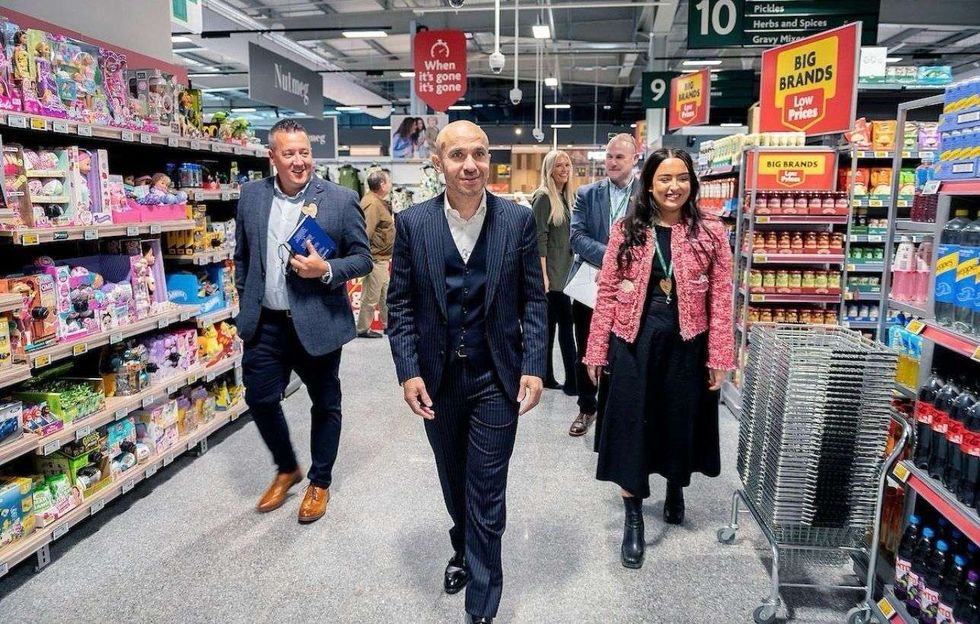 Rami BaitiéhPhoto: Handout
So he took a one-year sabbatical and wrote to French supermarket Carrefour, which handed him an aisle with stock problems. Orders went out on A3 sheets, product by product, by pen. “I found this very boring, so I wanted to digitise this.” He built a Lotus 1-2-3 spreadsheet that saved him three hours a day.
Colleagues asked for help. Soon 230 people were using it, and his store climbed from 37th out of 110 to first. The group's chief executive turned up to find out why, and Rami wore a tie. His boss scoffed: “He will not even say hello to me. You think he will say hello to you?”
The sabbatical never ended. Carrefour sent him to Poland, Turkey, Taiwan, Argentina, Spain and France. In Taiwan in 2015, a supply chain manager refused to show him the stock algorithm. Too complex, she said. He insisted. “It was my formula from '95.”
Morrisons came calling three years ago. Rami saw its numbers and knew his answer. “I could see the solution immediately.” At the interview, he told the panel: “I'm the man that you need.” They did not like it. The head-hunter told him: “Please avoid this.” He got the job anyway.
His strategy took six months to write. Meanwhile he fixed what he calls certainty: availability, checkouts, toilet cleanliness. “Certainty is the word.” He also listened to shoppers, colleagues and shareholders.
Three years on, Morrisons has recorded 15 consecutive quarters of underlying like-for-like sales growth, EBITDA is up and debt has fallen 46 per cent. He refuses to chase a league-table position. “The ranking is not a target for me. I want to be higher ranked in customers' mind.”
Stop building supermarkets!
Rami's strategy starts with a surprise. Morrisons has nearly 500 supermarkets, and he believes Britain has all the big-store space it needs. “Building more big stores, I don't think this is the right strategy now to address the consumer needs in the future.”
Shoppers have moved on, he argues. The family day out has become a chore, and driving miles for a two-hour shop will not survive the next 30 years. “Now it's a waste of time,” he says. Groceries are a necessity: “I need to shop. It's mandatory.” So shoppers will hand the job to an online shopper or buy from a small store near home.
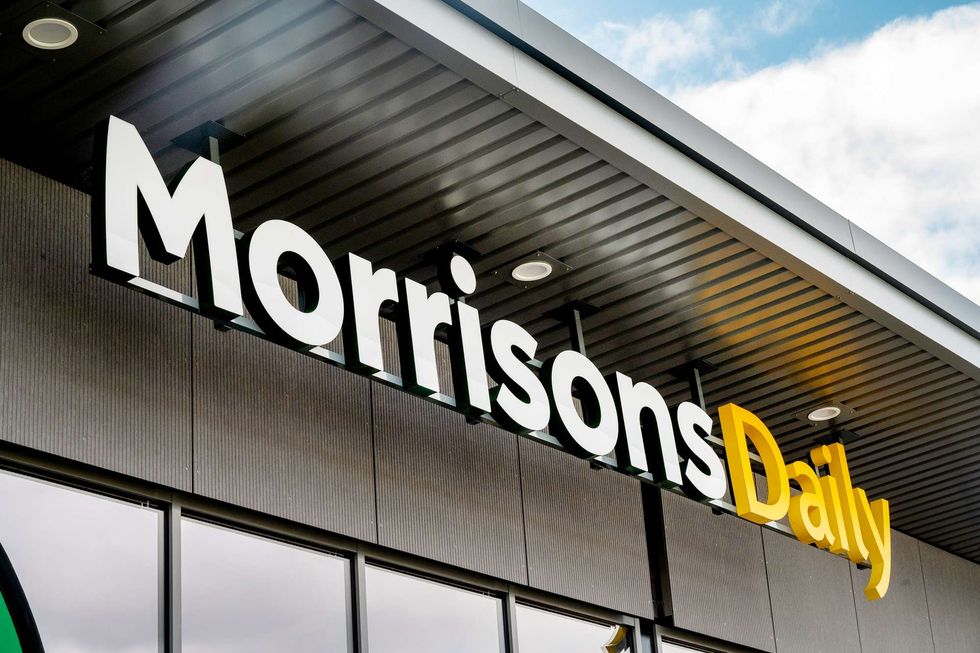 Morrisons Daily convenience store Photo: Handout
He foresaw the shift three years ago, he says, as digital tools made immediacy normal. “The closer you are to the customer's house, the better it is for the customer.”
He could have opened those stores himself. He chose not to, because running hundreds of them would take “a lot of energy, unnecessary energy”. “The best way is to give it to people who will feel the ownership because it is their own store.”
The numbers are growing. Morrisons has more than 1,700 convenience stores, 700 of them franchised, and Rami says 100 opened this year. The model also saves cash. “Remember that this is capex light.”
38,000 doors
The people he wants already run the shops. Rami counts 48,000 small stores in Britain. About 10,000 belong to the multiples. The other 38,000 are independent, run by “a very small group of families and entrepreneurs”. He praises their drive. “They have an entrepreneurship mindset, but they look to be integrated, and they are hungry. The people from Sri Lanka, from Pakistan, from India, they do it perfectly.”
Does he want all 38,000? “I can't say my ambition is to get the 38,000,” he says, “but why not?”
The brake is capacity, not appetite. Morrisons can sign 120 stores a year, perhaps 150 next year and 200 the year after. “I need logistics, I need a technology team, I need a lot of organisation behind.”
The offer is a package. “I give them the brand. I give them my own brand. I give them my great product.” Buying power follows: “I can get them the product from the suppliers at much better cost because I buy very big quantities.” Training, technology and a loyalty card complete it, and “they belong to the Morrisons family.”
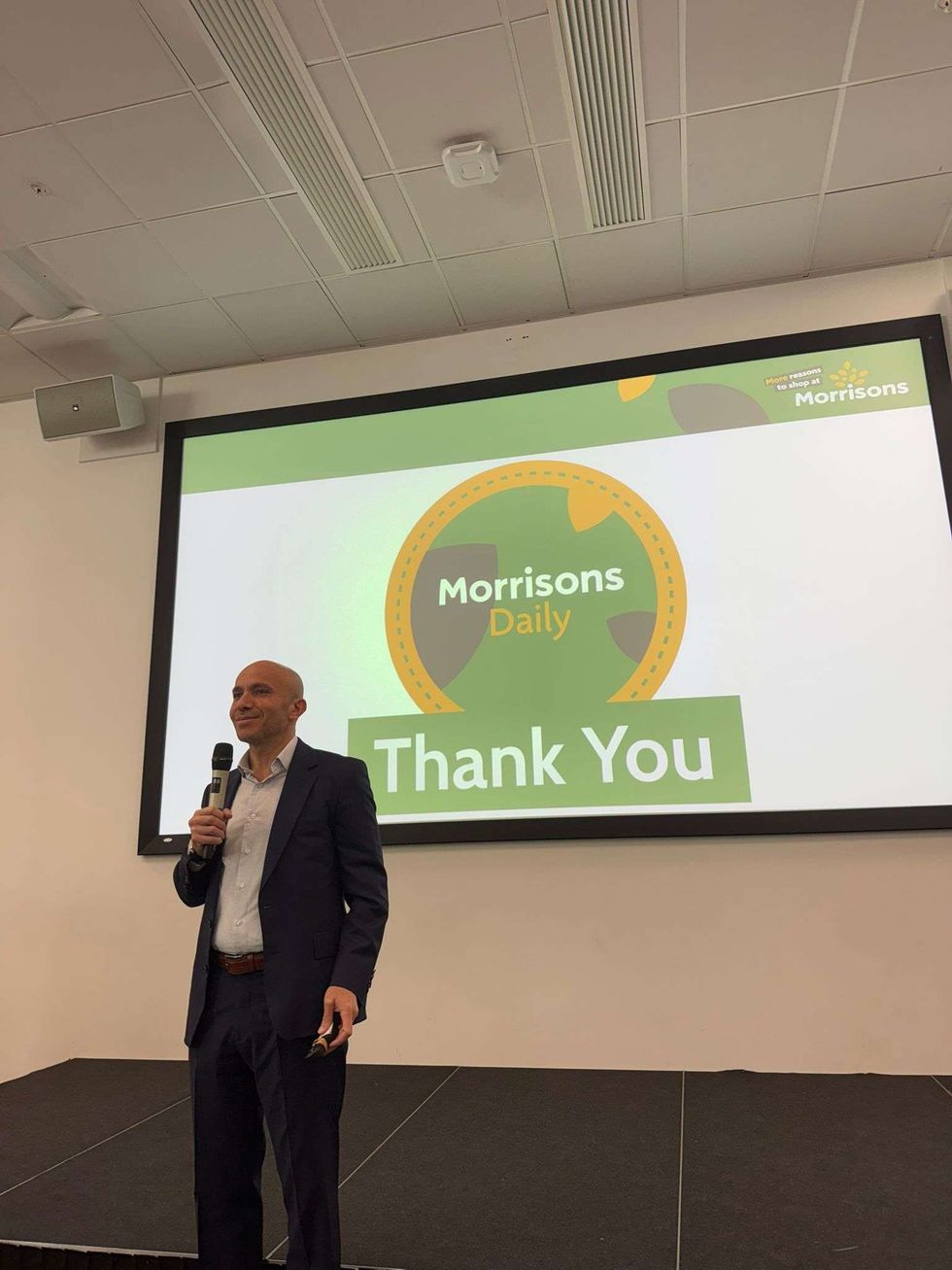 Rami Baitiéh speaking at annual franchise conferencePhoto: Handout
Rami takes a markup; franchisees keep a margin. “I have my markup, which is a very honest markup, and they have their margin.” He says they “improve their margin three times”.
The loyalty card has its own story. When Rami first asked shoppers why they stayed away, almost all gave one answer: “You stopped your loyalty programme.” He restored it. Membership rose from 4.5 million to eight million.
At its annual franchise conference earlier this year, Morrisons sweetened the invitation. It doubled the “Refer a Friend” reward for partners who recruit others, and offered £2,000 to partners switching a store from another symbol group to Morrisons Daily.
Rules of the club
Surely a franchisor loses control? Rami reaches for McDonald's and Coca-Cola. “If you go to McDonald's, do you know which one is owned by the company, which one is owned by franchise? You don't.”
Audits keep standards honest. In his own stores, repeated low hygiene ratings mean “a managerial issue. What do I do? I change the manager.” Franchisees get no special treatment. “If the franchise puts me in this situation, I change the franchise. It is written in the contract.”
Last month, he says, he stopped working with three stores. The reasons included buying from a competitor against the contract, and unpaid bills.
“I can help you, but for nine months and you don't show me any solution, we stop here.” Then the clincher: “It doesn't mean that I'm for charity here.”
More than a shop sign
Behind the sign sits the supply chain. Availability was Rami's first fix at Carrefour, and Morrisons highlighted it at the conference as a milestone. Partners also heard about field-based trainers and new product development; and a supplier village showcased direct-to-supplier deals.
The conference also launched the Hot Weather Club, a supply scheme that automatically allocates water and ice to registered stores when local temperatures reach 23°C, saving more than 10 per cent.
Rami sees wholesale in two halves. The franchise network is one. The other is Morrisons' factories. He says the group owns 16, making meat, potatoes, onions, salad and eggs, and sells their output to outsiders as Myton Food Group.
“We opened our production to anyone in the market.” He claims “the best abattoir in the country”, and says Myton alone would rank among Britain's top 10 manufacturers. “For food security, Myton is jewellery for the country.”
Diwali on the shelf
At head office, Diwali has an owner. His name is Tushar. “He is responsible for Diwali,” Rami says, and other colleagues handle Ramadan and Eid. Staff celebrate each festival, and colleagues from those communities explain them to everyone else. “Now, if you go to the store at Diwali, you see the product, you see the recipes, you see the prices, the promotions.”
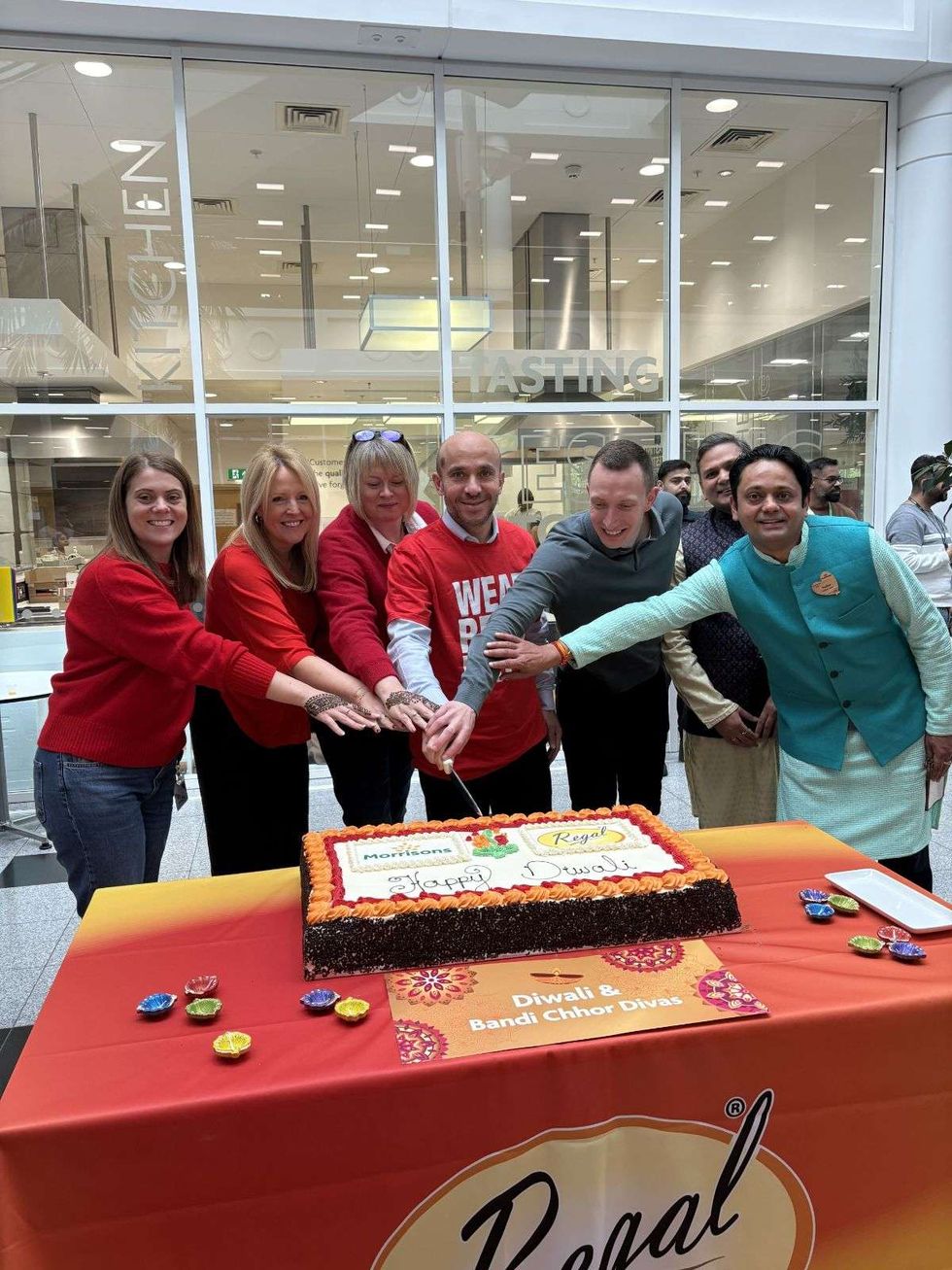 Diwali celebrations at Morrisons Photo: Handout
World food has changed shape, too. Rami says he brought a full aisle of it to Morrisons. There are now two.
He thinks of world food in three levels. Faith comes first: halal, kosher, meat-free. “This we respect.” Belonging comes second, the shopper who may be second-generation Indian, third-generation Pakistani or fourth-generation Middle Eastern. “I'm British, but culturally and from a food point of view, I still have some taste from my family.” The third group is “travellers”. “The British people, wherever their route, they are all travellers, all of them.”
Year-to-date growth in the category is 36 per cent, he says, and Morrisons has tripled its world food market share. A supplier forum meets three times a year to grow the range further.
The word he keeps using
Morrisons' leadership school takes applicants with no CV. “We have only one question: What about your passion?” Ethnically diverse managers have doubled from eight per cent to 16 per cent, Rami says.
At a recent leadership meeting, after the company won a diversity and inclusion award, a colleague named Maz stood up, Rami recalls. Maz is of Pakistani descent and from Bradford. “I have been working for Morrisons for 15 years. The first 12 years, I was in survival mode. For the last three years, I'm in a belonging mode.”
Belonging is the word Rami keeps using, in the aisle, in the franchise pitch and in the Bradford meeting room. Whether 38,000 independents want to belong to Morrisons is the question he is now putting, shop by shop.