



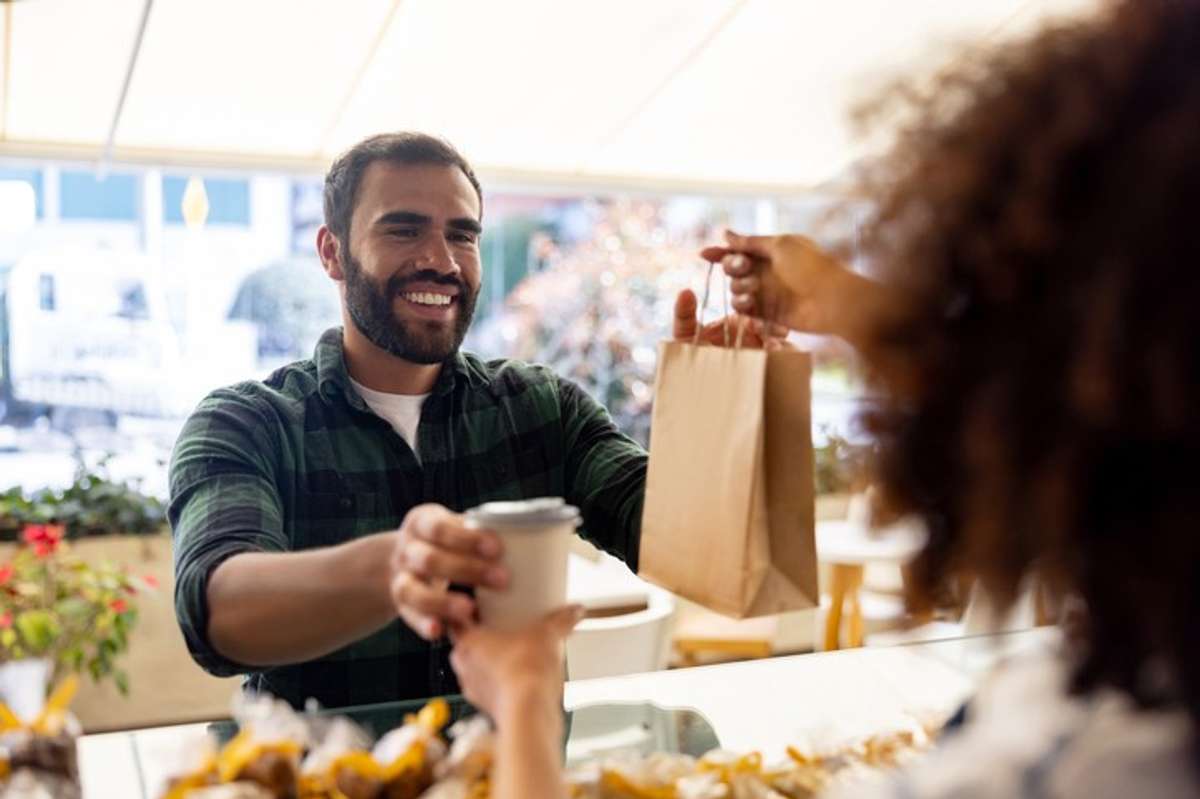

The definition of convenience in convenience store is changing fast. Evolving from a pint of milk and loaf of bread and cigarette packet, shoppers increasingly want a store in their locality from where they are able to buy all the essentials but also can grab breakfast on the way to work, pick up a decent lunch without breaking the bank, refuel with a cold energy drink, find a healthier snack between meals or take home something hot for dinner.
Convenience store operators not reading the signs written on the wall need to take notes if they want to survive in this increasingly competitive landscape.
Let's start with the scale of the thing, because it's genuinely eye-opening. The UK convenience sector as a whole is forecast to hit £49.1 billion in sales in 2026, according to Lumina Intelligence's UK Convenience & Wholesale Market Report 2026, and the same report names food to go, alongside store investment and shifting shopper missions, as the single biggest driver of that growth.
The report notes that the UK convenience sector may be experiencing slower overall growth, but food-to-go continues to outperform.
Sector reports adds that the UK food-to-go market is forecast to reach £24.9 billion in 2026, rising +3.4 per cent year on year and continuing to outperform the wider eating out sector. Yet
this uplift is not being driven by rapid outlet rollout. Instead, higher spend per visit, premium add-ons and tighter value engineering are doing most of the work.
For operators and suppliers, 2026 is less about chasing volume and more about protecting margin, consolidating share and refining format strategy.
According to IGD, future growth in the convenience sector will increasingly come from areas where convenience can offer something distinctive, particularly food to go, food for later and quick commerce.
Drinks to go are riding the same wave. Soft drinks are officially powerhouse drivers in the UK convenience market, locking in a massive 17.5% of all sales in 2025 according to data from Talysis.
What stands out most is that the growth isn't just coming from traditional sodas, but is heavily propelled by energy, sports, and functional drinks as consumers increasingly look for added health benefits, hydration, or a quick pick-me-up on the go.
Category leaders and veterans seem to agree with all these data and numbers.
Phil Holford, Senior Brand Manager at Golden Wonder, feels savoury snacks play a central role within food to go.
“Retailers should recognise that food-to-go shopping is increasingly occasion led, covering lunch on the go, after-school snacking and other immediate-consumption missions rather than one single traditional lunchtime purchase,” Holford says.
Stuart Graham, Head of Convenience and Impulse at KP Snacks, remains confident about the future of food to go category.
“At KP Snacks, we are continuing to excite and interrupt with flavoursome innovation, having the right brands in the right formats, meeting changing shopper missions as needs adapt, and building brand equity by doing the right thing,” Graham says.
Lauren George, External Communications Manager, Mars Wrigley, shares with Asian Trader, “When it comes to trading up, consumers aren't necessarily trading up only for luxury, they're trading up for authenticity and provenance.
“High-quality chocolate backed up with transparent sourcing stories are what justify premium price points, and we're finding that consumers will protect their small indulgences even when the cost of living is challenging.”
So, what are shoppers reaching for, what is changing, and where should retailers place their bets?
Big Snack Opportunity
Healthier snacking has stopped being a corner of the fixture for the terminally virtuous and become the fixture, full stop.
Shoppers now expect a snack to earn its place in the basket, whether that means protein, fibre, natural ingredients or simply a recipe that hasn't been through a laboratory.
Demand for cereal bars is riding that shift hard. Within that category, "better for you" bars are the fastest-growing segment going, up 12.1%, though don't mistake that for an easy sell as today's shopper is choosy.
Alice Boardman, Marketing Manager at Natural Balance Foods (TREK and nākd.), shares with Asian Trader, “If a snack doesn’t deliver on flavour, it won’t make it into baskets.
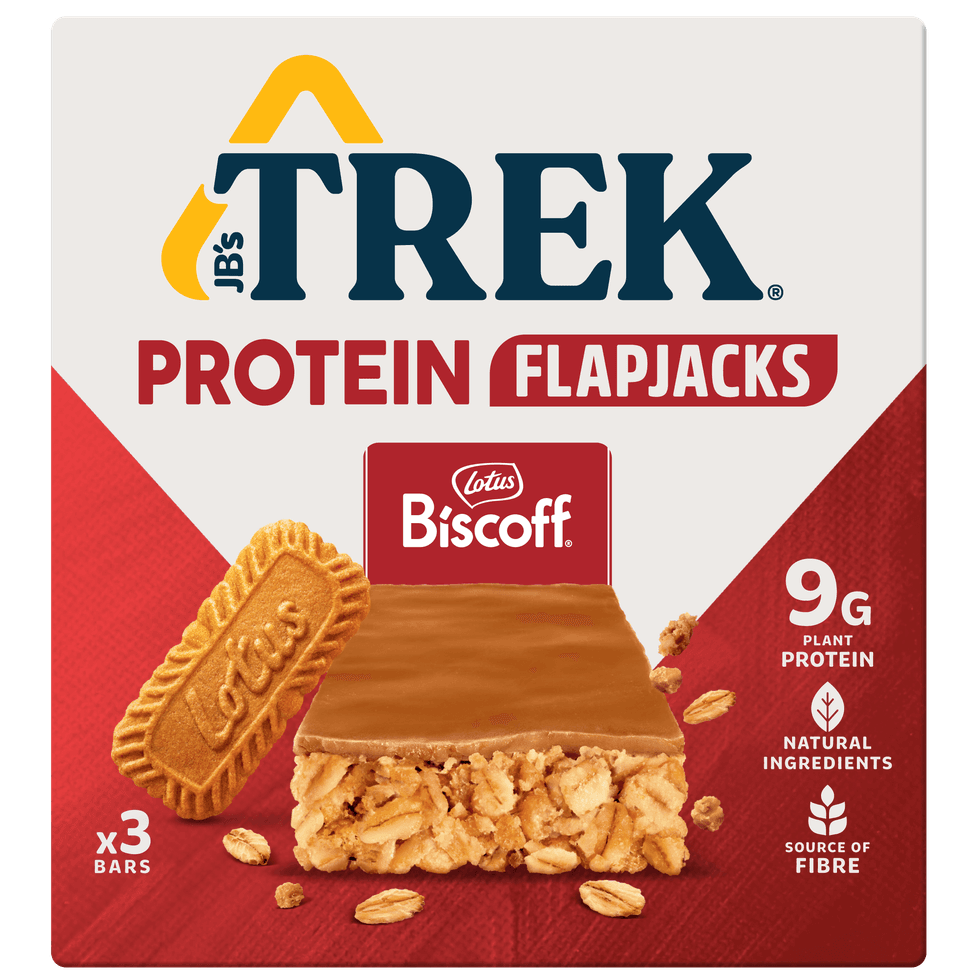 TREK unveils new Biscoff Protein Flapjack TREK
“Cereal bars continue to play a key role here, because they’re versatile, familiar and easy to shop. They work just as well for a quick breakfast, a mid-morning pick-me-up, or a grab-and-go snack, which is why we’re seeing such strong momentum across singles as well as multipack ‘take-home’ formats, growing +8.2 per cent and +2.5 per cent respectively.”
And increasingly, protein is part of that everyday picture. The growth is no longer being driven solely by hardcore sports nutrition, but by products that make protein feel relevant to ordinary routines.
“At Natural Foods UK, both TREK and nākd. are benefiting from this shift. They offer different routes into healthier snacking, but both are built around the same principle which are natural ingredients, great taste and products that fit easily into everyday lives,” Boardman adds.
TREK, in particular, is going from strength to strength. Now worth £44.4m, it was the fastest-growing cereal bar brand in 2025, up 27.6 per cent year on year.
“Our core Protein Flapjacks, worth almost £35m and growing +31 per cent YOY, account for 76 per cent of our sales and remain the engine of the brand. They deliver natural energy for everyone, made with oats and plant-based protein to create a delicious bar that is just as relevant for fueling a busy workday as it is for an active lifestyle.”
But protein alone does not necessarily make a shopper reach for a product. Flavour still has to close the deal, and innovation that combines the two is helping bring new consumers into the category.
The TREK Biscoff Protein Flapjack is a case in point. The product was the number one grocery cereal bar NPD of 2025 across both singles and multipacks, showing that indulgence and protein can happily share the same wrapper.
If TREK is riding the protein wave, nākd. is tapping into simplicity. The brand is now worth £40.8m, growing 9.6 per cent year on year and making it the seventh-largest cereal bar brand.
Boardman explains, “The conversation around UPFs has given shoppers permission to ask more questions about what’s in their food.
“nākd. answers that in the most straightforward way possible, with bars made only from recognisable ingredients like fruit and nuts, no added sugar and no artificial ingredients.
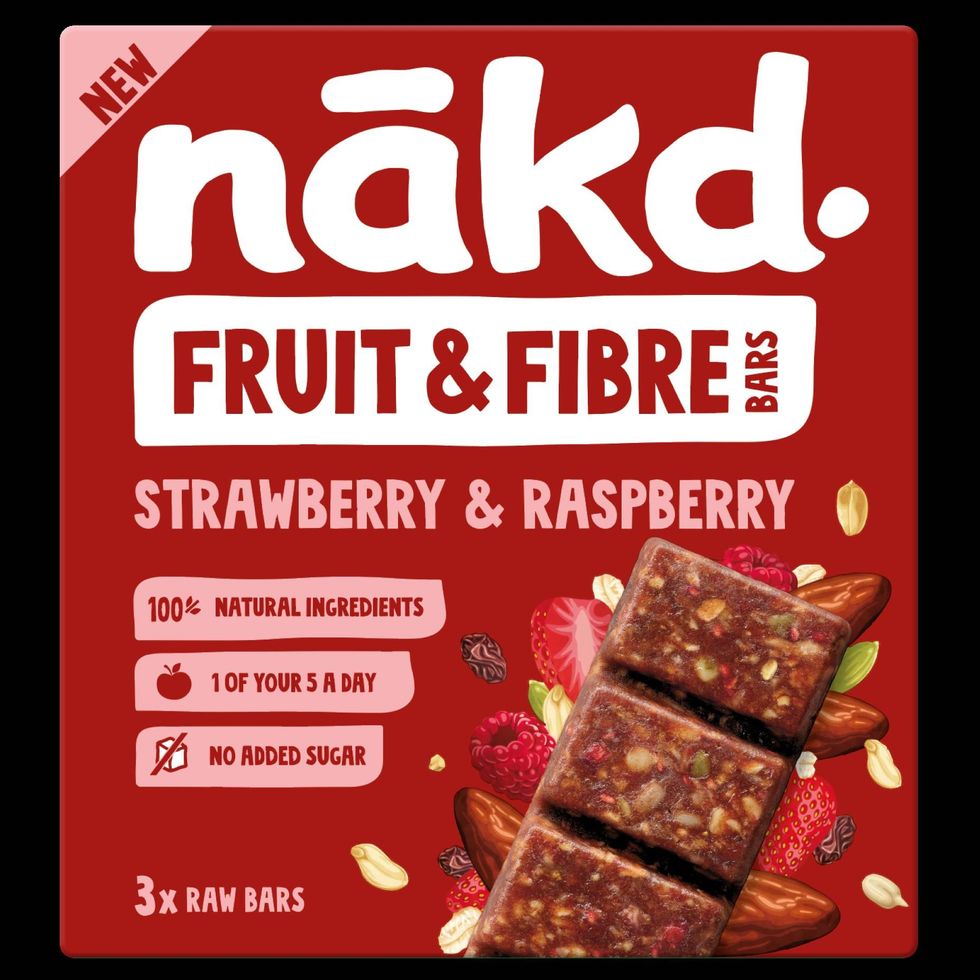 nākd. unveils Fruit & Fibre bars for functional snacking nākd.
“That message lands particularly well in convenience, where clarity and trust really matter.”
The healthier-snacking opportunity, however, does not stop at cereal bars.
On-the-go snacks go everywhere, even in school bags, changing bags, gym bags and, inevitably, the glove compartment. For retailers, that makes portability, familiarity and broad appeal just as important as the nutritional credentials.
Stephanie Armstrong, BEAR Marketing Manager, shares with Asian Trader, “For BEAR, that opportunity goes well beyond lunchboxes.
“The brand now spans a full portfolio of dried fruit products designed for adults too, in both sharing and snack pack formats, including mango, strawberry and coconut varieties.
“Adult fruit snacking is gaining momentum as more shoppers look to swap confectionery and ultra-processed snacks for something naturally sweet.”
And then, of course, there are crisps and snacks, which remain a key part of the mission, particularly when paired with soft drinks or meal deals.
Golden Wonder Ridges Flame Grilled Steak and Paprika, available in £1 PMP sharing bags and six-pack multipacks, are designed around precisely this balance of flavour, format and value through the brand’s “More Punch Per Crunch” proposition.
“Demand changes according to shopper mission,” says Holford from Golden Wonder.
“Impulse packs are particularly relevant to lunchtime, immediate-consumption and after-school occasions, while larger sharing packs suit later-day missions such as Big Night In, live sport and social gatherings.”
Golden Wonder’s portfolio spans impulse, sharing and multipack formats, allowing retailers to serve different occasions throughout the day while maintaining visible value.
That mission-based approach matters because the snack shopper at 12.30pm is not necessarily the same shopper at 7.30pm.
Price marked packs (PMPs) remain central to convenience retail and now account for 83 per cent of snack sales within symbols and independents.
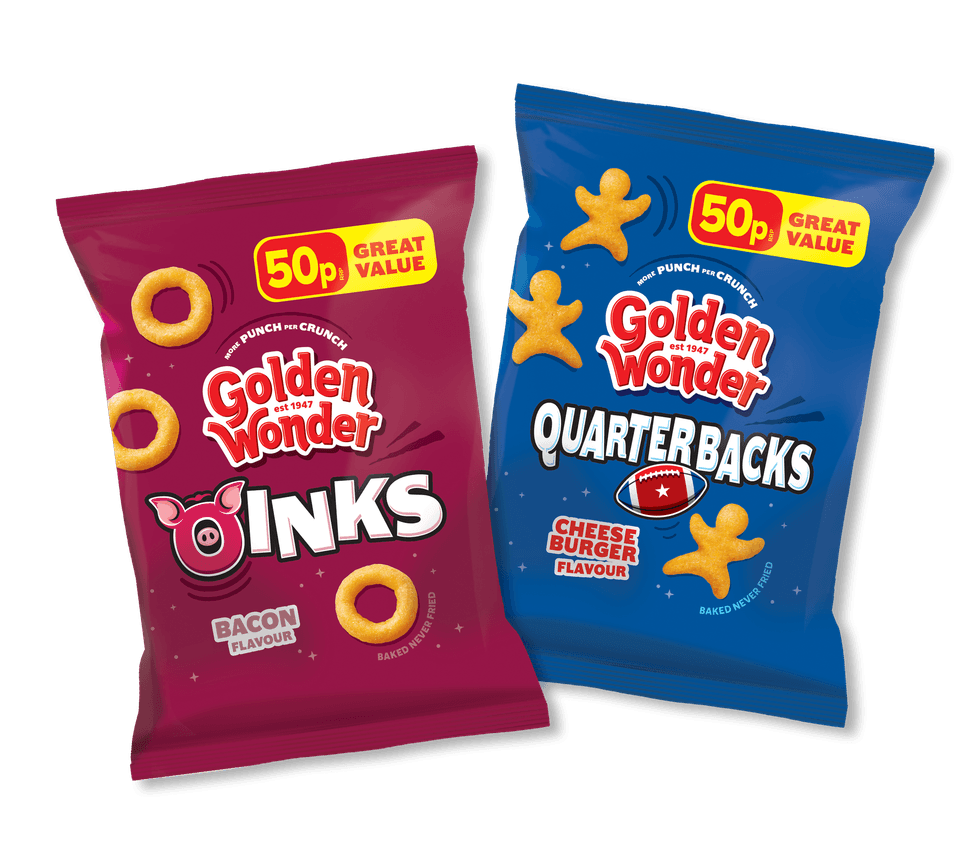 Golden Wonder has rolled out 50p price-marked packs across popular ranges, expanding its retail snack offering. Golden Wonder
Holford adds, “Retailers should maintain strong availability across both impulse and sharing formats. Impulse packs serve immediate-consumption, lunchtime and after-school missions, while larger formats support evening and social occasions.
“Golden Wonder’s £1 Sharing PMPs are significantly outperforming the market, growing +36.4 per cent versus market growth of +3.7 per cent, demonstrating the strength of the combination of trusted branding, bold flavour and visible value.”
The lunchtime opportunity remains particularly important.
Weekday lunchtimes are the most popular time for eating on the go, with 62 per cent of consumers saying they enjoy picking meal deal combinations. For retailers, getting the core range, formats, promotions and merchandising right can therefore make the difference between a shopper picking up one item and building a proper food-to-go basket.
Graham from KP Snacks agrees, “Retailers should look to create value by understanding customer expectations, whether that be through premium or value offerings.
“Last year, we launched McCoy’s Hot ‘N’ Spicy in a Grab Bag and PMP format, tapping into the growth of Food to Go occasions. The bold new flavour capitalises on “Spicy” as the third-largest flavour partition in CSN.”
KP Snacks' large-format PMP portfolio alone is now worth £133m and growing at 7.4 per cent, a genuinely extensive range built to catch the eye and trigger the impulse buy, alongside a full stable of smaller PMPs.
There is room for premium lines too. Tyrrells, for example, plays into the shopper looking for something a little more indulgent, while larger formats are increasingly finding their place beyond the traditional lunch mission.
Meal time: Sandwich and beyond
The traditional sandwich still has its place on the food-to-go fixture, but it's no longer the automatic answer to the "what's for lunch" question it once was. More and more shoppers are
actively hunting for something with a bit more heat, heft or personality to it, and that's precisely the gap Rustlers has spent years quietly making its own.
Rustlers, the £109m powerhouse of chilled snacking, supports retailers in growing food-to-go profits with its popular line-up of convenient, high-value, flame-grilled burgers and sandwiches.
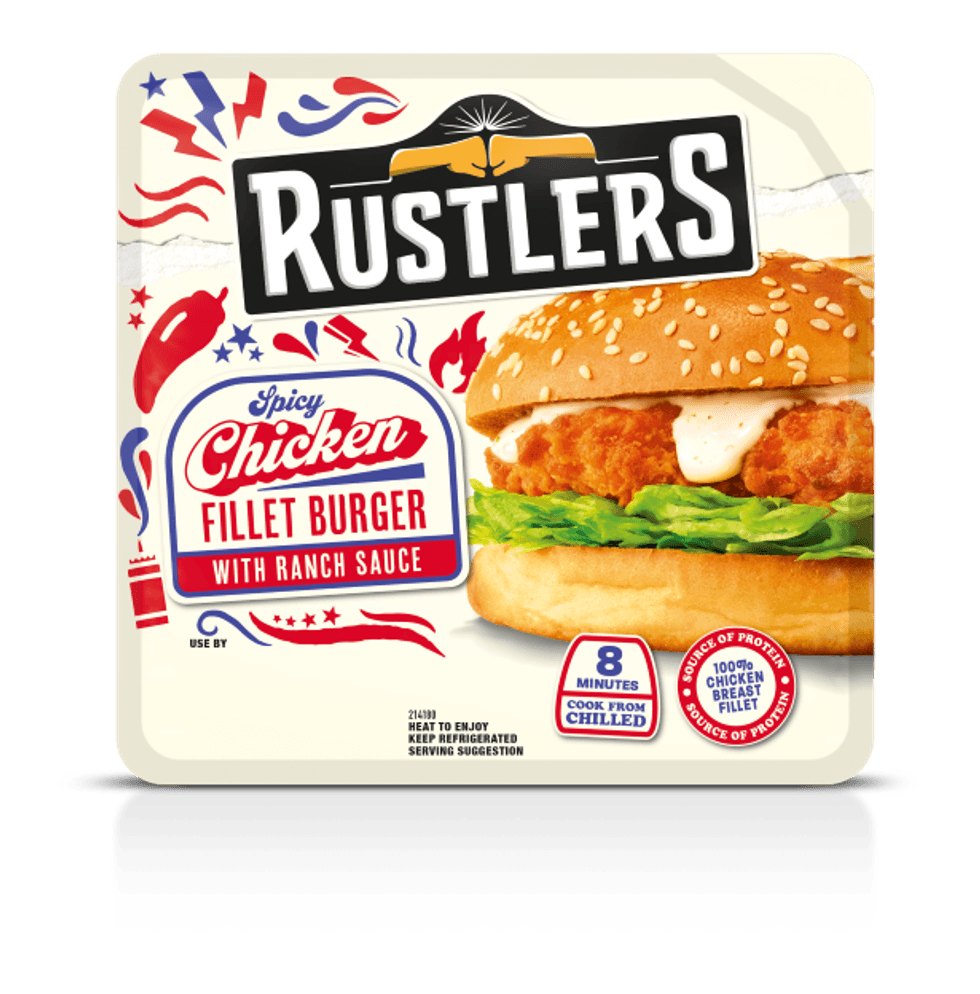 Rustlers taps into fried chicken obsession with spicy ranch burger Image: Kepak
Ross Davison, Head of Convenience at Kepak (Foods Division), home of Rustlers, says, “Consumers are also turning to products like Rustlers, which they view as ‘quick and easy’ and a ‘treat’, whether they’re eating at home, at work or on the move.”
Recent brand refresh has made market-leading Rustlers more relevant to food to go shoppers, improving the clarity of messaging on-pack and driving clearer differentiation between Rustlers Burgers, Sandwiches and Subs. Demand has also been boosted by the introduction of new product names and images, with consistent colouring for different types of protein.
Convenience has always been the whole point of the brand, but Rustlers has widened that promise rather than resting on it.
Alongside the classic microwave route, products can now be grilled or air-fried, both flashed proudly on the front of pack for anyone reaching for a bit more than a ping and a prayer.
And with the cost of living still squeezing wallets, PMPs have become the format doing the real legwork, giving budget-conscious shoppers the value, taste and quality combination that keeps them coming back, cementing Rustlers as a firm food to go favourite for consumers and a must stock for retailers.
Meal time is the time when shoppers are tend to pay a bit extra attention to what they are having while some time-starved ones look for something quick. That is when beef jerky comes handy.
Shaun Whelan, Head of Convenience at Link Snacks, stresses on having enough protein offering in food to go.
"Protein has become a key consideration, particularly among younger consumers, office workers and shoppers leading active lifestyles,” Whelan shares with Asian Trader.
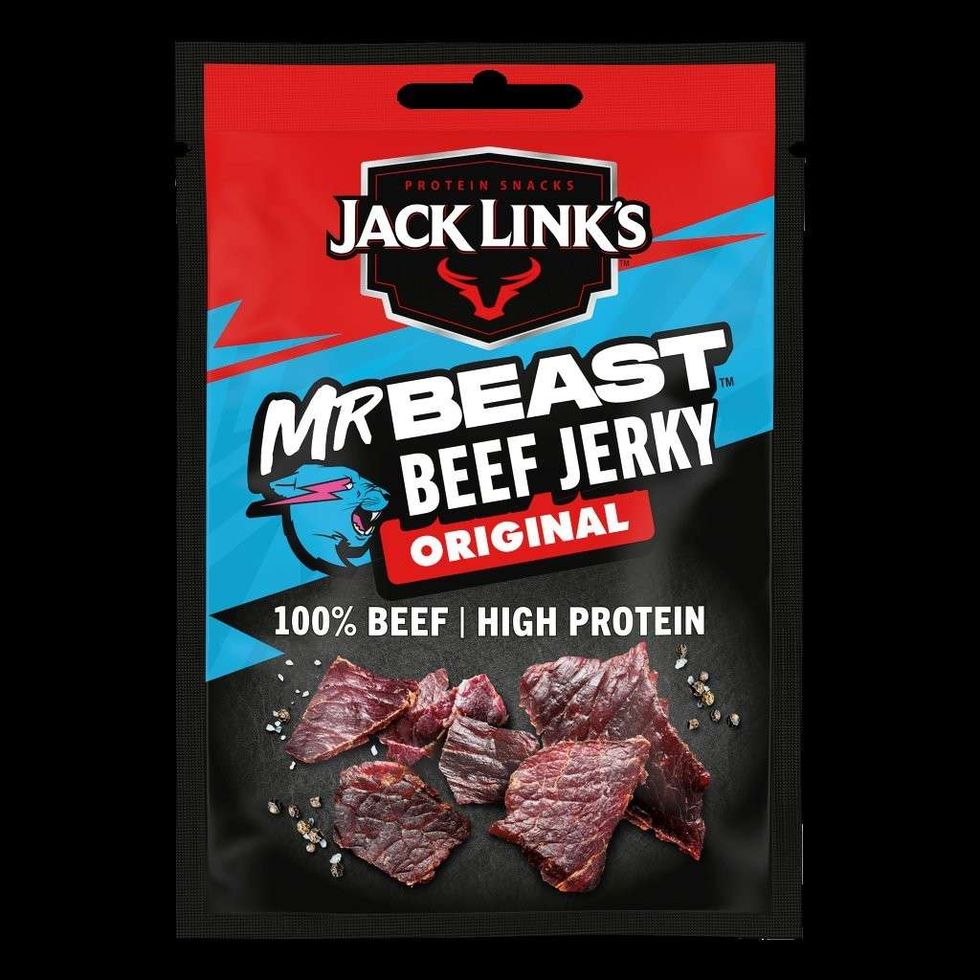 Jack Link's launches MrBeast co-branded meat snacks Photo: Jack Link's
Beef jerky through Jack Link's or flavour-led innovation such as the new Peperami x Doritos BBQ Sweet Tang range offer convenient solutions that deliver both protein and excitement.
"Meat snacks are increasingly being purchased as part of lunch missions, either replacing traditional snacks or complementing meal deals.
“Providing a range of protein options allows retailers to appeal to consumers seeking satisfying alternatives without compromising on convenience,” Whelan adds.
Stores located near offices, transport hubs, colleges or gyms may see stronger demand for grab-and-go products, while residential locations may attract more work-from-home shoppers looking for quick lunch solutions. Retailers should analyse sales data, observe purchasing habits and speak directly to customers to understand which products best meet local demand.
Retailers can attract shoppers by creating compelling meal-deal propositions, introducing new and interesting products, and highlighting alternatives to traditional lunch options. Products such as Peperami x Doritos BBQ Sweet Tang help create excitement in-store and give shoppers something different to discover.
Meal deals remain one of the most effective ways to drive lunchtime sales. Products such as Jack Link's Beef Jerky and Peperami x Doritos BBQ Sweet Tang help diversify meal-deal options and appeal to shoppers seeking something more substantial than traditional crisps or confectionery.
Meat-eaters aren't the only shoppers worth chasing at meal time. Retailers looking to have a wholesome meal-to-go offer need to widen their view of who is sitting at the table.
Lucy Grogut, Marketing Director at Quorn Foods, stresses that meat-free shoppers are highly valuable and they spend “86 per cent more than non-meat-free shoppers”.
“Ultimately, the future of meat-free lies in making it a truly mainstream choice, and that’s not something we can achieve alone. We’re passionate about working closely with retailers in a collaborative and meaningful way to fully unlock the potential of the category.
“Our focus is on engaging shoppers across more occasions and entry points, supported by exciting product innovation and consistent investment in impactful campaigns that reach consumers across multiple touchpoints,” Grogut says.
That mainstream ambition rests on proving meat-free doesn't mean compromise, on taste, convenience or price.
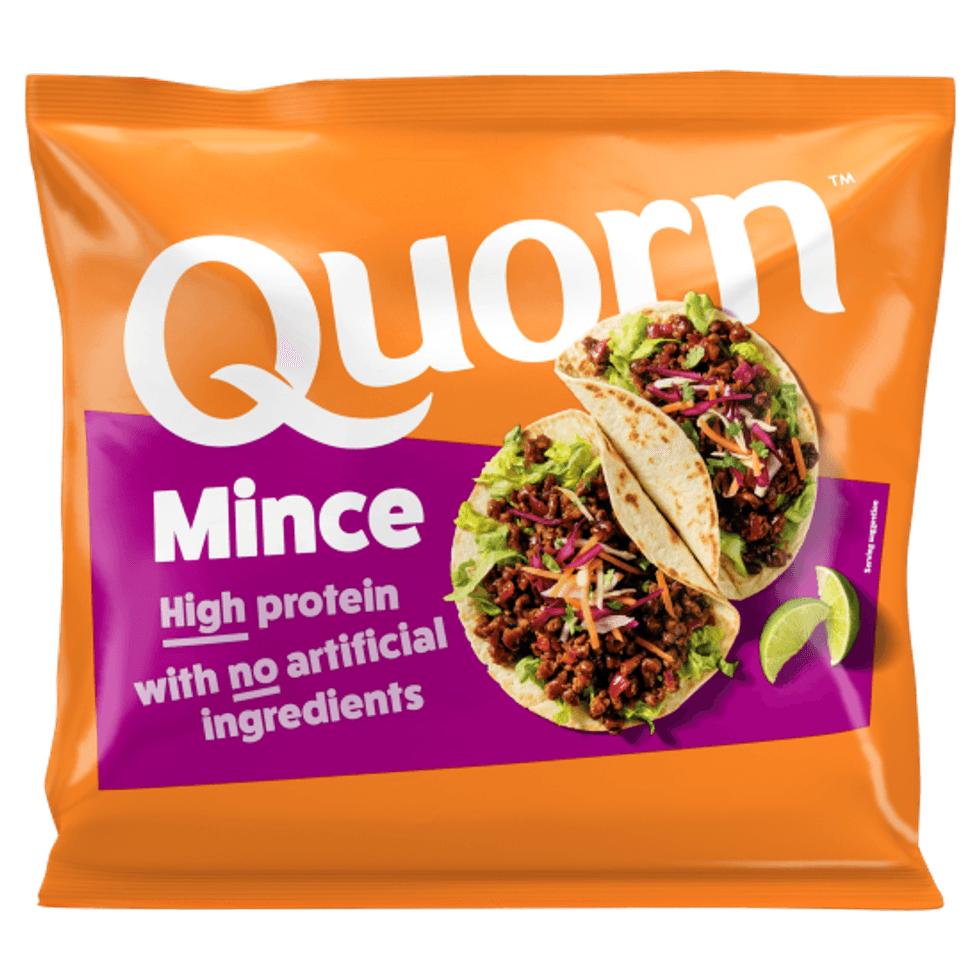 Quorn unveils new look across core frozen ingredients range Quorn Foods
Grogut adds, “Our Big Bag Great Value range has been a key focus here, offering larger frozen packs that help stretch budgets. These remain the most popular SKUs within the frozen meat-free market with Mince 500g the number one in both volume and value.”
Quorn has been sharpening the proposition further still, stripping artificial ingredients out of its core range altogether. The resulting "high protein" with "no artificial ingredients" line-up spans the brand's best-sellers, Quorn Mince, Pieces, Strips, Swedish Style Balls and Fillets, giving retailers a meat-free offer that trades on genuine credentials rather than just a green label on the packet.
For convenience retailers, the lesson from both sides of the meal-to-go fixture is fairly simple that shoppers looking for lunch are not necessarily loo
is a flame-grilled burger, an easy-to-prepare meat-free meal or a familiar favourite with a new twist, the opportunity lies in giving shoppers more reasons to make convenience their meal destination.
Drinks to go
Drinks are doing far more than washing down the sandwich. For many convenience shoppers, the drink is the starting point of the food-to-go mission and increasingly, what goes into the chiller is being judged on taste, function, value and, above all, choice.
Convenience stores remain the dominant channel for energy drinks generally. On the hot drinks side, Costa Express is still the brand most retailers reach for first.
Beyond the coffee machine, though, the cold chiller is fighting its own quiet battle, and it's increasingly a battle over health credentials. To-go often resonates with quick easy bites and drinks, and if the product has health credentials, shoppers are likely to go for it.
Alpesh Mistry, Sales Director, Suntory Beverage & Food GB&I (SBF GB&I), feels health continues to be an important driver of choice in soft drinks.
“For retailers, this means ensuring low and no-sugar options are given strong visibility within the fixture, as these products are increasingly driving category growth rather than serving as a niche alternative.
“Low and no-calorie variants now hold nearly 70 per cent of the volume share of the total soft drinks market.
“Ribena Blackcurrant Squash 1.5L in its core and No Added Sugar variants are our most popular drinks, along with Ribena Blackcurrant 500ml and Ribena Blackcurrant No Added Sugar 500ml that has shown strong performance in convenience with RTD variants.”
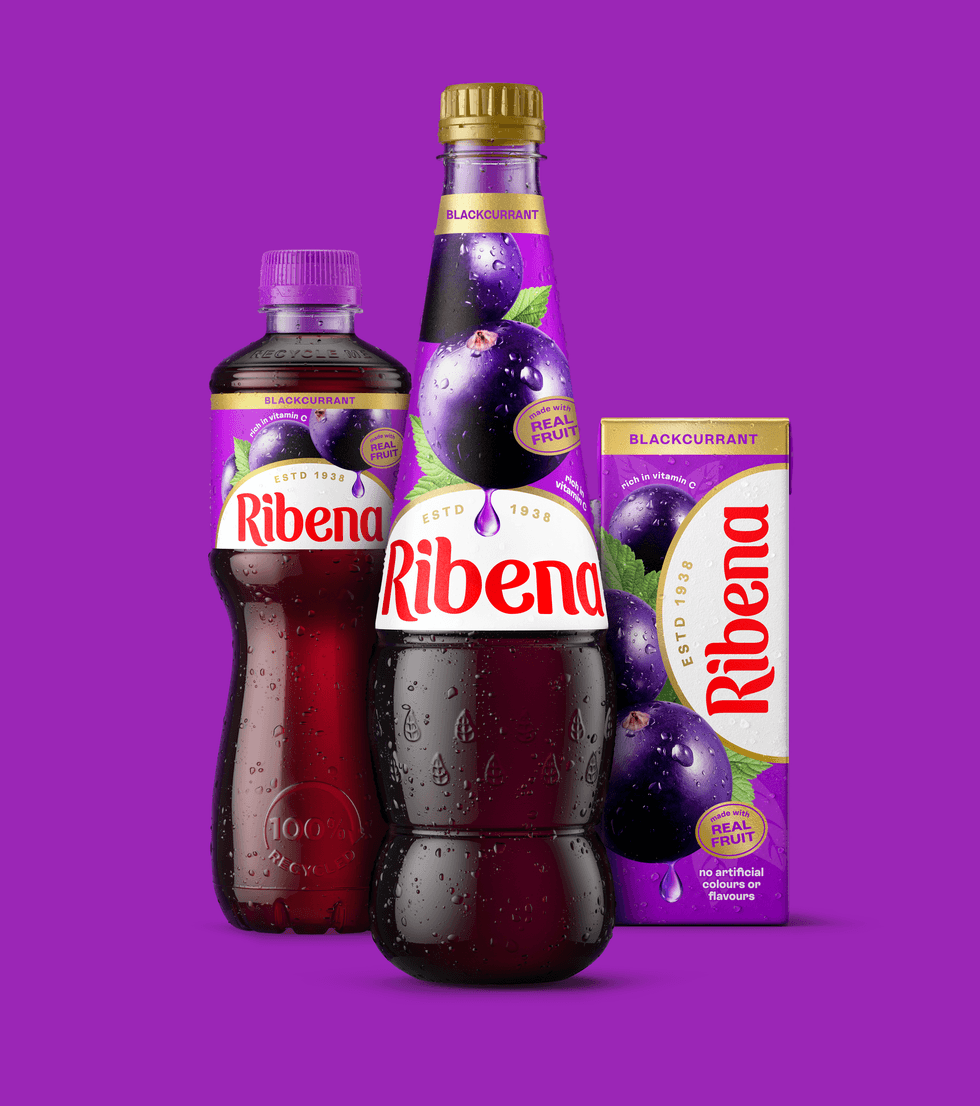 Ribena unveils new look accompanied by £7m campaign Ribena
That same instinct is shaping what lands on shelf next, not just what's already there. At Suntory, consumer demand for zero sugar has been taken into account both for NPD and when re-imagining limited editions, ensuring all launches meet the needs of today's consumers, such as its Lucozade Grafruitti Zero Sugar re-launch earlier this year, and the early numbers suggest shoppers noticed.
“In its first 19 weeks, Lucozade Energy Grafruitti generated £7.3m in value sales and 2.7 million litres sales,” Mistry said.
That final figure is particularly telling. The best drinks innovation is not simply stealing another soft drink’s sale but it is to persuade shoppers to try new categories.
And that brings us neatly to the bigger question of what is actually changing about the way shoppers use food and drink to get through the day.
How habits are shifting
The food-to-go shopper is not always looking for a meal. Sometimes they are looking for a pick-me-up at 10.30am, something to get them through the afternoon, or a small reward between the school run and dinner.
The “tide me over” mission is a particularly useful one to watch. Whether it is during the school run, evening commute or lunchtime Zoom call, 64 per cent of consumers eat snacks to keep their energy up throughout the day, while 53 per cent eat snacks to satisfy hunger between meals.
Graham from KP Snacks explains, “While tasty snacks are a hugely important part of this mission, we’re seeing an uplift in healthy snacking sales as shoppers look for a permissible energy boost throughout the day.”
That shift towards “permissible” indulgence is creating some interesting winners. Nuts, for example, are exempt from HFSS legislation and offer a combination of natural and functional benefits that increasingly fits the way shoppers think about snacking. Packed with protein and fibre, with those benefits clearly highlighted through labelling, KP Nuts is the number one brand in nuts, nearly four times bigger than the nearest branded competitor and worth £101.3m RSV.
There is a similar balancing act at play with popchips. Coming in at under 100 calories per serving, suitable for vegetarians and vegans, and with a third less fat than the market leader, the brand offers shoppers a more permissible snack option without asking them to surrender big flavour.
Health, however, is only one part of the equation. The shopper still wants something that tastes good, looks interesting and feels worth the money.
That is why the sweet spot for retailers is increasingly the intersection of health, flavour and familiarity, rather than betting everything on any one trend.
Mistry from Suntory Beverage & Food GB&I (SBF GB&I) adds, “Flavours are a major purchase driver, particularly for consumers who prefer zero sugar soft drinks, with nostalgic and familiar tastes continuing to resonate strongly.
“At SBF GB&I, we are consistently tracking emerging trends and consumer insights to inform the development of new flavours across our portfolio.”
Then there is nutrient conversation, which is becoming harder for retailers to ignore. Fibre is quietly overtaking protein as the functional claim shoppers actually care about; it is already ahead of omega-3s and collagen in consumer research, while “fibre maxing” content has racked up well over 150 million views on TikTok.
The rise in GLP-1 weight-loss medications is adding another dimension, with around 5 per cent of UK consumers now using them and another 10 per cent considering them.
Moreover, shoppers increasingly want to know what makes something genuinely good for them, and that means scrutinising labels and packaging more closely.
That scrutiny is also feeding the increasingly noisy conversation around ultra-processed foods.
Grogut from Quorn says, “As health climbs the shopper agenda, so too has the UPF conversation. People are growing concerned about ‘ultra processed’’ products and their place in an everyday diet.
“As the leading brand within meat free, it’s now more important than ever for Quorn to cut through the widespread generalisations and disrupt that conversation with fact-based messaging around health and nutrition.
“We are supporting retailers by providing clear messaging and products from trusted brands that tackle these concerns head on, whilst providing great taste and convenience.”
That approach is reflected in Quorn’s frozen ingredients range, where the front of pack highlights “High in Protein” and “No Artificial Ingredients”, supported on the back with “High in Fibre”, “Low in Saturated Fat” and “Cooks in 10 Mins” messaging, essentially giving shoppers the information they need without requiring them to conduct a nutritional investigation in the frozen aisle.
And the conversation does not stop at what is good for the shopper. As sustainability moves further into the mainstream, particularly among younger families and flexitarian shoppers, what is good for the planet is increasingly becoming part of the food choice conversation too.
Grogut says, “We know that retailers have their own internal sustainability targets to meet which may influence their approach to meat free. Quorn’s sustainability credentials make the brand a natural partner on these journeys.
“Quorn mycoprotein has a 98% lower carbon footprint than beef and 60% less land and water usage. Compared to rearing livestock, growing Quorn mycoprotein produces 80% fewer greenhouse gas emissions.”
For retailers, the takeaway is not that every emerging trend be it health, nutrition or sustainability need to be kept in mind. Food-to-go shopper want convenience, but they also want choice and indulgence, but increasingly with a reason to feel good about it.
What’s new this season?
For retailers, new product launches is not just about keeping the fixture looking fresh. In a food to go mission, where so many purchases are made on impulse, a new flavour, format or twist on a familiar favourite can be the thing that makes a shopper stop, look twice and add something extra to the basket.
Lucozade Grafruitti is a good example of how nostalgia can be given a modern retail job. Originally launched as a full-sugar limited edition back in 2015, Lucozade Energy Grafruitti Zero Sugar returned this April, with Suntory making it a permanent part of the range.
Mistry from Suntory explains, “We carefully flavour matched every note to bring the drink back in a refreshing zero-sugar version while staying true to the original taste.
“The return of a well-loved flavour in a zero-sugar format gives retailers an opportunity to tap into nostalgia while meeting growing demand for lower-sugar options, helping broaden appeal across different shopper groups.”
 Lucozade Energy Grafruitti returns to shelves Photo: Suntory Beverage\u00a0& Food
The brand has plenty of momentum elsewhere in the fixture too. Across grocery, convenience and wholesale, Lucozade Sport is a key sales driver, with Lucozade Sport Ice Kick among Suntory’s top-performing drinks, adding more than £27m to the brand in 2025.
For convenience retailers, high-profile collaborations and limited-edition flavours can create standout moments in the chiller, giving shoppers another reason to pause at the fixture.
The same formula is playing out in snacking, where the opportunity is increasingly about taking a familiar format and giving it a reason to feel new.
nākd. is tapping into the protein opportunity with its latest addition, while keeping the product firmly within its recognisable fruit-and-nut territory.
Boardman says, “We’ve just announced a new addition to the range with nākd. Protein Cherry, which we’ve launched in response to cherry being a huge trend right now, while adding a clear protein benefit.
“What works so well in wholesale is that nākd. Protein doesn’t look or feel like a traditional protein bar, making it an easy grab-and-go choice for shoppers who want to boost protein without changing their snacking habits.
Golden Wonder, meanwhile, continues to put its money behind bigger flavours, sharing occasions and visible value. Recent launches include Golden Wonder Ridges Flame Grilled Steak and Paprika, Golden Wonder Oinks £1 PMP Sharing, Golden Wonder Saucers Sour Cream & Onion £1 PMP and Golden Wonder Bikers Cheese & Onion 35p PMP.
The launches are supported by ongoing trade PR, retailer communications and category marketing designed to improve visibility and help independent retailers drive sales.
Link Snacks too continue to invest heavily in the meat snacks category through both product innovation and marketing support.
Whelan says, “Jack Link's is building awareness through its partnership with global creator MrBeast, helping attract younger shoppers into the category and drive engagement.
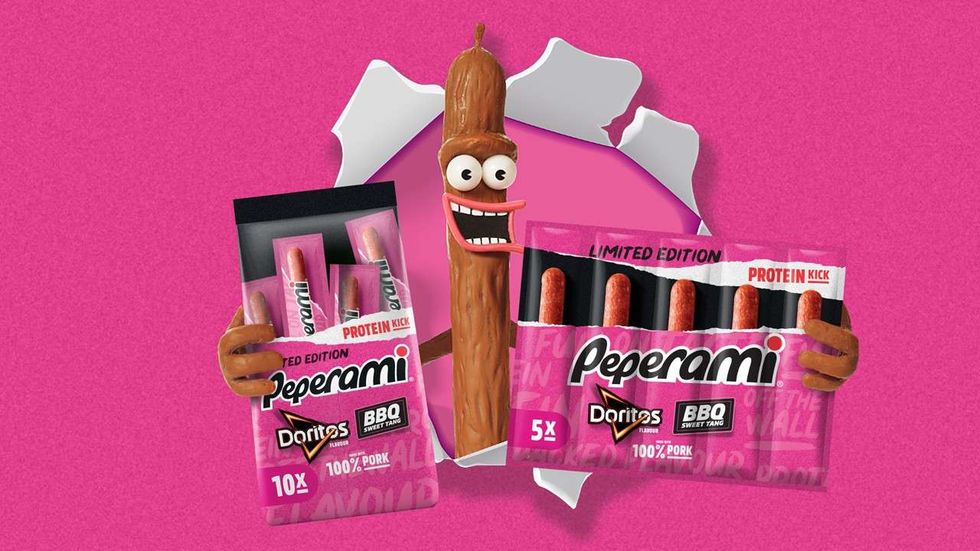 Peperami x Doritos Launch BBQ Sweet Tang Range Image from Peperami
“Meanwhile, Peperami has recently launched its limited-edition collaboration with Doritos. The new Peperami x Doritos BBQ Sweet Tang range brings together two of the UK's most recognisable snacking brands, combining Peperami's protein-packed meat snacks with Doritos' iconic flavour credentials.
“Supported by a heavyweight marketing campaign throughout 2026, the launch is designed to drive awareness, trial and repeat purchase while helping retailers inject excitement into lunchtime and food-to-go occasions.”
And while healthier snacking is taking up more space in shoppers’ heads, confectionery remains very much in the conversation when the mission is “I fancy something nice.”
Freshness matters here too. TWIX is a top ten UK bar brand, with previous flavour variations bringing an additional 512,000 shoppers into the brand. Hazelnut is one of confectionery’s most popular flavour profiles, with new variants driving 56 per cent of category NPD sales.
GALAXY has taken a different route, adding two bakery-inspired flavours to More to Share – Millionaire Crumble and Cinnamon Swirl.
M&M’s Cookie Dough is also now a permanent addition to the core M&M’S range, joining Peanut, Chocolate, Crispy and Minis. The launch was built to drive incremental growth in bitesize by unlocking new occasions and new buyers.
The common thread is not novelty for novelty’s sake. The strongest launches give shoppers something they already understand and then add just enough difference to make it worth trying.
For a convenience retailer, that is the sweet spot.
Making it work on the shop floor
Of course, the best NPD in the world cannot sell if shoppers do not see it. In convenience, where many food-to-go decisions happen in seconds, placement is not a finishing touch; it is part of the proposition.
Impulse purchasing drives the overwhelming majority of soft drinks sales in convenience, which means a chiller tucked away at the back of the store is working far harder than it needs to.
Drinks to go, particularly energy and functional drinks, need clear sightlines near the entrance and till, within whatever HFSS constraints apply to the format, and should be visually connected to the food-to-go fixture rather than treated as a completely separate category.
Mistry from Suntory Beverage & Food GB&I (SBF GB&I) stresses on going for brand blocking and double facing, calling them two simple yet effective ways to make shelves easier to navigate and improve customer experience.
“By grouping brands together and placing two rows of the same product side-by-side, retailers can improve shelf cohesion, reduce gaps, and make it easier for shoppers to spot the drinks they’re looking for.
“Keeping RTD soft drinks chilled is essential, especially for shoppers on the go.
“While having the drinks ready to go in chillers is essential, we’ve also seen success with retailers including ambient shippers with our drinks throughout their stores, most recently helping to drive sales for our NPD Lucozade Energy Grafruitti Zero Sugar.”
Retailers should merchandise lunch products together to make shopping as easy as possible.
Whelan from Link Snacks suggests retailers to create dedicated lunch zones that include sandwiches, drinks and snacks encourages shoppers to purchase multiple items in a single transaction.
“Protein-rich snacks should be positioned alongside meal-deal fixtures and food-to-go areas to maximise visibility and encourage impulse purchases. New and innovative products can also be used to draw attention to the fixture and stimulate trial,” adds Whelan.
Many snacking decisions are made in the moment in convenience stores, so clarity, trust and relevance are key. Shoppers are not browsing for long; they want to understand quickly why a product is right for them.
That is why TREK and nākd. have a natural role to play in the channel.
Boardman tells Asian Trader, “We launched our first ever out-of-home campaign for TREK in February, with two more waves planned in June and October, helping to build brand awareness and drive recognition at fixture.
“In 2026, TREK will reach half a million runners through RunThrough event branding, sampling and activation, and benefit from multi-million reach through Saracens’ kit and stadium branding.”
nākd. has matched that momentum with a major £1m digital ATL investment planned across three waves in January, June and September, as well as just finishing a social-led office sampling campaign in January.
Even the strongest brand campaign eventually has to translate into one very physical thing: a shopper putting more than one product into their basket.
That is where cross-merchandising becomes one of the simplest wins available to retailers. If the sandwich, snack and drink components are scattered across three different aisles, the shopper has to do the assembly work themselves and plenty will simply settle for one item or abandon the mission altogether.
Holford from Golden Wonder says, “Retailers should build link sales around recognisable shopper missions rather than promoting unrelated products together.
“Position sharing snacks beside beer, cider and wine for Big Night In, sporting and social occasions. Site impulse packs near sandwiches, food-to-go, soft drinks and meal deals to capture lunchtime shoppers.
“Seasonal displays linked to occasions (like Halloween and Christmas) and major sporting tournaments, can create additional reasons to buy.”
The objective is to make the complete occasion visible in one place, increasing convenience for the shopper and total basket spend for the retailer.
And that is ultimately what good food-to-go merchandising should do. It should not simply make individual products easier to find; it should make the whole mission easier to buy.
Proprietary food-to-go
There is food to go, and then there is your food to go. That distinction is becoming increasingly important as convenience stores compete not just with supermarkets, but with Greggs, coffee shops, fast-food operators and an ever-growing army of delivery platforms.
A proprietary, freshly made offer gives shoppers something they cannot simply pick up at the store down the road. More importantly, it gives the retailer greater control over the product, the price and, crucially, the margin.
Retailers are already taking notice. Judith Smitham, Sunder Sandher, Roli Ranger, Mike Sohal and young gun Arsh Singh Sohal are among those putting their weight behind proprietary freshly made food, recognising that the opportunity is about more than simply adding another food-to-go bay.
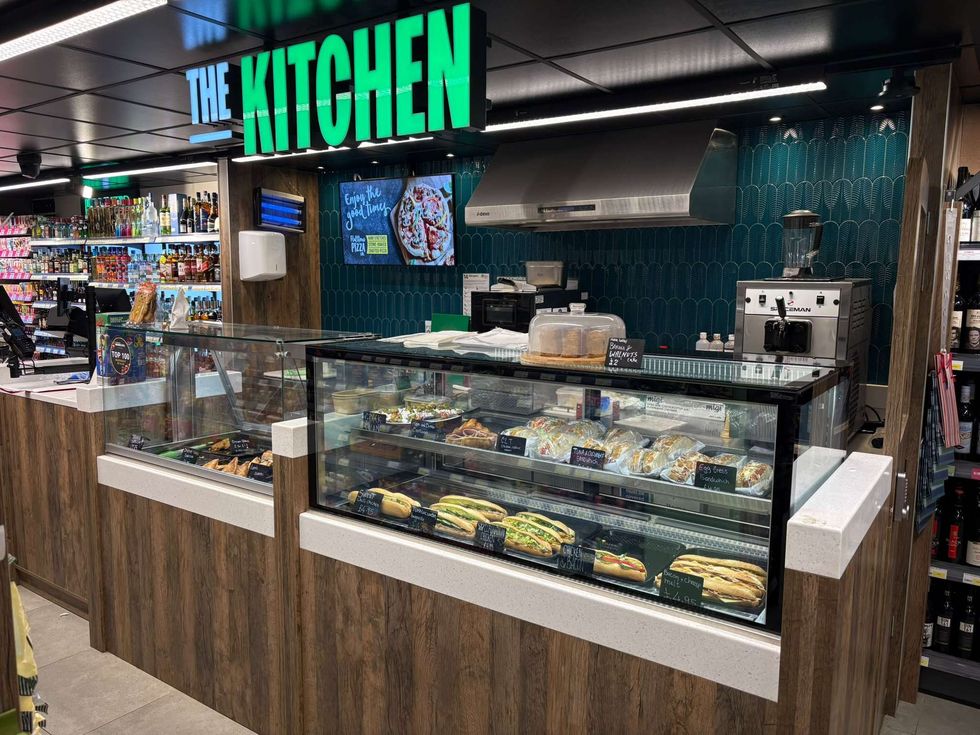 Roli Ranger
There is a margin argument too. Retailers speaking to Asian Trader have shown margins of around 40-60 per cent on some hot-food operations, with individual retailers reporting margins of 80-100 per cent on particular freshly made lines.
According to retail expert Scott Annan, some of the top multi-store operators, such as David Sands and Terry Mulkerns, can compete aggressively on the price of core grocery SKUs because of the margins they generate from proprietary food.
That is a powerful proposition at a time when convenience retailers are under pressure to remain competitive on everyday prices while finding new sources of profit.
Some operators are taking the idea considerably further. Heart of England Co-op’s new Warwick store has adopted a foodservice-led format built around its own DeliCo proposition, offering made-to-order food alongside a coffee shop.
Elsewhere, independents are proving that proprietary food does not necessarily require a restaurant-sized operation or an army of chefs. Hot counters and ovens can be used for breakfast rolls, chicken, pies, pasties, pizza and other freshly cooked products, allowing retailers to build an offer around the equipment, skills and footfall they already have.
The opportunity is bigger than lunch
The most interesting thing about food to go is that it is no longer really a category. It is a collection of occasions, stretching from the first coffee of the morning to the evening meal, with snacks, soft drinks and quick bites filling the gaps in between.
For convenience retailers, that creates plenty of opportunities, but it also means the old approach of simply stocking the bestselling sandwich, crisps and drink is unlikely to be enough. Shoppers want choice, but they also want value, speed, familiarity and increasingly, something that feels healthier, fresher or more interesting.
The retailers getting the most from the category are thinking in terms of missions rather than individual products. They are asking what their particular customers need at 8am, 1pm and 6pm,
and building the range and merchandising around those moments. A commuter store may have more to gain from coffee and breakfast; another may find its sweet spot in hot food and evening meals.
And for retailers prepared to go a step further, proprietary food could be the real differentiator.
Because ultimately, the food-to-go opportunity is not about selling a sandwich faster. It is about giving shoppers another reason to walk through the door and, once they are there, giving them enough reasons to buy a little more.