



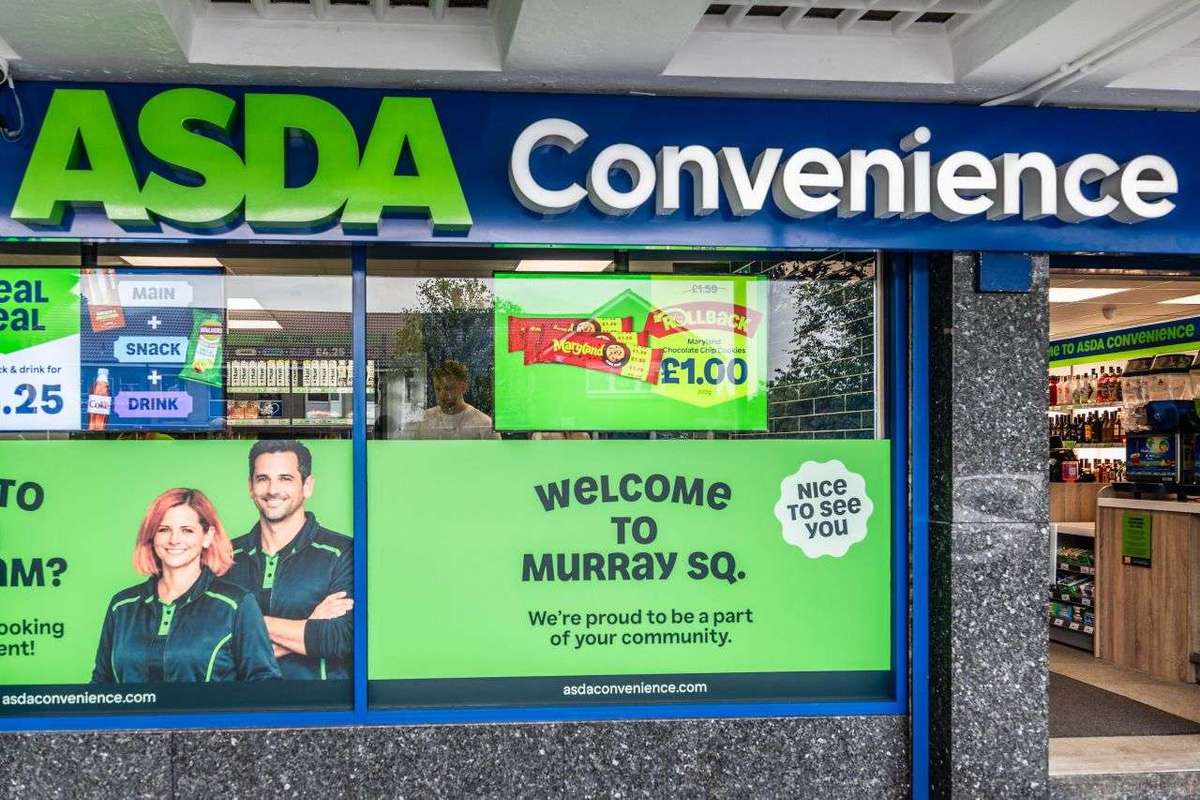

Asda’s move into wholesale is the latest sign that Britain’s major supermarkets want a bigger slice of the £50 billion convenience market. As independent retailers become an increasingly important route for supermarkets, the real battle in future could be between supermarkets and wholesalers.
The convenience channel is no longer simply a place for supermarkets to open smaller versions of their stores.
For Britain’s major grocers, the channel has become too valuable and too large to ignore.
That matters because the convenience channel already has something supermarkets have historically struggled to build at scale, which are thousands of stores in established local locations, run by people who know their customers.
The routes into that market vary. Tesco acquired and now owns wholesale giant Booker, while Morrisons has built a substantial Morrisons Daily estate alongside its franchise operation. Co-op has Nisa within its wholesale proposition, while Sainsbury’s continues to expand its company-owned Local estate.
Now Asda is adding another model to the mix.
Last month, Asda announced the launch of ‘Asda Convenience’ - a new wholesale supply model for independent retailers in the convenience market.
The three-store trial is rolling out in Scotland in partnership with independent operator One-O-One, testing how retailers can run stores under the new Asda Convenience fascia and bring the retailer’s value-led offer to more local communities.
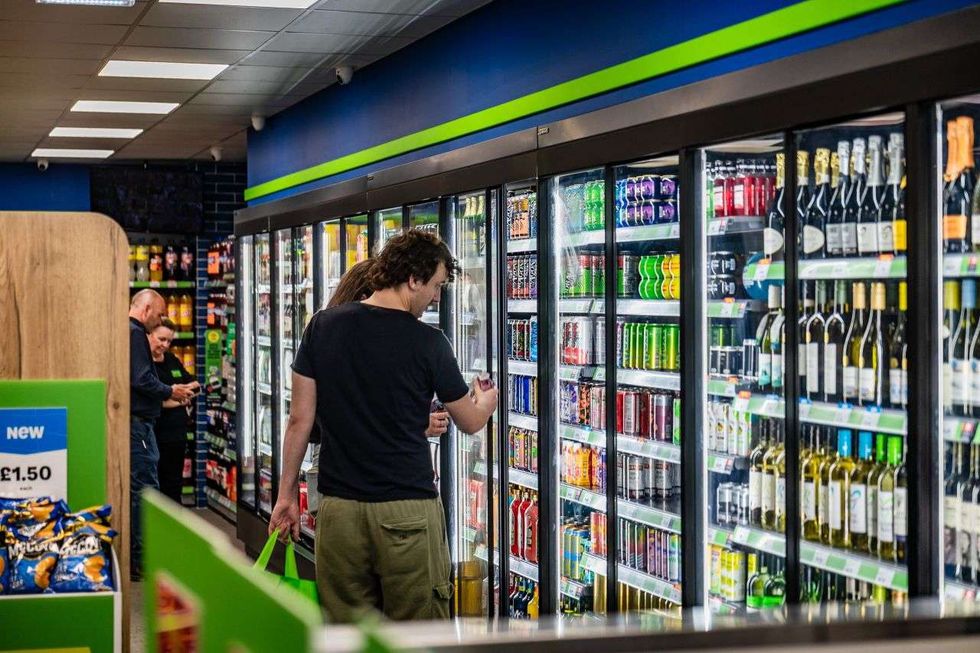
Each store will stock around 3,500 products, including Asda own-label, fresh and chilled groceries, and food-to-go, all at Asda’s well-known value prices.
Unlike Asda Express, which is owned and operated by Asda, the new format is designed around independent retail partners. Asda says there is potential to expand the model to up to 50 additional stores this year, subject to the performance of the trial.
On its own, three stores do not represent a revolution. But the significance lies less in the number of shops and more in the route Asda has chosen to take into the market.
Supermarkets want in
TWC Development Director and convenience data master Tom Fender estimates convenience stores account for around £50bn in annual sales, equivalent to roughly 20 per cent of the value of supermarket sales.
“Supermarkets want a slice of the convenience pie, and they feel they have every right and opportunity to deliver what consumers want,” Fender tells Asian Trader.
 Tom Fender TWC
“Partnering is not without risk, but it does offer a lower cost to entry.”
That last point goes some way to explaining why the independent retailer has become increasingly important to supermarket strategy.
Opening and running small stores is expensive and operationally complex. More importantly, supermarkets do not necessarily find the economics of a very small footprint easy to replicate.
Morrisons provides perhaps the clearest example of how the partnership route can work. It now has more than 1,700 Morrisons Daily convenience stores, around 700 of which are franchise stores. Under its franchise model, independent operators own and run their stores while trading under the Morrisons Daily brand, with access to branding, store design, supply, promotions, loyalty and operational support.
Asda is therefore not entering an empty space. It is entering a channel in which the major supermarkets have already begun experimenting with different ways of combining corporate scale with independent retail ownership.
And that is why retail and engagement strategist Phil Mc Mahon sees Asda’s move as less as revolution and like a catch-up.
“There is nothing particularly new or innovative at play here. Asda is moving into an established channel that other majors have been operating in for years,” Mc Mahon tells Asian Trader.
“It’s a valuable space to play in, and the current Asda leadership may feel it has been leaving money on the table for Tesco, Co-op and Morrisons by not being there.
“It could be taken as a signal that Asda considers it a strategic priority to compete with Tesco’s Booker business and, maybe to a greater extent, Morrisons Daily.
 retail and engagement strategist Phil Mc Mahon Phil Mc Mahon
“Asda hasn’t exactly been setting the world on fire in recent years, and I appreciate it is still in the early stages of a turnaround that will take time, but I don’t think there’s any reason to assume it will enter an established channel and suddenly cause major disruption.”
Asda’s proposition
If the model itself is not new, the more interesting question is what Asda can bring to it.
Joseph Sutton, Asda Express- Fuel & Wholesale Director , told Asian Trader that Asda Convenience and Asda Express will operate as separate parts of the wider convenience strategy.
“The two formats will sit alongside each other as part of our broader convenience strategy, with customers benefiting from the same focus on value, quality products and a familiar Asda shopping experience.”
“Our focus is on creating value for partners and customers, so we're approaching the market with a lot of respect for existing operators and wholesalers.”
Sutton acknowledged that convenience and wholesale are key growth channels for Asda, where the supermarket sees significant opportunity to expand our reach and relevance.
“Launching Asda Convenience is a natural next step as we look at new ways to bring Asda’s value, own-brand range and fresh food offer to more customers,” Sutton said.
“One-O-One are an experienced convenience operator with a proven local presence, so were an ideal partner to help us test and refine the model.”
Sutton is confident that Asda has a clear opportunity here to offer strong independent retailers something distinctive by combining its value credentials, own-brand range, fresh food expertise and supply chain strengths.
Apart from usual grocery and ambient SKUs, the franchise stores are expected to have parcel storage room, Costa Express machine, reverse vending machine and hot food-to-go counter.
For Asda, the target will not simply be any independent retailer.
 Joseph SuttonAsda
Sutton stressed that the business is looking for only “well-established multi-site operators who run great stores and see an opportunity to grow areas such as fresh food, core grocery and own label”.
“As we develop the model, we will continue to assess which partners are the best fit, but our priority is finding retailers where we can genuinely add value to their proposition,” he added.
That proposition plays into one of the biggest changes taking place inside the convenience itself.
Paul Stirling, group retail director at One O One, said the partnership combines the convenience chain’s local trust and knowledge with Asda’s “exceptional value, market-leading own-brand range and strong customer proposition”.
Asda reportedly will be investing “over £2m” in the project by the end of the year.
Traditional convenience categories remain hugely important, but the role of the store is expanding. Fresh, chilled, food-to-go and meal solutions are becoming increasingly important as retailers look to capture more than the traditional top-up mission.
That shift could play directly into Asda’s hands. Unlike a traditional wholesaler whose strength has historically been rooted in core convenience and impulse, Asda comes into the channel with the credentials of a supermarket and, with them, an established fresh and chilled offer.
That is where Fender sees a potential point of difference.
“Wholesale supplied c-stores have huge strength in traditional convenience and impulse categories.
“These categories are still huge but today’s consumers want fresh, shortlife, chilled lines. Asda has all of this and being a supermarket will have very strong fresh credibility in the eyes of many consumers.
“Asda’s food to go lines will do pretty well too. So for me, it’s expertise in food led missions as well as food and snacking to go that can be a differentiating factor. In short, it makes a lot of sense on paper.”
Wholesaler becomes the battleground
That is where the implications become more interesting.
Asda may be another supermarket entering convenience, but its decision to use independent retailers means it is also stepping into territory traditionally occupied by wholesalers.
Booker, Nisa, SPAR, Bestway, regional wholesalers and other operators already have established relationships with independent retailers. They also understand the practical realities of supplying small stores from delivery economics to ranging and the day-to-day needs of independent operators.
Asda now adds another option for retailers considering their supply and fascia arrangements.
Patrick Mitchell-Fox, Insight Partner at IGD, believes delivered wholesalers could feel the impact most if the model succeeds.
“If it’s successful it will be disruptive for existing wholesalers, especially those dependent on a delivery model of service, so SPAR and Co-op Wholesale (Nisa) in particular,” Mitchell-Fox tells Asian Trader.
“Asda is saying it will only supply mini chains of 10 or more stores to begin with, which are probably most plentiful in the forecourt sector, so any wholesaler servicing forecourt groups will face an additional challenge so that would be putting Booker and Morrisons in Asda’s sights too.”
But there is a significant learning curve ahead for Asda.
“Opening and running convenience stores is ‘hard yards’ for major grocery retailers looking to expand in the channel as their model of retailing needs a relatively large footprint,” Mitchell-Fox explained.
“A large majority of convenience stores in the UK are smaller than 2,000 sq ft, but multiple retailers find it difficult to achieve their sales and profitability goals in this size of store.
“They can access the opportunity more readily by just supplying these stores and letting a third party bear the cost and complexity of actually running the stores.
“I think Asda will have a lot to learn about how to service small stores and independent retail businesses.
“They are unlikely to get it right straightaway. While they may achieve an initial burst of growth building the wholesale business, in future years, chasing incremental business can be expensive.”
 Scott Annan Scott Annan
That is an important distinction. The opportunity may be sizeable, but scaling a wholesale operation is not simply a matter of putting an Asda fascia above the door.
While some experts feel a start of shift in the dynamics in convenience retail, food and convenience retail specialist Scott Annan takes a more sceptical view of Asda's prospects, but his concern about the implications for wholesalers is sharper.
“I do not believe this Asda trial will have any impact on British convenience retail. It should be an alarm bell for wholesalers supplying independent retail.
“Tesco and Morrisons have clear strategies on their operated convenience stores and independent retail branding and supply. Coop Manchester has Nisa, albeit the last two years numbers point to a weakening performance, as does the management churn. Sainsbury’s Local and M&S Food operated stores are performing strongly.
“I do not see a profitable place for an Asda supply chain. Asda’s net debt position of £3.1bn and 2025 loss of almost £1bn, suggests that management should have clear priorities that do not include wholesale.
“However, it should be an alarm bell for wholesalers.
“If they chose to continue to push ‘excessive’ core grocery SKUs to independent retailers (& take CPGs’ funds), rather than developing day part, fresh food solutions, then there is a clear risk of retailers being tempted to opt for major multiple supply chain."
Booker and Bestway were reached out for the comments.
Independent retailer becomes the prize
For retailers, however, the increasing interest from supermarkets could create another layer of choice.
That competition could ultimately be more significant than the number of Asda-branded stores themselves. An independent retailer with a strong store, good location and ambitious plans is an attractive partner for any supplier looking to grow. The question is increasingly what each model can offer in return.
For supermarkets, it is a route into established locations without taking on the full cost and complexity of running every store.
For retailers, it can mean access to scale, own-label, fresh supply chains, technology, loyalty and operational expertise that would otherwise be difficult to replicate independently.
For wholesalers, it creates another competitor for the relationship.
And for shoppers, the potential benefit is greater access to supermarket-style ranges and pricing closer to home.
Fender believes that retailers will gain access to capabilities that can complement their own core convenience ranges.
“Supermarkets will be looking to partner with forward thinking hard working, entrepreneurial, customer focused retailers who believe in delivering good standards,” he said.
“The battleground for attracting the best independent retailers has potentially just gone up a notch but we need to see if this trial sticks and expands first.”
 Asda
Asda
Mc Mahon raises the question of potential of Asda pricing structure in the convenience channel.
“It remains to be seen whether Asda will bring anything close to its supermarket pricing into the sector, but it is important to remember that we are in a period of sustained pressure on disposable incomes,” he said.
“If it does, it could have a positive effect on affordable food accessibility, particularly in areas where people have limited access to a large supermarket.”
Having said that, Mc Mahon does not see Asda’s move as changing anything concrete.
“If the trial is a success, then we can expect to see it grow, but I don’t think it fundamentally changes wholesale or independent convenience retail over the next five years,” McMahon said.
“The most visible change is likely to be that some stores which currently have another fascia above the door will have Asda Convenience there instead.
“That will inevitably take time, because independents operating under existing fascia agreements will all be at different stages of their contract terms.
“Asda is more recognisable than most convenience fascias, though, and if it can deliver a better range at better prices, there will undoubtedly be interest from retailers and shoppers.”
A model to watch
There is also a bigger question about whether the UK convenience sector could see more partnership and franchise models emerge.
Fender believes it is one trend worth watching.
“Franchising is not new,” he pointed out. “It’s very established model around the world in ‘convenience’. But not really in UK convenience.
“There are plenty of franchising models in other channels (food to go, coffee shop etc) but it’s not particularly established in UK convenience.
“Bargain Booze was pretty close to a franchise model a few years ago. Maybe 2027 will see the emergence of more franchising operating models in UK convenience stores. Something to keep an eye on,” he said.
Asda clearly believes there’s a prize to be won, and its entry will force the incumbents to review what they offer independent retailers.
As Mc Mahon puts it, Asda’s move has the potential to invigorate the sector.
“Increased competition is generally an indicator of a healthy market,” Mc Mahon told Asian Trader.
“If a retailer feels its existing agreement is not meeting its profitability expectations, or the relationship is suffering from indifference and inertia, then it owes it to itself to explore the Asda Convenience proposition when the opportunity arises. Why wouldn’t he?
“For wholesalers, that means another serious competitor at the table when retailers come to review or renew their existing agreements.”
For now, Asda has only three stores to prove the model.
Whether those three become 50, 500 or remain a small experiment will depend on the economics, retailer appetite and Asda’s ability to translate supermarket capabilities into the very different world of independent convenience.
For independent retailers, the attraction is not simply the fascia above the door. Access to supermarket scale can potentially bring a broader range, stronger own-label credentials and fresh expertise, while allowing the retailer to retain the local knowledge and day-to-day ownership.
But that also raises the bar for the rest of the market.
If supermarkets can offer independents a combination of scale, price, fresh capability and a recognisable consumer brand, traditional wholesalers have to make sure their proposition offers retailers a compelling reason to stay.
And that competition is not necessarily about price alone. The ability to help retailers evolve their stores, identify new missions and improve execution could become just as important as the products arriving through the back door.
Asda, meanwhile, still has to prove that the model works at scale.
The trial may be small, but the strategic question it raises for the wider convenience supply chain is considerably bigger.