



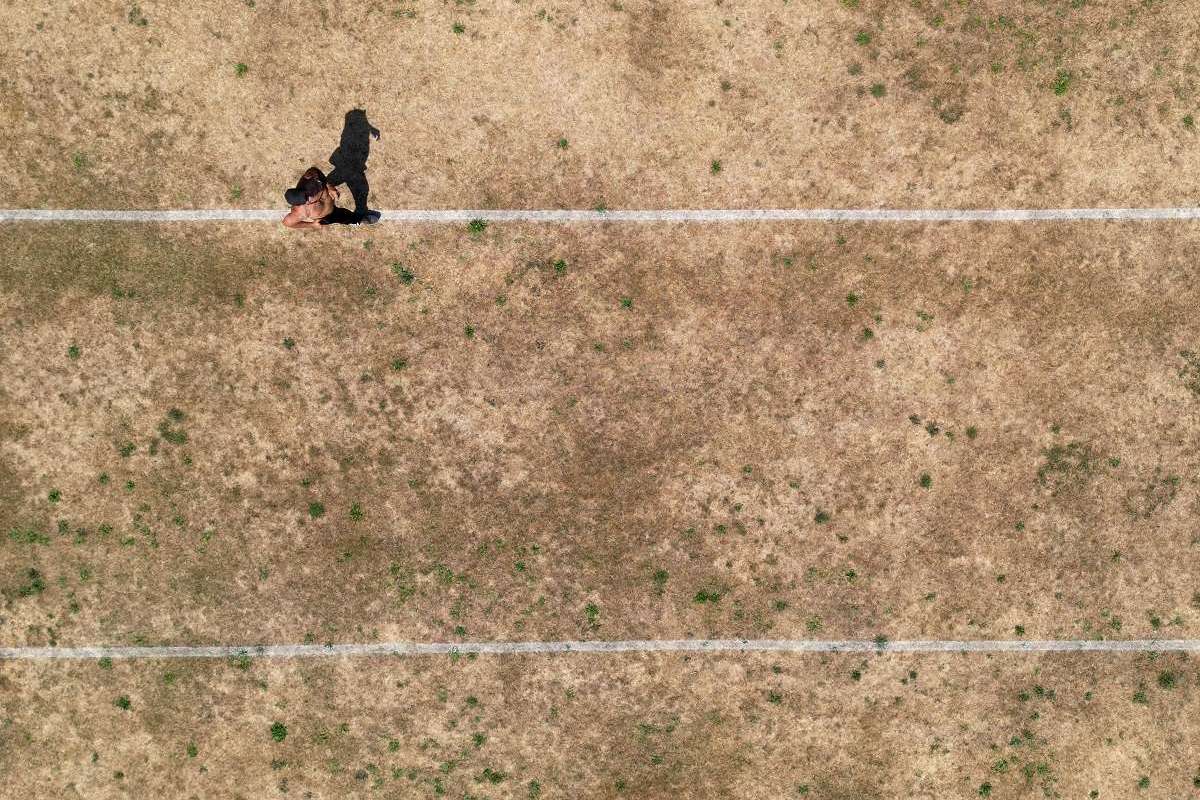

Half of England has been declared in drought following an exceptionally hot and dry summer, prompting warnings from farmers over mounting pressure on food production and raising concerns about further increases in fresh food prices.
The Environment Agency on Wednesday declared drought status across seven regions covering large parts of central, eastern and southern England after July recorded just seven per cent of its average rainfall, with some southern areas receiving as little as one per cent.
The areas now in drought are East Anglia, Hertfordshire and London, the Thames Valley, Hampshire and the Isle of Wight, Devon and Cornwall, the West Midlands and Wessex, while several other regions remain under prolonged dry weather status.
The announcement comes as retailers are already facing renewed inflationary pressure on fresh food. The latest BRC-NIQ Shop Price Monitor, published on Tuesday, showed fresh food inflation accelerated to 3.1 per cent in July, with retailers continuing to rely on promotions to offset wider cost pressures.
The National Farmers' Union said prolonged dry weather and repeated heatwaves were making food production “harder, riskier and more costly”, warning that farmers urgently need secure and reliable access to water to continue supplying the nation's food.
“Farmers and growers have always had to contend with the weather, but what they are experiencing now is climate change in action,” said NFU deputy president Paul Tompkins.
“Across every sector and every part of the country, farmers and growers are seeing first-hand the impact of dry weather and drought, with more extreme conditions making it harder, riskier and more costly to produce the nation's food.”
The NFU said restrictions on water abstraction were already affecting irrigated fresh produce growers, while producers with stored water were rapidly depleting supplies. Poultry and livestock farmers also face increased demand for water during the hot weather, with dairy businesses reporting heat stress in cattle and lower milk yields.
The farming body said 18.5 million litres of milk production have already been lost in recent weeks because of heat stress, while arable farmers are reporting lower yields and quality as crops mature early in the dry conditions.
The comments follow figures published earlier this month by the Agriculture and Horticulture Development Board showing Britain's milk production fell 3.1 per cent year on year in June, highlighting the impact of successive heatwaves on dairy herds.
Environment Agency director of water Helen Wakeham described a second consecutive summer drought as “an exceptionally serious situation” with long-lasting impacts on the environment, wildlife and the economy.
“The hot and dry weather means we are currently using water faster than nature can replenish it,” she said. “Every drop we can save is a drop more for nature and agriculture.”
New normal
The Environment Agency said 78 per cent of England's rivers are now below normal levels, reservoir storage has fallen to 75.3 per cent of capacity, and seven water companies have introduced temporary use bans affecting around 23 million customers. It added that prolonged dry weather is creating significant challenges for agriculture, with reduced crop yields, increased irrigation demand and rapidly declining farm water storage.
The latest drought also underscores the increasing frequency of extreme weather events affecting UK food production. According to the Environment Agency, England has now experienced three droughts in the past five years – in 2022, 2025 and 2026.
Officials said this year has seen a dramatic shift in weather patterns, from a very wet winter that replenished reservoirs and groundwater to an exceptionally hot and dry summer. July has so far recorded just 7 per cent of its long-term average rainfall, following three heatwaves and 12 consecutive days with temperatures above 30C. The Met Office said that while some areas may see rain during the first part of August, there is “little sign of the widespread, sustained rainfall” needed to make a significant difference to the drought-hit regions.
Water minister Emma Hardy said the conditions reflected a broader trend. “Our climate is changing, droughts are becoming increasingly common, and we need to be prepared for this new normal,” she said, adding that the government was investing in water infrastructure and expecting water companies to strengthen drought resilience.