



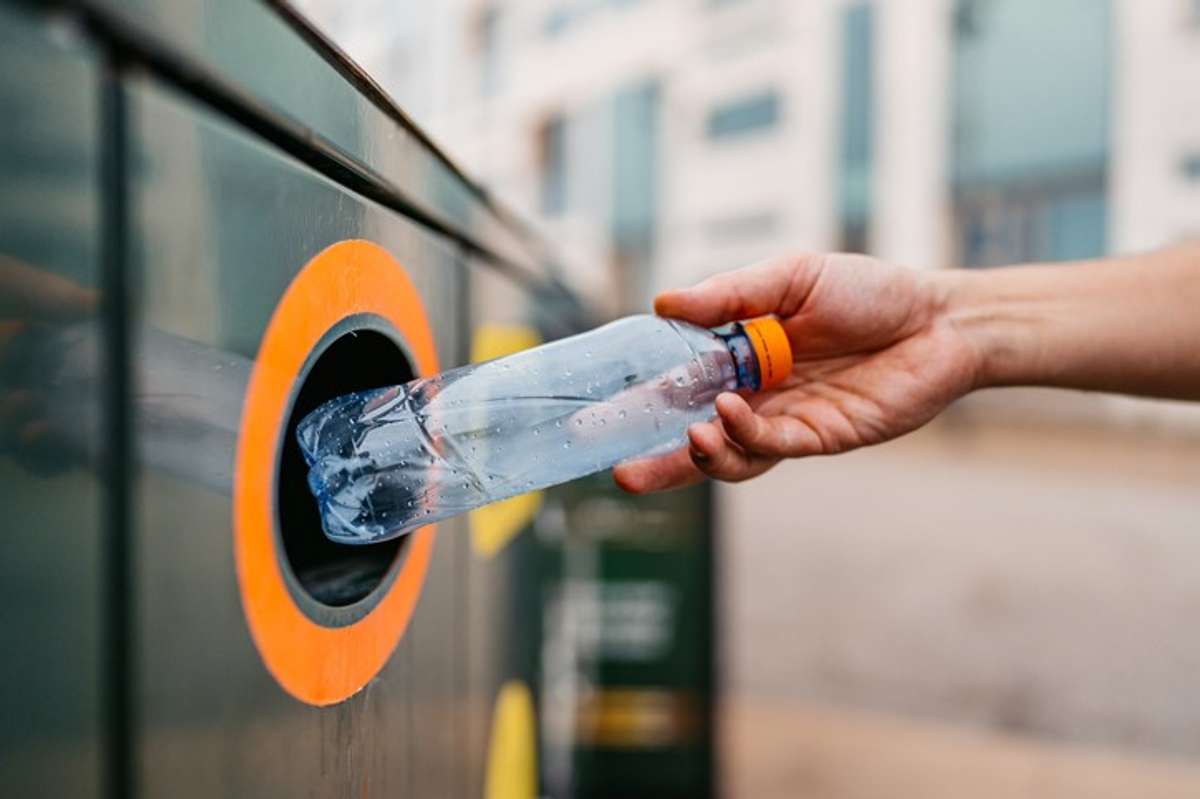

With the UK's landmark Deposit Return Scheme (DRS) launching in less than a year, the machinery behind it is now falling into place though the local stores responsible for running it are still facing some questions, Asian Trader finds.
Under the scheme, shoppers will pay a refundable 20p deposit on single-use drinks containers made of plastic (PET), aluminium or steel, and get it back when they return the empty container at designated return points, which will have to be operated by supermarkets, grocery stores, convenience stores, and newsagents, unless they qualify for a small-retailer exemption.
It implies that from Oct 1 next year, unless exempted, convenience stores will be obliged to collect returned containers either manually or through a reverse vending machine (RVM), refund 20p on marked containers and keep them ready for collection. Retailers will receive a handling fee of 3p per
container for manual returns and 5p for the first 225,000 annual returns through an RVM, falling to 1.3p thereafter.
Exchange for Change (EFC), the industry-led body delivering the scheme, has already opened its first phase of registration for producers and retailers.
The scheme also has a £60m grant programme, offering eligible independent retailers £6,000 per site towards RVM investment, paid in three annual instalments of £2,000.
On infrastructure, EFC has appointed five logistics and recycling providers covering England, Scotland and Northern Ireland. The network is expected to involve around 400 collection vehicles and dedicated processing facilities.
Last month, EFC published the first list of certified RVMs, thereby giving retailers a point to start with.
With the scheme moving from planning to implementation, convenience retailers are also getting ready to make their stores DRS compliant though some of the practical questions around collection and payment frequency still remain unanswered, leaving them less-equipped to make well-informed decisions.
Different stores, different issues
With store size, investment capability and support from symbol groups influencing the prep-up, there is no single picture of DRS readiness at the moment. Some retailers are well into their preparations while others are still trying to understand what will happen and how.
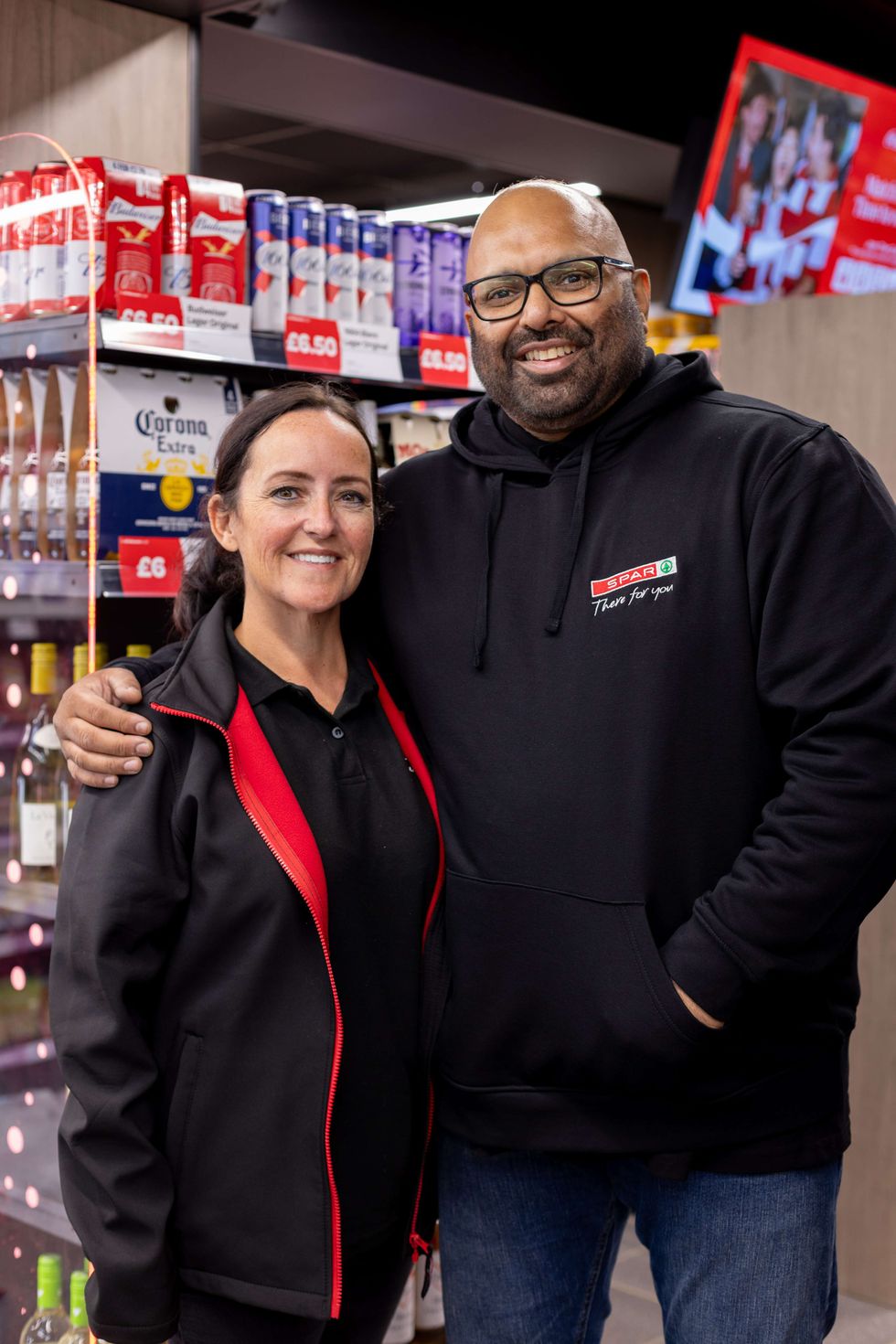 Jatinder Sahota Jatinder Sahota
Jatinder Sahota on the Isle of Sheppey has factored DRS into his latest refit and set aside space for an RVM, based on the dimensions of several models he has reviewed.
“My symbol group, AF Blakemore, has been exceptionally supportive and informative throughout this process,” he told Asian Trader. “They are trialling DRS in three of their company-owned stores, and I am looking forward to seeing how those turn out.
"Overall, I am not phased by the upcoming laws. I feel confident, ready, and fully prepared.”
Elsewhere in Wales where glass containers are also part of the scheme, Iwan Jones, who operates Siop Glyndwr Costcutter store in Gwynedd, feels "fairly prepared", owing to the support of his symbol group.
"I have had good support from my Costcutter BDM, have been over what it all entails and been in contact with a supplier for a DRS Machine," Jones told Asian Trader.
In Leamington Spa, Sunder Sandher also feels backed by his symbol group, One Stop, but finding room in his store for an RVM is a problem he will have to solve himself.
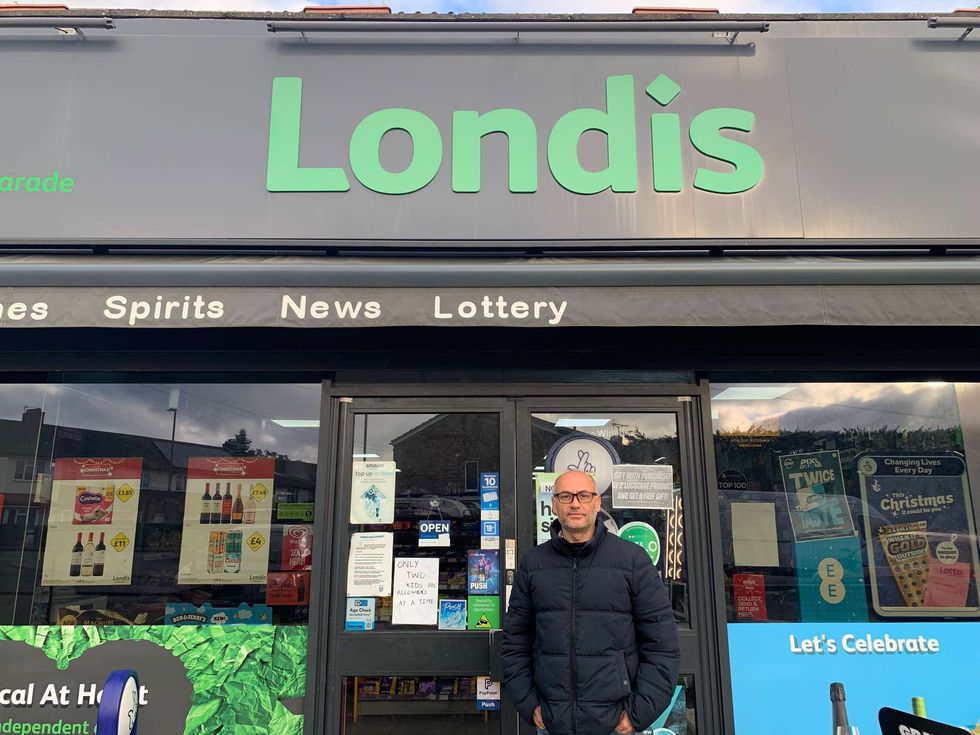 Hitesh Modi Hitesh Modi
For some, space is turning out to be a serious obstacle. Hitesh Modi of Londis BWS Chesham in Buckinghamshire feels "not prepared" because he is unsure where a unit could go.
“Having seen the units, I feel they are massive and there is definitely no space in my store,” Modi said, raising questions if the customers will spend the refunded money in store only.
In Kislingbury village, retailer Vidur Pandya has been keeping a close tab on DRS developments, but he still does not feel completely prepared.
"I feel information from Exchange for Change is coming out slowly. With less than a year now, there is still a lot of uncertainty.
"There are still many retailers who are not aware of DRS and what it means for their business.
"What we also need is support from local government, especially in areas where retailer wish to install an external machine and the land is not theirs."
 Retailer Vidur Pandya Retailer Vidur Pandya
Meanwhile in Telford, Pritpal Sandhu of Brookside Supermarket has done quite a lot of groundwork in the past months, contacting companies involved in DRS in Scotland and visiting stores to see the machines in operation.
However, his preparation has raised a series of questions around the implementation of DRS on the shop floor.
"For independent retailers, every square foot of retail space is valuable," Sandhu told Asian Trader. "We can’t simply keep sacrificing selling space without considering the financial impact.
"Where are we supposed to put the machines? Can we install them outside, or must they be inside the store?
"There are also questions about electricity cost, maintenance, cleaning, storage, hygiene and staff time."
Sandhu also has concerns about the frequency of retailer payment of handling fees.
"We are based on a large housing estate. What’s stopping somebody from going around the entire estate collecting empty bottles and cans?
"Imagine that person arrives at my store with 1,000 containers. Now, assuming a 20p deposit on each container, that customer could potentially receive a voucher worth £200.
"And what happens if the customer returns hundreds of containers (not necessarily bought from my store) but does not purchase anything?"
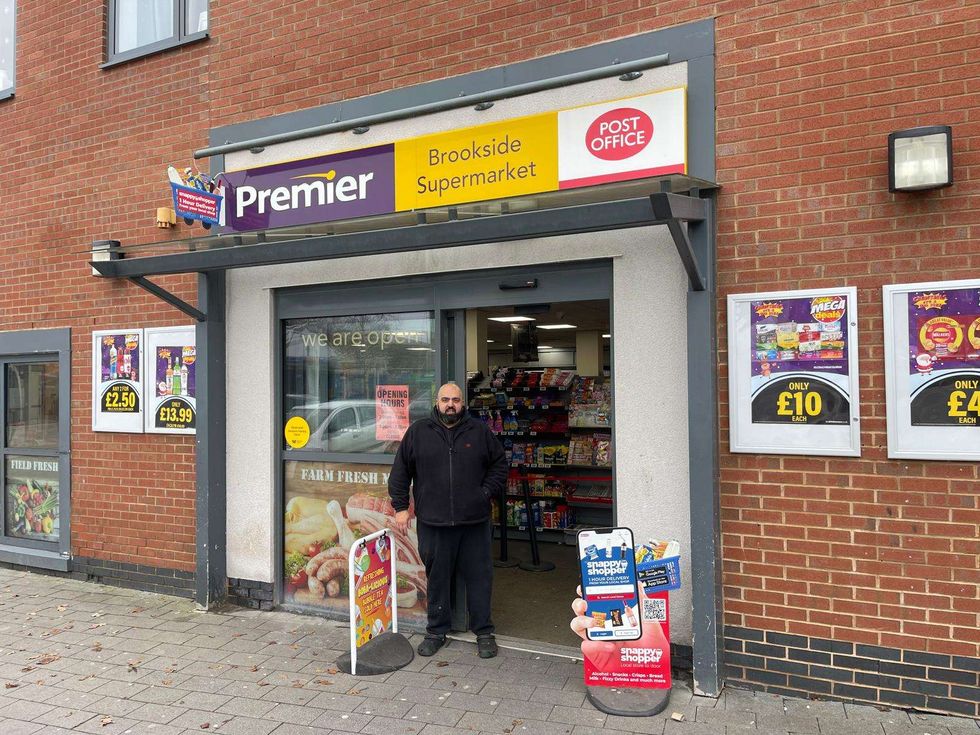 Pritpal Sandhu Pritpal Sandhu
"Am I expected to honour it from my own cash flow and then claim the money back? If so, how quickly will I be reimbursed? Daily, weekly or monthly?"
Sandhu also raises concern whether DRS will even genuinely change consumer behaviour.
Drawing a comparison with the carrier bag charge, he wonders whether customers could eventually become accustomed to paying the deposit without bothering to return their containers.
'DRS is coming'
The concerns raised by retailers point to a bigger question: will the scheme's financial and operational model work for independent stores?
Agreeing with retailers, John Kinney, CEO of Unitas Wholesale, believes several issues need to be addressed before launch.
"For PMPs, manufacturers should clearly show the additional deposit alongside the selling price; consumers should know exactly what they will pay before reaching the till," he said.
Kinney also wants guaranteed collection arrangements, with service-level agreements setting out collection frequencies based on the number of containers processed.
The financial arrangements are another major concern. Retailers will have to refund deposits and meet the costs of operating return points, but Kinney believes they must not be left financing the scheme or subsidising its operation.
"I also believe that any interest earned by EFC on funds attributable to retailer handling fees should be ring-fenced to support those fees, not used to cross-subsidise other parts of the scheme.
 John KinneyJohn Kinney
"Retailers should not be expected to finance DRS, and they certainly should not be expected to subsidise it."
Yet Kinney is also urging retailers not to see DRS solely as another compliance burden.
"DRS is coming," he said. "Rather than viewing it simply as another cost and operational burden, retailers should be seeing this as an opportunity to become the destination of choice to return containers in their local community.
"If they can encourage customers to bring their containers back to their store, they also have a chance to turn that additional footfall into sales."
Kinney is also cautioning retailers not to make RVM buying decisions just on price and size.
"Reliability, maintenance, customer support and the speed at which faults can be resolved will be critical," Kinney said. "The last thing a retailer wants is for a customer to make a special journey to return their empty containers, only to find the machine is out of order.
"Not only could that mean losing the additional sales opportunity, but it could also result in losing that customer to a competitor."
Although Exchange for Change has made provision of seeking exemption for small stores, the decision to seek or not to seek exemption is not an easy one as the exemption will come with loss of footfall.
Kinney offers some clarity. "I see less opportunity in non-residential city-centre locations or near transport hubs, where customers may be less likely to return containers," Kinney said. "On housing estates, however, I think retailers should see the risk of loss of footfall if seeking exemption from DRS, particularly if a competitor offers the service and uses it to attract regular customers."
The space crunch
With roughly 48 per cent convenience stores being less than 1000 sq ft, it is understandable why retailers are struggling to fathom the idea of a RVM inside the store. Manual collection does not offer any relief either, as the returned containers will still be required to be stored until collection day, whose frequency is still not known.
In Scotland, Ryan Hutchinson, owner of SPAR Scone store in Perth, feels "well-prepared" and is "cautiously optimistic about DRS".
"Our biggest challenge at the moment is finding space to accommodate the machine," Hutchinson said. "As a small to medium-sized convenience store, every square metre of retail space is valuable, so we need to carefully consider how best to incorporate it without negatively impacting our existing offering.
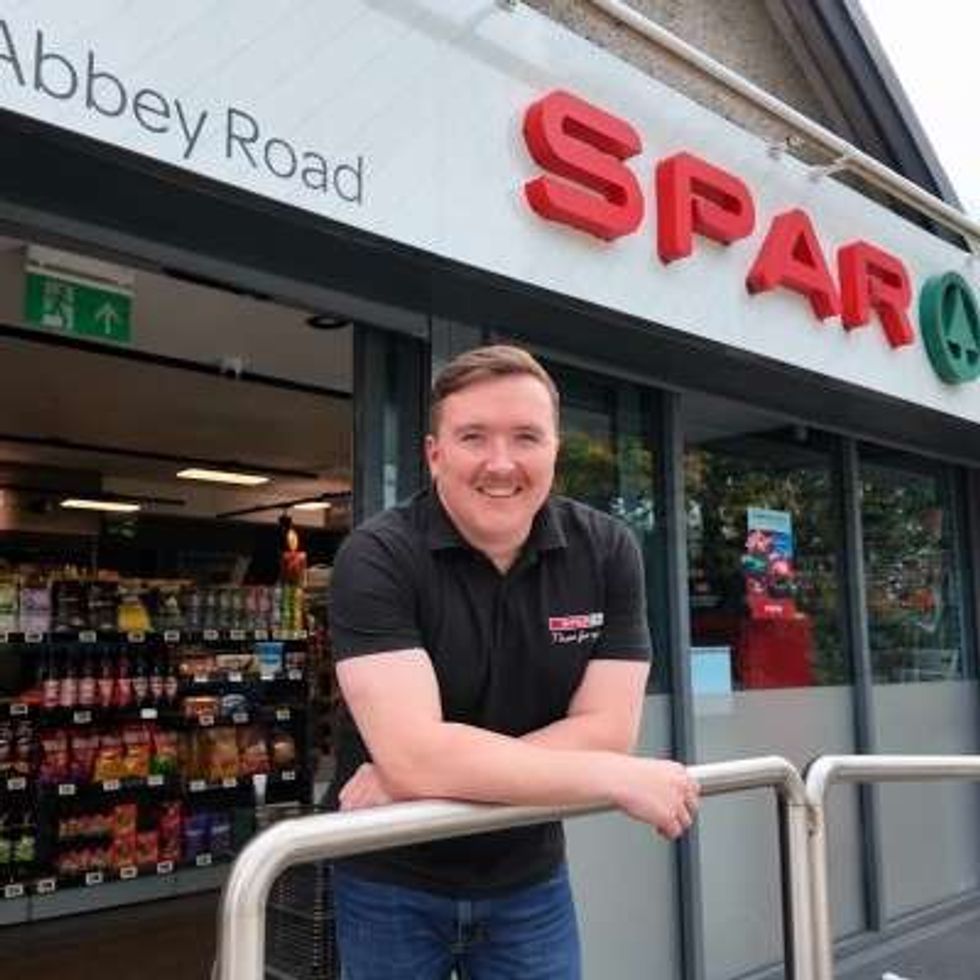 Ryan HutchinsonRyan Hutchinson
"Clear communication, practical guidance and ongoing assistance from scheme operators and machine suppliers will be essential to ensuring a smooth rollout. It's also important that this support continues beyond installation, giving retailers the reassurance that any teething problems can be addressed quickly."
Croydon-based 2026 award-winning retailer Benedict Selvaratnam is yet to make any decisions, owing to concerns around space and uncertainty on collection frequency.
"We also need to work out whether a reverse vending machine is practical for each store or whether returns would need to be handled manually. The last thing anyone wants is bags of empty cans taking over the shop.
"I support the principle behind DRS, but it needs to be practical and properly funded. Smaller retailers shouldn’t be left carrying the cost and workload of making the scheme work."
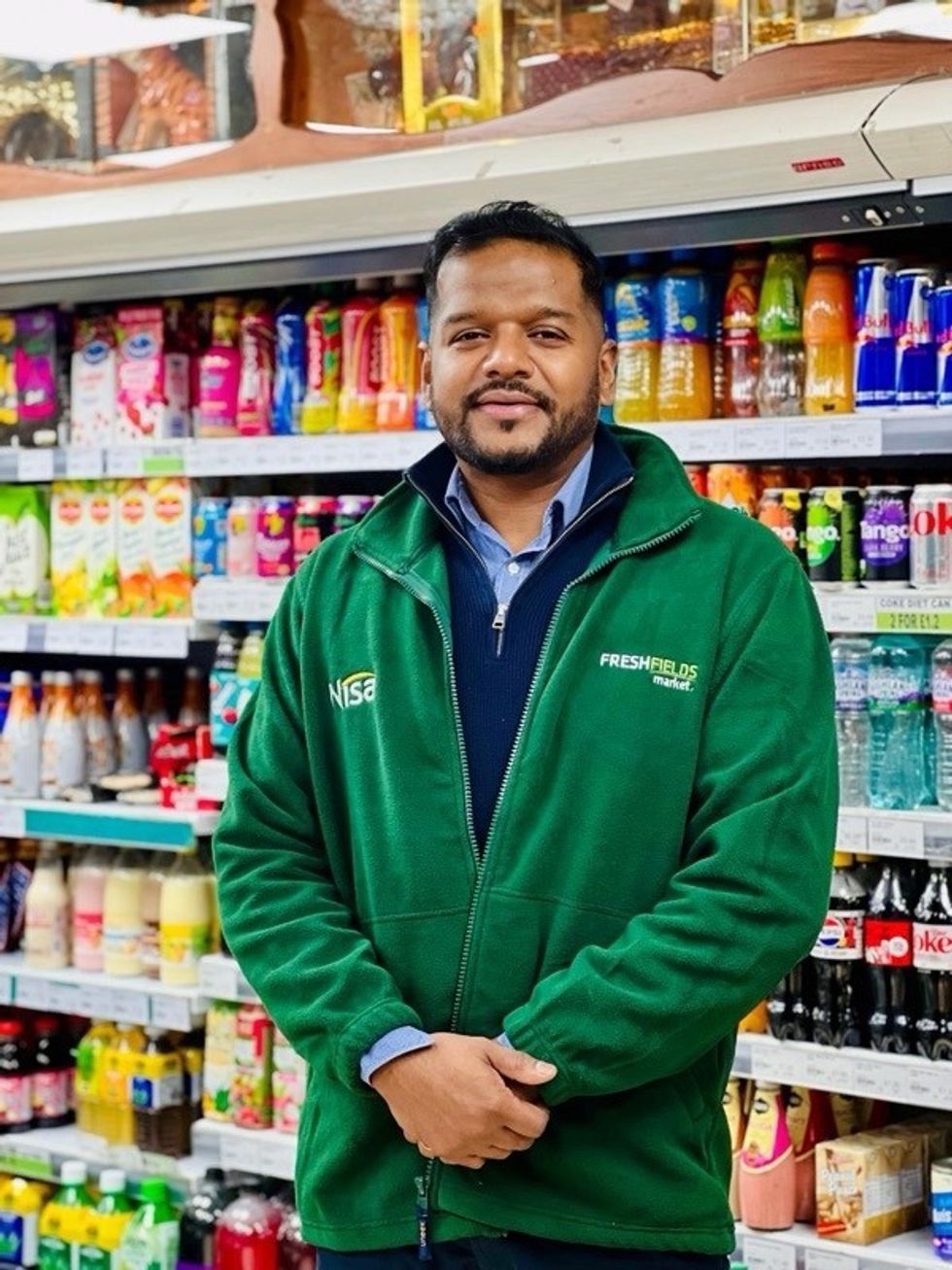 Benedict Selvaratnam Benedict Selvaratnam
Retailers are putting up the space, the staff time and, in many cases, RVMs, then waiting for volumes and handling fees to pay it back.
A lot will depend on timely collections, machines that stay in working order and shoppers who choose to bring empty containers to their stores.
The countdown to launch has begun. Time will tell whether DRS becomes a new sales opportunity for convenience retailers or simply another compliance burden.
No room for error
Some lesser-known facts for better decision-making around DRS
- What is included? PET plastic, aluminium and steel drinks containers sized 150ml – 3 litres.
- What is excluded? Milk cartons, including Tetra Pak, and containers below 150ml or above 3 litres. Glass is excluded in England, Scotland and Northern Ireland but included in Wales.
- Manual returns must stay intact. Containers must be checked, counted, bagged and tagged. They cannot be crushed before collection.
- Not every container qualifies. It must be registered with the scheme and carry the required DRS labelling and return code.
- Exempt stores still have duties. They must charge the 20p deposit on eligible drinks and display directions to the nearest return point.
- Pre-launch purchases do not qualify. Only containers sold from 1 October 2027 with the required DRS identification can be returned for a refund.