



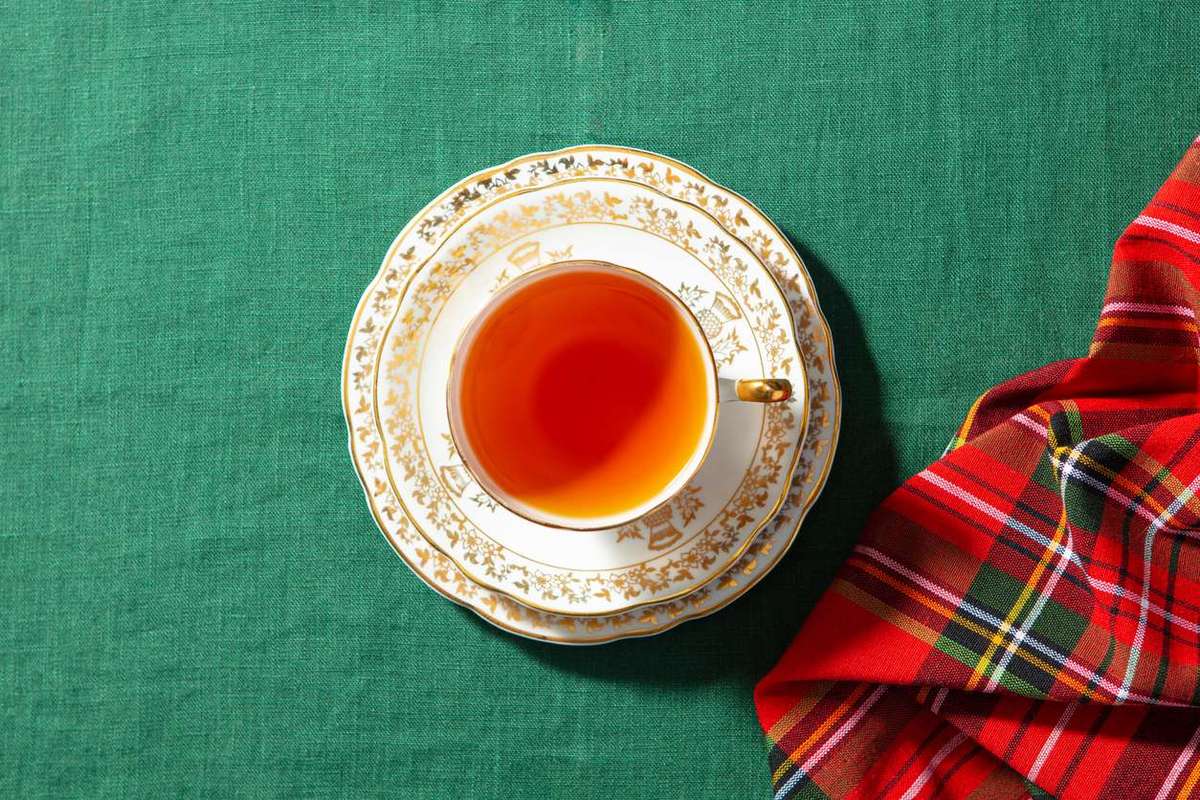

A small-scale tea-growing venture in Angus highlights how changing climatic conditions could open up new agricultural possibilities in Scotland, as farmers explore crops suited to a warming climate.
Tea is being grown commercially on a small scale in Scotland, offering an unusual example of how the country’s changing agricultural landscape could create opportunities for crops not traditionally associated with the region.
According to a BBC report, Susie Walker-Munro is among a handful of Scottish tea growers producing tea under the Kinnettles Gold brand. The tea is grown in the walled garden of her family farm near Forfar, Angus.
The venture produces a premium tea, with its most expensive product priced at around £40 a packet. However, Scotland’s northerly location presents challenges: tea cannot be harvested throughout the year, and yields remain limited. While wetter conditions could improve production, Scottish-grown tea is unlikely to become a major crop in the near future.
The project nevertheless illustrates how farmers are exploring new possibilities as climate change alters growing conditions across the UK.
A changing agricultural landscape
Scotland could become suitable for a wider range of crops as temperatures and weather patterns change, although the opportunities will depend on local conditions and the ability of growers to adapt.
The BBC report highlighted wider efforts to identify crops that could thrive under future conditions. Researchers at the James Hutton Institute, for example, are using climate simulations to assess the suitability of crops such as fava beans, while agricultural researchers have called for more resilient crop varieties to be developed ahead of changing conditions.
Farmers are also exploring diversification into crops including soya, flax and legumes. Protected growing environments, supported by renewable energy, could offer further possibilities for producing crops not traditionally associated with Scotland.
The longer-term outlook remains uncertain. Scotland is expected to experience hotter, drier summers and milder, wetter winters by the end of the century, potentially changing which crops can be grown successfully and where.
A parallel with English wine
The emergence of Scottish-grown tea offers a reminder that the UK’s agricultural possibilities are not fixed. English wine provides a more established example of how growing conditions can help a once-unconventional British product develop.
UK wine production exceeded 124,000 hectolitres in 2025, equivalent to more than 16.5 million bottles, according to Food Standards Agency data. Output rose 55 per cent year on year, reflecting favourable growing conditions alongside continued structural growth in the English and Welsh wine sector.
Earlier in July, Waitrose reported a 10 per cent year-on-year increase in English wine sales over the past 12 months, with Alexandra Mawson, sparkling wine buyer at Waitrose, noting that England’s climate now provides conditions suited to producing high-quality sparkling wine.
Scottish tea remains a much smaller and more uncertain proposition. Its significance for now lies less in its potential scale than in what it demonstrates about the crops that may become possible as the UK’s climate and agricultural practices evolve.