



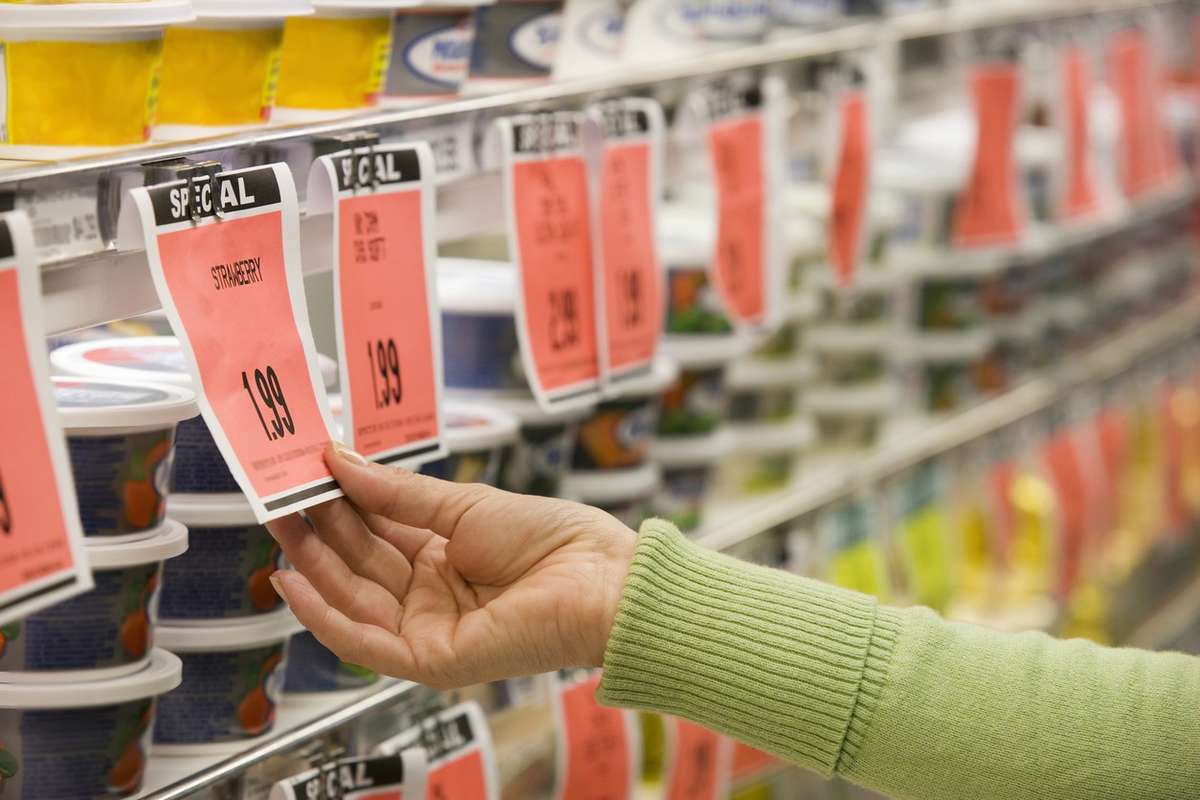

First Minister John Swinney has defended plans to impose price caps on essential groceries, following sharp criticism from retail industry bodies.
The proposal, outlined in the Scottish National Party manifesto, would require large supermarkets to limit the price of staple items including milk, eggs, cheese and rice, as part of wider efforts to ease cost-of-living pressures.
The Scottish Retail Consortium (SRC) has strongly opposed the measure, questioning its practicality.
However, Swinney rejected the criticism in an interview with BBC Radio Scotland, insisting the policy reflects a willingness to take “bold” action to support households facing rising prices.
Asked if the policy was a "potty gimmick", as branded by SRC, Swinney told BBC Radio Scotland, "No, it's about helping people who are really struggling in our society today.
"I'm acutely conscious of the gravity of the cost of living crisis that people are facing in their daily lives, and I'm bringing forward solutions to that in the manifesto."
Insisting that he was "unrelentingly focused" on bringing down the cost of living, Swinney told BBC Radio Scotland that his government would consult with industry groups and UK ministers while to find an "agreed way forward".
The SNP manifesto states that the price of between 20 and 50 "essential" groceries would be limited in large supermarkets.
Retailers would be required to cap the cost of at least one variation of the listed items, such as one particular brand of bread, but would not have to cap the prices of all their bread brands.
Swinney's proposal on putting the caps on essential good prices is being met by sharp push back from retail and manufacturing sector.
The Scottish Grocers' Federation claimed the proposals could create a competitive disadvantage for smaller local shops and "distort the market" by changing consumer behaviour.
The Food and Drink Federation Scotland, which represents manufacturers, said the policy had a "real risk of undermining investment, resilience and food security".
The Institute for Fiscal Studies, meanwhile, described the price cap as "very radical and risky" – warning it could lead to shortages or reductions in quality.
Moreover, to introduce the scheme, the Scottish government would likely have to agree a deal with Labour ministers at Westminster due to UK internal market rules which seek to limit trade barriers between the four nations.
However, a UK government source described the SNP proposals as "incoherent and undeliverable", warning they could face legal challenges.