



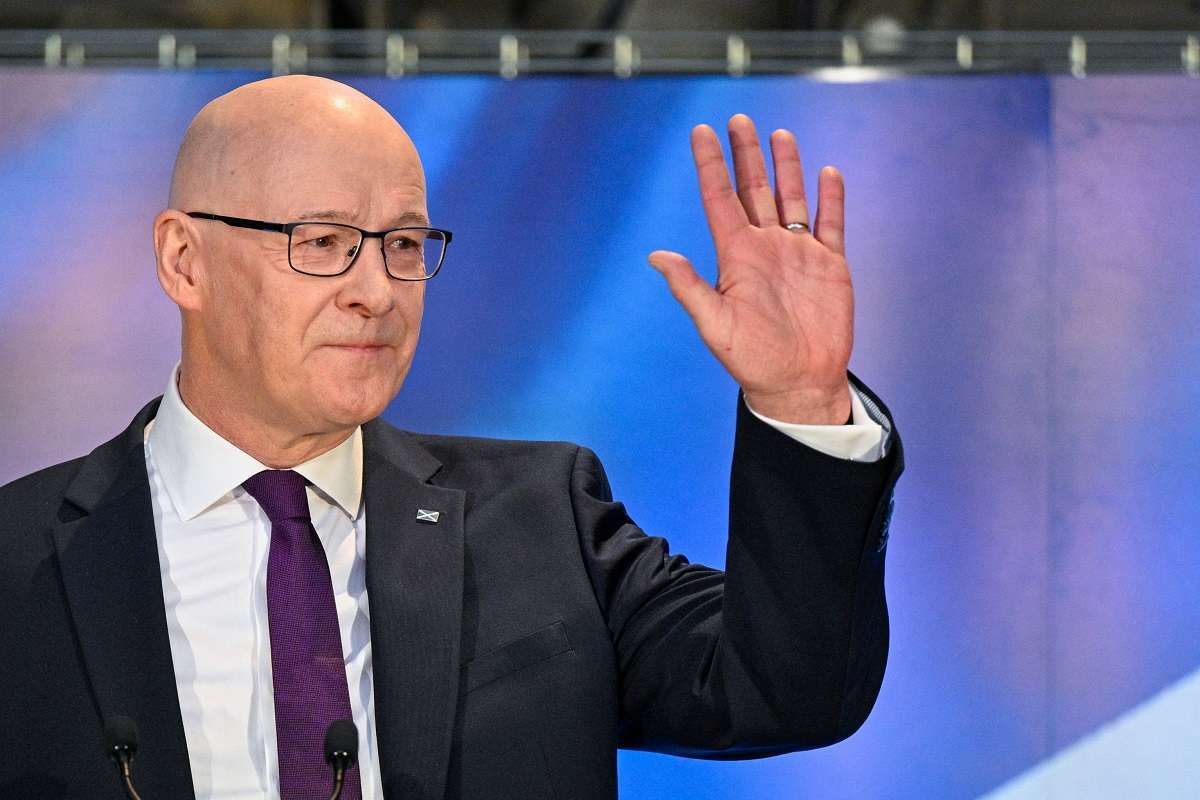

The Scottish National Party has pledged to introduce price caps on essential food items in large supermarkets if re-elected, as part of its manifesto for the upcoming Scottish election.
First Minister John Swinney said the proposed policy would set maximum prices on key staples such as bread, milk, eggs and rice, with the aim of reducing the cost of the weekly shop and putting “more money in people’s pockets”.
"People are, quite simply, struggling to afford food," Swinney said at the party’s manifesto launch. "In a rich country like Scotland, that is a moral outrage."
Companies have warned that higher energy costs linked to the war in Iran are pushing up prices. Britain's food prices are set to rise by almost 10 per cent this year because of the conflict — about three times faster than previously forecast — the country’s food and drink manufacturers’ lobby said this month.
The SNP, is on course to win a majority in next month’s election, according to some polls.
The party said in its manifesto that it would "require large supermarkets" to make one line of listed essential food items available at the capped price.
The manifesto said it would not require supermarkets "to make every variation of that type of food they stock available at that price".
However, the proposal has raised concerns among convenience retailers, with the Scottish Grocers’ Federation (SGF) warning of potential unintended consequences for the sector.
Luke McGarty, head of policy at the SGF, said that while smaller local stores are not directly targeted, the policy could distort competition and shift shopper behaviour.
“Capped prices in supermarkets could encourage customers to travel further to out-of-town locations for staple goods typically purchased locally, reducing sustainability and creating a competitive disadvantage for small local businesses,” he said.
He added that independent retailers, already facing rising operational costs, may feel pressured to match supermarket pricing, potentially threatening their viability.
The SGF also highlighted the broader role of convenience stores in providing accessible goods, supporting local employment and contributing to community economies, warning these benefits could be undermined.
The trade body said it would engage with ministers and take part in any consultation process should the SNP return to government.
The Scottish Retail Consortium, which represents supermarkets, called it a "wrongheaded 1970s gimmick", a reference to unsuccessful price controls to curb soaring inflation more than half a century ago.
In 1972, the then-prime minister Ted Heath introduced a freeze on wages and prices in a bid to curb inflation.
Consumer price inflation peaked in 1975 at 24.5 per cent and it was not until the 1990s that it fell sustainably into low single digits.