



![Convenience stores on brink of cost-of-doing-business crisis [Exclusive]](https://www.asiantrader.biz/media-library/convenience-stores-on-brink-of-cost-of-doing-business-crisis.jpg?id=66786440&width=1200&height=800&quality=60&coordinates=0%2C28%2C0%2C29)

Rising wages, mounting operating costs and staffing pressures are forcing independent convenience retailers to adapt, cut back and rethink on how to operate.
For Britain’s independent convenience retailers, pressure is no longer coming from one direction. It is hitting from all sides at once.
Wage bills are climbing. Supplier costs continue to rise. Energy, insurance, and delivery charges remain stubbornly high. Customers are watching every penny they spend.
Multiple industry reports are pointing out at years-low levels of consumer confidence with experts warning of a second cost-of-living crisis amid economic uncertainty and fears of further disruption linked to conflict in the Middle East.
Asian Trader spoke to retailers from across the country to understand the realities of running an independent convenience store in 2026.
The responses reveal that the sector, comprising 50,000-plus convenience stores with around 71 per cent being run independently or with a symbol group, is operating in survival mode.
‘Higher wages mean less profit’
Last year was already tough on the convenience sector.
According to the latest Early Channel Track findings from TWC. Sales across independent convenience stores declined by 3.8 per cent in the year to March 22, 2026, a drop that deepens to 4.7 per cent when excluding commission-based income such as National Lottery and payment services, as well as non-barcoded sales.
The data also points to a gradual erosion of the sector’s role in everyday shopping missions. Independent convenience has lost 0.4 percentage points of total grocery transactions, as shoppers increase their visits to supermarkets, particularly larger format stores, which are driving most of the growth within the multiples.
The single biggest blow to convenience retail's economics has been the rise in the National Minimum Wage. Compounding effects came from hikes in National Insurance contributions that came into effect at the same time.
From 1 April 2026, the UK National Living Wage (NLW) for workers aged 21 and over has increased to £12.71 per hour , a rise equating to an extra £900 per year for a full-time worker.
While the mandatory minimum is £12.71, major retail employers like Co-op are implementing even higher internal rates, with some exceeding £13 per hour, adding further pressure to independent operators competing for staff.
Higher stock costs also emerged as another challenge.
In Horsham, retailer Alpesh Shingadia is facing a sea of increased costs at his Budgens Southwater store.
Shingadia shared with Asian Trader, “General business costs have increased. Business rates to staff wages and National Insurance contributions.
"And there is inflation pressure on customers due to which they are scouting better deals at supermarkets and even online.
“We need to keep a check on our prices as well as to not lose the customers.”
Taking account of higher wages and higher NI contributions, Shingadia is estimating a setback of “30,000 to 40,000 pounds a year”.
“That's a lot of work to get 40,000 pounds as profit, not just sales. It is getting extremely difficult for independent retailers at this point in time. No wonder, some retailers are struggling and looking to sell up the business,” he said.
For retailer Arshpreet Sohal, who runs One Stop Gotherington Stores in a 2000-resident village in Cheltenham, day-to-day life running a convenience store has become “extremely tough”.
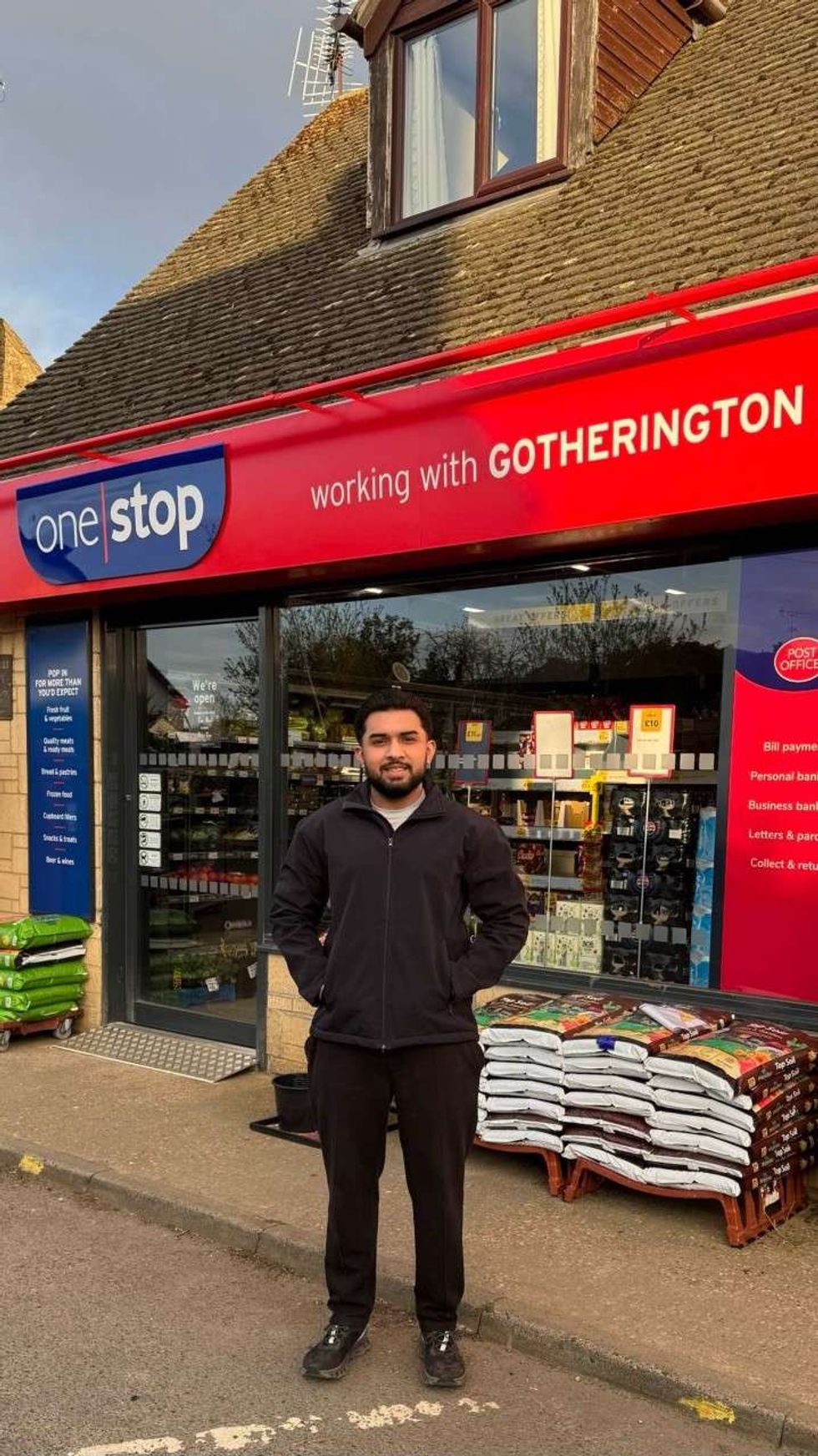 Arshpreet Sohal
Sohal shared with Asian Trader, “The rise in minimum wages has had a massive impact on company profits, while the economy and business conditions don’t seem to be improving. Overall profit margins continue to shrink.”
Sohal says increasing stock costs across key convenience categories are further intensifying the pressure on independent operators.
In Middlesborough, retailer Vijay Kalikannan’s 15 stores are now facing pressure “from every angle”.
Kalikannan told Asian Trader, “Over the last year, the biggest change has been the pressure on costs from every angle, wages, utilities, deliveries and supplier prices.
“Staffing has also become tougher, so I’ve had to be much more hands-on day to day and spend more time in the business myself.”
In Hampshire, retailer Imtiyaz Mamode is facing the similar storm.
Mamode told Asian Trader, “Over the past year, things have definitely become more challenging with rising wages, business rates, supplier costs and ongoing staffing pressures.
“As independent retailers, we’ve had to be much more hands-on and careful with day-to-day operations.
“We’ve had to focus more on stock control, reducing wastage and making sure we’re bringing in products that customers really want,” he said.
For seasoned retailer Sunder Sandher in Leamington Spa, who has been in business for almost four decades, impact on profits is quite measurable.
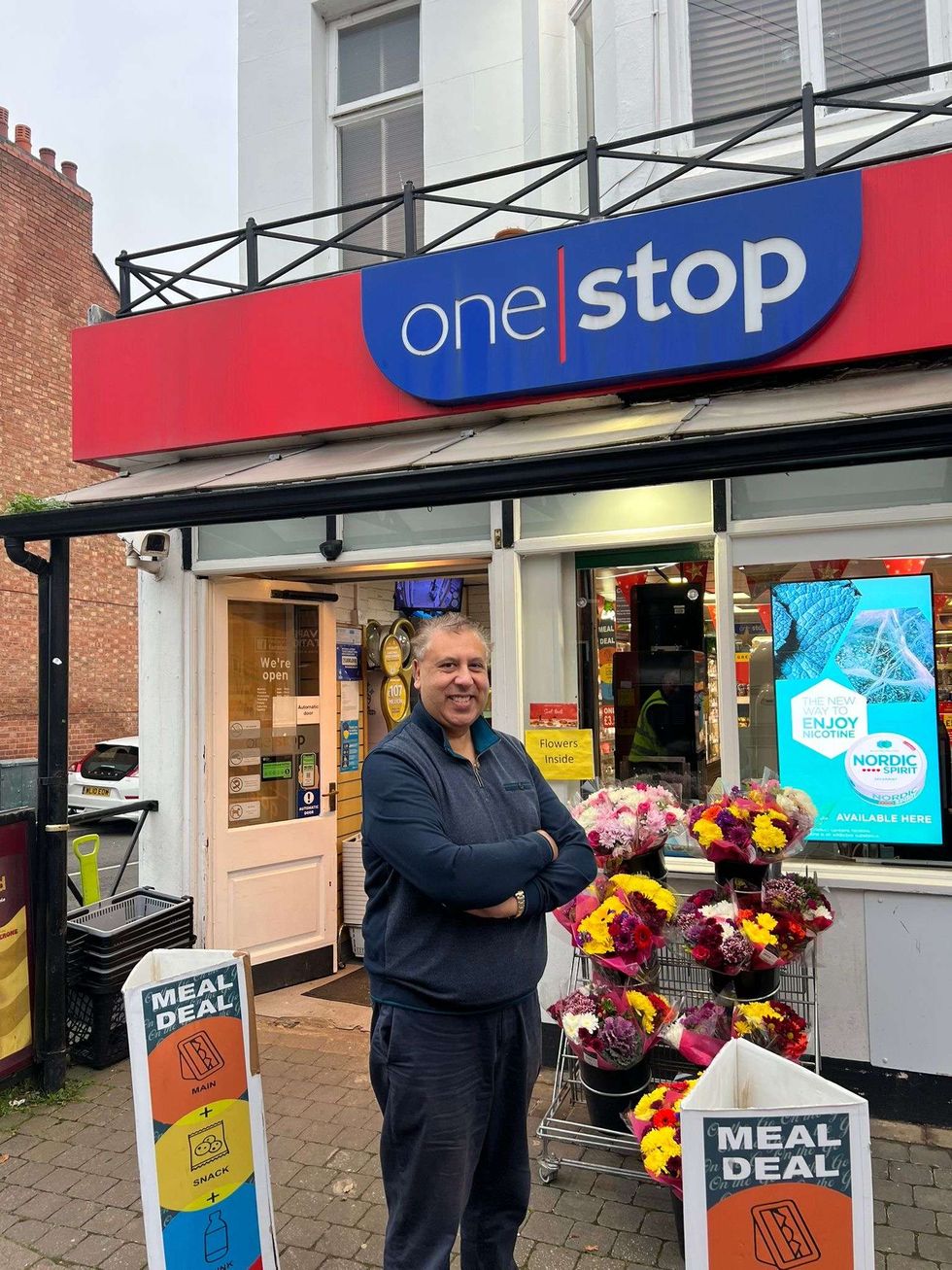 Sunder Sandher
Sandher shared with Asian Trader, “Higher wages mean less profit. Where we had a fixed amount of profit banked every week, I can see a drop of 10 per cent. Clearly, we are taking the hit.”
Ironically, these pressures are playing out against a market that is becoming more competitive, not less.
Multiples are expanding their convenience formats aggressively. IGD projects the multiples segment will grow at 2.7 per cent CAGR over the next five years, well ahead of the channel average.
Morrisons has announced plans for 250 new Morrisons Daily franchise outlets; Co-op is targeting 75 new store openings.
‘Never-ending cycle’
While rising costs are affecting the entire sector, retailers are forced to adjust and adapt.
For Sohal in Gotherington, the way to reduce wage costs is to work more hours.
“The majority of the time it feels like we are working more and more, and it becomes a never-ending cycle,” he pointed out.
“It also has a knock-on effect on family life, making it difficult to maintain a healthy work-life balance. As the business is our main source of income, it’s not easy to adjust our lifestyle while dealing with the constant pressures and demands of running the store.”
That sentiment is echoed across the sector, where many independents are increasingly working as the shock absorbers.
Kalikannan is now more careful with staffing hours, resorting to “closing stores earlier to keep staff cost down”.
“I’m working longer hours myself to keep costs under control and maintain standards in the store,” he said. “It does affect work-life balance, but as an independent retailer you just adapt and keep going.”
Mamode too stated that he is “working longer hours” to help control costs and keep things running smoothly.
At Budgens Southwater as well, staff hours are being reduced with extra hours put in by Shingadia but for him, the way forward is also through tech.
 Alpesh Shingadia Alpesh Shingadia
The store is recently installed electronic shelf edge labels which is helping him reduce labour costs and in having smoother store operations.
“While prices everywhere are going up, prices of electronic shelf edge labels have gone down over the years, so they are not as expensive as perceived. These labels help me reduce wage costs and in also running promotions smoothly.
“Another new system in our store now analyse our EPOS data and lets us know what is selling and what is just sitting on the shelf for more than three weeks. Earlier, I used to spend around five hours a month going through the data which I now have in minutes.
“That is both time saved and better movement of stock,” Shingadia said.
‘Rethink convenience retail model’
Faced with mounting pressures, convenience retailers are looking for ways to evolve their businesses for stronger margins and new revenue opportunities.
In this quest, food-to-go has emerged as the top winner. Sohal’s Gotherington store already has a wide line of freshly-made food and proprietary food-to-go, which makes his store stand apart.
“One strategy I’ve used is introducing more local products and expanding the food-to-go range, which allows me to set a higher RRP and improve margins,” Sohal said. “It doesn’t always guarantee success, as food-to-go sales in the UK are heavily dependent on the weather.
“Despite that, it’s still been a positive direction for the business overall.”
Sandher also vouches on food to go and proprietary freshly made food when it comes to earn some margins. His store in Leamington Spa has an in-store bakery and it sells almost “200 samosas a week”.
“The changes we have made are on high profit margin products and extended our food to go,” he said.
In Middlesborough, apart from banking on food-to-go, Kalikannan is also focusing more on "premium convenience products” and on “products that customers really want”.
“What’s helped us most is focusing on products and services that make us stand out locally, especially imported products, food-to-go and engaging with customers through social media,” he said.
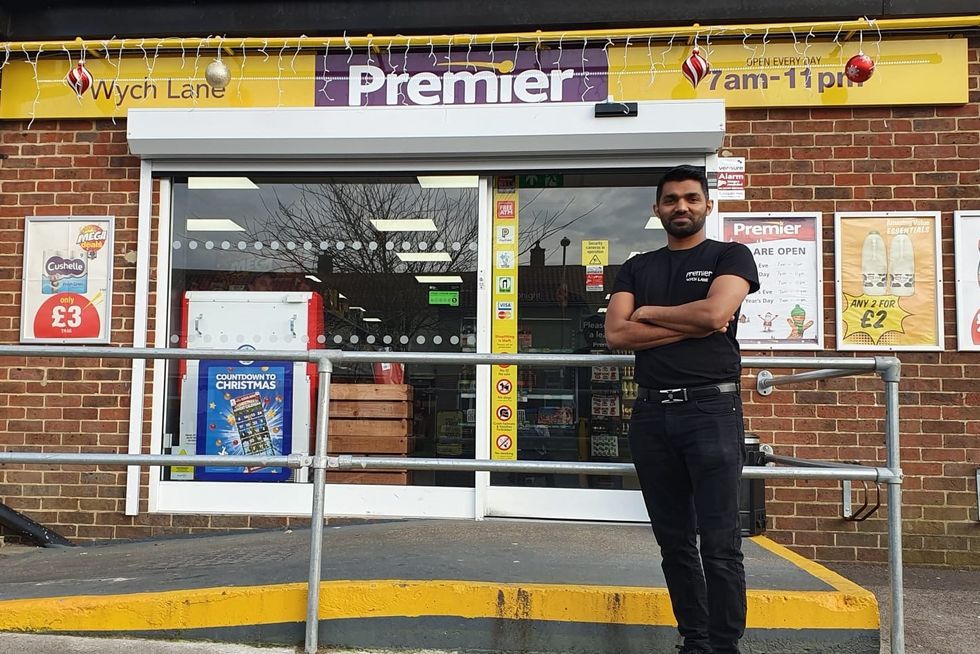 Retailer Imtiyaz Mamode Image from Imtiyaz Mamode
Mamode’s Hampshire store is leaning on to-go options as well but more like “Freal milkshakes and FWIP ice creams”. He is also paying more attention on “better stock management to reduce waste” and social media to keep both new and existing customers engaged.
What retailers are experiencing on shop floor is resonated by sector experts as well.
Retail expert Scott Annan bets on “proprietary, fresh, day part food” as the key differentiator and margin enhancer in convenience stores and believes independents and symbol groups will increasingly need to rethink traditional convenience retail models.
“Proprietary food made in store or in a central kitchen can deliver gross margins 60-100 per cent.
“This margin can be leveraged to value-price the top ‘50’ core grocery lines, to match the nationals,” Annan told Asian Trader.
He also argues that most independent retailers are “massively over-ranged and over-spaced in ambient core grocery”.
“One market-leading laundry softener, bleach, washing-up liquid or mayonnaise is sufficient for a convenience store,” Annan said.
 Scott Annan Scott Annan
Technology, he adds, can also be the key as retailers look to reduce labour-intensive processes and manage costs more effectively.
However, his most decisive and blunt advise to retailers is to prioritise sharper commercial negotiations over supplier-funded hospitalities.
“There is no such thing as a free lunch,” he pointed out. “Manufacturers inviting wholesaler leadership and prominent independent retailers to events like World Cup has a cost.
“Decline all such activities and negotiate lower costs of goods instead.”
For data wizard Tom Fender, Development Director at TWC, the solution is pretty simple.
“We all know the economy is challenging and the retail mults are using price promotions and loyalty programmes well,” Fender told Asian Trader.
“However, TWC Group has identified £1bn of additional sales for the independent convenience store channel by each store gaining ‘one more’ transaction per day, and for 10 per cent of those transactions to contain ‘one more’ item.”
‘Treat us as a priority’
While retailers continue adapting operationally, many fear the pressure facing independents is far from over.
Retailers point to rising stock costs, cautious consumer spending and incoming regulation as major concerns over the next 12 months.
They are now calling on the government for better realistic support on areas like energy costs, business rates and better collaboration from suppliers to help protect margins.
Symbol groups are also called upon to provide “better rebates”, better negotiations with suppliers regarding stock prices and better promotional opportunities.
Echoing the wider sentiment, Sohal said, “I believe the government should treat independent convenience retailers as a priority and offer more support, rather than placing additional pressures on businesses that are already struggling with rising costs and shrinking margins.”
For now, independent retailers are responding the only way they know how and that is working longer hours, operating leaner businesses and searching for new ways to protect increasingly fragile margins.