





Today, 1 April 2026, the UK National Living Wage (NLW) increases to £12.71 per hour, representing a 50p rise on 2025. However, new analysis from the SGF in collaboration with the University of Stirling, shows that the true cost to retailers when paying the NLW is significantly higher, at £17.37 per hour – 65p more than the previous year.
The study factors in employer on-costs such as employer National Insurance contributions and holiday pay, alongside additional employment-related expenses including uniforms and administrative overheads.
Meanwhile, a recent survey of SGF members highlights the mounting pressure on the sector, with 100 per of respondents stating they are unable to increase staff numbers or working hours due to rising costs. Additionally, more than three-quarters (77 per cent) of retailers report that wage increases will have a significant or substantial impact on the viability of their business.
Over the past decade, the real business cost of employment has almost doubled (£9.28 in 2016 to £17.37 in 2026). As a result, retailers warn that higher staffing costs will inevitably be passed on to customers - many of whom are already facing financial pressure - while also leading to reduced opening hours and, in some cases, difficult decisions about whether stores can continue to operate.
"A reduction in the number of people employed by the convenience store sector in Scotland as well as indications of reductions in labour input (hours worked) and hours of opening have recently been seen in national data," explained Professor Leigh Sparks, University of Stirling. "Whilst the increase in the National Living Wage (NLW) is a recent low, and there have been no further increases in employer National Insurance, fifteen years of austerity, the true cost of Brexit and recent, and likely future Trump-inspired, economic turbulence and inflation have made the Scottish convenience store sector cautious and concerned over costs and regulations.
“With the rising costs of labour, energy and store security it is extremely unlikely that sales and profit have been maintained at 2016 levels.
“Convenience stores often play more than a ‘simple’ shop role and are key assets and community 'glue', providing facilities, services and spaces to combat social and economic inequalities and isolation. Understanding the true cost of employment and the consequences that decisions on wages and other employment and regulation aspects have, is thus an essential part of maintaining and growing this vital sector."
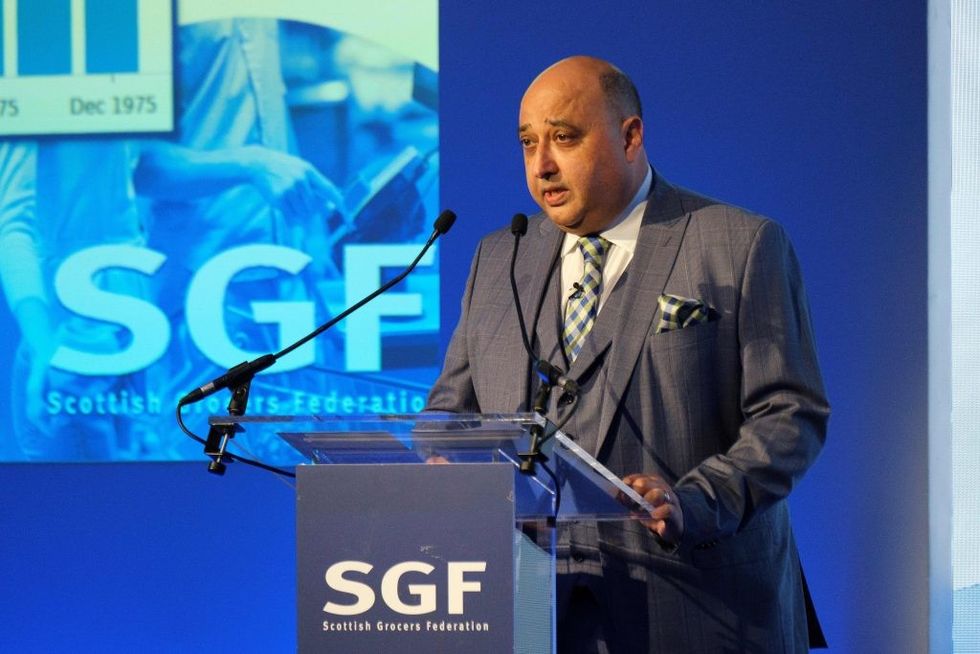 SGF Chief Executive, Dr Pete Cheema OBE Image: Scottish Grocers' Federation
SGF Chief Executive, Dr Pete Cheema OBE, added: “For a decade, we’ve exposed the gap between the headline National Living Wage and the real cost of employing staff - and that gap is only widening.
“Let’s be clear, Scottish retailers support fair pay, but policymakers cannot ignore the real and rising business costs created by above-inflation increases to the National Living Wage. Last year, retailers were hit with a double whammy - sharp wage rises combined with damaging increases to employer National Insurance costs.
“Instead of easing the pressure, governments have chosen to further add to the burden on retailers. The implications of this put’s jobs, investment and the future of local businesses at risk.
“If governments are serious about promoting economic stability, supporting business investment and tackling increasing levels of unemployment, they must address the continued rise in employment costs and the impact this is having on small business growth.”
The Real Business Cost of Employment 2026 paper will form part of SGF’s annual submission to the Low Pay Commission consultation, for inclusion in its report and recommendations to the Prime Minister later this year.