



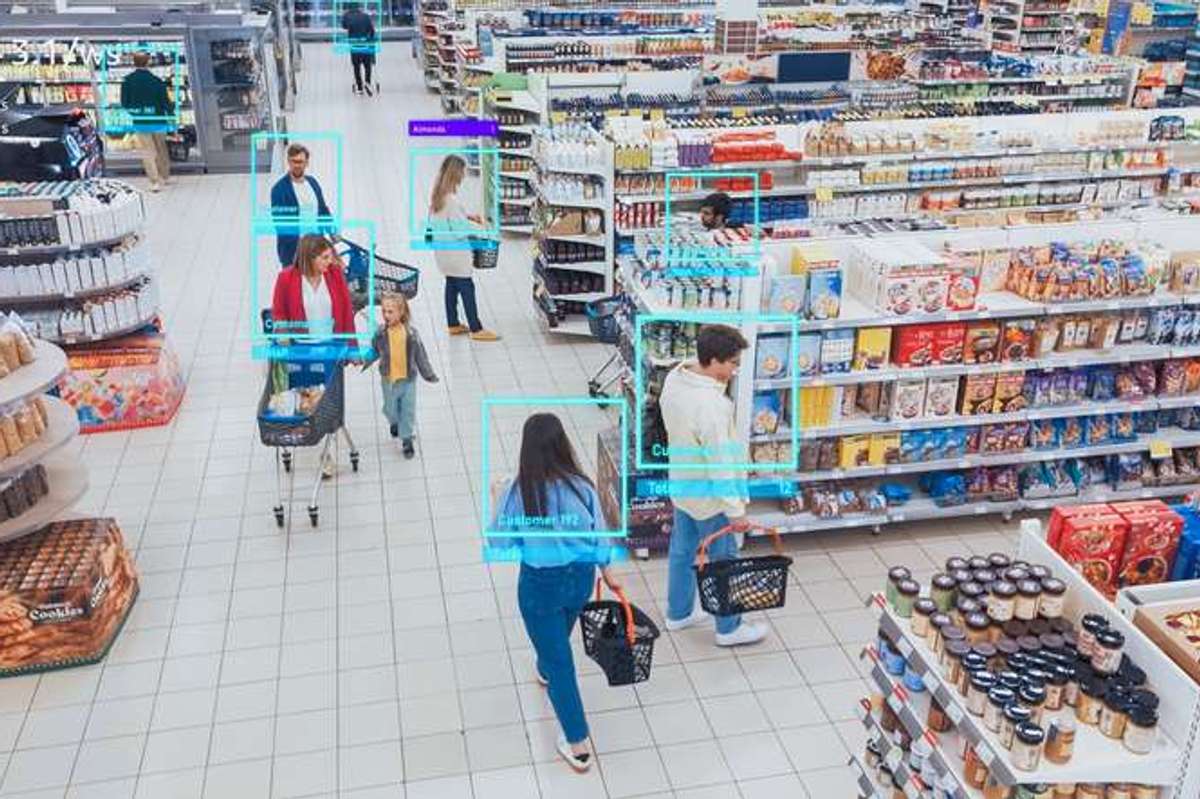

Civil liberties groups have launched a fresh challenge against the expansion of facial recognition technology in shops, warning that Facewatch's new system alerting police in real-time when the most serious offenders enter shops represents a “dangerous escalation” of surveillance in retail.
Facewatch, which is used by more than 100 retailers including Sainsbury's, B&M and SPAR, has announced plans to introduce a UK-first feature that will allow retailers to send real-time alerts to police when its technology identifies “the most serious offenders” enetring the store premises.
The company said the system, due to launch this autumn, would notify police in an average of four seconds when a person on its database triggers a live facial recognition match.
However, privacy campaigners have strongly opposed the move, arguing that facial recognition technology is expanding faster than regulation and risks creating a system where people are treated as suspects before committing a crime.
Charlie Whelton, policy and campaigns officer at Liberty, said the development was an “untested, opaque” use of technology that had been allowed to spread without proper safeguards.
“It’s not against the law to walk into a shop even if you’ve committed crimes in the past,” The Guardian quoted Whelton as saying. “The idea of calling the police on somebody who hasn’t committed a crime, but there’s a concern they might, is really upending the way we do things.”
Campaigners also raised concerns about inaccuracies in facial recognition systems, with previous cases involving customers being wrongly identified as shoplifters.
Some people who have been flagged by the technology have described the experience as “Orwellian”, claiming they felt they were treated as “guilty until proven innocent”. Evidence suggests black and Asian people are more likely to be incorrectly identified than white people.
Sarah Lasoye, pre-crime programme manager at Open Rights Group, said the latest development represented a major step towards a wider surveillance culture.
“People’s faces being scanned without consent and being added to lists is worrying enough, but the speed which Facewatch technology now makes it possible for someone to encounter the police force in the middle of their daily shop is a really dangerous escalation,” she said.
The criticism comes as retailers continue to seek new ways to tackle rising levels of theft and violence in stores. Official figures show there were 509,566 shoplifting offences recorded in England and Wales in the year ending December 2025, while retailers have warned that abuse and crime against shop workers are escalating.
Facewatch said its technology was designed to target prolific repeat offenders rather than ordinary shoppers. The company said it had alerted retailers almost 300,000 times during the first six months of 2026 when a “known repeat offender” entered a store.
Launching Facewatch's new feature, Nick Fisher, CEO of Facewatch, said, "The Facewatch Crime Management Platform combines world-class algorithm accuracy with an easy-to-use reporting system, enabling retailers to record incidents, analyse data and generate evidence-led reports.
“Retailers have told us they want one trusted platform that supports shop floor colleagues, loss prevention teams and the police, and that’s what we’re building.
“To support the wider community and government fight against retail crime, the capability to alert police instantly when serious offenders trigger a live facial recognition match will take evidence-backed crime reporting to the next level.”