



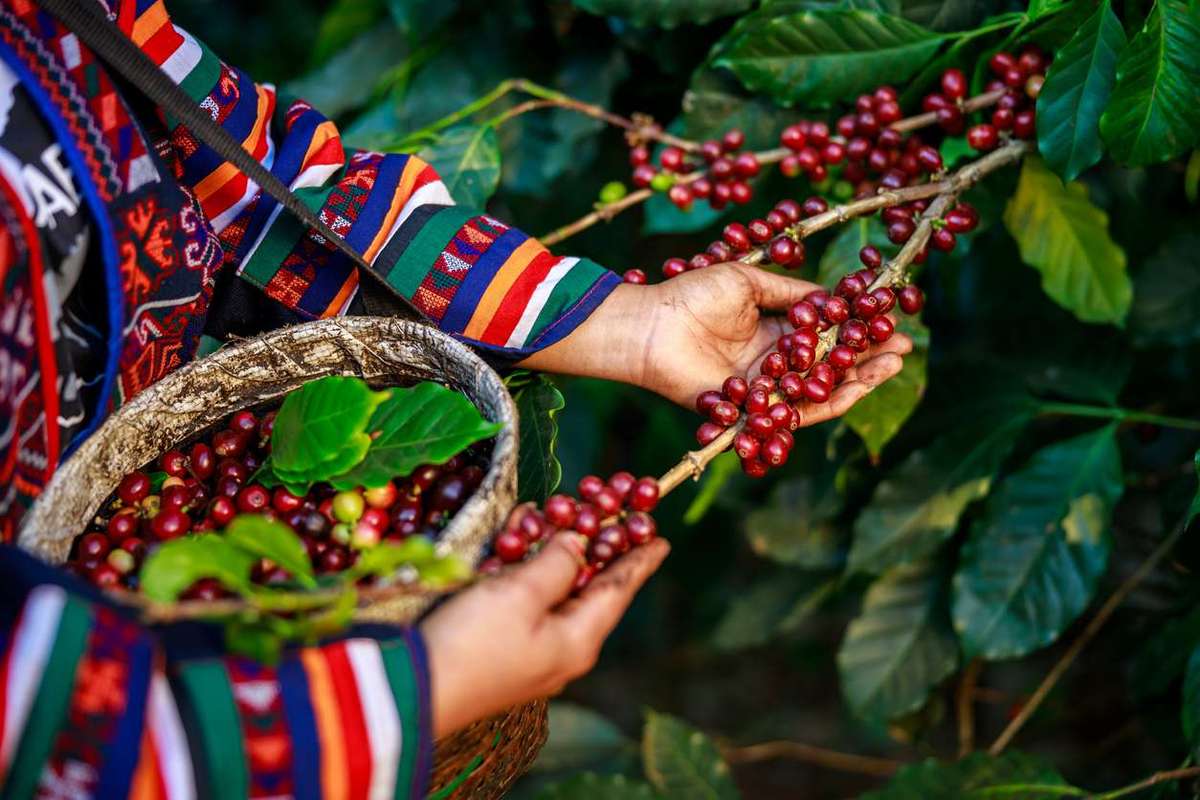

Nescafé has revealed that more than half of the green coffee it sourced last year came from farmers adopting regenerative agriculture practices, marking a significant milestone in the brand's efforts to build a more resilient and sustainable coffee supply chain.
According to the latest Nescafé Plan 2030 Progress Report, 53 per cent of the brand's green coffee was sourced from farmers using regenerative agriculture methods in 2025, up from 32 per cent in 2024, as the company expanded its field programmes and increased support for coffee growers.
The latest update comes a day after Nestlé announced that KitKat will begin using British-grown regenerative wheat supplied through a partnership with Wildfarmed. The wheat will be used in the wafer component of the 1.5 billion KitKat bars produced each year at Nestlé's York factory, highlighting the company's broader push to expand regenerative agriculture across its ingredient supply chains.
Nescafé said more than 1,600 agronomists and field staff worked with coffee farmers across 15 countries during 2025, providing training and technical support on practices such as agroforestry, cover cropping and optimised fertilisation.
The company reported an 18.3 per cent reduction in greenhouse gas emissions from its green coffee compared with its 2018 baseline, while 94.3 per cent of Nescafé coffee was responsibly sourced and traceable to identified farmer groups.
Antje Shaw, head of sustainability for Nescafé, described the achievement as a major milestone for the brand.
"With more than half of our green coffee sourced from farmers adopting regenerative agriculture practices in 2025, Nescafé has reached a major milestone," she said.
"This shows how we are working with farmers to scale regenerative agriculture across our coffee supply chain. We aim to support farmers in this transition, strengthen resilience to climate change and help secure Nestlé's long-term access to coffee, a key growth driver for the company."
As part of its efforts to improve farm resilience, Nestlé distributed 20.3 million coffee plantlets to farmers during 2025, helping growers replace ageing coffee trees with varieties better able to withstand disease and changing climatic conditions.
Beyond agricultural practices, the report highlighted progress in reducing emissions across Nescafé's manufacturing operations. Nearly all electricity used at Nescafé coffee manufacturing sites (98.6 per cent) was sourced from renewable energy during the year.
The company also outlined measures aimed at improving human rights protections within coffee-growing communities. In 2025, Nescafé and child rights organisation Terre des Hommes jointly developed a Child Protection Framework designed to strengthen child protection systems within coffee supply chains.
In addition, the brand extended its partnership with the International Labour Organization in 2026 to support labour rights initiatives in coffee-growing regions.