



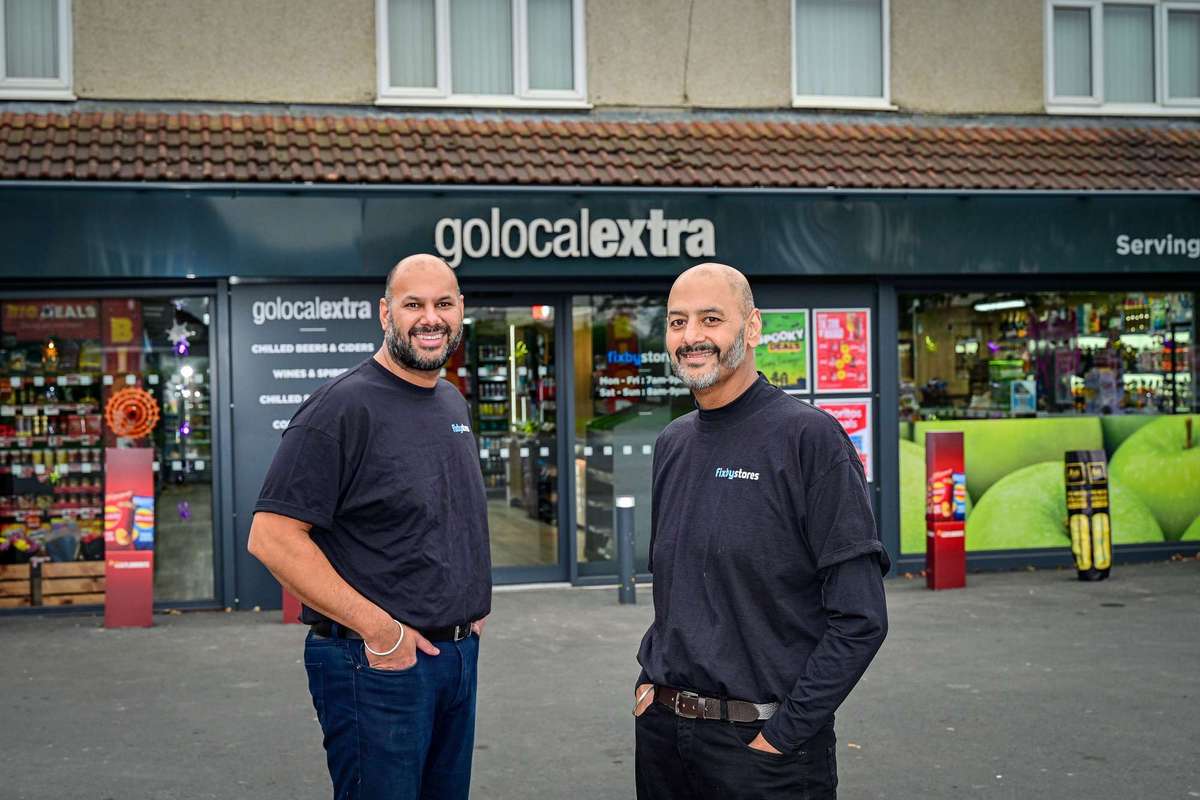

For Manjinder and Navinder Uppal, the redevelopment of Fixby Stores was not about making an old shop look newer. It was about rethinking how the entire business worked.
The approximately 2,000 sq ft store trades under the Go Local Extra fascia and reopened in early 2025 following a complete floor-to-ceiling rebuild. The work covered everything from electrics, flooring, ceilings and refrigeration to counters, glazing and automatic doors, while parts of the building were extended and reshaped to create a better shop floor and more storage.
The Uppals also looked closely at the less visible mechanics of retail. Taller shelving allows surplus stock to be stored above the selling space, while shelved stock trolleys assigned to individual aisles allow staff to take the right products directly to where they belong. The idea is to make replenishment faster while improving availability, stock control and ordering.
Lighting was planned around the aisles and displays rather than simply fitted into the existing ceiling grid. Straight LED strips run centrally along the aisles to improve shelf illumination and sightlines, while energy efficiency was also built into the thinking.
Chilled was another major part of the transformation. The store went from around 6.2 metres of chilled space to almost 16 metres for food and soft drinks, rising to around 26 metres when beer and wine are included. That has created room for stronger fresh, food-to-go, meal-solution, drinks and alcohol ranges.
But the central merchandising idea is perhaps the simplest: customers do not necessarily shop by category. They shop by mission.
Someone comes in for breakfast, lunch, tonight’s tea, a weekend barbecue, a top-up shop or something they have forgotten. Fixby’s layout and merchandising are designed around those missions, allowing shoppers to complete them quickly.
That thinking has also produced a clever take on cross-merchandising. The Uppals use an “often bought with” approach, placing wraps beside chilled chicken, dips with sharing crisps, snacks alongside beer, burger buns near burgers and skewers and firelighters near charcoal.
Products retain their main homes, but secondary positions help customers complete a shopping mission and prompt additional purchases.
The approach is deliberately restrained. Parasite units and secondary displays are used when they add something to the shopping journey rather than simply create clutter. Suppliers are encouraged to support launches through sampling, demonstrations and in-store activations.
Behind the scenes, the team works to a simple “see it, sort it” rule. A gap, poor display or misplaced product is dealt with immediately. Short-dated stock has dedicated reduced sections and yellow labels, while complementary products can temporarily fill a gap when a key line sells out.
The numbers suggest the new approach is working. Before redevelopment, Fixby served around 470 customers a day, with an average basket of about £5.50 and weekly sales of around £19,000. It is now serving more than 600 customers a day, with an average basket of around £8.12 and weekly sales regularly above £30,000. The next target is 625 customers a day.