



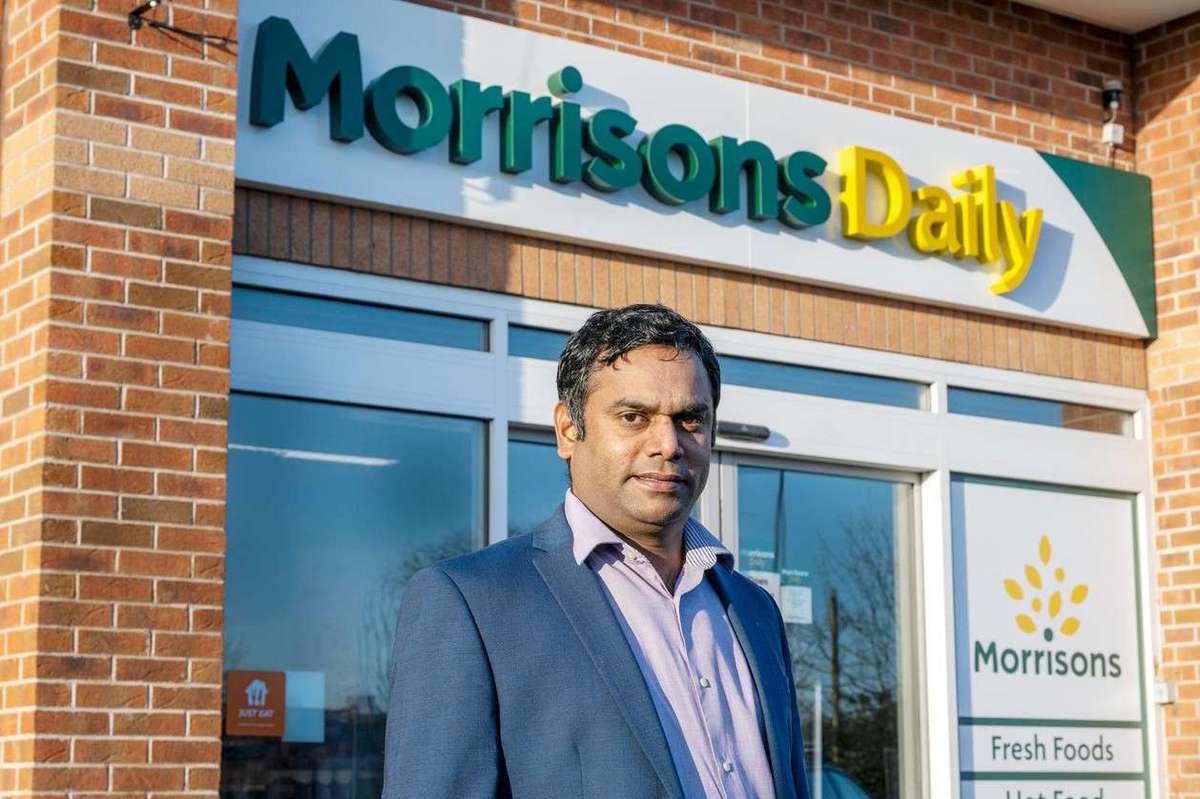

Mohan Periyasamy Palani’s journey into convenience retail began at the most basic level and that behind the till of a petrol station.
When he arrived in the UK in 2007, Palani had no retail experience. He started as a cashier, learning the business from the shop floor and developing what would become a deep focus on standards, customer service and disciplined operations. By 2012, he had acquired his first petrol station.
More than a decade later, that first step has developed into the Samy Group, formally established in July 2025.
Today, the group directly operates or manages 55 convenience stores and forecourts, alongside a further 13 commission-operated forecourts, with more than 320 colleagues and forecast annual turnover of more than £130m.
Its estate stretches across England, from Great Yarmouth and Plymouth to Middlesbrough, with a particular concentration across the East and West Midlands, Yorkshire and the North East.
The scale is impressive, but Palani’s proposition is not built around making every store look the same. Quite the opposite.
He sees flexibility as one of the great advantages of independent retail and chooses the fascia for each site according to its size, customer profile, competitive environment and local needs. The group’s portfolio includes Budgens, SPAR, Morrisons Daily, Londis and Premier, allowing each store to retain its own identity while benefiting from established retail brands.
That balance between central discipline and local freedom runs through the business. Palani describes the DNA of Samy Group as a passion for price, quality, availability and service, with the customer journey at the centre of the operation. The aim is not simply to acquire more sites, but to improve the performance of each one through sharp execution and local relevance.
That approach has also shaped the group’s expansion strategy. Samy Group has selectively acquired corporate sites where there was an opportunity to rebrand, refocus the proposition and unlock stronger performance. The business says it has developed a reputation for increasing both sales and profit through this combination of operational consistency and local understanding.
Behind the estate is a relatively streamlined leadership structure, with Palani supported by area managers, store colleagues and external specialists. He describes the business as flat and open, with talent and hard work recognised and people encouraged to contribute to its culture and development.
There is a clear ambition to keep growing. Having built an operation of considerable scale, Palani wants to deepen the group’s presence in the regions where it already operates while ultimately expanding the estate to more than 150 stores over the next three to five years.
What makes the story particularly compelling is the distance between where it started and where it is heading. The journey from petrol-station cashier to head of a multi-brand convenience operation is, in itself, a lesson in the possibilities of independent retail.
For Palani, though, scale is not the destination. The ambition is to build a business where the discipline of a large operator does not erase the local knowledge that made independent retail successful in the first place.