



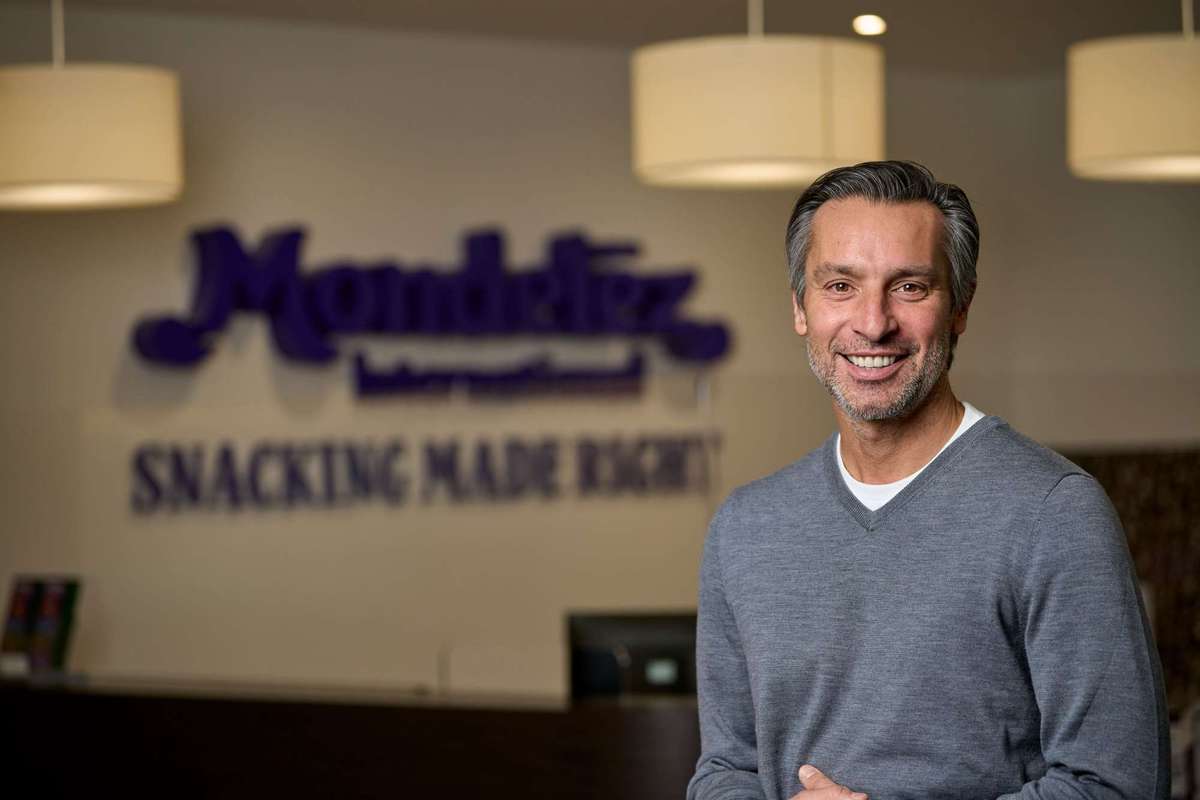

Asian Trader: Christian, it’s a pleasure to see you. You’ve now been in the Senior Vice President and Managing Director role for just over six months. What have been your priorities since taking on the position? What do you see as the biggest opportunities for Mondelēz under your leadership?
Christian Woolfenden: My first few months on the job have been spent getting to know our very talented team. I’ve enjoyed witnessing the incredible work they do, day in and day out, to grow our iconic Mondelēz brands and ensure that consumers up and down the country can enjoy their favourite products. I’ve also been looking at how we are investing in innovation, capabilities and our future talent.
My priority is fundamentally growth and focusing on how we combine our advanced manufacturing capabilities, innovation and deep understanding of consumers to create brands people love today and will enjoy for generations to come. In order to do that, over the past four years we’ve invested over £24 million in R&D and employed 750 specialists.
Snacking is an exciting space. We are leaders in the industry and want to continue to lead its future with our portfolio of world-class brands.
AT: As you’re still relativity new to your role, what are your first impressions on the state of the confectionery industry? What have been the main changes you’ve observed, and which direction do you see the market moving in, given economic pressures, changing consumer behaviour and wider social trends?
CW: I believe the snacks category, including confectionery, is well positioned for growth. People have strong affection for our brands, while there remains a clear opportunity to cater for different eating occasions. There is also scope to tap into snacking trends, which are not only multi-faceted, but fast moving with the help of social media and influencer culture.
We’ve been able to launch some fantastic products that have resonated with consumers – with our Cadbury Biscoff partnership being a personal highlight which is now worth £43m1, the largest launch of any Mondelēz International NPD in a decade, as well as the growth of our Grenade protein brand.
Consumers are also key to every decision we make as a business. We understand the challenges that they are facing – from economic pressures and health considerations to permissibility. That’s why it’s so important that we get our offer right.
Our focus is to understand our shoppers’ needs so we can offer a range of snacks in the right formats, for the right moment, made in the right way – from everyday treats to indulgent treats to well-being and nutritional snacks. And the product portfolio needs to offer a range of price points. At the same time, we never compromise on what matters most, which is delivering delicious products that represent quality and good value for money.
AT: What do you see as the biggest challenges facing the confectionery and snacks sector right now? How do you balance short-term pressures, such as extreme volatility and record-high cocoa costs and the ongoing cost-of-living squeeze, with longer-term issues such as regulation and changing health and lifestyle trends?
CW: Ultimately, it is about managing the pressures we face today without losing sight of what consumers will want tomorrow.
That’s why we continue to invest in our business and people. Over the past three years, we’ve invested £135 million in our manufacturing facilities, while I’m extremely proud of the advancements we’ve made in research and development. All to ensure we can meet consumer needs.
We are also investing in sustainable solutions. When we say “snacking made right” we are talking about reducing our end-to-end environmental impact – using more sustainable ingredients, championing human rights and looking after the wellbeing of consumers and colleagues, while investing in communities.
96 per cent of our packaging is now designed for recyclability, and we reduced our use of virgin plastic in the UK and Ireland by 30 per cent versus 2020. Our Cadbury sharing bars now use 80 per cent certified recycled plastic, removing around 600 tonnes of virgin plastic, for example.
When it comes to our ingredients, 100 per cent of wheat volume for our European biscuit business is grown under the Harmony charter,* supporting regenerative agriculture. And in every bar of UK&I Cadbury Dairy Milk, we continue to use the equivalent of glass and a half of fresh liquid milk sourced from British and Irish farms.
And it is important that our impact goes beyond our own supply chain. Through Health for Life™, our community programme, we have supported 240 schools and reached more than 260,000 children and adults, while as a business we donated £7.7 million to UK charities between 2022 and 2025.
There is wider conversation happening around how consumers may eat and snack in the future with health and wellness being top of mind. How are you thinking about this potential shift and how important will treats and permissible indulgence remain?
CW: Consumers have different needs for different occasions. There is no one-size-fits-all approach and through our extensive consumer research we understand what our shoppers are looking for.
The demand for “better for you” snacks has increased, but that term can mean different things to different consumers and even the same consumer at different times of the day or in different situations.
We need to deliver on consumer expectations and innovate for the future. We will focus on three areas to do that: Permissible indulgence, more functional snacks – like Grenade and Philadelphia – and our “Better for You” portfolio, which includes belVita and Cadbury Brunch.
Having a broad portfolio of brands is so important to us, and it’s why we continue to invest heavily in product development whether that is through portion size, improved nutritional profiles, or packaging.
AT: Looking ahead five years, how do you expect the snacking landscape to develop, and where do you see the biggest opportunities for category growth across areas such as chocolate, candy, biscuits and dairy?
CW: Over the next five years, the biggest opportunities will come from understanding how, when and why people snack – something that we are uniquely placed to do.
Consumer needs are constantly changing, but what has remained clear across our history is that people look for great-tasting products from brands that they know and trust. They are looking for products that deliver enjoyment, but also can cater to factors such as wellness, convenience and value. Having a broad portfolio allows us to meet those different needs, whether that is an indulgent treat, something for on the go, something to share or an option that meets wellness needs.
Cadbury has been around for over 200 years and that’s because we continue to deliver products that our shoppers want. We’ve introduced unique added value propositions to the market such as Cocoa Essence in the 1860s, Cadbury Dairy Milk in 1905 and more recently, our partnership with Biscoff, which has delivered value and category growth.
AT: Based on your experience across different sectors, how do you think impulse will evolve in the future as shopping habits change? What role do you see Mondelēz playing in shaping the future of the snacking?
As shopping habits become increasingly varied, we need to think beyond traditional impulse occasions and ensure our brands remain relevant wherever and whenever consumers choose to snack. As the category leader, Mondelēz has an important role to play in shaping the future.
That means continuing to strengthen the brands consumers already know and love, while investing in innovation to respond to emerging needs and occasions.
As some examples, recently we’ve launched Cadbury &More, which meets demand for indulgent flavours, expanded our Cadbury Delights range of bars containing fewer than 100 calories per bar for those seeking smaller portions, and expanded our protein range through the launch of Grenade Soft Core.
AT: As shopper behaviours continue to evolve, how do you see the importance of the convenience channel changing?
Convenience stores are at the heart of local communities, and we’re incredibly proud of the relationship we have with retailers across the country.
We continue to support our convenience customers in making the most of the snacking opportunity and help them make their stores a key destination. Strong execution at the point of purchase is essential to converting demand into sales, and we help retailers respond to changing shopper needs to support growth in the channel.
We wanted to build on the unique relationship between shoppers and retailers with the return of our highly successful Cadbury Big Win Win promotion. Generosity is at the heart of Cadbury, and the campaign brings that to life by giving winning shoppers the chance to nominate their favourite convenience store, with both receiving a cash prize.
AT: Do you see the power of brands becoming more important with an ageing demographic looking for nostalgia and consumers looking for more premium products?
I think brands will become even more important as consumer needs continue to evolve. Heritage and nostalgia can be incredibly powerful, particularly for brands such as Cadbury, but that heritage needs to be balanced with continued relevance for new generations.
Considering that Cadbury is the nation’s No.1 chocolate brand2, while OREO is the world’s No.1 biscuit brand3, it’s clear that consumers are still responding strongly to brands with heritage. The future opportunity is to build on the trust and affection consumers already have for our brands and find new ways for people to enjoy them.
AT: Looking across the Mondelēz portfolio, how are your brands performing and where do you see the greatest opportunities for future growth? What can you tell us about your priorities for the portfolio in terms of investment, campaigns and NPD?
CW: Across the portfolio, we are seeing value growth, as well as share and volume growth from some of our key brands.
Cadbury saw volume growth across nearly a third of its 600+ range in 20254. That reflects the strength of the core range, and the relevance of the innovation and value formats we’ve delivered.
OREO5 and Ritz6 are both also continuing to grow at strong rates.
In candy, Sour Patch Kids continues to build real momentum. It is one of the fastest-growing confectionery brands7, growing 25.1 per cent year-on-year8. It is a great example of the opportunity that comes from giving shoppers something different while continuing to deliver the tastes and textures they are looking for.
NPD has always been vibrant in confectionery. We’re increasingly seeing brands move across categories and formats, from chocolate bars becoming ice creams to partnerships such as yours with Lotus Biscoff. Where do you see the biggest opportunities for innovation and cross-category collaboration in the years ahead?
CW: I see partnerships becoming increasingly important for us, especially where we can bring the strength of our brands together in ways that make sense. We have already seen that across our portfolio with Cadbury Creme Egg and OREO, Grenade and OREO, as well as our Philadelphia and Ritz tie-up. When you bring two powerful brands together around a genuine consumer need, it can create something really compelling.
There are also significant opportunities through partnerships beyond our own portfolio. Cadbury Biscoff has been one of our most successful collaborations to date and is a great example of partnership potential at a product level. The range is already worth more than £38 million9, with further innovation still to come.
But partnerships are about more than product innovation. Our promotional partnerships allow us to offer shopper experiences and opportunities that go beyond the product itself. Whether that’s engaging directly with fans through OREO’s limited-edition cookies with K-Pop icons BTS or through our broader partnerships with football clubs like Arsenal, Liverpool and Tottenham, or providing access to experiences with Live Nation or Merlin. These relationships can create money-can’t-buy memories, strengthen the connection consumers have with our brands and give retailers something exciting to activate in store.
AT: Christmas, Easter and Halloween have traditionally been important moments for confectionery. How do you see occasions shaping strategies for the convenience channel? What other opportunities could emerge in the future and could significant confectionery growth be driven by Diwali and Eid?
CW: The mini seasons, as they tend to be called, are becoming increasingly important. Occasions including Diwali, Eid and Father’s Day give us more opportunities throughout the year to excite shoppers, create theatre in-store and ultimately grow the category.
These moments can be even more powerful in convenience, where retailers can tap into community events. The opportunity is to understand which occasions matter to their shoppers and bring them to life through the right products, promotions and displays.
For impulse categories, creating that visibility and sense of occasion can get shoppers thinking about shopping the category in a different way. It also encourages incremental purchases and helps retailers unlock opportunities beyond the traditional seasonal peaks.
AT: As we approach the “Golden Quarter”, which we like to think is heralded by Diwali, what advice would you give independent retailers looking to make the most of their confectionery aisle and chiller? Beyond the immediate seasonal opportunity, how should retailers be thinking about the category to drive sustainable growth?
CW: My advice to independent retailers is to become known as a destination for the seasons. Get a fast start on the core holidays like Christmas, Easter and Halloween, with a strong gifting and sharing range that gives shoppers a reason to visit you. That starts with great execution. Displays should clearly signpost the seasonal offer and create theatre in-store. This becomes even more important as we move into the Golden Quarter.
We know that 72 per cent of convenience retailers say seasonal sales are very important to their business, while deals and offers, new product launches and display materials are the three biggest drivers of seasonal sales10.
I would also encourage retailers to balance seasonal innovation with proven, year-round favourites. Products such as Cadbury Dairy Milk and Cadbury Milk Tray can provide continuity throughout the year, while giving retailers a strong foundation on which to build their seasonal ranges. That balance can help reduce risk while ensuring shoppers can always find brands they know and love, no matter the time of year.