



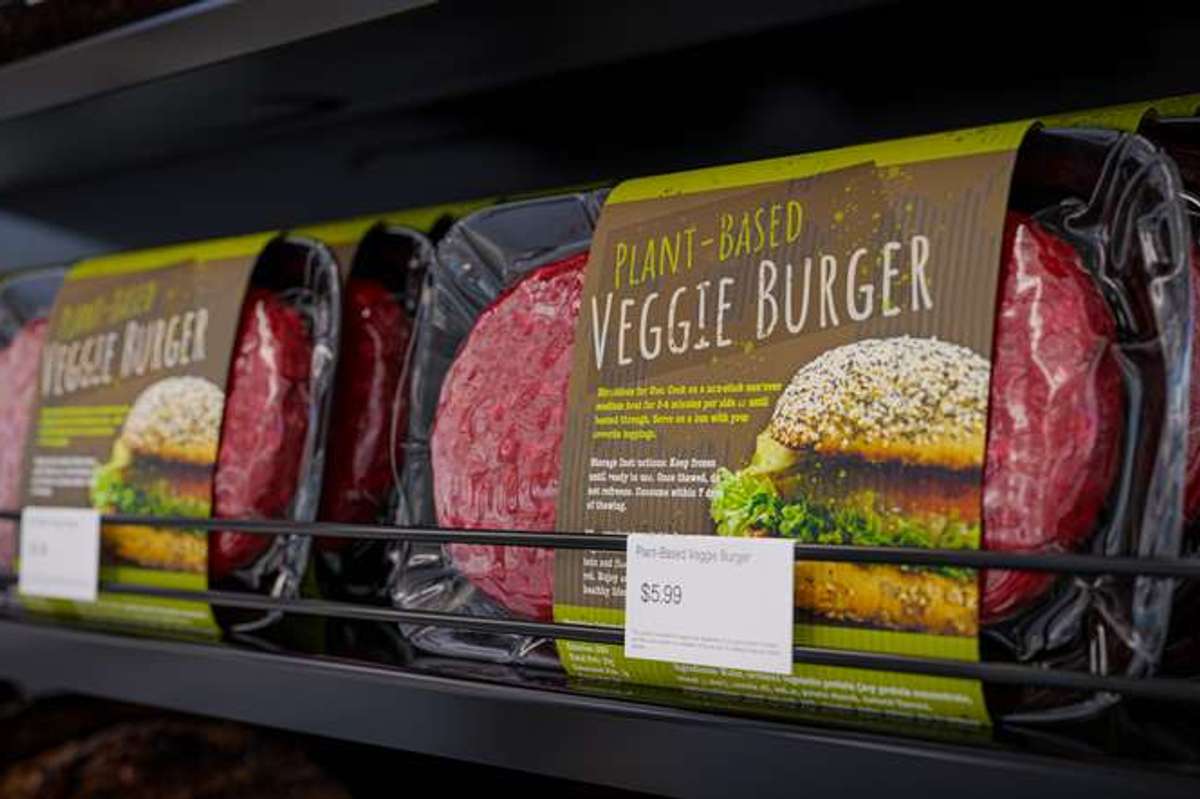

Plant-based products are widely stocked across UK supermarkets, but inconsistent in-store activation is preventing retailers from unlocking the category’s full commercial potential, according to a new report from ProVeg International and Planeatry Alliance.
Launched during London Climate Action Week, Blueprint for Plant-Based Commercial Growth: Realising the Commercial Opportunity in Protein Diversification, argues that while headlines have focused on a slowdown in parts of the meat alternatives market, the wider plant-based sector is entering a new commercial phase, with growth opportunities emerging in different areas of the category.
The report draws on market analysis, store audits across 10 UK retailers, product-level data, and industry interviews.
The category is stocked, but not fully sold
The report finds that plant-based products are now widely available across UK retail, but supporting infrastructure such as signposting, shopper communication, meal inspiration, and category navigation often remains underdeveloped.
Store audits found that no retailer incorporated plant-based products into wider in-store corporate communications, while execution around fixture signposting and shopper activation varied significantly. Even the highest-scoring retailer achieved less than half of the maximum possible activation score.
“The real opportunity is not simply putting more products on shelves,” said Joanna Trewern, Partnerships Director at ProVeg International.
“Retailers have largely achieved distribution. The next challenge is helping shoppers discover products, understand how to use them, and buy them again.”
Growth is becoming more selective
According to the report, different plant-based segments are now performing very differently.
While some meat alternative products face pressure, dairy alternatives remain resilient and ingredient-led proteins are showing strong growth signals. The report highlights year-on-year growth in tofu, tempeh, beans and pulses, driven by consumer interest in protein, fibre, value, and recognisable ingredients.
“Dairy alternatives have become part of everyday shopping habits, while ingredient-led proteins are increasingly aligned with what consumers are looking for from food,” said Trewern.
“The lesson for retailers is that plant-based should not be treated as a single category with a single growth strategy.”
A resilience opportunity for retailers
The report positions protein diversification as an increasingly important commercial consideration for retailers facing commodity volatility, inflationary pressures, climate-related supply risks, and changing consumer preferences. It argues that a more diversified protein portfolio can support shopper relevance, supply resilience, and long-term category growth.
“Protein diversification is becoming a retail resilience issue,” said Trewern.
“Retailers that build stronger, more balanced protein portfolios will be better positioned to respond to changing consumer demand and future supply chain pressures.”
A blueprint for the next phase of growth
The report introduces a five-stage ‘stocked to scaled’ activation framework designed to help retailers move beyond product availability and improve category performance.
Recommendations include improving category navigation, connecting products to meal occasions, strengthening shopper communication, building demand beyond discounting, and embedding protein diversification into wider commercial strategies.
The report concludes that future growth will depend less on increasing distribution and more on creating the conditions that support discovery, trial, repeat purchase, and long-term category confidence.