



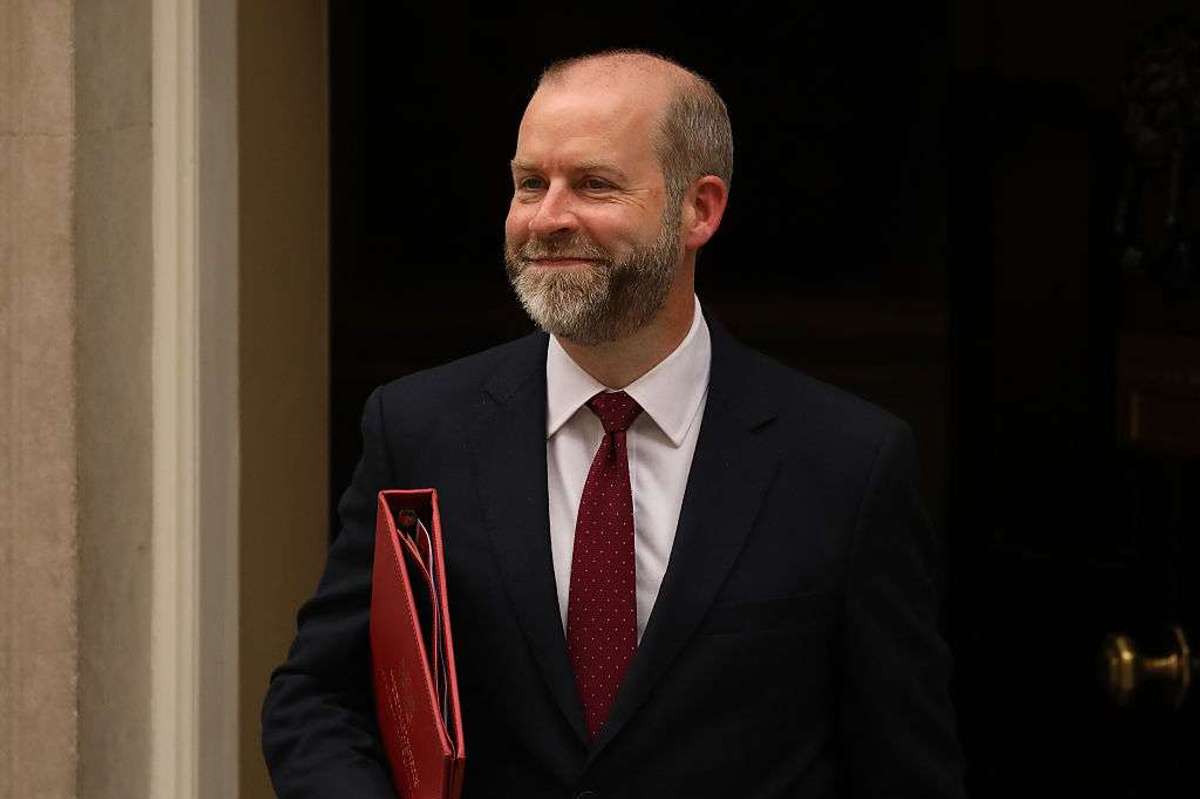

Business groups have welcomed the return of Jonathan Reynolds as business secretary after prime minister Andy Burnham reinstated him to the role as part of his first ministerial appointments.
Reynolds was named secretary of state for business, innovation, science and trade on Monday (20), taking on an expanded brief after previously serving as business secretary before losing the post to Peter Kyle in a reshuffle under former prime minister Keir Starmer.
The appointment was welcomed by the National Enterprise Network (NEN), which said it looked forward to working with Reynolds to strengthen support for the UK's 5.7 million small businesses.
“We warmly welcome the appointment of Jonathan Reynolds as business secretary,” said Alex Till, chair of NEN.
“Having served as shadow business and trade secretary, Mr Reynolds has demonstrated a deep understanding of the vital role that micro and small businesses play in driving economic growth. NEN looks forward to working collaboratively with him and his team in the coming months to support the small business community and strengthen our position as a leading voice for enterprise.”
NEN said small and medium-sized enterprises employ 16.9 million people – around 60 per cent of the UK's workforce – and generate £2.8 trillion in annual turnover. The organisation said its network of enterprise support agencies provides funding advice, mentoring and business support to start-ups and small firms across the country.
The group added that approximately 16 per cent of trading businesses reported increased turnover during the early months of 2026, highlighting the resilience of the UK's small business sector.
The Federation of Small Businesses (FSB) also welcomed the change in government, calling on Burnham to deliver policies that boost growth and reduce costs for small firms.
“We extend a warm welcome to Andy Burnham as he takes on the most important role in public life,” said Tina McKenzie, FSB's policy chair.
“This is a golden opportunity to restart the Parliament, go for growth, and get it right on supporting small businesses.”
McKenzie said the organisation was encouraged by Burnham's recent pro-business messaging but urged the government to address pressures facing smaller firms by increasing Small Business Rate Relief, tackling rising business costs following National Insurance increases, and reducing unnecessary red tape.
She also called on the new administration to continue with planned late payment reforms currently progressing through Parliament, describing them as one area where the previous government had “got things unquestionably right”.
The FSB further urged ministers to expand procurement opportunities for smaller businesses and ensure that more economic decisions are taken at a local level.
“For the prime minister to get growth in every postcode, he needs to back the UK's 5.7 million small businesses which are at the heart of local economies and communities right across the country,” McKenzie said.
Burnham announces tax cut to energy bills
Burnham on Tuesday said he would cut taxes on electricity bills, the first of several early moves to signal his intent to ease a cost-of-living crisis and quell anger over successive governments' failure to bring change.
On his second day in his new job, Burnham said his government would remove the value-added tax from domestic electricity bills from October 1, cutting around £45 from the average annual bill of around £1,862 that households pay.
With bond investors watching closely for how any fiscal support would be paid for, he said the move would be funded by savings from the cancellation of a £1.8 billion digital ID programme, announced on Sunday.
“We're taking immediate action to cut taxes on energy bills, put more money in people's pockets and bring back hope,” he said in a statement, having pledged to give people more “breathing space” in their lives.
Burnham, a 56-year-old former Greater Manchester mayor, wants to move quickly to show people he is “serious about helping them out”.
He said on Monday his early policies might not “take all of the pressure off” people struggling with rising prices and that a longer-term plan would be set out later in the year.
But his calls for the governing Labour Party to get behind his agenda might have fallen on deaf ears. An ally of former prime minister Keir Starmer, Darren Jones, said the digital ID scheme was unfunded, questioning whether the new leader had the money to cover his policy move on energy bills.
“The government will have to set out how it will pay for its new policies at the budget,” he said on X.
Energy bills have been one of the main drivers of Britain's cost-of-living crisis after the wholesale gas price, which heavily influences British electricity prices, surged after Russia's full-scale invasion of Ukraine in 2022.
The Conservative government at the time spent billions of pounds to shield households through the energy price guarantee. But while prices eased from mid-2023, they remain up to 60 per cent higher than before the energy crisis.
Ruth Curtice, chief executive of the Resolution Foundation, said the move could benefit higher income families because the cuts were not targeted. “With bills still set to rise over £150 this October, this money would have been better spent on more targeted support,” she said in a statement.