



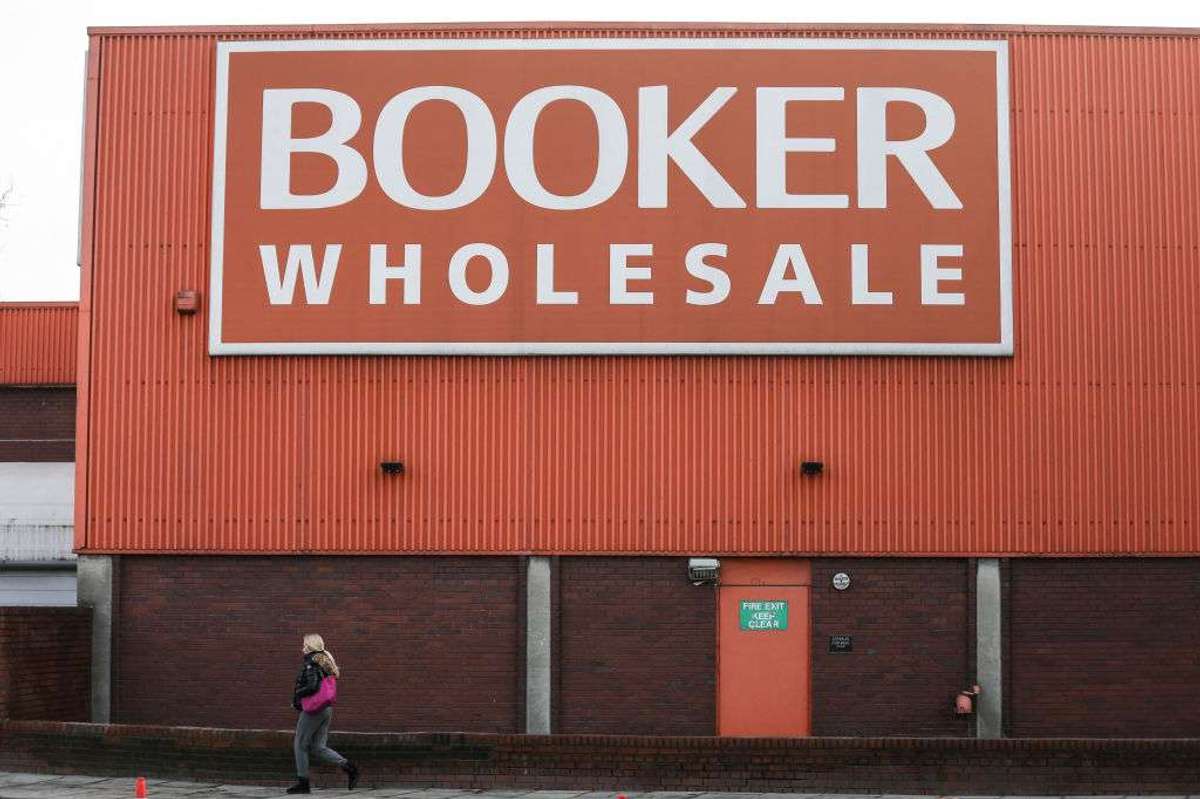

Booker sales fell 2.6 per cent in the first half of Tesco’s financial year, with the continuing decline in tobacco sales offsetting growth from new convenience retail partners. However, underlying Core retail sales grew 1.4 per cent once the impact of a lost national account is excluded.
Booker sales declined 2.6 per cent year-on-year to £4.62 billion in Tesco’s first half, as the continuing contraction in the tobacco market and tough comparatives weighed on its performance.
The wholesale division nevertheless held adjusted operating profit broadly flat at £163 million, with better buying and Tesco’s cost-saving programme offsetting lower sales and ongoing operating cost inflation.
The interim results, published today (8 October), cover the 26 weeks to 29 August 2026.
Sales in Booker’s Core retail business fell 0.6 per cent on a like-for-like basis to £1.71bn, but Tesco said this included an approximately 200-basis-point impact from the exit of a lower-margin national account in August 2025.
Excluding this effect, Core retail like-for-like sales grew 1.4 per cent.
Tesco said its symbol brands continued to perform strongly, with Booker adding 275 net new retail partners during the half.
Booker’s total sales excluding tobacco declined 1.4 per cent on a like-for-like basis, while tobacco sales fell 8.9 per cent to £740m. On a two-year basis, however, Booker excluding tobacco was up 2.7 per cent, while tobacco was down 16.6 per cent.
Tobacco remains a drag on convenience
The tobacco decline is not confined to Booker. Tesco said its total Convenience sales, including One Stop, declined slightly, as the ongoing contraction of the tobacco market offset growth generated by new store openings.
Tesco Express sales were broadly flat year-on-year, although performance benefited from a 1.4 percentage-point contribution from net new store openings.
The results therefore point to a familiar challenge for convenience retailers: even where stores are adding customers or expanding their estate, falling tobacco sales can make overall sales growth harder to achieve.
Booker catering also faces a tough comparison
Booker’s Core catering sales fell 3.2 per cent on a like-for-like basis, although Tesco said this reflected a strong comparative period and sales were 2.3 per cent higher on a two-year basis.
The wholesaler said it had strengthened its catering proposition around value and key essentials, including new products, higher quality and clearer tiering across its fresh chicken range, as well as enhancements to coffee and sweet treats.
Best Food Logistics delivered 0.6 per cent like-for-like growth despite continued pressure in the fast-food market.
Tesco overall remains profitable
The Booker performance contrasts with stronger growth elsewhere in the group.
Tesco group sales excluding VAT and fuel rose 1.6 per cent at constant exchange rates to £33.78bn, while like-for-like sales increased 1.0 per cent. UK like-for-like sales were up 1.5 per cent, including 2.4 per cent growth in food.
Group adjusted operating profit rose 6.3 per cent to £1.78bn, while free cash flow increased 21 per cent to £1.57bn.
Sales of fuel at Tesco petrol stations that adjoin some of its biggest stores jumped almost 20 per cent to £3.58bn in the first half.
Diesel prices especially are surging due to supply disruptions from the US-Iran war, reaching record highs across Britain in recent weeks.
"Against an uncertain external backdrop, we have continued to invest in giving customers the very best value for money," Tesco chief executive Ken Murphy said in the statement.
"Our digital channels are important growth drivers for Tesco, with online sales growing eight percent in the half," he added.
Its Whoosh offering, which can deliver goods in 20 minutes for an additional charge, saw sales increase by 37 per cent.
Tesco also raised its full-year adjusted operating profit guidance to £3.15bn-£3.30bn, from its previous £3bn-£3.3bn range.
It is increasing its planned share buyback from £750m to £950m, while raising full-year capital expenditure guidance from £1.6bn to around £1.7bn.