



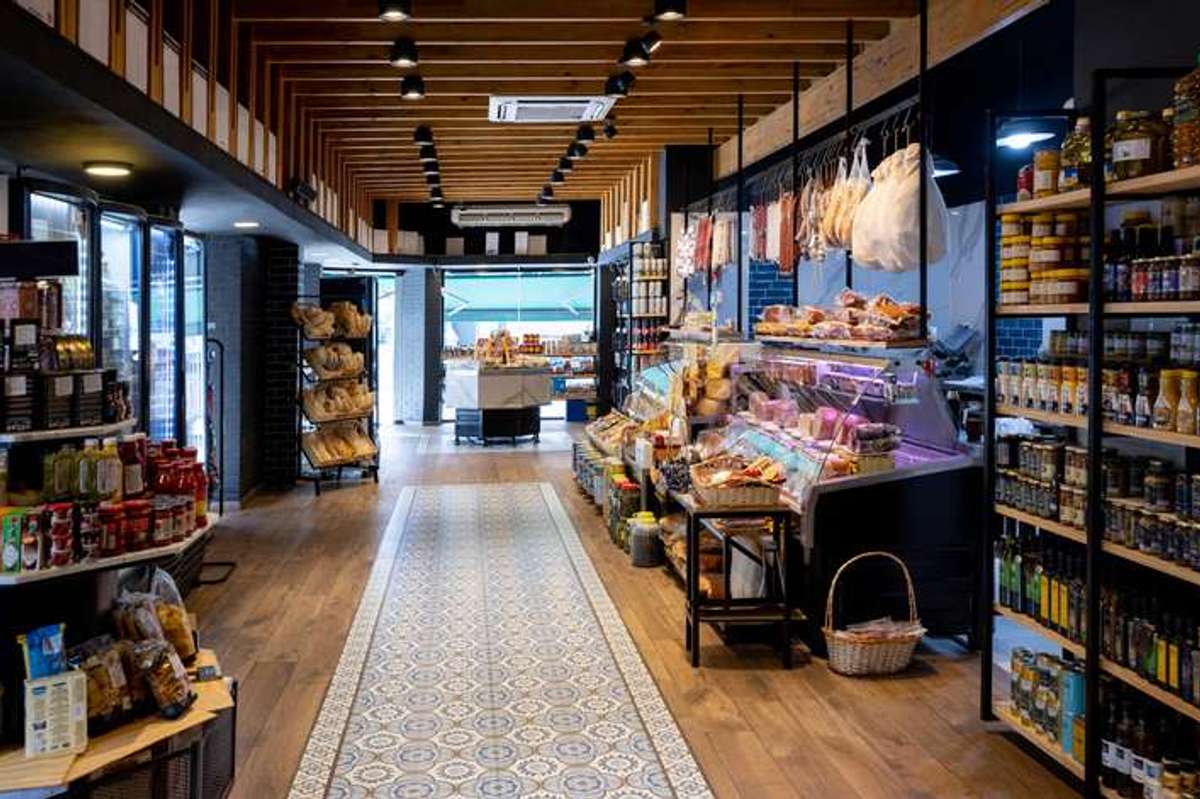

Here is the good news, delivered early. Convenience is forecast to add £6.3 billion in sales over the next five years.
Now the bad news. Institute of Grocery Distribution (IGD) expects the channel to grow at a compound annual rate of 2.5 per cent between 2026 and 2031, as compared to 3.3 per cent for the wider grocery market.
To find out what that all means for convenience sector’s stakeholders and what they should do to about it, Asian Trader reached out to IGD experts.
Turns out that the picture is not so rosy but not so gloomy either.
According to IGD insight partner and senior business analyst Patrick Mitchell-Fox, the market will get tougher but there exist ways for convenience store operators to overcome the challenges.
Let’s start with the elephant behind the counter. Tobacco and vaping remain a big source of sales and footfall for symbols and independents, and both are in structural decline. The generational smoking ban will accelerate a fall that was already under way.
Mitchell-Fox doesn't pretend otherwise.
"As it is intended, the next year’s Tobacco and Vapes Bill, once it comes into effect, will progressively reduce the addressable market for these products," he said. "The legitimate tobacco category will disappear long-term."
The headline IGD figures though hide a more encouraging picture. Strip tobacco and vaping out and IGD forecasts convenience growing at 3.4 per cent, just ahead of the wider grocery market, with momentum building from 2027.
The obvious question is what replaces tobacco sales.
In the view of Mitchell-Fox, replacing tobacco sales value pound-for-pound is the wrong thinking. The better approach is not replacing a category but replacing the missions and frequency that come with it.
“In terms of sales value, tobacco will be hard to replace due to the high-ticket prices. But in terms of profitability, it’s a lot less, so focusing on better margin categories can help offset the downside,” he told Asian Trader.
 IGD
“To make up lost footfall, retailers need to target products and services that drive hopefully daily frequency. For example, make a mission of breakfast, then provide a night-in solution through Beer-Wine-Spirits and snacks in sharing packs.
“Not all retailers want to go after chilled food-to-go due to the potential for wastage. In-store prep and made to order can offer good control of that but it needs to be backed with commitment to create something credible.”
According to IGD, future growth will increasingly come from areas where convenience can offer something distinctive.
Food to go, food for later and quick commerce are becoming more important as retailers look to serve a wider range of shopper missions.
For independents, however, there is an obvious danger in turning every emerging trend into a new investment project. So, should every convenience store start offering food to go?
Mitchell-Fox’s answer is a qualified yes but only where the mission makes sense.
“There are many potential approaches to food to go,” he said.
“Creating a full-on in-house offer can offer impact and be highly profitable, but it needs serious commitment and there’s often a significant threshold of trial and error where it can lose money before the retailer finds out what works.
“For lots of retailers, that’s too big a risk, but there are many off-the-shelf solutions that can offer less risk.
“In the end, it’s down to the retailer to work out what works for them. I think it’s critical that if retailers have an opportunity to serve the mission (and not all do), they should at least do something to address it.”
Changing face of convenience
The competition is about to get closer. Big multiples are going bigger on range, prices and promotions.
For a small store, that can sound like an uneven fight.
But Mitchell-Fox bust the myth, arguing that independents should not worry about direct price comparison with multiples but rather work on being in the “right ballpark”.
"Retailers should not underestimate the role of ‘convenience’ as part of the value equation,” he said.
“Shoppers’ needs vary. When they want something to eat or drink now, they will buy ‘now’, and being the store in the right location at the right time is what drives store choice and their willingness to purchase.”
The price comparison does come up but its range specific.
“In contrast, with take-home or top-up purchases, shoppers will be more likely to consider ‘Do I need this right now? And maybe I can get it cheaper elsewhere’,” Mitchell-Fox pointed out.
“So, I think it’s right that retailers should be concerned to be in the right ballpark when it comes to price, but matching price for price is not vital. It’s more a question of being aware where it is more important and where other factors are at play.”
In other words, price matters. But it is not the only currency.
“Product differentiation can also play a role in offsetting price competition,” he said. “Offering different and unique lines where direct price comparison is not possible can also be a value-add strategy.”
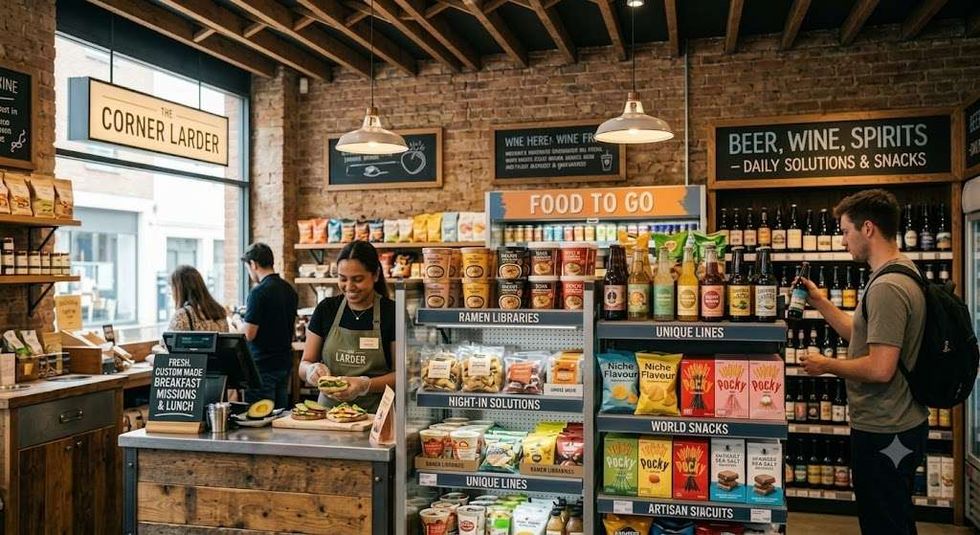 Image by Asian Trader
Switching the conversation to symbol groups and fascias, what should an owner weigh before signing on the dotted lines?
Mitchell-Fox urged the retailers to weight the symbol group proposals as the “balance between what they get out versus what they have to put in”.
“The key thing is the balance between what they get out versus what they have to put in. They have to understand their own aspirations for how they want the store to develop and how much freedom they want to retain to do things ‘their way’,” he said.
“There is a whole range of packages on offer from full franchise where you are pretty much part of a chain and you have multiple capabilities running the store.
“But it limits flexibility on ranging and sourcing, so other ‘softer’ options are a big part of the sector.”
The tension is worth spelling out. If the strategy is to be known for something distinctive, a model that narrows ranging and sourcing can work against that ambition.
If the priority is to reduce operational complexity and gain access to a ready-made proposition, the trade-off may look very different.
Hard facts
Price may start the conversation in retail, but the shelf is increasingly about perceived value.
Private label complicates the picture. IGD reports that retailer-owned products took 44.3 per cent of UK grocery value sales, well above the European average of 39 per cent.
Private label grew 4.1 per cent in value last year against 2.7 per cent for brands. Nearly half of shoppers globally (47 per cent) say price is no longer the main reason they buy it, and 52 per cent believe its quality matches branded alternatives.
For convenience retailers, that makes the question less about whether to stock brands or own label and more about what each line contributes to the proposition.
That becomes particularly important when costs remain under pressure. IGD forecasts average food inflation of 2.9 per cent to 3.9 per cent this year, rising to 5.6 per cent to 6.6 per cent in 2027 and 5.3 per cent to 6.3 per cent in 2028.
The pressure on shoppers is unlikely to disappear. Nor is the need for retailers to make every piece of space work harder.
IGD’s review of Christmas 2025, published earlier this month, offers an interesting glimpse of how that might play out this year as well.
While volume sales were broadly flat in 2025, retail benefited from shoppers’ desire to save by avoiding restaurants for their meals.
Large-format stores remained important for many shoppers.
Convenience stores were impacted by their limited ranges, with reduced footfall mitigated by last-minute top-up shops. The combination of a stronger quick commerce offer and convenience stores' structural issues could see fast-paced delivery options gain further, warns IGD.
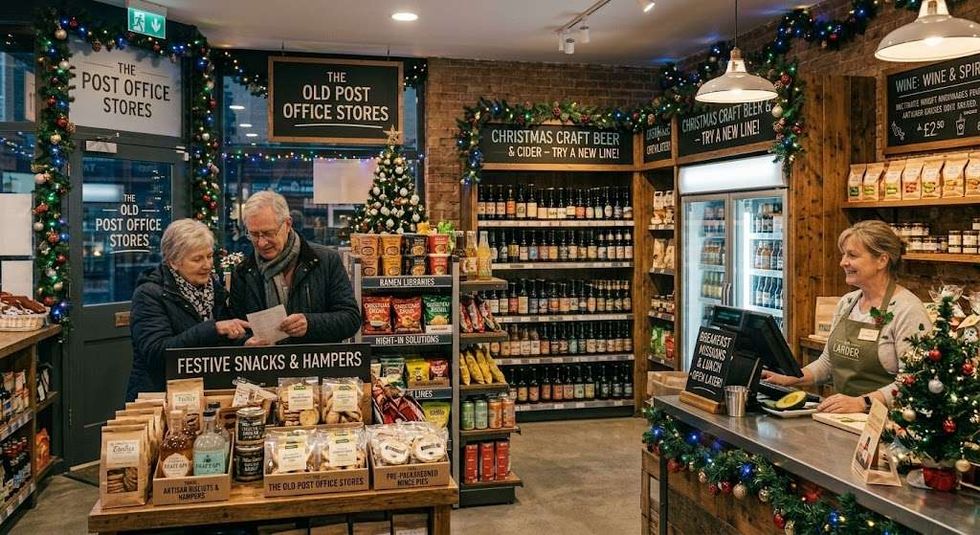 Image by Asian Trader
However, there are some lessons to take as well.
Most shoppers hosting for Christmas plan to cook from scratch, but more are buying party foods and ingredients for drinks, states IGD. 43 per cent of shoppers plan to try new recipes so it will be wise for retailers to provide recipe inspiration for shoppers planning to cook and bake.
These different needs mean that shoppers remain highly mission-focused during events. To meet these needs, activations must be mission-oriented and clearly signposted to make the shopper journey easier.
Additionally, IGD expects shoppers to look for top-ups of alcohol, snacks and convenience foods in addition to forgotten items so retailers need to keep an eye on in-demand products in the build-up to Christmas Day, as they may become the must-have items later on.
And if retailers are looking for a shortcut to the future, technology will play its part but with limitations. AI is, inevitably, part of the conversation about what retail will look like by 2030.
Mitchell-Fox is unmoved.
“I would never say anything is inevitable as it’s impossible to account for all the variables that can change circumstances and influence decision-making in unforeseen ways,” he said.
“AI is probably being overhyped. It is a powerful tool but it still needs human direction and human agency to be employed successfully in the real world.”
‘Be famous’
If the convenience market is becoming harder to win across the board, the answer may not be to do more, but to do fewer things better.
When asked what retailers should prioritise over next 12 months, Mitchell-Fox’s advice is direct, “Focus on the winning footfall-driving categories and shout about it. Make sure you are famous for something!
“The channel doesn’t need a big offer in slower moving categories like household; just focus on the core lines and free up space for faster moving lines and categories.
“Create a destination in terms of choice and variety for products that engage shoppers and offer a bit of daily interest/excitement.”
Mitchell-Fox is also warning of “tough times” ahead for the convenience sector.
“It’ll be a more competitive environment as the big retailers look to expand their convenience presence in a wider range of locations, bringing their class-leading capabilities and an increased focus on price and value to the small store sector,” he said.
“However, there will always be places that the big retailers can’t make commercially viable, and in these places independent retailers can still thrive by getting their ranges right for the location and leveraging things like home-delivery.
“To outperform, they need to ensure they can ‘be famous for something’, be that in terms of unmatched ranging like going large on soft drinks selection with more niche brands and flavours, or on instant noodles on the lines of ‘ramen libraries’ in Korea or services like quicker delivery and reaching places that others don’t.”
To sum up the conversation, competition is going to be cutthroat, so the only thing left to stock that nobody can undercut is a reason to visit.
Be the shop people name when they give directions, because in an increasingly competitive market and tougher times, “the one next to the bus stop” won't be enough.