



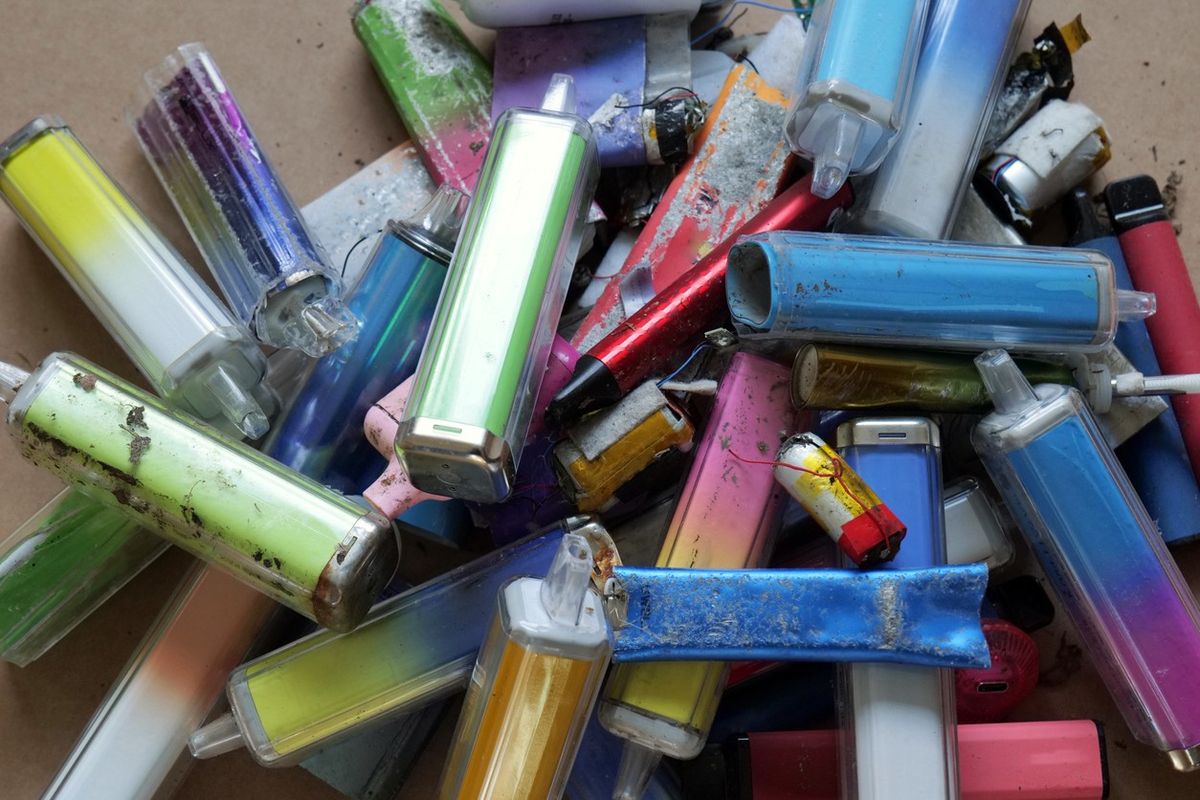

Almost half of UK adults would dispose of a used vape through general waste or household recycling, highlighting widespread confusion over how the devices should be recycled, new research has found.
A survey of 1,001 UK adults commissioned by nicotine pouch brand übbs found that 46 per cent would put a used vape in general waste or household recycling, despite the batteries and electrical components they contain.
Only 31 per cent said they would take a used vape to a proper recycling point, while half of respondents said they knew vapes could be recycled at all. A further 30 per cent were unsure and 21 per cent believed they could not be recycled.
The findings come despite the scale of the UK's vape waste problem. The latest research from Material Focus estimates that 6.3 million vapes and pods are thrown away or incorrectly recycled in the UK every week – equivalent to around 10 devices every second.
The figure represents a decline from 8.2 million devices a week in 2024, following the UK's ban on the sale and supply of single-use vapes in June 2025. However, millions of devices continue to enter the waste stream.
The survey found that 62 per cent of respondents knew vapes contained batteries, but 56 per cent had never considered what happened to the battery after disposal.
The research also highlights the potential consequences of incorrect disposal. Lithium-ion batteries can be damaged during waste collection and processing, creating a risk of fires, while valuable materials such as lithium are lost when devices are not recycled correctly.
Material Focus has reported a 71 per cent increase in battery-related waste fires, from around 700 in 2022 to more than 1,200 in its most recent year reported.
Despite the confusion, 73 per cent of those surveyed said they considered vape waste to be at least somewhat of a problem, including 34 per cent who described it as a big problem.
Consumers also identified measures that could encourage more responsible disposal. A cash-back or deposit scheme was the most popular option, selected by 33 per cent, closely followed by having more recycling points in shops, chosen by 31 per cent. Clearer labelling was favoured by 16 per cent, while 10 per cent wanted a council collection service.
The findings suggest that awareness of vape waste has not necessarily translated into knowledge about how devices should be disposed of.
Under the UK's waste electrical and electronic equipment (WEEE) framework, retailers selling vapes are required to provide a route for customers to return used vape products for recycling. Used vapes should not be placed in general waste or household recycling bins.
The research also found significant regional differences in disposal intentions. In Scotland, 45 per cent said they would take a used vape to a recycling point, compared with just 20 per cent in South West England.