



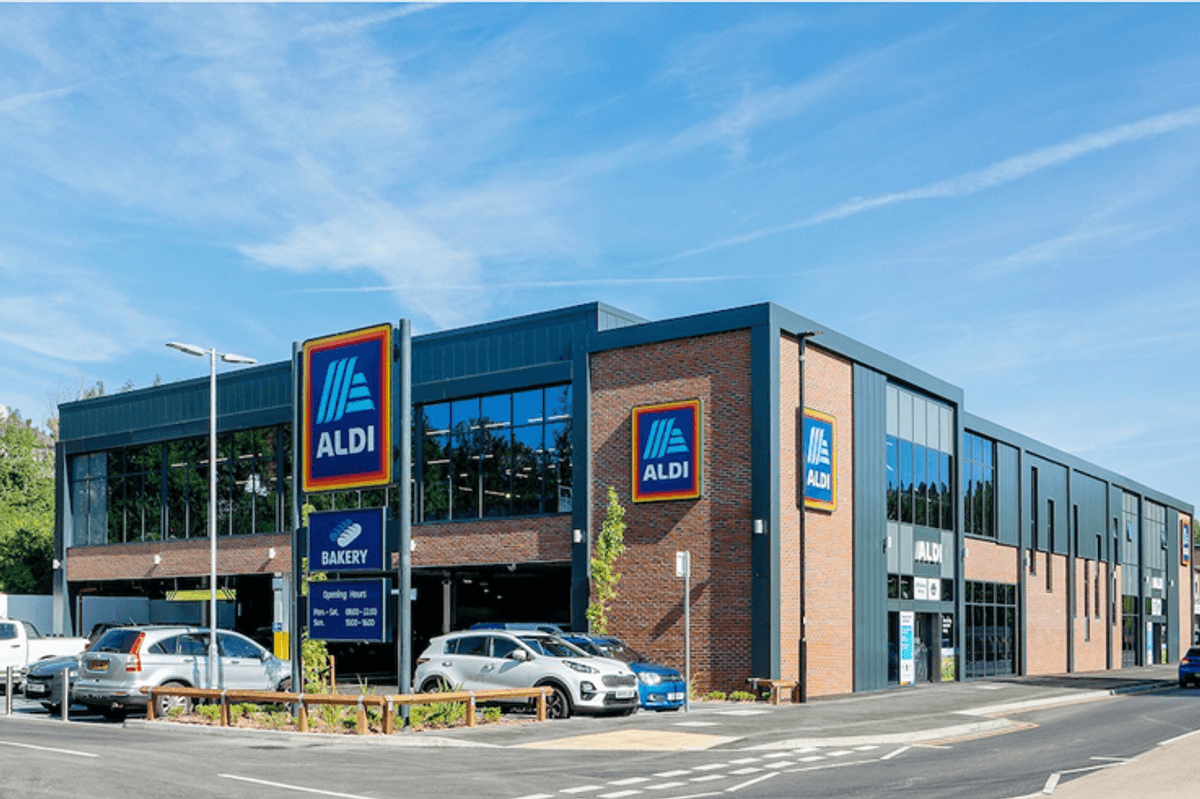

Aldi UK chief executive Giles Hurley has backed the Government’s plans to crack down on misleading supermarket promotions, arguing that loyalty prices and prolonged discounts can make it harder for shoppers to judge the true value of a deal.
His comments come after Prime Minister Andy Burnham announced plans to ban misleading pricing practices, including artificial “was” prices and discounts that give shoppers a false impression of the saving they are making.
The Government is expected to consult in the autumn on the specific practices that will be covered by the new rules.
Hurley said ministers were “right” to target misleading discounts and promotions as part of efforts to ease cost-of-living pressures.
“For too long, shoppers have been bombarded with discount signs and loyalty prices that can give the impression they’re getting a great deal, when the price they pay at the till can still be higher than elsewhere,” he said.
The Aldi boss took particular aim at loyalty pricing schemes such as Tesco Clubcard Prices and Sainsbury’s Nectar Prices, arguing that they can encourage shoppers to focus on the size of the advertised saving rather than the final price.
He said: “The problem with loyalty pricing is that it encourages shoppers to focus on how much they’ve supposedly saved, rather than how much they’ve actually spent. Taking £2 off a £6 product doesn’t make it good value if you can buy it for £3 somewhere else.”
Hurley also questioned promotions that remain in place for extended periods, arguing that shoppers should be able to distinguish between a genuine price reduction and a product that is simply sold under a promotional banner for weeks on end.
“When so-called special prices are running week after week, shoppers are entitled to ask what the real price actually is. A permanent promotion isn’t the same as a permanently low price,” he said.
Supermarkets push back on profiteering claims
Hurley’s comments come amid a wider debate between the Government and the grocery sector over food prices, margins and the role of supermarkets in the cost-of-living crisis.
The Government has also announced plans to strengthen the Competition and Markets Authority’s ability to investigate sharp price rises during periods of economic or supply disruption, including greater scrutiny of company margins.
Retailers have pushed back against suggestions that supermarkets are profiteering from inflation, pointing instead to intense competition and the sector’s relatively low margins.
British Retail Consortium corporate affairs director Jim Bligh previously said it was “not helpful” for ministers to portray retailers as potential profiteers, arguing that grocery retail is one of the UK’s lowest-margin industries.
The Government had also explored asking supermarkets to voluntarily cap the prices of staples including bread, eggs and milk, although it ruled out mandatory price controls following opposition from the sector.
Meanwhile, food inflation has eased considerably. Prices for food and non-alcoholic drinks rose by 1.7% in the year to June, according to the figures cited in the original report, as competition between supermarkets and efforts to absorb cost pressures helped keep price increases in check.
Aldi and Lidl have been central to that competitive pressure, forcing the traditional supermarkets to respond with price-match initiatives, loyalty offers and other promotional activity.