



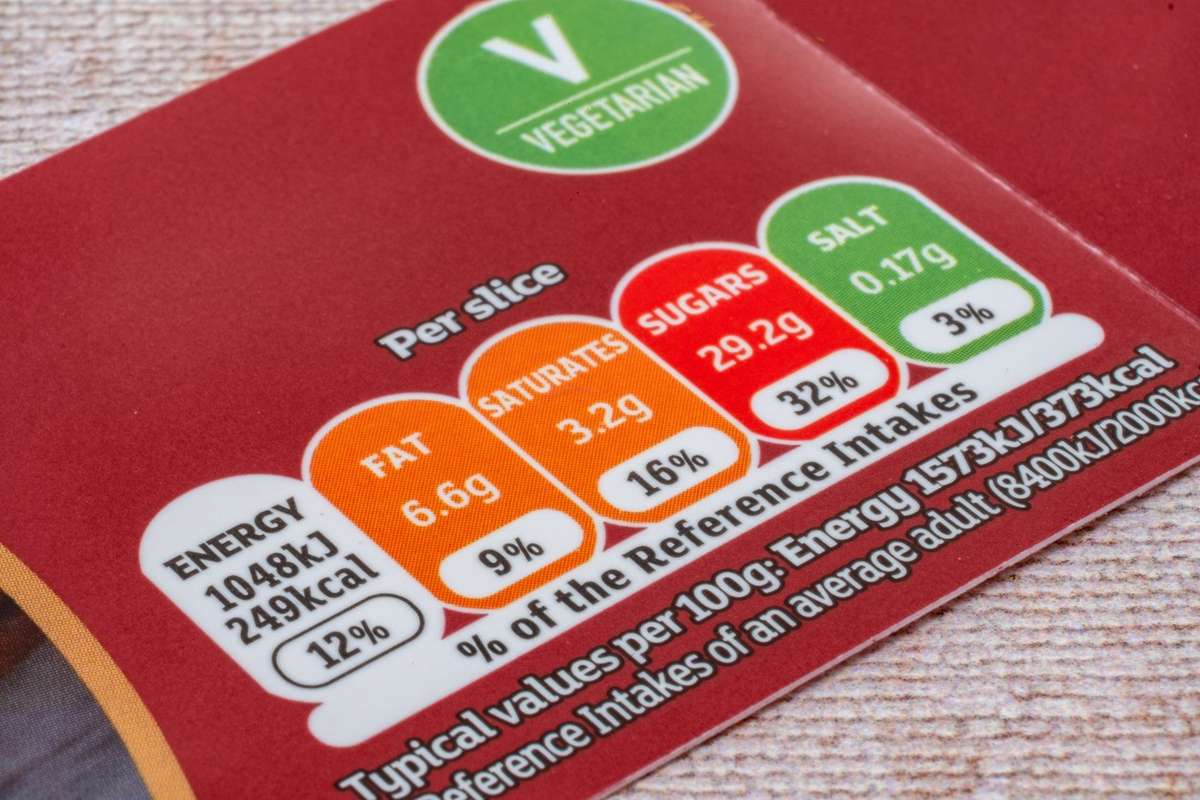

Shoppers want clearer and more consistent food labelling to help them make healthier choices, according to new research by consumer champion Which?, which is urging the government to overhaul and make mandatory the UK’s front-of-pack traffic light nutrition scheme.
The traffic light system, used in the UK for more than a decade, is designed to show whether foods are high, medium or low in fat, sugar and salt. However, it is only government-recommended rather than compulsory, leading to widespread inconsistency across supermarkets and brands.
Which? found that some retailers and manufacturers do not use the scheme at all, while others display nutrition information without the familiar red, amber and green colour coding. Iceland, for example, does not include the government-recommended traffic light labels on its own-brand products.
An analysis of popular frozen pizzas highlighted how uneven the approach can be. Brands including Crosta Mollica, Pizza Express and Italpizza La Numero Uno provided no front-of-pack nutrition labelling, while others such as Dr Oetker and Chicago Town used black-and-white labels without colour coding. Which? said this makes it harder for shoppers to quickly compare products and identify foods high in fat, sugar or salt.
The consumer group’s research combined real-time insights gathered via participants’ mobile phones during everyday activities, such as shopping, with in-depth focus groups. A third (33 per cent) of shoppers said, without prompting, that nutrition labels were the first thing they looked at when choosing a product, behind brand (40 per cent) and price (37 per cent). Traffic light labels were most often used when choosing snacks, dairy products and breakfast cereals.
Nearly half of participants said they found traffic light labels easy to understand, and more than a quarter said they helped them make quick decisions in the supermarket. One shopper said the system’s simplicity made it useful not only for fast choices, but also for teaching children how to spot healthier options.
Which? also tested alternative labelling systems used abroad, including the Nutri-score scheme common in parts of Europe and Chile’s warning labels for foods high in unhealthy nutrients. After discussing the pros and cons of each, most participants still preferred the UK’s traffic light system, provided it was improved and applied consistently.
Common suggestions included making labels larger, easier to read and more prominently placed on packaging. Shoppers also called for the removal of percentage reference intakes, which many find confusing, and for more realistic and consistent portion sizes. Some expressed frustration that manufacturers can base traffic light ratings on small portions that do not reflect how people actually eat.
The findings come as the UK and EU move towards a new Sanitary and Phytosanitary Agreement, which could affect the UK’s ability to regulate food labelling. Which? said exemptions within the agreement should be used to allow the introduction of a mandatory UK front-of-pack nutrition labelling system, particularly given the scale of the country’s obesity crisis.
Sue Davies, head of food policy at Which?, said clearer labelling was essential. “The UK is in the midst of an obesity crisis and it’s clear that a better approach to front of pack labelling is needed to help shoppers make healthier choices,” she said.
“Our research shows that people still prefer traffic light nutrition labelling, but that the current scheme needs updating so that it is clearer, simpler and works better for consumers.”