





In the British convenience sector, loyalty is often discussed as if it is automatic, baked into distribution, proximity and habit. But on the shop floor, loyalty is far more conditional than many brands assume.
Independentconvenience retailers operate at the sharpest edge of the grocery market. They absorb cost increases first, feel operational pressure fastest, have to remain compliant, and carry the reputational weight of brands in their communities every single day.
When support works, it is visible immediately. When it doesn’t, it fades just as quickly.
Last month, Asian Trader reported on growing unease among retailers about a perceived thinning of hands-on engagement from snacks giant PepsiCo UK.
With comments like “kudos to Asian Trader for carrying out some real journalism, representing the concerns of its readers, rather than simply acting in the interest of suppliers”, the flood of reactions that we received reflected how the findings resonated with the wider sector.
Many convenience retailers even expressed relief that “at last, someone understands and is ready to ask tough questions”.
The feature struck a chord with the wider sector, ruffled some feathers as well, but it also exposed the harsh truth that some of the big companies are treating the convenience sector as just a route to market rather than a channel that also deserves sustained investment and respect.
That conversation is ongoing. Turns out when it comes to brand support, convenience retailers are not short of opinions.
What they are increasingly short of is patience for distant engagement, selective activations, facades on social media and partnerships that look convincing in boardrooms but don’t make it to the shop floor.
And yet, amid the frustration, all is not gloomy. Many brands, retailers say, are getting it right.
The gap between those two approaches, however, is becoming harder to ignore.
What is meaningful support?
For today’s convenience retailers, support is no longer measured by how often a brand appears in press releases or social media posts, but by whether its presence adds tangible, day-to-day value.
For Kent-based multi-site retailer Pete Patel, meaningful support starts with consistency and collaboration.
“Meaningful support also means working collaboratively through a joint business plan, with agreed KPIs, sales growth targets and shared objectives,” he says.
“It’s not just about margin; it’s about being rewarded for loyalty, strong in-store execution, and long-term partnership.”
Field teams, Patel adds, still have an important role to play, but only when visits are purposeful.
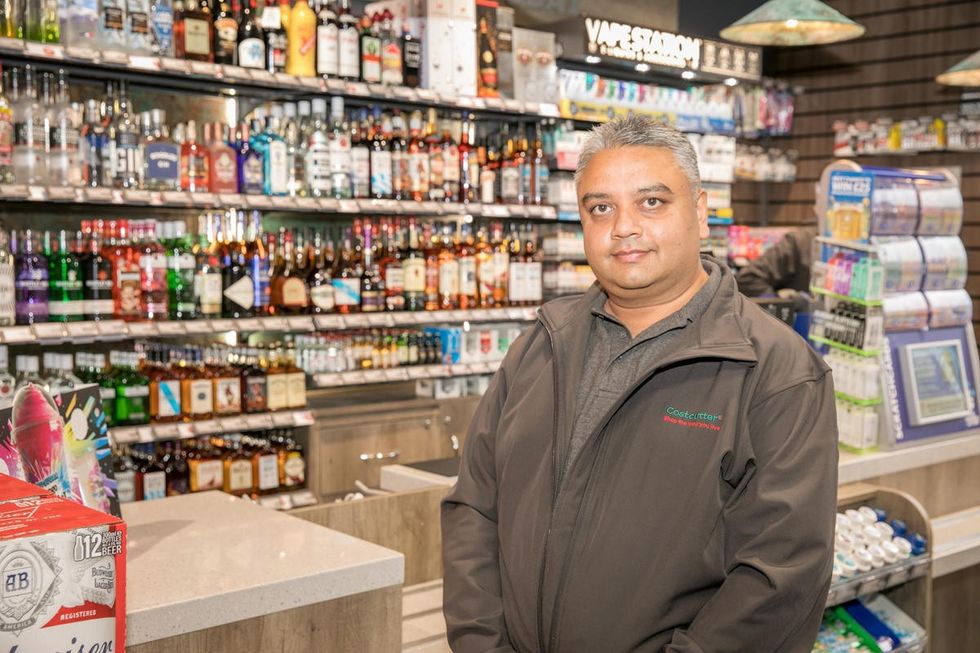 Retailer Pete Patel Image from Pete Patel
“When there is no added insight, action, or follow-up, rep visits feels like ‘box-ticking’ exercise,” Patel shared with Asian Trader.
That distinction, between presence and value, runs through almost every retailer conversation.
When it comes to a leading Peterborough-based retailer, meaningful support is one that “genuinely helps make the category work at store level”.
“That starts with realistic margins and targets that reflect rising costs and operational pressure.
“Beyond that, it’s about simplicity and relevance, fewer, better PMPs that actually sell, practical POS rather than clutter, and instore activations that acknowledge staffing and space constraints,” the retailer said, on condition of anonymity.
“Field team visits matter when they add value (insight, flexibility, problem solving), not when they’re just compliance-driven. The best support comes from brands that listen, adapt campaigns for convenience and want to make time to see you rather than pushing it all onto the retailer.”
Without naming individual brands, this retailer acknowledged that there are a number of large FMCG suppliers who continue to benefit heavily from convenience but engage with it very little.
“The tell-tale signs are generic national campaigns that don’t translate in store, margin structures that haven’t moved with costs, and a lack of meaningful dialogue with independent retailers.
“In many cases, convenience still feels like a route to market rather than a channel to invest in and that gap between words and actions is becoming more noticeable.
“I wouldn’t say the brands are ignoring convenience entirely, but the reduction in field presence and hands on engagement has been noticeable,” he said.
For retailer Sheraz Awan in Newcastle, genuine support relies heavily on field reps.
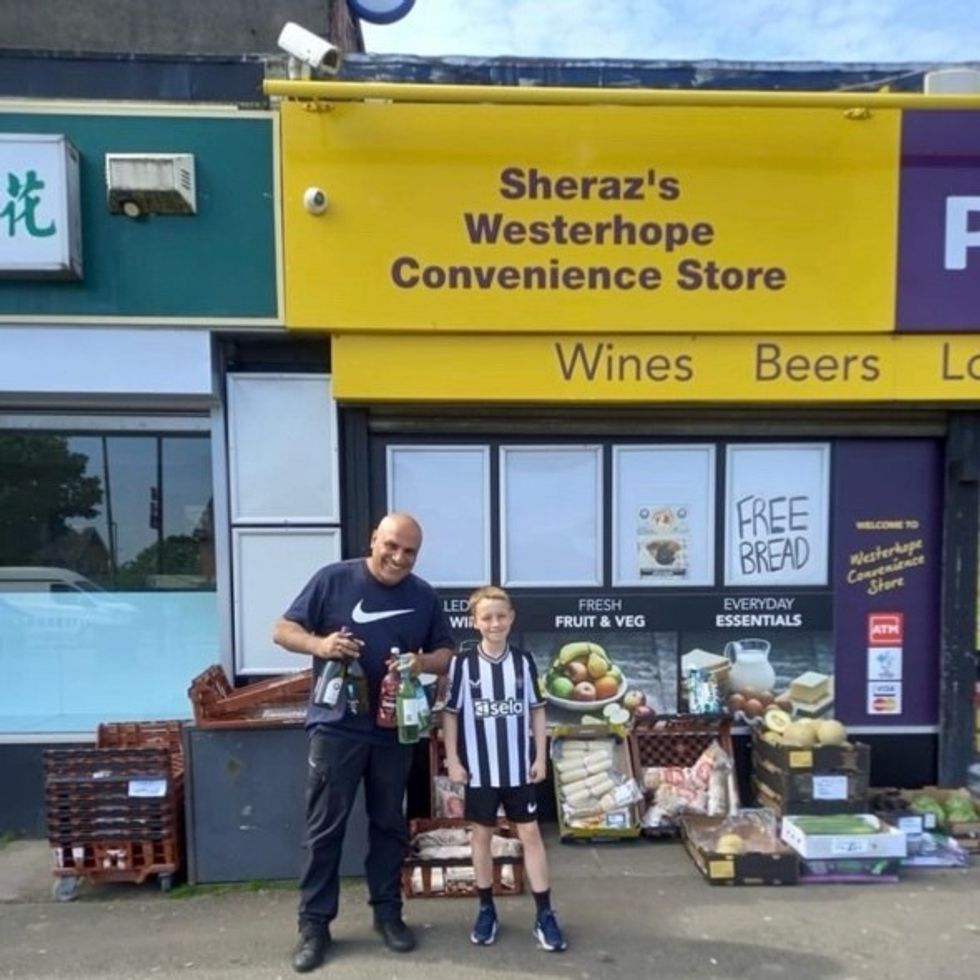 Retailer Sheraz Awan's Sheraz’s Westerhope Convenience Store Image from Retailer Sheraz Awan
“[They should] change stock that isn't selling, swap it without any problems and arguments and understand the operations, challenges, limitations as well as assets of our stores,” said Awan.
Just like Awan, Selby-based retailer Reuben Singh Mander, owner of The Three Singh’s Selby LTD, also feels that brand support often comes down to the field rep.
Mander explains, “Some brands’ field reps are only interested in selling or getting an FSDU [free-standing display unit] out, just so that they meet their targets.
“The biggest supporting factor for us though is the margin and demand for the product. Now more than ever, we are really digging into data to see whether the product deserves the shelf space and if not doubling up on a better performing product to not have dead stock,” Mander told Asian Trader.
Mander is satisfied with the support from the brands but he also feels uneasy with superficial PR-driven stunts.
"We sometimes have felt pressured, especially with seasonal products or limited-time campaigns that brands run, in particular with unnecessary POS such as shelf strips or FSDUs that they put up in our store literally just get a picture taken and then are removed,” he added.
Meanwhile, in Wiltshire, another well-known retailer says that proper support happens only when brands understand the realities of a convenience store.
“I would like better planograms that are more practical as well as more new launches. NPDs are always a winner for us.
"Like, I have a tasting station in my store. I try to get all the new products to display there and promote buyers’ curiosity,” the retailer stated on the condition of not being named.
Echoing the wider sentiment, this retailer also stated that field reps are useful, although it also depends on the individual.
“Mars sent me a rep who was clueless about business and had no inputs whatsoever, so I raised a complaint with the company,” the retailer explained.
"However, some of the reps are very good at their job. For example, the Red Bull rep does not just talk about his brand but gives me inputs for the whole category and suggests lines that we might be missing or a promotion that might fit in.
“Suntory also has got a really good rep, who works closely with us and for us.”
Elsewhere in Glasow, retailer and former Fed president Shahid (Mo) Razzaq agrees strongly with his sectoral peers. He sees better margins as the support that is needed the most in the present times.
“For me, meaningful support is better margins since costs have risen and are still rising.
“With changes in minimum wages coming our way again, it's going to make a massive difference. We've already cut back the staff; we originally had 26 staff but now we are down to 22,” Razzaq told Asian Trader.
“I think some of the bigger companies are cutting back on marketing and channel support spending for convenience. Maybe bigger names are expecting the wholesalers to do the selling for them.”
Who is nailing it?
Against that backdrop, many brands are still earning genuine goodwill from retailers by showing up consistently and thinking beyond their own SKUs.
For Patel, strong partnerships are clearly identifiable.
“Bestway Retail is our primary wholesale supplier and a key partner in our business. In addition, we work closely with brands such as Mondelez International, Red Bull, Imperial Tobacco, Kellogg’s, Coca-Cola Europacific Partners (CCEP), and Suntory Beverage & Food.
“These brands are genuinely supportive of independent retailers through regular knowledge sharing, including industry insights, ranging advice, marketing strategies, and wider market trends.
“There is also a strong focus on new product development (NPD) from these brands, supported by in-store activation to drive awareness, sales, growth, and long-term customer loyalty.”
Among the brands that are being genuinely supportive of the convenience channel, retailers singled out Red Bull, Coca-Cola (CCEP), Heineken UK, Mondelez International and JTI as being true to their job.
Reuben explained, “Coca Cola is a very supportive brand for me for a number of reasons. Firstly, it invested in our store, in the form of an eco-track for refrigeration.
“This saw our soft drinks sales increase by over 40 per cent in the first three months. The reps are also supportive and recognise that other brands still require adequate space and factor this into their planograms.
 Retailer Reuben Singh ManderImage from retailer Reuben Singh Mander
“Heineken is also another good brand to work with. Similar to Coke in the sense that they work on the category rather than just their own brands.
“Plus, the loyalty programme is a bonus and the inclusion of social media posts about their brand is also good as it keeps reminding us to post about certain events that the brands are doing, rather than just promotions.
“Cadbury (Mondelez) is another supportive brand. They have good loyalty programme that rewards us for stocking products we’d stock anyway.
“JTI is another name that understands us and is supportive. These brands, I feel, help boost our business rather than doing a purely a box ticking exercise. They are keen to find out how they can help us and if there any price promotions they keep us up to date also.”
Razzaq will agree with Reuben here as he also echoed the same sentiment.
“The two leading tobacco companies, Imperial and JTI, work quite well with convenience retailers. Field support is also good from Bobby's, Mondelez and Mars.
"In fact, many local and regional brands are doing very good service and are quite supportive, innovative and proactive. Sometimes, it is easier to deal with smaller companies as compared to big corporates," Razzaq said.
Red Bull and JTI are the names repeatedly pointed as being proactive and supportive of the convenience sector as a whole.
The Wiltshire retailer explains why.
“If we have a community event here, they support us with free stock. They give us the latest sales data.
“They have WhatsApp groups going on for just putting out information. We can always get hold of somebody if we've got an issue or a problem and that's why they're good.
"JTI is also good. They regularly sent reps who are informative and supportive in terms of keeping us updated about changes in rules and law,” she said.
Who is missing the target?
Despite being a major contributor to the UK economy, generating almost £49 billion in turnover through 50,486 convenience stores dotted throughout the UK from remotest village to some of the harshest places in the country, retailers say the convenience sector is still sidelined and deprecated by some companies.
Patel explained, “I have noticed that many newer, niche brands bringing innovative products to market are increasingly bypassing the convenience channel and going straight to the ‘Big Four’ multiples.
“This is likely driven by the appeal of large-volume first orders, perceived cost efficiencies, and consistency of execution.
“However, in my experience, this often leads to those brands being placed on extended credit terms and facing reduced or heavily squeezed margins. While the short-term volume may look attractive, it can come at the expense of long-term brand value and sustainable partnerships.”
For the Wiltshire retailer, it is the National Lottery operator Allwyn UK which is taking the convenience retailers for a ride.
She stated, “Allwyn UK is not very great when it comes to service. They say all the right things in the press, but actually when it comes down to the nitty-gritty, they are nowhere to be seen.
“There is no support, it's really hard to get hold of them. They keep issuing statements and giving us reassurances, which is great, but they don't actually act on them and there's no sort of follow-up.”
Allwyn UK has been running a large-scale National Lottery transformation project with its 43,500 retail partners by rolling out modern, fresh PPOS kit, fitting a new in-store network and installing state-of-the-art lottery terminals.
On being contacted by Asian Trader, a Allwyn UK spokesperson assured convenience retailers, saying that , “we're aware that, in some circumstances, this (the transformation) may have caused short-term disruption for some of our retail partners, but with the majority of this work now complete, we can now settle into a more day-to-day routine - with our sales reps focusing on helping retailers boost their National Lottery sales...”.
 Shahid Razzaq Shahid Razzaq
Meanwhile, it is the new age superficial engagement from some of the leading brands that irks this leading veteran retailer based in Derbyshire.
“Brands and suppliers have started to rely on giving away some free stock to just some handful of retailers in the name of channel support.
“Giving away free drinks and food to just a few retailers is bringing no real value to the wider sector. No one is benefitting from such PR stunts,” the retailer told Asian Trader on condition of anonymity.
This retailer, who himself had worked closely with many brands through forums and panels, stated that brands need to understand that true support equates to partnership.
“I collaborated with Nestle on a 50-50 partnership under which we gave 100 school bags to the local school. I value this more than a party with music, glam and booze.
“Brands need to get in touch with more and more business owners across the UK rather than relying on a dozen of the same ones,” he said.
Some retailers also express frustration that brands are reluctant to engage with community causes unless there is obvious PR value attached.
That frustration is perhaps most clearly illustrated by Newcastle-based retailer Awan, who is widely known for giving back to his community in ways never seen before. This Christmas, he gave away 2,000 loaves of bread for free to families in need. Yet support from suppliers and wholesalers has been limited.
He has been consistently calling on the wholesalers and suppliers to pitch in some more but is yet to get acknowledged and supported in his cause.
Awan said, “I thought I would get more support from my local Bookers cash and carry branch, since I am the only Premier retailer in the country doing what I do.
“I had managers of branches down south, hundreds of miles away, ring me up personally, telling me that they're very proud of what I do and they would give me free bread all year round had my store was in their area.
“My nearest Booker branch does support me but very little. I hope they can do a lot more.
“I hope Warburtons can pitch in as well, considering the fact that their factory is just five miles away,” he told Asian Trader.
Long-term loyalty
Razzaq warns that brands which are relying only on “influencer-style” narrow engagement with the sector, a criticism that he also levelled heavily at PepsiCo UK last month, risk missing the bigger picture.
“If one is determined to do activities in stores, do something nationally – one in the south, one in the north. Work with a wide variety of retailers, store sizes and different demographics and only then will the company get proper productive feedback,” he said.
Patel agrees, “Brands that will win long-term loyalty [from retailers] are those that think beyond wholesale head office agreements and actively engage with retailers and decision-makers in-store.
“Promotional activity at a wholesale level does not guarantee execution or success on the shop floor.
“We’ve seen first-hand that when brands engage directly with us, often through networking events or collaborative discussions, we can deliver immediate growth of 10 per cent or more across our estate, with consistent long-term gains.
“Strong partnerships in the convenience sector are built on trust, communication, and shared ambition. Brands that listen, collaborate, and invest in real execution, not just plans, are the ones that ultimately succeed with independent retailers," Patel shares with Asian Trader.
Convenience retailers are not asking brands to be charitable, sentimental and definitely not patronising. They are asking for support that recognises the realities of small formats, better margins to meet rising labour costs and the community role convenience stores increasingly play.
Retailers clearly remember who stand beside them when margins get tight, costs are rising and communities need support. They also remember who don't. They are drawing a clear distinction between brands that show up with intent and those that rely on scale, habit or historic dominance to do the heavy lifting.
The question is not whether convenience retailers are loyal but whether that loyalty is still being earned consistently, respected and protected.