



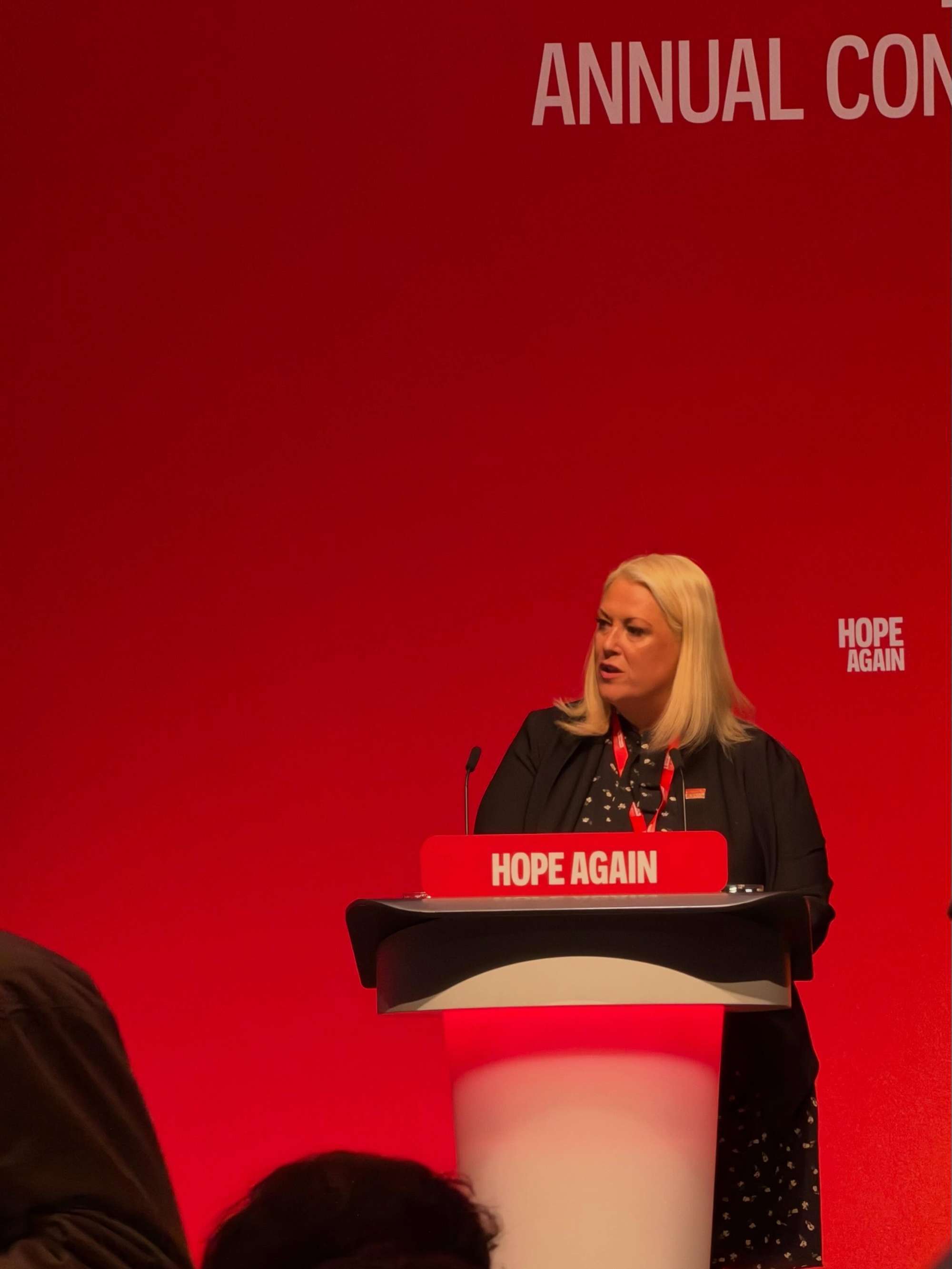

Usdaw general secretary Joanne Thomas has urged the government to move faster on employment reforms for young workers, while the retail trade union also called for greater support for the businesses employing them.
Speaking at Labour’s annual conference in Liverpool on 28 September, Thomas called for the government to deliver on its commitment to equalise National Minimum Wage rates from the age of 18, introduce guaranteed-hours contracts for all workers and strengthen protections around the use of AI and new technology at work.
Usdaw is also calling for a programme of high-quality, secure jobs for young workers across the economy, arguing that the focus should be on the quality as well as the quantity of jobs created.
Thomas said the government should “keep its focus on standing up for young people”, while rejecting what she described as “scaremongering” from the business lobby over stronger employment rights.
She called for the government to implement its Plan to Make Work Pay “in full and without delay”, including guaranteed hours and the commitment to scrap the lower youth wage rates.
“Nobody should be paid less for doing the same job, just because of their age,” Thomas told delegates.
Usdaw’s intervention comes as retailers continue to face pressure from rising operating costs, making the balance between improving employment conditions and supporting the businesses that provide those jobs a key issue for the sector.
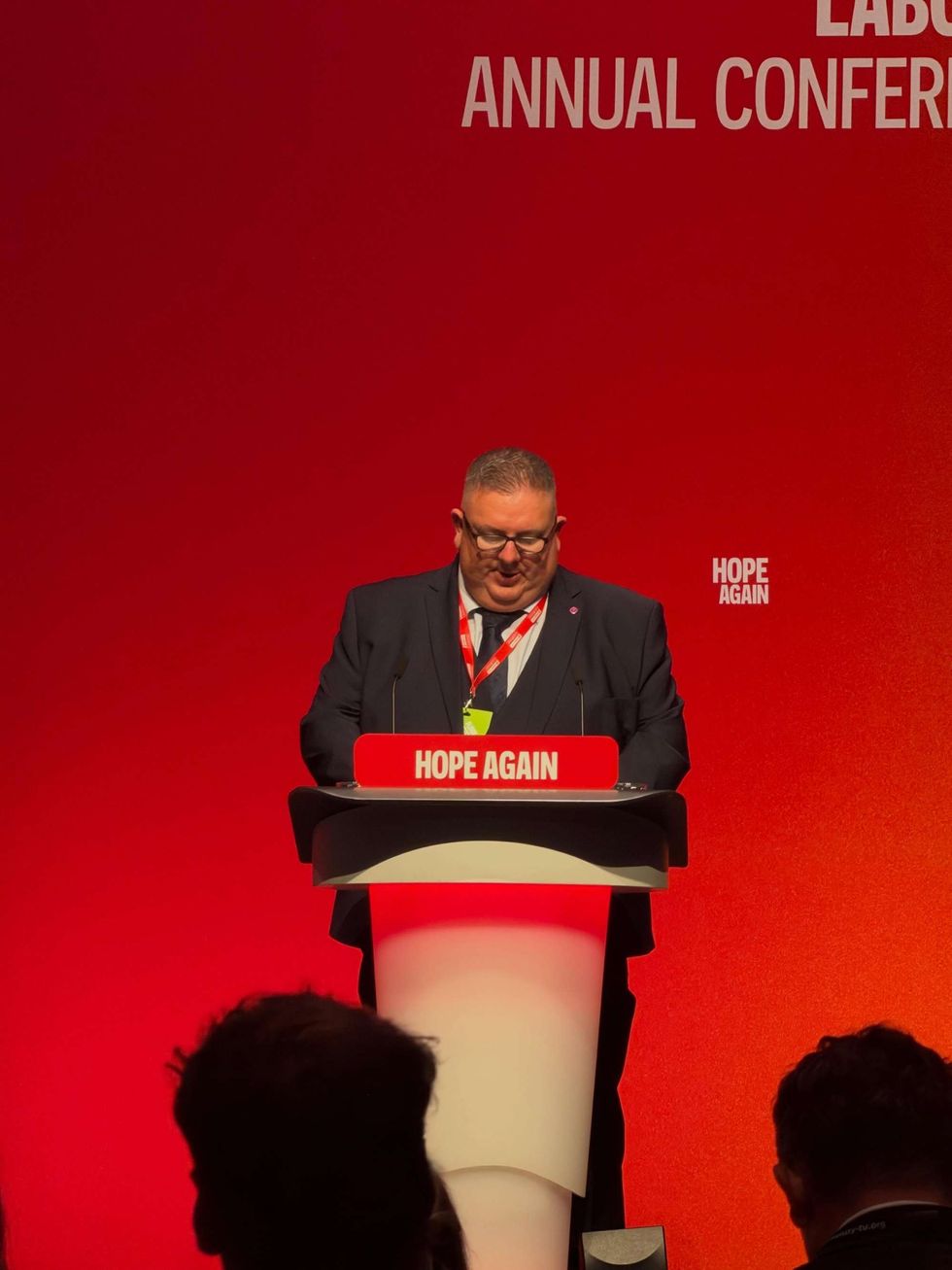 Usdaw deputy general secretary Rab Donnelly at Labour’s annual conference in LiverpoolPhoto: Usdaw/Facebook
In a separate conference motion, Usdaw deputy general secretary Rab Donnelly called on the government to develop an industrial strategy and skills plan specifically for retail.
The union wants ministers to recognise retail’s role in the UK’s economic and community infrastructure, while taking action on business rates and energy costs.
Usdaw is calling for all stores to be exempted from the higher business rates multiplier, arguing that the current system puts bricks-and-mortar retailers at a disadvantage compared with online businesses.
It also wants government action on energy costs for both businesses and consumers, as well as greater investment in skills and training for retail workers.
Donnelly said retail employs nearly three million people across the UK and has an important role in communities and high streets, but faces pressures from high energy bills, business rates and rapidly changing technology.
He linked those pressures to the closure of more than 10,000 physical stores over the past decade.
“Retail is infrastructure, not an afterthought,” Donnelly said, calling for the sector to be given a more prominent role in the government’s industrial strategy.
Usdaw also welcomed recent government measures on retail crime, including the creation of a specific offence of assaulting a shop worker and the removal of the £200 threshold for prosecuting shop theft.
The union said the government should now go further by developing a dedicated industrial strategy for retail and engaging with retail workers and their unions as part of that process.
The two interventions put employment conditions and the cost pressures facing retail businesses alongside each other, with Usdaw arguing for better-paid and more secure jobs while also seeking measures to strengthen the physical retail sector.