



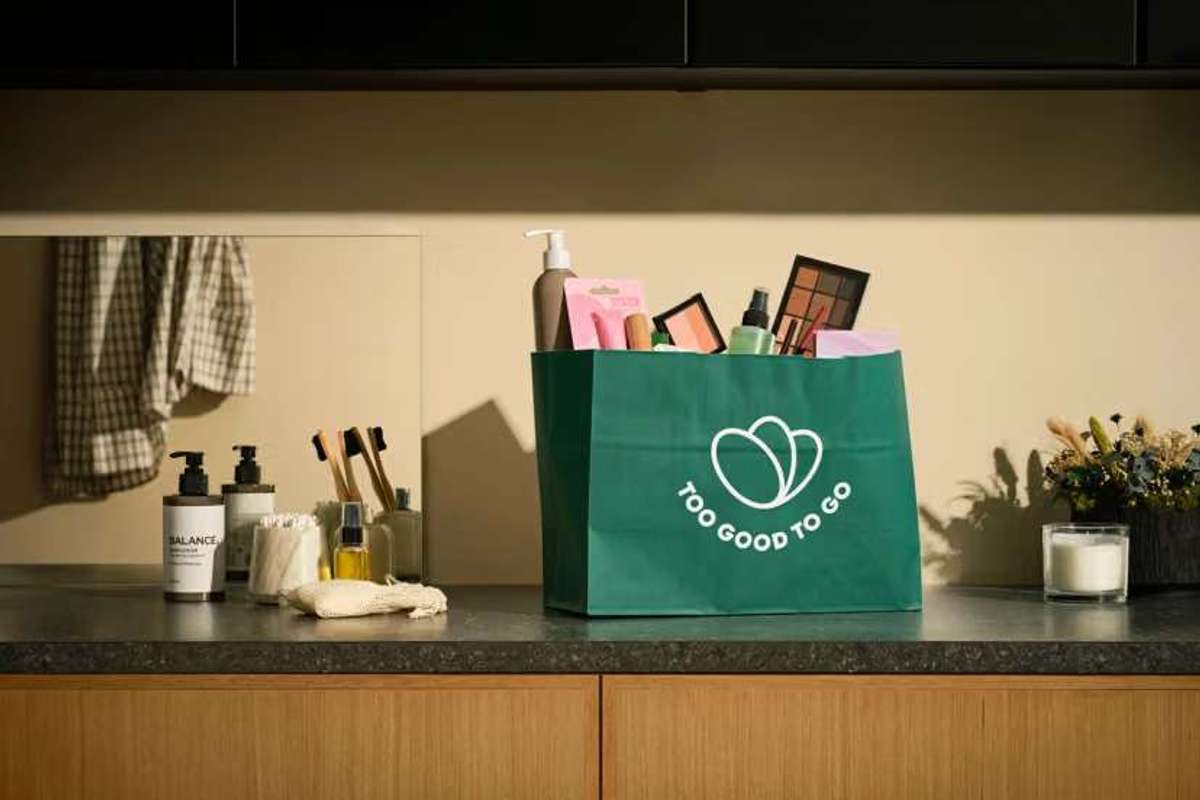

Too Good To Go has expanded its marketplace to cover personal care, pet care, flowers and plants, nutrition and supplements, and selected home products, opening up new opportunities for retailers to recover value from surplus stock.
The expansion, announced today, builds on the company's existing food surplus platform, with more than 8,500 stores already supplying products across the newly added categories. Around a third of these stores were already working with Too Good To Go to redistribute surplus food.
The new categories include skincare, haircare, oral care and beauty products; pet care; flowers and plants; nutrition and supplements; and home products, initially covering cleaning and laundry products and décor.
Too Good To Go said the move would help retailers sell surplus stock that might otherwise go to waste, while giving consumers access to everyday products at reduced prices.
Surplus inventory can arise from packaging updates, discontinued product ranges, seasonal changes and demand forecasts that do not match actual sales. Such stock can tie up working capital and valuable shelf and storage space, even when products remain usable and of good quality.
By connecting retailers with consumers through its marketplace, the company aims to help businesses recover value from these products while creating opportunities for additional store visits, product trials and new customer relationships.
“Our partners increasingly bring us surplus challenges that go beyond food and ask whether we can help. Surplus exists in every aisle. We see a clear opportunity to apply what we know more broadly and help them recover value across more of their business,” said Mette Lykke, CEO of Too Good To Go.
The company has already tested the potential of non-food surplus through selected partnerships in flowers and plants and, more recently, pet care. It is now expanding these initiatives across five product areas, with partnerships being rolled out and supply strengthened across Europe.
Examples of products available through the platform vary by market. In France, consumers can find personal care products from brands including Nivea, Neutrogena, Dove, Oral-B, Always and Head & Shoulders. In Poland, offers include personal care products from Inglot and Auchan, while nutrition products from Decathlon are available in Italy.
Flowers and plants are offered through partners including Interflora in Denmark and Sweden, Whole Foods Market in the US and Canada, and home and garden retailer OBI across Austria, Germany, Italy and Switzerland. OBI also has a particular focus on pet food in Switzerland. Hagebau offers products through the platform in Austria and Germany.
The range available varies by market and store.
Too Good To Go said the expansion addresses both the economic and environmental costs associated with unused products. Although food waste is widely documented, comparable industry-wide estimates are more limited for the newly covered categories.
The company highlighted research indicating that water accounts for more than two-thirds of cosmetic formulations on average, post-harvest losses in flowers can reach 40 per cent, and emissions associated with global dry pet food production are comparable to those of the world's 60th-highest-emitting country.
Each product also requires resources, including raw materials, energy, labour and transport, before reaching retailers. When usable products go to waste, these resources are consumed without the intended value being realised.
The expansion also comes as consumers remain under pressure from living costs. According to Ipsos' September 2026 What Worries the World tracker, inflation was cited by 29 per cent of respondents across 30 countries, making it one of the joint second-most frequently mentioned global concerns.
Too Good To Go said offering surplus products at reduced prices could help consumers stretch their budgets while allowing retailers to reduce waste and recover value from stock.
Founded in 2016, Too Good To Go operates across 20 countries, connecting 150 million registered users with 200,000 active partners. The company said its marketplace has helped save more than 600 million meals from going to waste, equivalent to 1.6 million tonnes of avoided CO2e emissions.
“Our vision is a world with no waste, and expanding the Marketplace lets us act on that vision across more of the products people use every day,” Lykke said.