



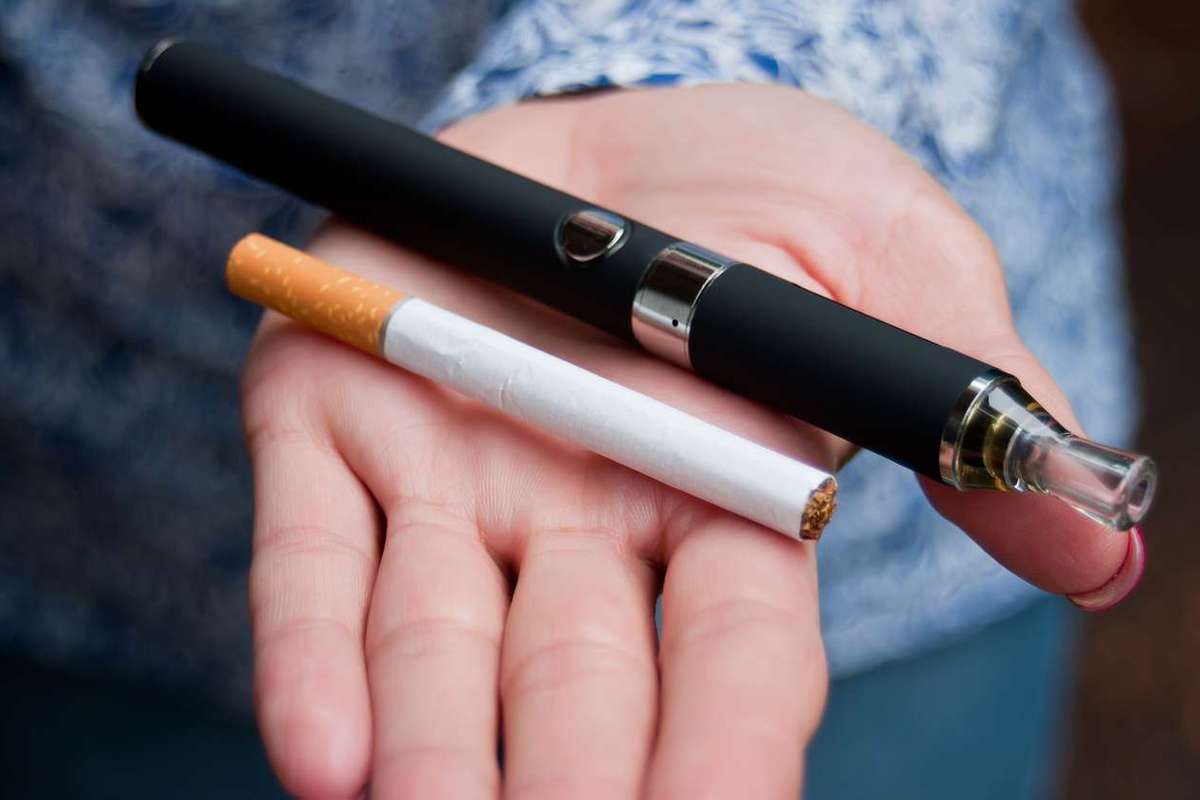

Smoking is becoming more socially acceptable while disapproval of vaping is increasing, according to new international research examining changing attitudes towards the two products.
The study, led by the University of Queensland (UQ), analysed responses from almost 20,000 adults who smoked daily in Australia, Canada, England and the US, finding that social attitudes towards smoking and vaping had moved in opposite directions between 2016 and 2022.
Researchers found that disapproval of smoking had weakened over the six-year period, while negative attitudes towards vaping had strengthened. The pattern was broadly consistent across all four countries, despite differences in their tobacco and vaping regulations.
Dr Giang Vu from UQ’s National Centre for Youth Substance Use Research said the findings suggested that public perceptions of the two products were shifting in contrasting directions.
“Opinions around the two products have moved in opposite directions – anti-smoking norms weakened while anti-vaping norms strengthened,” she said.
Dr Vu said the developments were concerning from a public health perspective because social norms could influence whether people continued smoking, quit or considered switching to vaping.
She warned that declining social disapproval of smoking could reduce the motivation to quit among people at greatest risk, while growing disapproval of vaping could discourage smokers from switching to a less harmful alternative.
Although vaping is not harmless, it poses fewer health risks than smoking, she said.
The researchers suggested that attitudes could be influenced by a “global information environment,” with media coverage and major events potentially shaping perceptions across national boundaries.
These included the Covid-19 pandemic and a 2019 outbreak of lung injuries in the US linked to the use of certain e-cigarette or vaping products.
Dr Vu said the findings highlighted the importance of public health messaging that communicated the risks associated with both products accurately and transparently.
“This would allow people who smoke to make informed choices, while continuing to protect young people who have never smoked,” she said.
The research drew on data from the International Tobacco Control Four Country Smoking and Vaping Surveys.
However, the researchers cautioned that the study tracked changes in attitudes and perceptions over time rather than actual smoking cessation or switching behaviour. It also did not establish whether changing social norms caused people to quit smoking or take up vaping.