



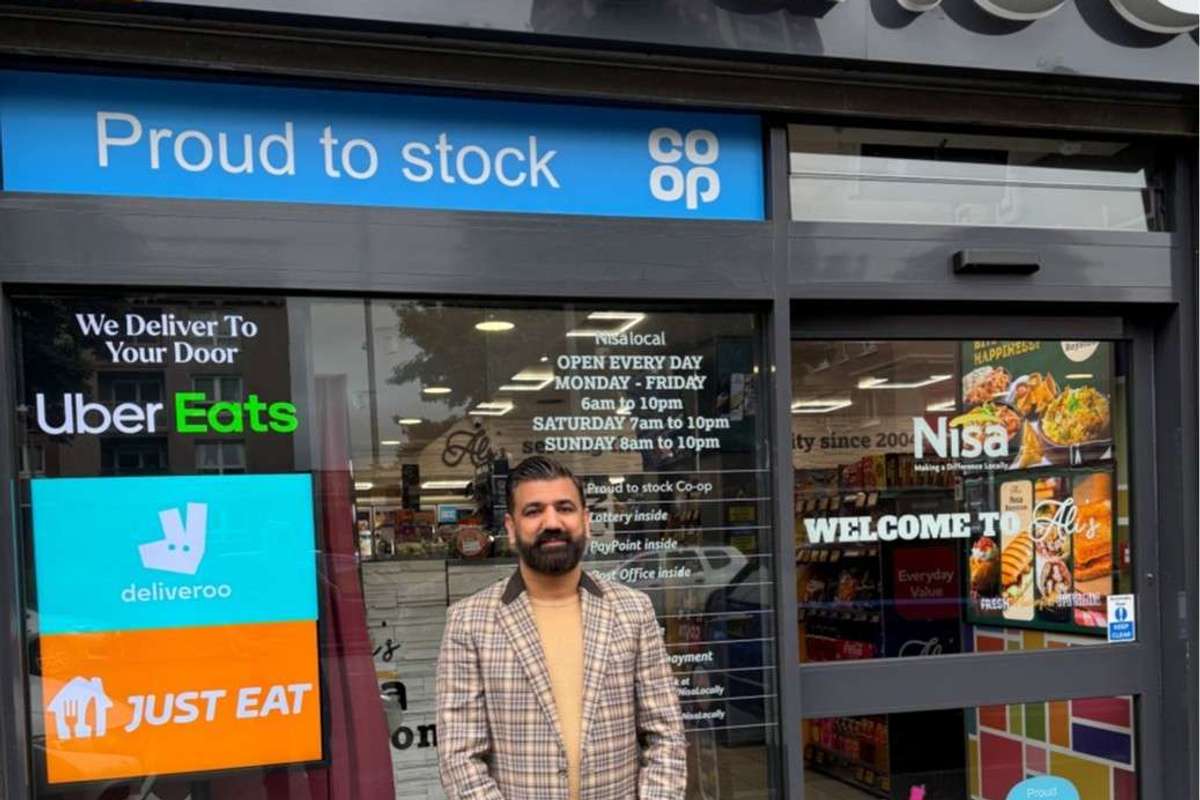

When Raheem Ali Razaq took full ownership of Ali’s Nisa Royston in December 2024, the family business already had more than two decades of history behind it. His response was not simply to freshen up the shop, but to rethink what a neighbourhood convenience store could offer.
The store has been part of the Nisa family for 10 years. Soon after taking over, Razaq invested in a comprehensive refurbishment and extension, introducing a new 3D fascia, internal graphics, bold window vinyls and a redesigned layout.
A 65-inch digital screen at the storefront promotes offers and engages passing customers, while further screens inside carry promotions and community information.
The Co-op own-brand range was expanded, supported by dedicated merchandising, branded gondola ends and clearer shelf-edge signage. The vape category also received a bespoke 2.5-metre British American Tobacco fixture with LED lighting and digital screens carrying the store and Nisa branding.
The result was more than cosmetic: Razaq says sales increased by 30% following the refit.
Accessibility was central to the redesign. Razaq had seen customers using mobility scooters waiting outside because the previous layout was difficult to navigate.
The new design has aisles of more than one metre, despite the loss of selling space, while the entrance was widened from less than 900mm to 1.3 metres and ramped access was introduced. Wheelchair users, mobility scooter users and parents with prams can now move around the store independently.
That emphasis on inclusion extends into the wider community. The store has given away free soft drinks with supplier support from Britvic and introduced subsidised wraps for schoolchildren at £1.95 rather than the regular £4, with around 150 sold a day.
It has also donated £2,000 to support cancer patients, sponsored West Pak United and contributed more than £700 to Glasgow’s Fountain Trust, supporting food packages, clean water and eye care for vulnerable people.
The store’s food-to-go offer is another major part of the transformation. Razaq offers 15–20 freshly prepared baguettes, paninis and wraps throughout the day, with quality, freshness and consistency at its core. Four staff members work on food-to-go, while professional training from experienced Baguette Express operators helped expand the range. Free sampling was used to introduce customers to the offer, supported by premium LED backlit menu boards.
The commercial impact has been striking. Weekly food-to-go sales have risen from around £500 to between £4,000 and £5,000, with more than 250 baguettes and paninis sold each week. Food-to-go now represents around 20% of store turnover, with margins of 40–45%.
Razaq’s approach is to keep evolving rather than treat the refit as a finished project. He regularly looks to foodservice operators and restaurants for ideas and new recipes, while technology continues to feature through electronic shelf labels and AI-powered theft detection.
For him, however, modernisation is not just about technology or aesthetics. It is about making the store work better for the people who use it – whether they are coming in for a freshly prepared lunch, everyday groceries or simply a place where they can shop without barriers. As Razaq puts it, merchandising should go beyond the packs on the shelves and give all customers equal access to them.