





Post Office Horizon scandal victims have hit out sharply at the Government and Post Office over compensation delays, after a damning new report from Parliament's Public Accounts Committee (PAC) found that officials fundamentally misjudged the scale of the scandal and left claimants trapped in a process many described as "retraumatising".
According to a new report from PAC published on Wednesday (Sept 9), the problems facing Horizon victims did not end when the scandal was exposed or compensation schemes were established.
The PAC found that 76 per cent of people surveyed across government compensation schemes said the claims process had been distressing or retraumatising, while 63 per cent described the overall process as “extremely difficult” and a further 23 per cent as “somewhat difficult”.
Another key finding of the report is that the Department for Business and Trade (DBT) has admitted to a fundamental misunderstanding of the scale of the Post Office Horizon IT scandal, with the department and Post Office initially expecting only a few hundred people to seek compensation.
"They acted like a dictators"
Seema Misra OBE, one of the most high-profile victims of the scandal, has hit out at the government for its failures.
Speaking to Asian Trader, she argued that the Government and the Department for Business and Trade (DBT) knew the true extent of the wrongdoing early on but pressed ahead regardless, shielded by the belief that their involvement placed them beyond scrutiny.
"The government and DBT weren't prepared for it, and the reason is they didn't want to be," Misra said.
"When the scandal happened, when they knew that everything was wrong, they still carried on. They thought they were above the law, because government officials were involved and everybody was involved, and they thought nobody could touch them.
"They acted like dictators. That's why they couldn't grasp the scale of it because they never even looked."
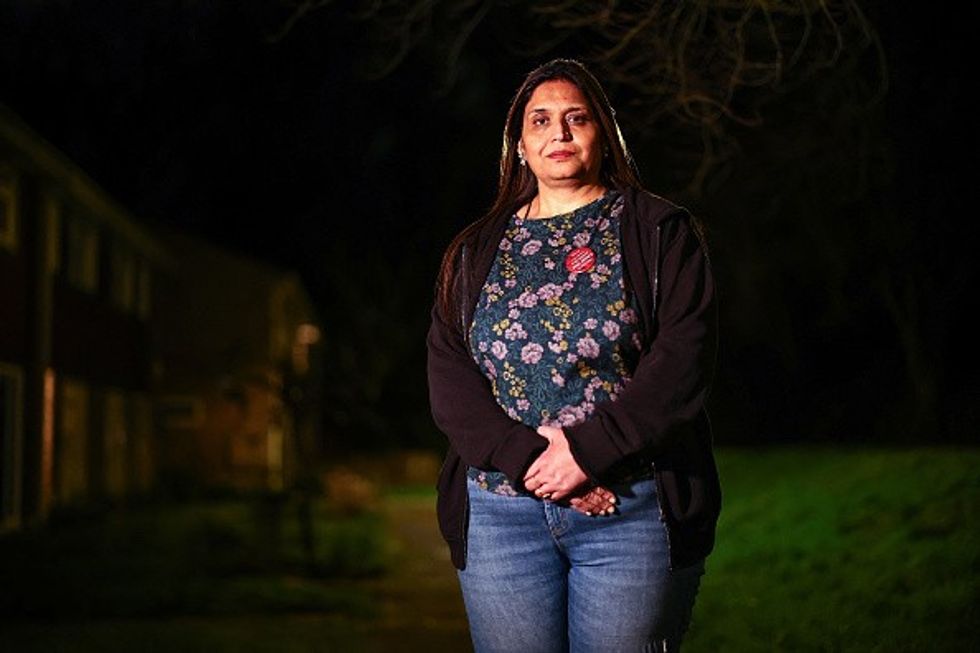 Former sub-postmistress Seema Misra Photo by HENRY NICHOLLS/AFP via Getty Images
She was unmoved by the department's explanation that it had underestimated demand for compensation.
"I don't take that as an excuse," she said. "They have £250 million to spend on lawyers, but they don't have the money to give to the victims or the winners."
Misra ran a post office branch in West Byfleet, Surrey, from 2005 until 2008, when she was suspended after the faulty Horizon accounting software falsely showed a shortfall of £74,000.
In 2010, she was convicted of theft and false accounting and sentenced to 15 months in prison while eight weeks pregnant. She served over four months before being released on an electronic tag, subsequently giving birth under supervision. The Court of Appeal officially quashed her wrongful conviction in April 2021.
'PAC report makes difficult reading'
Varchas Patel, whose father Vipin Patel is among those still fighting for redress, said the PAC's findings confirmed what families like his had been saying for years.
"The PAC report makes difficult reading, but for families like mine, very little of it comes as a surprise," he said. "We have been explaining these problems for years. It is exhausting to keep seeing them recognised in official reports while still having to fight to get anything done."
Vipin was wrongfully prosecuted for shortfalls at his Horspath Post Office, in Oxfordshire, in excess of £75,000 from 2010 to 2011. He was given an 18-week suspended prison sentence in 2011.
Varchas said report after report had backed up victims' concerns about how compensation schemes operate, yet delays, complicated requirements and uncertainty persisted.
"From where I stand, too many of these schemes feel designed to wear people down until they accept what is offered," he said. "When the same failings keep being identified, it becomes harder to accept that those responsible simply do not understand the problem."
Varchas revealed he had spent the past year writing to Gareth Thomas MP and Blair McDougall MP, pressing for the £600,000 full-and-final settlement figure to instead be made available as an interim payment, so claimants can access meaningful help without forfeiting their right to pursue the full value of their case.
He has also called for postmasters who accepted the £600,000 settlement, despite their claims being worth substantially more, to be allowed to reopen and properly reassess them.
 Varchas Patel with father Vipin PatelVarchas Patel
Varchas pointed to the Business and Trade Committee's own report, published on 19 June 2026 and chaired by Liam Byrne MP, which he said backed his position directly.
Paragraph 4 of that report addresses the Horizon Convictions Redress Scheme and states that the Committee "strongly believes this should be the amount given as the interim payment", with MPs warning that the Government's current approach risks discouraging postmasters from pursuing everything they are owed.
"That is exactly the concern I have been raising," Patel said. "Someone who needs money now should not have to choose between financial relief and pursuing proper compensation.
"If a person accepted a settlement because they could no longer cope with the uncertainty or afford to keep waiting, I believe there should be a route to reconsider it where their claim is worth substantially more. Calling a payment 'full and final' does not, by itself, make it fair."
Varchas said his father had already lost years of his life to the scandal, with the family making clear to the Post Office that £1 million was the bare minimum owed.
"They know our position and the scale of the harm behind his claim," he told Asian Trader. "Yet they still will not provide a substantial interim payment that reflects those circumstances while the final settlement is resolved. I cannot understand why my father should continue to carry the burden of that delay."
"Every letter, every request for an update and every further delay takes something out of a family," he added. "We should be spending that time with my dad, helping him enjoy his life. Instead, we are still trying to persuade the organisations responsible for putting things right to act with some urgency."
Accoridng to the PAC report, the scale of the miscalculation was stark.
The Horizon Shortfall Scheme, set up to compensate subpostmasters wrongly held liable for branch shortfalls but not covered by other Horizon redress routes, was designed on the expectation of only a few hundred applications.
By the November 2020 deadline, 2,417 people had applied – more than the Post Office could afford to pay at that point, forcing processing to be paused. When the scheme reopened, more than 10,000 further applications followed.
MPs also found the schemes had become bogged down in legal process. Sir Alan Bates, founder of the Justice for Subpostmasters Alliance, told the Committee the schemes had become mired in lawyers, driving up both cost and complexity.
50 per cent of survey respondents said the evidence demanded of them felt unreasonable or too difficult to provide, with some asked to produce material already held by the very bodies running the schemes.
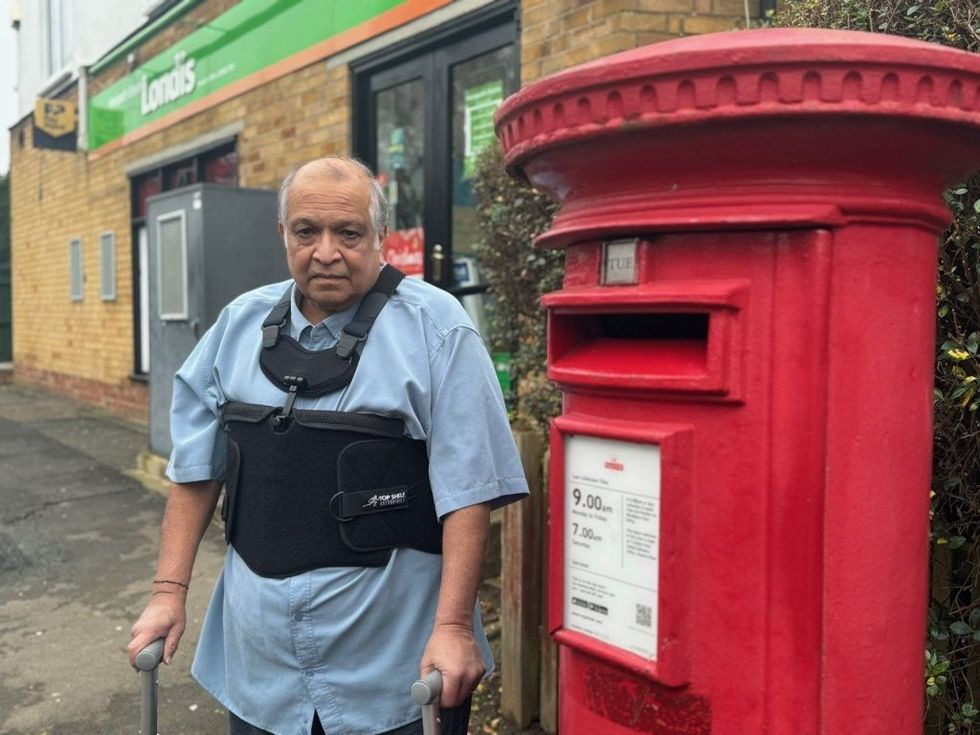 Former sub post master Vipin Patel Image from Varchasanraj Patel
On the Horizon Shortfall Scheme alone, 2,049 claims – around a fifth of all those paid – took more than a year to settle, and the longest claim took 1,395 working days.
The PAC called any claim taking more than 1,000 working days unacceptable. Poor communication made matters worse, with 53 per cent of respondents saying they were not regularly updated on progress.
Underlying all of this, the Committee said, was a deeper failure: victims had lost trust in bodies they held responsible for the original harm, with DBT itself admitting it was a mistake for the Post Office to have administered its own compensation scheme.
The PAC is now calling for an independent body to design and run government compensation schemes in future – echoing recommendations already made by the Horizon IT Inquiry under Sir Wyn Williams and by the National Audit Office.
The Post Office Horizon scandal is one of the UK's most serious miscarriages of justice.
Between 1999 and 2015, faulty accounting software called Horizon, supplied by Fujitsu, generated false shortfalls in the accounts of Post Office branches across the country.
Rather than investigating the software, the Post Office prosecuted hundreds of subpostmasters for theft, fraud and false accounting based on data it knew, or ought to have known, was unreliable.
More than 900 subpostmasters were wrongly convicted, with many losing their livelihoods, homes and reputations; some were imprisoned, and the scandal has been linked to bankruptcies, broken marriages and a number of suicides.
Convictions have since been quashed on a mass scale, and several redress schemes – including the Horizon Shortfall Scheme, the Overturned Convictions scheme and the Group Litigation Order scheme – were established to compensate victims. The PAC's latest report makes clear that, years on, delivering that compensation fairly and swiftly remains a work in progress.