



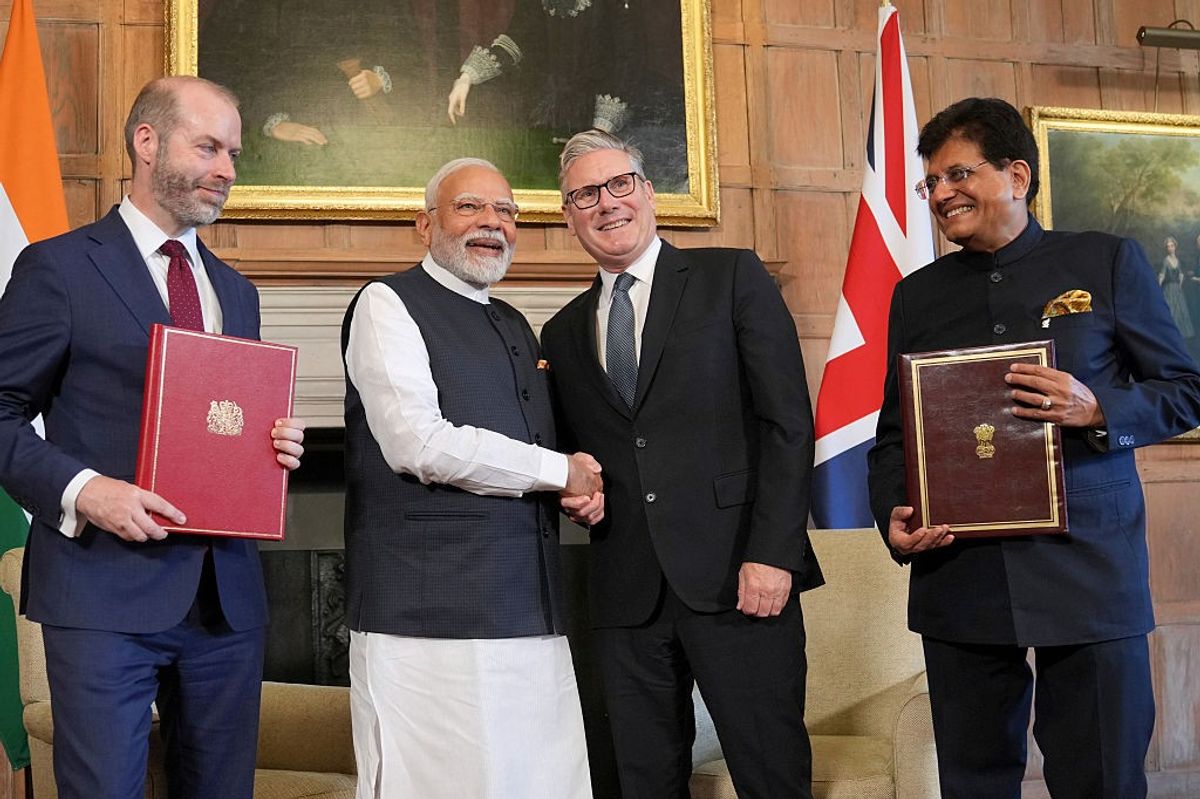

India's trade agreement with Britain today (15 July) entered into force.
The India-UK Comprehensive Economic and Trade Agreement (CETA) was signed in July last year, after more than three years of negotiations.
Under the agreement, India will reduce or eliminate tariffs on many British goods, making products such as whisky, gin and cosmetics cheaper in the Indian market over time.
In return, the UK will cut tariffs on many Indian exports, improving access for products including marine products, gems and jewellery, and toys as well as engineering goods, chemicals, and auto components.
The UK government has said the deal could boost the country’s GDP by £4.8 billion, real wages by £2.2bn and bilateral trade by £25.5bn every year in the long run.
Industries across the UK will benefit, with whisky tariffs cut from 150 per cent to 40 per cent, automotives from 100 per cent to 10 per cent under a quota and cosmetics will see tariffs of up to 22 per cent eliminated either from day one or after 10 years.
As India has never implemented a deal of this size, the UK government said the country will have an immediate competitive advantage over other markets.
“The deal gives British exporters an edge over international competitors, and I would encourage all businesses to ensure they are properly prepared to allow them to sell to India’s huge market in the years to come,” business and trade secretary Peter Kyle said last month.
The UK will cut tariffs on Indian goods coming into the country such as clothes, footwear, and some food products. Less cost for British businesses importing Indian products could mean cheaper prices and more choice for consumers across the country.
The deal also extends the benefit for UK nationals moving to India to work and continue to build entitlement to a UK State Pension from 36 months to 60 months. They will continue to pay National Insurance Contributions during that period, without also having to pay social security contributions in India.
This is reciprocal for both British and Indian professionals and will be applicable to highly skilled professionals on pre-existing visa routes. This is in line with the UK’s arrangements with other countries such as Korea, Japan, and Canada.
The government said this will be achieved through the UK-India Double Contributions Convention Agreement, which also took effect today.