



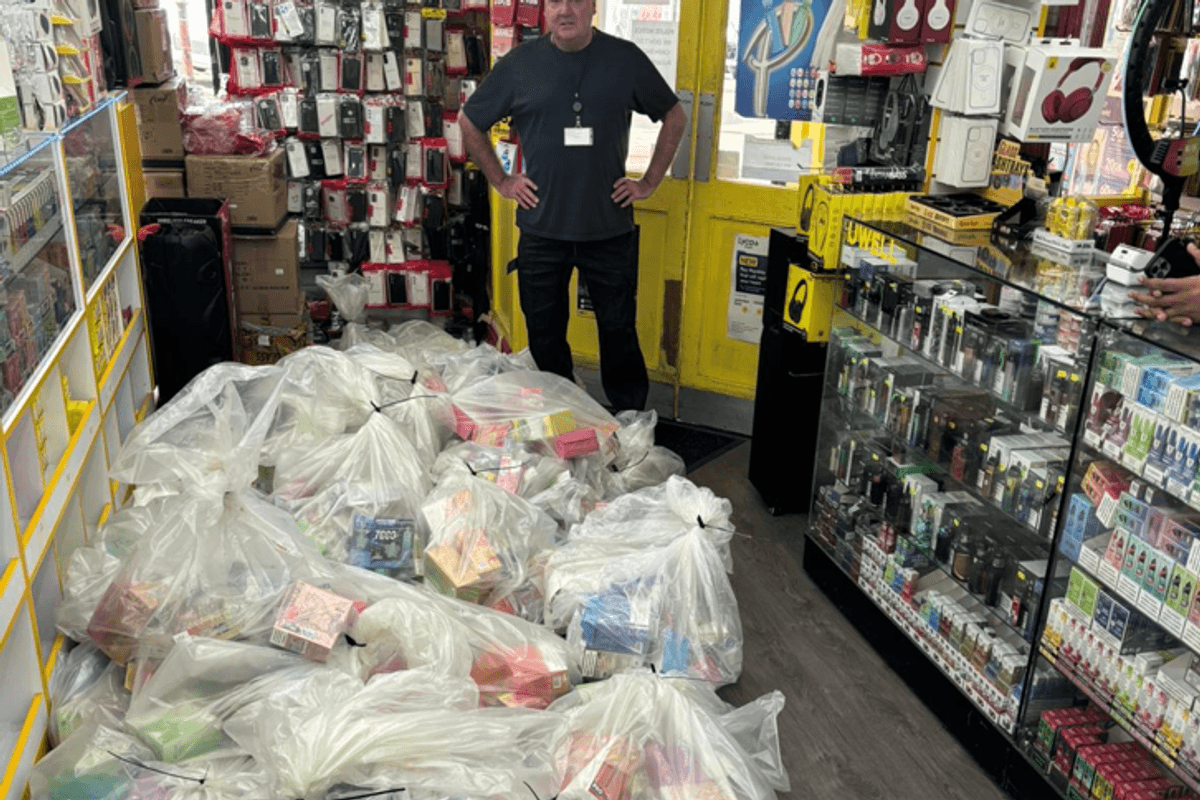

One in four independent shops selling tobacco in Liverpool was found to be offering illegal products during a recent enforcement operation, underlining the scale of a black market that authorities say is costing the Treasury billions of pounds each year.
The findings also raise concerns about persistent repeat offending and the growing role of illicit tobacco in funding organised criminal networks.
According to JTI, illegal tobacco was found to be on sale in one in four independent Liverpool shops selling tobacco visited during a recent test-purchasing operation.
The operation, conducted on 30 January 2025 and 3 February 2026, visited 72 independent shops selling tobacco in Liverpool, 18 of which (25%) were found to be selling illegal tobacco.
Of those 18 shops, 14 had also sold illegal tobacco during previous test-purchase operations, suggesting more needs to be done to tackle repeat offending.
New polling commissioned by the It Costs More Than You Think Campaign has also found 72% of people surveyed in Liverpool believe politicians aren't doing enough to tackle illegal tobacco trading. Meanwhile, 76% believe there is not enough enforcement to stop illegal tobacco sales.
HMRC estimates the issue of illegal tobacco is costing the Treasury over £2 billion in lost tax revenue nationally each tax year.
Illicit tobacco products purchased during the recent Liverpool test purchasing operation included counterfeit Amber Leaf starting from just £4.00. For comparison, the recommended retail price of a legal 30g pouch of Amber Leaf was £27.95 as of 19 January 2026.
The illicit white cigarette brand Topgun, sourced from Belarus and the UAE, was found to be on sale for £6.00. These products were positioned behind vape displays in gantries among legal stock, as well as behind the counter or in a back room.
The polling also found that 97% of people surveyed in Liverpool are concerned illegal tobacco can lead to increased crime and violence in local communities.
Almost two-thirds (62%) of Liverpool residents surveyed are very concerned that a consequence of illegal tobacco is the funding of organised crime, while nearly three in four (73%) are very concerned about the impact on victims of organised crime, including those affected by human trafficking and exploitation.
HMRC and UK Border Force have linked illicit tobacco to organised crime, smuggling, fraud, violence and money laundering, while the National Crime Agency’s Operation Machinize targeted independent shops, barbershops and other cash-intensive premises suspected of selling illicit tobacco and illegal vapes, as well as money laundering, human trafficking, drugs and weapons offences.
From 1 October 2026, smokers will face a double duty increase, with the usual annual RPI plus 2% tobacco uplift applied alongside a one-off additional rise on cigarettes and hand-rolling tobacco, introduced with the new vaping products duty.
Government figures show the combined increases will add £1.21 to a pack of 20 cigarettes and £2.54 to a 30g pouch of roll-you-own tobacco, creating a sharp price rise that risks pushing more consumers towards the black market.
Among Liverpool smokers surveyed, nearly three in five (59%) believe the October 2026 tax increase will make them more likely to seek out cheaper alternative tobacco for the first time and 50% believe buying illegal tobacco makes it more socially acceptable to buy other illegal goods.