



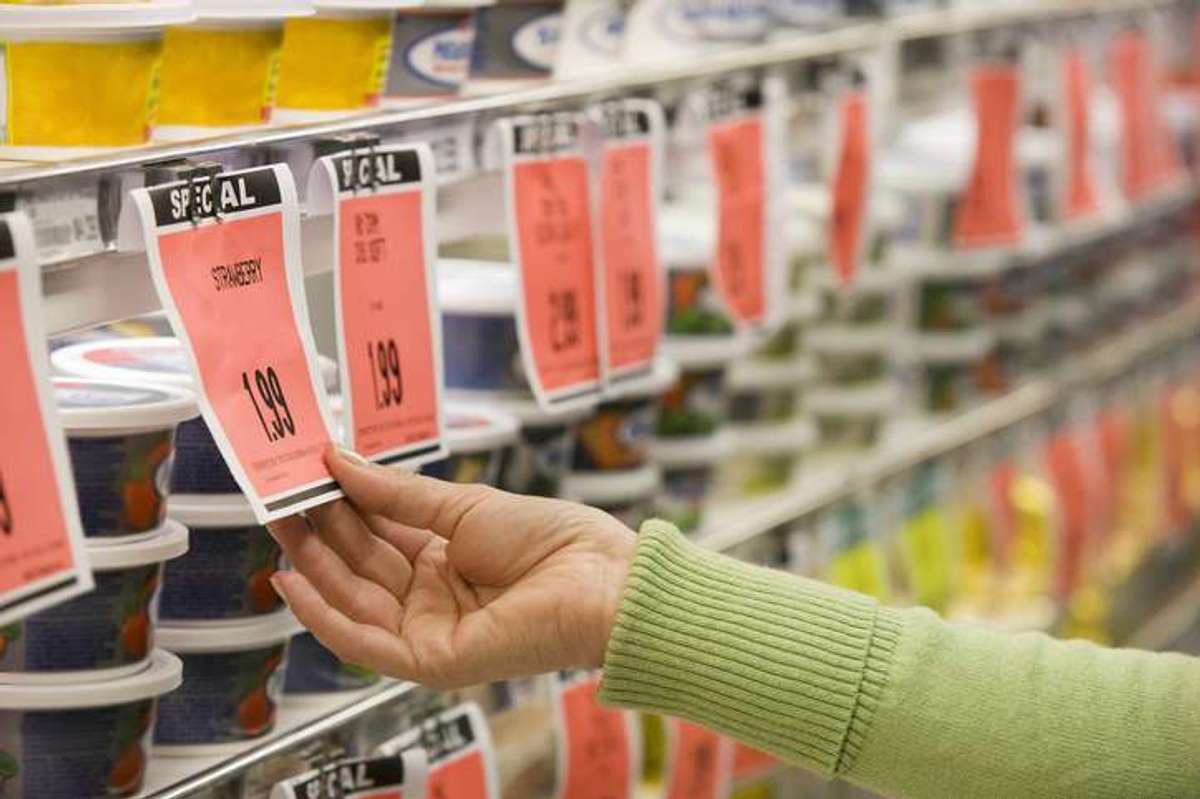

The government has refused to scrap the Extended Producer Responsibility (EPR) packaging tax despite mounting pressure from retailers and manufacturers, raising fears of further food price inflation for shoppers.
Officials from the Department for Environment, Food and Rural Affairs (Defra) have told industry bosses that the EPR regime, which requires food producers and online retailers to pay a charge for every item of packaging they use in the products they sell, will not be dropped.
It had been hoped that EPR, which is adding an estimated 0.5 percentage points to food inflation according to the Bank of England, would be scrapped to ease the burden on households that are grappling with increased supermarket bills since the start of the Iran-US war.
Industry leaders warn the £2 billion scheme — often dubbed a “shopping stealth tax” — is already adding costs across the grocery sector, with around 80 per cent of the charges ultimately being passed on to consumers.
Inflation could rise to 6.2 per cent by the start of 2027, and as much as 7 per cent on food, the Bank warned earlier this month.
Taxes on coffee cups, soup containers and juice cartons are set to increase later this year by an average of 19 per cent, and on plastic by 15 per cent. The money raised is then remitted to local authorities with the intention of improving recycling. Crucially, however, the funding is not hypothecated — meaning cash-strapped councils are free to spend it on other services such as social care, planning and education.
Businesses argue the tax is putting severe strain on manufacturers and supermarkets at a time when food inflation is already expected to worsen due to global supply chain pressures linked to the Iran-US conflict.
The glass packaging sector has been particularly vocal, warning that the current EPR model disproportionately penalises glass producers and risks driving investment away from the UK.
Officials highlighted that packaging tax on glass would fall when the regime is reset in June. However, Whitehall’s own projections show that it will only fall by an average of 1 per cent — and glass already accounts for £400 million of the up to £2 billion that EPR raises.
As a result the UK glass industry, which supports 120,000 jobs across its supply chain and contributes £2 billion to the economy, is grappling with an existential crisis.
Vidrala, the Spanish owner of Encirc, which employs 2,000 people across factories in Northern Ireland, Cheshire and Bristol, is understood to be threatening to withdraw £500 million of investment into the UK to upgrade its furnaces to meet net zero requirements.
Encirc produces roughly a third of all the glass bottles in the UK — 3 billion annually — for the likes of Budweiser, Fever-Tree and Smirnoff. Vidrala is said to believe that it makes little sense to invest in the UK while the EPR regime remains in place.
Bosses at the firm are said to be frustrated because the UK glass sector makes up 5 per cent of the packaging market, yet the sector is due to pay 27 per cent of EPR fees because the tax is levied based on weight. Encirc did not respond to requests for comment.
Nick Kirk, federation director at trade body British Glass, said: “We are disappointed by Defra’s response, which fails to recognise the mounting evidence of harm to UK manufacturing from the current EPR design.
"The policy is already contributing to a sharp decline in domestic glass production, rising imports and growing uncertainty for investment across the sector.
“The UK glass packaging industry is substantially internationally owned, with five out of six packaging manufacturers’ headquartered overseas.
"Across 12 UK glass packaging production sites, only one is operated by a UK-based company. This ownership structure means that future investment decisions, including the billions of pounds required to transition to net zero glass production, are being made outside the UK.”