



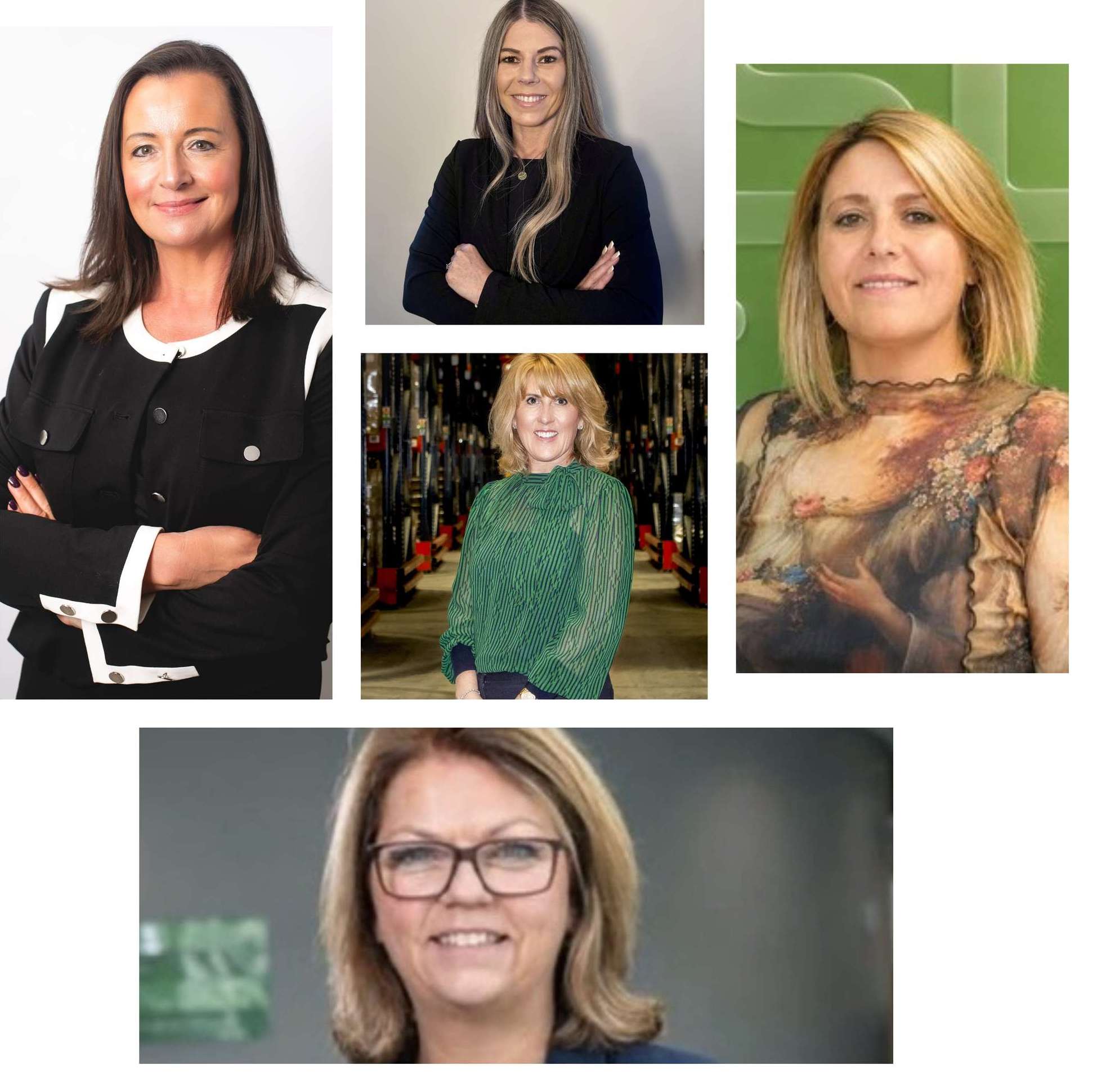

UK wholesale sector has changed dramatically since these five women began their careers. But while the number of women in senior roles has grown, the route to the top still comes with its own set of doubts, assumptions and obstacles.
Asian Trader brought together top five female leaders who have built careers across retail, wholesale, suppliers and distribution in a panel to talk candidly about what they encountered, what they learnt and what still needs to change.
Meet the super women
Cheryl Hope has spent more than 30 years across retail and wholesale, beginning her career at Co-op before moving through trading roles at several companies including A.F. Blakemore and Unitas Wholesale. For Hope, the attraction of wholesale has always been its relationships and its fast-moving nature. She is currently Trading Director at Parfetts.
Jo Wrate has worked across almost every side of the industry. Her career spans Müller Dairy, Kerry Foods, Poundland and A.F. Blakemore, where she held senior trading roles across wholesale and SPAR, before joining VSL Trade earlier this year, where she has joined as Trading Director.
CJ Antal-Smith began at the ASDA graduate scheme, before holding senior commercial roles across retail, wholesale, hospitality and services, including Co-op, Halfords and Poundland. Her career has been shaped by taking opportunities as they arose. She is currently working as Chief Commercial Officer at AF Blakemore & Son.
Victoria Lockie started working in her local convenience store at 14. She went on to spend 25 years at Costcutter, followed by more than a decade at Nisa and a senior role at Unitas Wholesale, before joining Morrisons. She is currently serving as Head of Wholesale – Strategic Projects & Acquisitions at Morrisons.
Debbie Harrison OBE grew up in a family business and has spent her career in wholesale. For Harrison, the sector’s pace, variety and, above all, its people have kept her in the industry. She is currently Managing Director at Pricecheck.
“I’m here because I’m bloody good at what I do”
The old idea of what a senior leader should look and sound like is being challenged but our panelists agree that women still encounter assumptions that men rarely have to navigate.
What gender stereotypes have you encountered in your career, and how did you tackle them?
Cheryl Hope:
When I started 30 years ago, wholesale was a male-dominated line of work. I have been in plenty of meetings where I was the only woman in a room.
It was assumed that to progress in career, I should behave like my male colleagues and male seniors.
But very early on, I decided that I wouldn't behave in a particular way. I always felt that if I knew my numbers, understood the business and had credible information, I didn't need to pretend to be someone else.
Once people understand that you deliver what you say, then gender becomes less relevant.
Also, I was never fazed by anybody's opinion of me. I have not got a position because I'm a woman; I am in this position because I'm bloody good at what I do.
Jo Wrate:
There may have been times when I was underestimated or judged differently, but I have never spent much energy thinking about it. I would rather put that energy into what I'm trying to achieve.
I'd much rather lead as myself than try to become a colder version of me because that's what somebody thinks a senior leader should look like.
I was able to see through stereotypes and very soon figured out that I can lead from the heart and still make tough commercial decisions. That I can be kind and still be assertive.
Caring about the outcome, the people and the business made me a stronger leader because I am genuinely invested in making it successful.
CJ Antal-Smith:
I have met assumptions that women needed to behave like traditional male leaders to progress, that being decisive meant being tough, showing emotion meant being weak, or that being collaborative meant you weren't commercially tough enough.
I have always tried to be myself- commercially ambitious, direct when I need to be, collaborative, curious and focused on my team and people.
Authenticity becomes even more important as one rise in the career. Leadership comes in different forms. One can be both ambitious and empathetic as well as decisive and collaborative. One can care about people and still be focused on performance.
Victoria Lockie:
Earlier in my career, I realised that being empathetic and collaborative leadership was often stereotyped as feminine, which in turn assumed to lack commercial sharpness and toughness.
I responded by letting my bjective business performance lead, delivering margin and sales growth, forming strong retail partnerships and clear operational results to prove to the world that commercial rigour and inclusive leadership go hand in hand.
Another common challenge has been ensuring my voice is heard in the room. My response has always been to be brave, stay persistent and speak up. Never shy away if you have a good idea.
It is a misconception that to be taken seriously in leadership, you need to adopt an aggressive leadership style or conform to someone else's idea of what a leader looks like.
Debbie Harrison OBE:
I have been fortunate not to encounter too many overt assumptions about being a female leader, but there is still a tendency to judge the same behaviour differently.
A confident or assertive woman can quickly be labelled difficult, while the same qualities in a man are often accepted without question.
I also think women can be more likely to second-guess themselves, which is where imposter syndrome can creep in. Over the years, I've learned to focus on the issue, communicate clearly and trust my own judgement rather than spend too much time worrying about how I might be perceived.
“Being a woman has made me more conscious of the human side of business.”
The panelists feel that if the wholesale sector wants better leaders, it needs to stop treating empathy, listening and collaboration as weaknesses.
What qualities traditionally associated with female leadership should the industry value more?
Cheryl Hope:
I value empathy, being able to listen, emotional intelligence, collaboration and building relationships.
Some people might view those as soft and weak qualities; I don't. Being empathetic doesn't mean that you're not going to have a difficult conversation.
I think it gives a different perspective on things. It's a different approach that probably leads to a slightly different outcome.
Jo Wrate:
If collaboration and communication are traditionally seen as female leadership qualities, then I think the industry should value female leaders enormously.
I feel empathy and emotional intelligence are hugely important in leadership. I genuinely care about people and relationships. I like to understand what motivates people, what's going on in their lives and what they want to achieve.
I also think being kind whilst being assertive is absolutely possible. I care about people, treat them well and am approachable, while still being very clear about what I expect and prepared to have difficult conversations when needed.
CJ Antal-Smith:
I think women lead in different ways through understanding what motivates people and understanding when someone needs challenge or support.
Providing psychological safety so people feel able to tell you what you don't want to hear can make a huge difference to performance. I also think the industry should value different perspectives.
The closer leadership teams are to reflecting the diversity of their customers, colleagues and communities they serve, the better decisions they are likely to make.
Victoria Lockie:
Wholesale can be a tough, fast-moving environment, but at its heart, it's a people business.
Navigating my career as a woman made me inherently collaborative, as I learnt that bringing a range of diverse perspectives together always drives the strongest outcomes.
I believe the industry needs to value emotional intelligence and empathy. They're often mischaracterised as 'soft skills' but, in reality, they are major commercial strengths.
When you lead with empathy, build trust and create an environment where people feel supported, performance and loyalty naturally follow.
Debbie Harrison OBE:
Empathy and emotional awareness are sometimes associated with female leadership, but they're qualities every good leader should have.
The industry needs to value those strengths, and the development of the next generation, just as much as commercial performance.
Being a woman has probably made me more conscious of the human side of business. I tend to notice when someone has lost their spark or their confidence has changed, and I want to understand what's happening and make sure they feel supported.
“Biggest challenge early on was learning to trust my own perspective.”
When asked about challenges they overcame, the answers could have been anything from long working hours to uncertainity or even male dominance. Turns out that for each, the challenge was not external, but it is what they struggled to overcome within themselves.
And it is shockingly more common than you think.
What has been the biggest challenge you have faced as a woman in wholesale?
Cheryl Hope:
For me, main challenge is that sometimes I feel like I am not ready for a particular role, even when I am 100 per cent ready. I hear this quite a lot from other female colleagues at Women in Wholesale as well, whereas men tend to be quite confident in their own abilities and just go for it.
It took me a while to overcome this challenge and remind myself that I don't need to know absolutely everything before I take the first step.
As long as I know enough, am surrounded with good people and understand the business, I need to take the challenges head-on and have more trust in my abilities.
Jo Wrate:
If anything, the biggest challenge earlier on was probably having the confidence to back myself.
I think women can sometimes feel they need to know absolutely everything before putting themselves forward or giving an opinion, whereas I've watched plenty of people over the years who haven't had that same hesitation.
Experience helped me overcome that. I realised that I don't have to know everything; nobody does. Work hard, know your business, surround yourself with good people and trust your own judgement.
CJ Antal-Smith:
The biggest challenge isn't a singular event. It's probably the accumulation of having to prove yourself, particularly when you join a new business or a traditionally male-dominated environment.
What helped me most is understanding the detail first and asking questions. You don't have to be the loudest voice in the room to have influence.
Credibility comes from what you know, experience and the results you deliver. That's especially true in wholesale, where decisions directly impact independent retailers' margins and availability.
Victoria Lockie:
Early on, the biggest challenge was learning to trust my own perspective when I was often the only woman in the room.
Wholesale is a traditional, fast-moving sector, and it is easy to let self-doubt creep in when your background or approach can differ from everyone else in the room.
I overcame that by backing my leadership with my depth of experience and keeping the focus firmly on commercial results. Instead of trying to conform to the room, I learned to view my distinct perspective as a competitive advantage that helped spot operational gaps others may overlook.
Having the confidence to challenge the status quo when a strategy wasn't delivering not only drove better commercial outcomes, but ultimately grew my confidence in trusting myself.
Debbie Harrison OBE:
Without question, the biggest challenge was balancing being a mum with the demands of a senior role at a time when there was very little flexibility.
I returned to work when my first child was two weeks old and, two years later, when my second was three weeks old. I constantly felt that I wasn't doing enough at work or at home, while still knowing I had to deliver everything expected of me.
Determination and strong support around me helped enormously, but I also had to learn that I could be both a committed mum and an effective business leader without holding myself to an impossible standard.
“..... needs more women progressing from senior management into board ...”
Everyone agrees that there has been progress in women representation but the panelists argue that getting more women into wholesale is only half the job; the bigger test is getting them to the top and into the boardroom.
What has genuinely changed for women in wholesale since you started your career?
Cheryl Hope:
I do think there has been a massive change in the industry. There's much more focus on female progression and diversity than there ever was at the start of my career.
Initiatives like Women in Wholesale are making a massive difference to the industry, adding more to the conversation alongside other forums like Diversity in Wholesale.
The difference is we are seeing more females in senior roles, which is brilliant. I think we've made progress in representation.
The next challenge is progression and getting more women into commercial trading and operational top-level roles, rather than simply increasing the number of women in the industry.
I think there is still an underrepresentation at board level.
Jo Wrate:
When I started my career nearly 30 years ago, there simply weren't as many women in senior commercial and leadership roles in wholesale.
Today I see far more women coming through buying, trading, sales, operations and into senior positions, which is brilliant. The pace of change has really accelerated over the last 10 years.
Initiatives such as Women in Wholesale have helped create networks, confidence and, importantly, visibility. Younger women entering the industry can now see successful women ahead of them and think, “I can do that too.”
The sector needs to see more women progressing from senior management into board and ownership positions, and more businesses actively developing talent rather than waiting for people to put themselves forward.
CJ Antal-Smith:
I think the change has been significant in the last 30 years. When I started my career there were far fewer women in senior positions.
Today there is a greater spread of women in leadership and a broader recognition that diverse teams are good for business.
We need to focus on the pipeline – enabling women to see wholesale as an industry they want to progress their careers in, giving them visible role models, meaningful development opportunities and the confidence to see senior leadership as achievable.
Victoria Lockie:
Visibility has improved significantly, driven by changes across the sector such as inclusive recruitment practices and a conscious effort to remove biased language from roles.
Progress is certainly happening, but we still have work to do, especially in building clear progression pipelines into senior roles and raising the profile of emerging diverse talent within the industry.
We all have a responsibility to create the culture we want to see, and it's up to all of us across wholesale to keep driving real, lasting change.
Debbie Harrison OBE:
There has been real progress, particularly around maternity and paternity provision, flexibility for childcare and recognition of the different perspectives women bring to businesses and boardrooms.
That said, progress hasn't been consistent and there is still plenty of work to do.
Women entering wholesale now have more visible leaders to look up to, and businesses increasingly understand the importance of fair and equal opportunities. But creating an opportunity is only part of the answer.
Women also need the confidence and encouragement to take that next step, go for bigger roles, use their voices and trust their ability.
“Flexibility and ambition aren’t mutually exclusive”
The return from maternity or caring leave is not simply an HR process; the panel argues that how businesses handle it can determine whether experienced women stay, progress or leave.
What can or should an organisation offer support to women returning after child care break?
Cheryl Hope:
If a business is flexible and empathetic around the challenges that women face after resuming work after childcare leave, then it's reassuring for them to know that their company is supportive and has got their back. And that makes a huge difference.
Back when I started, when I was younger and having my children, I had a maximum of nine or 10 weeks off because I felt like I had to get back into work as soon as possible or else I would miss out.
I always felt guilty as a young mum. I felt that I should have been more involved in my children's childhood but couldn't give them more time because I wanted a career as well.
But with flexible working and support from a good company like Parfetts, women are able to do both and balance work and family in a better way.
Jo Wrate:
One of the most important things an organisation can do is recognise that returning to work after having a child or taking a caring break is a transition, not simply a case of picking up where you left off.
That can mean a phased return, flexibility around working hours or location where the role allows it, regular check-ins with the manager, and being realistic about the fact that childcare and family responsibilities don't suddenly disappear when somebody comes back to work.
Just as importantly, returning women shouldn't be treated as though their ambition or capability has somehow reduced. They should still have access to important projects, development opportunities and progression.
Flexibility and ambition aren't mutually exclusive.
CJ Antal-Smith:
Real support means offering structured, phased returns that allow women to rebuild momentum, paired with proactive executive sponsorship to ensure their career trajectories remain ambitious and clear.
When we treat flexibility as a baseline business standard and actively champion mums returning to work, we don't just retain top female talent, we build a stronger, more genuine and supportive business for everyone.
By creating a culture of trust and psychological safety, we can bridge the gap between policies and the lived experience of our teams, proving that career growth and family life are mutually reinforcing rather than mutually exclusive.
Victoria Lockie:
Returning to work after childbirth or a care break is a huge personal shift, and transitioning back requires empathy, patience and structured support.
Morrisons works hard to make sure its policies translate into a seamless experience for colleagues.
We launched returnee coffee mornings, which have been great for creating an instant support network where new parents can connect and ask candid questions.
We also offer line manager training to give leaders the right tools and empathy to guide their team through the transition.
Debbie Harrison OBE:
There is no single right way to support someone returning to work after having a child or taking time away to care for their family. Everyone’s circumstances are different, so listening, being flexible and having open conversations about what will make their return work is incredibly important.
At Pricecheck, we offer a range of family-friendly benefits, including enhanced maternity, paternity and adoption support, paid time for fertility treatment, and flexible working approaches such as part-time working and job sharing.
We’ve also seen how valuable informal mentoring and peer support can be for women returning from maternity leave. We’ve seen examples of this happening within our business and recognise the value in developing that support further over time.
Ultimately, returning mothers bring experience, different perspectives and valuable skills back into the workplace. The responsibility of the employer is to create an environment where they feel supported and valued, and to recognise that what works for one person may not work for another.
“Drive the bus. Don’t be a passenger.”
The collective advice from the panel to the next generation of women entering wholesale and retail is remarkably consistent is to stop waiting to feel completely ready, build your network and make opportunities rather than waiting for them.
What advice would you give the next generation of women entering wholesale?
Cheryl Hope:
Know your numbers, understand the business and know your customer. That's the absolute foundation of the business and of the industry.
The biggest thing would be: do what you say you're going to do and really protect your reputation, because that definitely goes before you.
Find people who advocate for you as well, or find yourself a mentor. Having that support network around you is really important.
Jo Wrate:
Drive the bus, don't be a passenger. Make things happen.
Put your hand up, get involved and don't wait for somebody else to create opportunities for you. If you have an idea, say it. If you see an opportunity, go after it.
And be curious. Ask questions, get out and see things, meet customers, walk stores, talk to suppliers and always want to understand a bit more.
Work hard, build relationships and be yourself. But above everything else, drive your own bus – don't sit at the back waiting to see where somebody else takes you.
CJ Antal-Smith:
Believe in your ability, even when you feel unsure. Fail fast, take the learnings and move on, and don't be afraid of pushing outside your comfort zone – that is when you learn the most.
Always be curious and stay open to learning. Build strong relationships; your network is invaluable now and in the future.
Finally, remember that your voice and perspective are valuable tools in any business, however experienced you are.
Victoria Lockie:
Don't sit back and wait to be invited into the conversation and make sure your voice is heard early on.
To truly learn, you need to be inquisitive and volunteer to take part in new projects. When you do this, you are also showing senior leaders that you are a standout professional who goes the extra mile.
Debbie Harrison OBE:
Find a mentor. Be open-minded about where your career could take you, grab opportunities and don't be afraid to move between roles or departments to broaden your experience.
Make your own chances, be confident in what makes you different and think about the impact you can have.
At the same time, remember that while you can do anything, you can't do everything. Don't put yourself under pressure to be everything to everyone.
Learn to delegate, ask for support and embrace each stage of your life and career. Wholesale still needs fresh ideas and different perspectives, so have the confidence to stand out, challenge how things are done and own the contribution you can make.
“You will learn through stretching yourself.”
There is perhaps no better way to close the conversation than by asking what these five women would tell the younger versions of themselves.The answers are different, but the message is strikingly similar.
Cheryl Hope:
You don't have to have every answer ready. Some answers you will learn along the way. Speak up, opportunities will come, and grab those opportunities when they do.Don't spend too much time worrying about, ‘Do I belong here? Am I right for this? Can I do it? Am I capable?’ If you're in a room, you've earned your place there.
Jo Wrate:
Worry less.Keep working hard, keep putting your hand up and keep pushing yourself, but trust yourself a bit more and don't let fear of what might happen stop you enjoying what is happening.Things have a funny way of working themselves out.
CJ Antal-Smith:
Be more confident in your abilities and decisions, fail fast and stop worrying about whether you are fully ready for the next opportunity. You will learn through stretching yourself.Some of the biggest progressions in my career have been through taking a risk and taking on something that made me initially feel uncomfortable.
Victoria Lockie:
Always be curious, as there is so much you can learn from others and people genuinely want to help you succeed.Welcome opportunities across different teams and departments. Step outside your comfort zone as it will sharpen your business mindset and open doors to unexpected growth.Build a strong network of mentors, peer and advisers.
Debbie Harrison OBE:
Trust your own ability and give yourself permission to make more time for being a mum.Looking back, I wish I'd had more confidence that I could step away when I needed to, come back and still be just as capable and committed.
On their own terms
Their journeys may have taken different routes, but the learnings are similar. Women do not need to lead like men or choose between ambition and empathy. They need to have a bit more trust in their abilities and remain beware of imposter syndrome.
Because the next chapter in wholesale and retail is not just about getting more women into the room. It is about making sure their voices are heard, their contributions count and their ambitions have room to grow.