



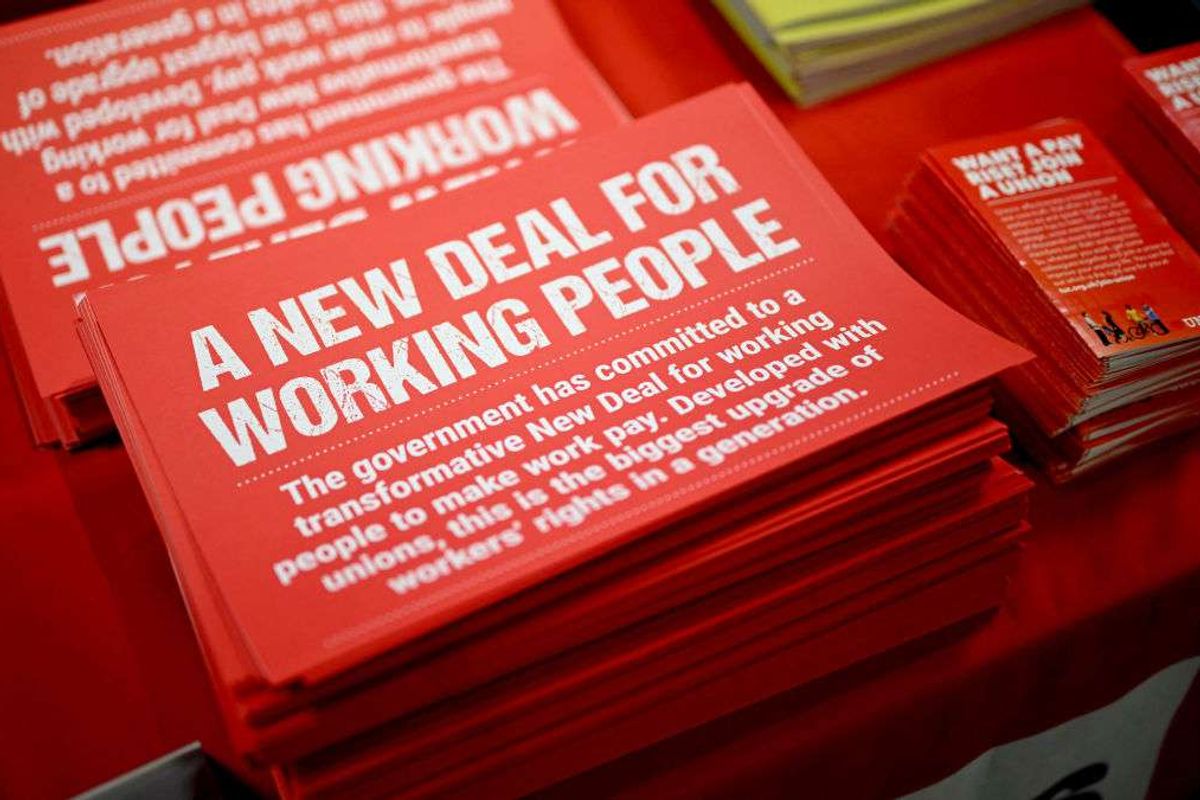

The government’s flagship Employment Rights Act has received Royal Assent today, formally becoming law after weeks of parliamentary deadlock and a last-minute delay in the House of Lords.
The legislation, which ministers say will benefit more than 15 million workers across the UK, introduces a wide-ranging overhaul of employment law, with changes due to be phased in over a two-year period to give businesses time to prepare.
The Act’s passage was briefly stalled last week after peers continued to press amendments during the final stages of parliamentary “’ping-pong’. The stand-off ended when a Conservative-led amendment was withdrawn in the Lords, clearing the final hurdle and allowing the bill to pass before Christmas.
For businesses, one of the most significant elements is the government’s decision to row back on its original proposal for day-one unfair dismissal rights. Instead, workers will gain protection from unfair dismissal after six months in a job – a compromise secured following negotiations with business groups.
Under the new law, workers will also gain day-one rights to statutory sick pay, paternity leave, unpaid parental leave and a new bereavement leave entitlement. The government estimates that 1.3 million workers will benefit from changes to sick pay, while 32,000 more fathers and partners will be eligible for paternity leave and around 1.5 million parents will be able to access unpaid parental leave.
The Act also introduces new protections for workers on zero-hours contracts, including the right to a contract that reflects regular working hours and compensation when shifts are cancelled at short notice. More than one million people are currently estimated to be on zero-hours contracts.
Prime Minister Sir Keir Starmer said the legislation proved what a “pro-business, pro-worker government can achieve”, describing it as “a modern framework for worker’s rights”.
“This Act sets in motion an increase in living standards, supporting productivity and importantly, more security and dignity for people in work. When we said we’d bring work into the 21st century, we meant it – and today we’ve delivered it,” he added.
Business and trade secretary Peter Kyle said the reforms would be delivered “in partnership with businesses, trade unions and civil society”.
“We believe this change is a vital part of creating and maintaining good jobs and fair pay. This government is championing responsible businesses, driving fair competition, and creating a future where hardworking people enjoy real security and opportunity,” he added.
Read More: Government sets out timeline for employment rights reforms
Retailers and small business groups have welcomed the greater certainty provided by Royal Assent, while continuing to stress the importance of consultation as the detail is worked through.
Craig Beaumont, executive director at the Federation of Small Businesses, said small firms would be pleased to see the six-month qualifying period for unfair dismissal confirmed in law, adding that fears around day-one claims had been their “greatest concern”.
“We will continue to work with the team in good faith on secondary legislation to address the remaining issues, in line with the secretary of state’s pledge to us for implementation to be harmonious, sensible and sensitive to our needs,” Beaumont said.
Michelle Ovens, CEO of Small Business Britain, said the Act would help bring “much needed certainty” for planning, but warned that “there is undoubtedly more work to do”.
“We look forward to working collaboratively with the government, alongside others in the space, to deliver the best outcomes for small businesses and their wider workforce,” she added.
Co-op Group CEO Shirine Khoury-Haq said theAct will ensure that people can expect fair treatment at work, whoever their employer may be.
“When people feel valued, businesses are better placed to attract and retain the skills they need, benefiting workers, employers and the wider economy,” she noted.
The government said secondary legislation and guidance would be developed over the next two years, with ongoing consultation to ensure the new rules are implemented in a way that is sensitive to business needs.