




Easter continues to play a significant role in the UK confectionery calendar, offering an important seasonal opportunity for convenience retailers across multiple store formats. New survey findings from 74 convenience retailers highlight how the category is performing across forecourts, local convenience stores, and specialist bakery and confectionery outlets. While the outlook for this year’s Easter season appears broadly stable, retailers remain cautiously optimistic, with impulse purchasing, strong brand recognition and competitive pricing shaping sales expectations.
The survey, conducted for the Asian Trader Chocolate and Sugar Confectionery feature, captured feedback from a balanced cross-section of retailers. Forecourts accounted for the largest share of responses at 35.1%, followed by both local convenience stores (Supermarket Local/Express) and Bakery/Confectionery retailers at 32.4% each. The distribution provides a useful snapshot of how Easter confectionery performs across impulse-led retail environments as well as neighbourhood grocery stores and specialist sweet shops.
Easter remains key
Across the sector, Easter remains an important trading period for confectionery sales. Overall, nearly six in ten retailers (59.5%) consider Easter to be either “extremely important” or “very important” (Top-2-Box) for their confectionery business. However, the degree of reliance on the season varies by channel.
Forecourts show the strongest dependence on Easter sales, with a Top-2-Box score of 69.2%. This indicates that almost seven in ten forecourt retailers see the seasonal event as a key driver of confectionery revenue. The strong performance reflects the impulse nature of forecourt retail, where smaller Easter treats and single-serve products are often purchased during quick visits.
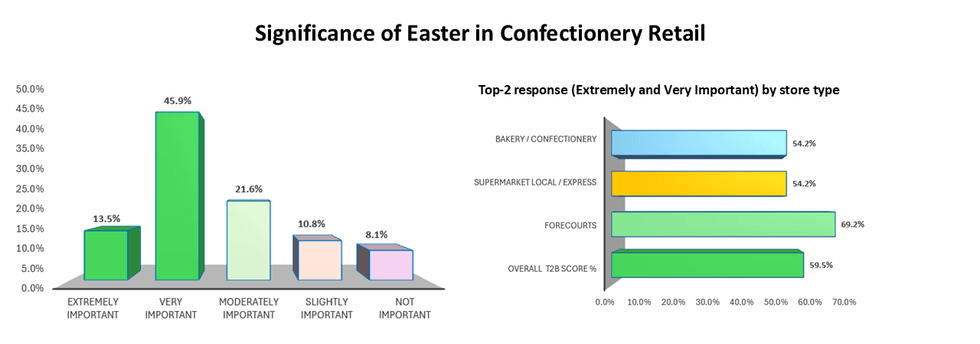 Overall, nearly six in ten retailers (59.5%) consider Easter to be either “extremely important” or “very important”Photo: Asian Trader
Supermarket Local/Express stores and Bakery/Confectionery retailers both recorded slightly lower importance scores of 54.2%. While Easter remains significant in these outlets, the category forms part of a broader product mix, meaning the seasonal impact is somewhat less concentrated than in forecourts.
When it comes to performance expectations for this year’s Easter season, retailers anticipate relatively stable trading conditions. Nearly half of respondents (48.6%) expect Easter confectionery sales to be about the same as last year, suggesting a steady outlook for the category.
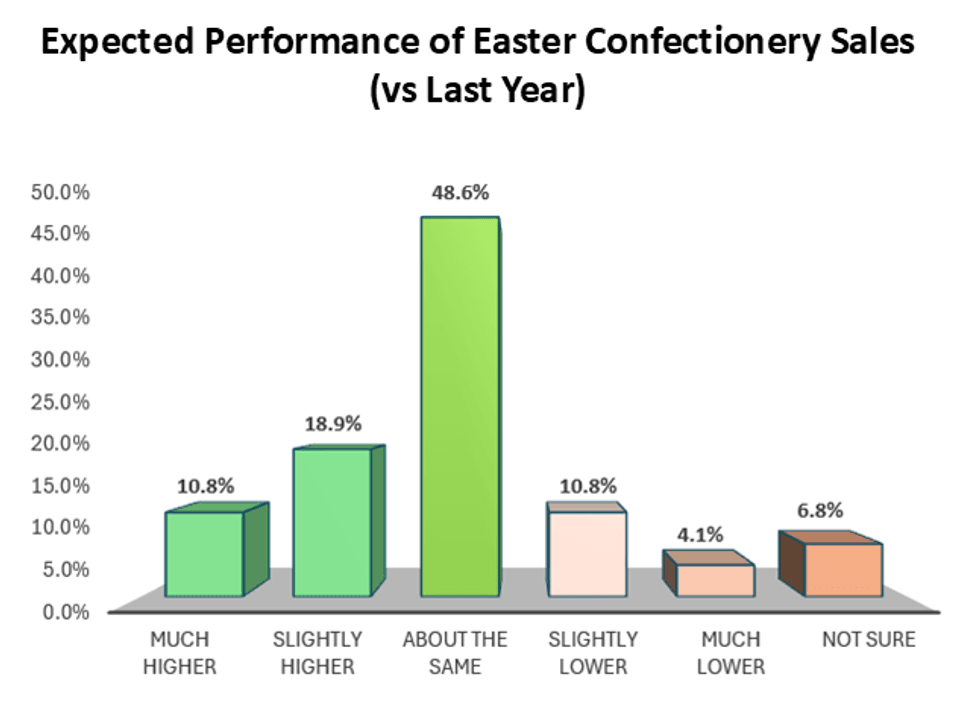 Nearly half of respondents (48.6%) expect Easter confectionery sales to be about the same as last yearPhoto: Asian Trader
Despite this stability, there is a modestly positive sentiment overall. Almost 30% of retailers anticipate sales to increase, with 10.8% expecting a significant rise and 18.9% predicting a slight improvement. By comparison, 14.9% of respondents believe sales may decline, while 6.8% remain uncertain about how the season will unfold.
Across the channel
Channel-level insights reveal some differences in expectations. Supermarket Local/Express retailers appear the most cautious, with two-thirds (66.7%) predicting sales will remain largely unchanged compared with last year. Forecourts, by contrast, show a more optimistic outlook, with a higher proportion expecting sales growth. Bakery and confectionery stores present a more mixed picture, balancing expectations of stable sales with some concern about a slight decline.
Retailers also highlighted clear winners in terms of product formats. Filled eggs such as creme-style eggs emerged as the top-performing Easter confectionery product, accounting for 25% of responses. These products combine strong brand recognition with affordable price points, making them well suited to impulse purchases.
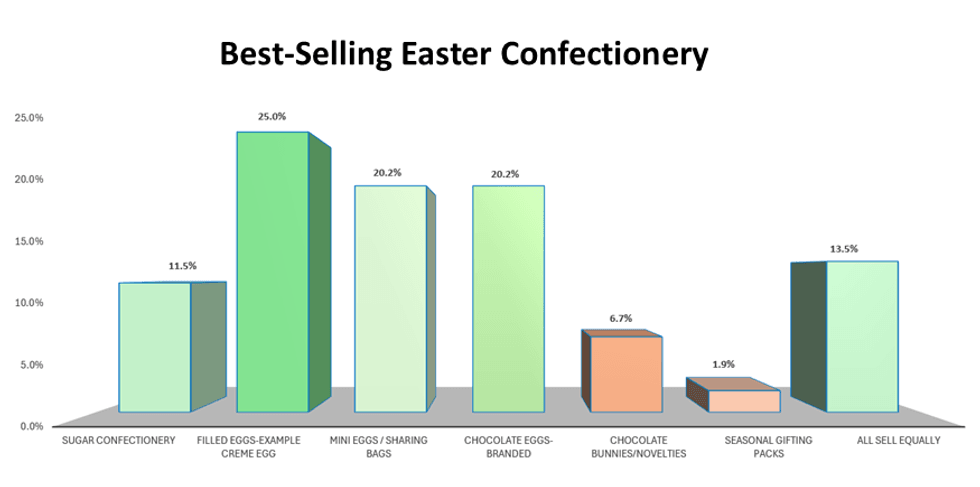 Filled eggs such as creme-style eggs emerged as the top-performing Easter confectionery productPhoto: Asian Trader
Mini eggs and sharing bags, as well as branded chocolate eggs, follow closely behind, each representing 20.2% of responses. These formats appeal both as individual treats and as products that can be shared within families or given as small seasonal gifts.
Sugar confectionery represents a smaller share of Easter sales overall at 11.5%, while novelty products such as chocolate bunnies (6.7%) and seasonal gifting packs (1.9%) occupy more niche positions within the category.
Product preferences also vary significantly by store type. Forecourts show a particularly strong preference for filled eggs, which account for 46.2% of their best-selling Easter products. This reinforces the importance of compact, impulse-friendly items within forecourt retail.
Supermarket Local/Express stores report stronger demand for branded chocolate eggs (38.1%) and mini eggs or sharing bags (33.3%), reflecting larger basket sizes and a broader product range available in these outlets. Meanwhile, Bakery/Confectionery retailers stand out for their emphasis on sugar confectionery (50%) and novelty products such as chocolate bunnies (43%), indicating a greater focus on seasonal and speciality items.
Seasonal sales
The timing of Easter confectionery purchases also reveals an extended seasonal sales window. According to retailers, purchasing typically begins in early March, with 26% identifying this as the primary start of the sales period. However, a significant share of shoppers begin buying even earlier. Around 37% of retailers reported that customers start purchasing Easter confectionery in January or February.
This early demand is particularly strong in Bakery/Confectionery stores, where 75% of retailers report that sales begin well in advance of Easter. In contrast, Forecourts show a more balanced pattern, with 61.5% of purchases occurring in advance and 38.5% closer to the holiday itself. Supermarket Local/Express stores see the highest level of last-minute purchases, with 45.8% of sales taking place closer to Easter, often as part of regular grocery shopping trips.
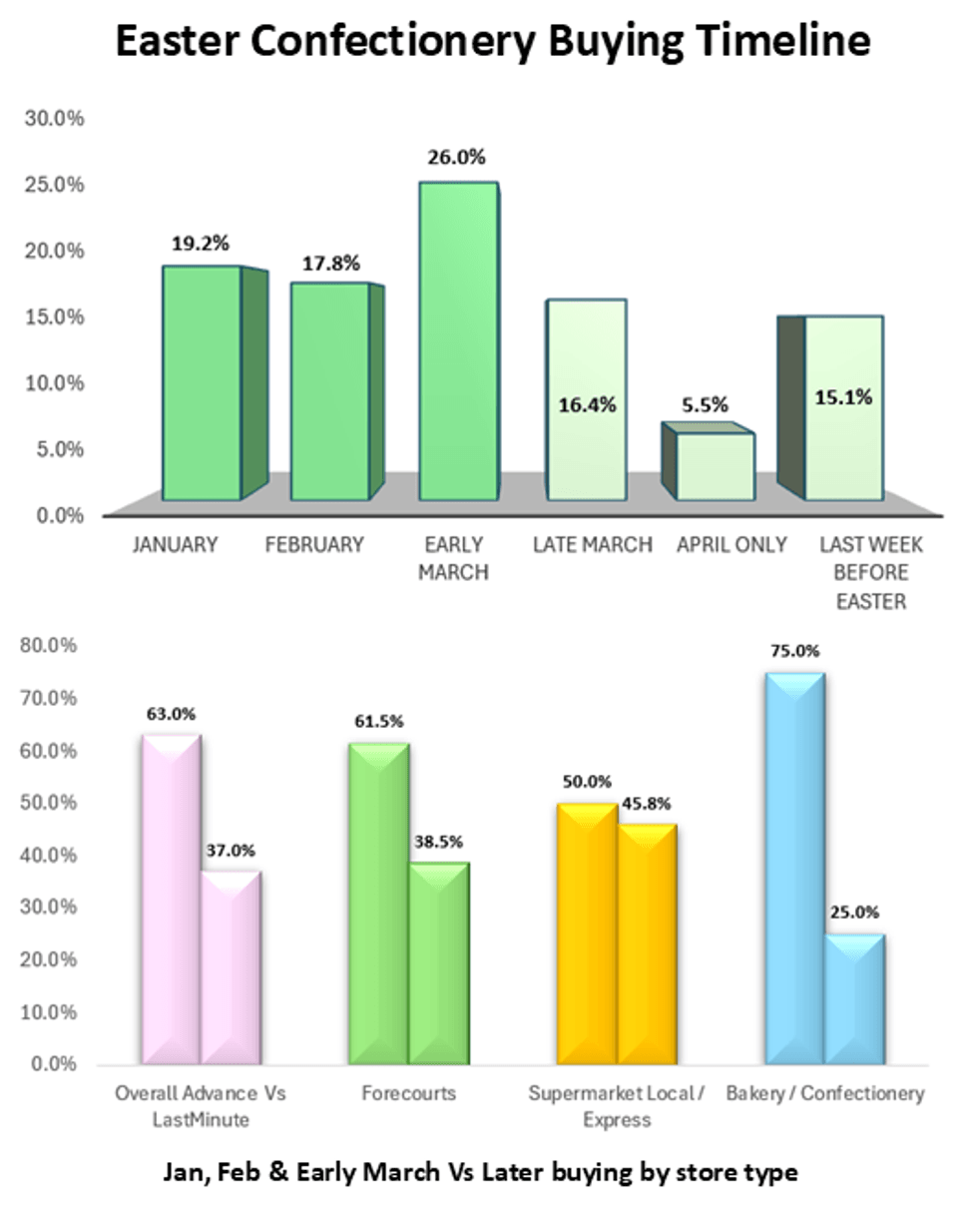 Supermarket Local/Express stores see the highest level of last-minute purchases, with 45.8% of sales taking place closer to EasterPhoto: Asian Trader
Price sensitivity remains a key factor shaping Easter confectionery sales. Mid-range price points dominate across all channels, with products priced between £1 and £5 accounting for more than 82% of best-selling items.
The £2–£5 range leads overall at 42.5%, closely followed by the £1–£2 segment at 39.7%. These price points reflect the popularity of affordable seasonal treats that can be easily added to impulse baskets.
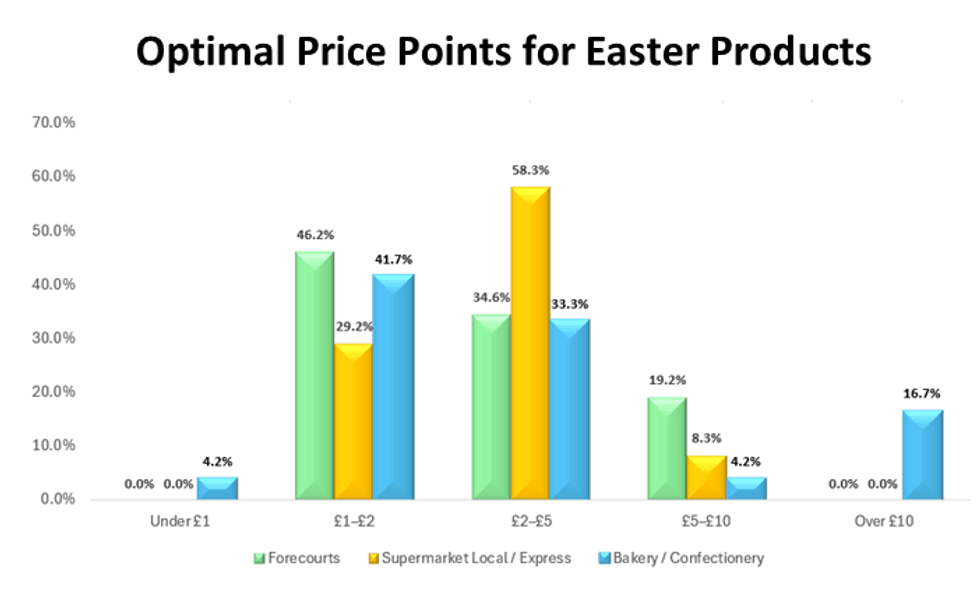 Mid-range price points dominate across all channelsPhoto: Asian Trader
Supermarket Local/Express stores show the strongest demand for products in the £2–£5 range, representing 58.3% of sales, which aligns with larger eggs and branded seasonal items. Forecourts, on the other hand, lean more heavily towards the £1–£2 segment (46.2%), reflecting smaller, grab-and-go treat formats. Bakery/Confectionery retailers display a more varied spread, with notable sales across both mid-range items and premium products above £10.
Melting away
Despite the seasonal opportunity, retailers continue to face several challenges during the Easter trading period. Competition from large supermarkets emerges as the most significant concern, cited by 37.8% of respondents. The aggressive promotional strategies and price discounts offered by major supermarket chains create strong competitive pressure for independent convenience retailers.
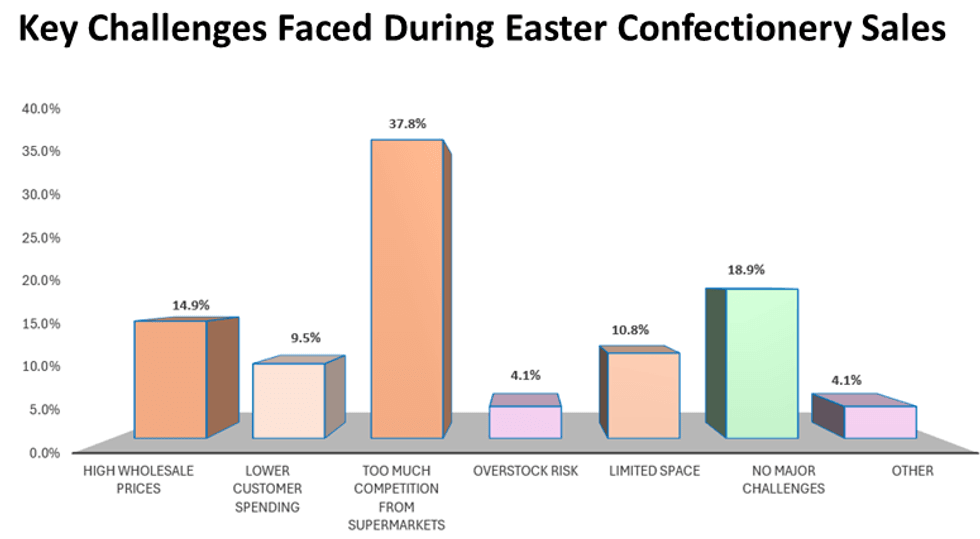 Competition from large supermarkets emerges as the most significant concernPhoto: Asian Trader
Bakery and confectionery stores feel this pressure most acutely, with 41.7% identifying supermarket competition as their biggest challenge. Supermarket Local/Express retailers also highlight competition strongly, though nearly 30% report facing no major challenges. Forecourts report a broader range of issues, including limited retail space and rising wholesale prices alongside supermarket competition.
Brand performance
In terms of brand performance, one name dominates the category. Cadbury was cited by 81.7% of retailers as the strongest-performing Easter confectionery brand, underlining its enduring association with seasonal chocolate products.
The brand’s dominance is particularly pronounced in Forecourts (88.5%) and Supermarket Local/Express stores (91.7%), where its recognisable Easter lines help drive impulse purchases. Bakery and confectionery stores show more brand diversity, with Cadbury still leading but other brands and value-led products also gaining traction.
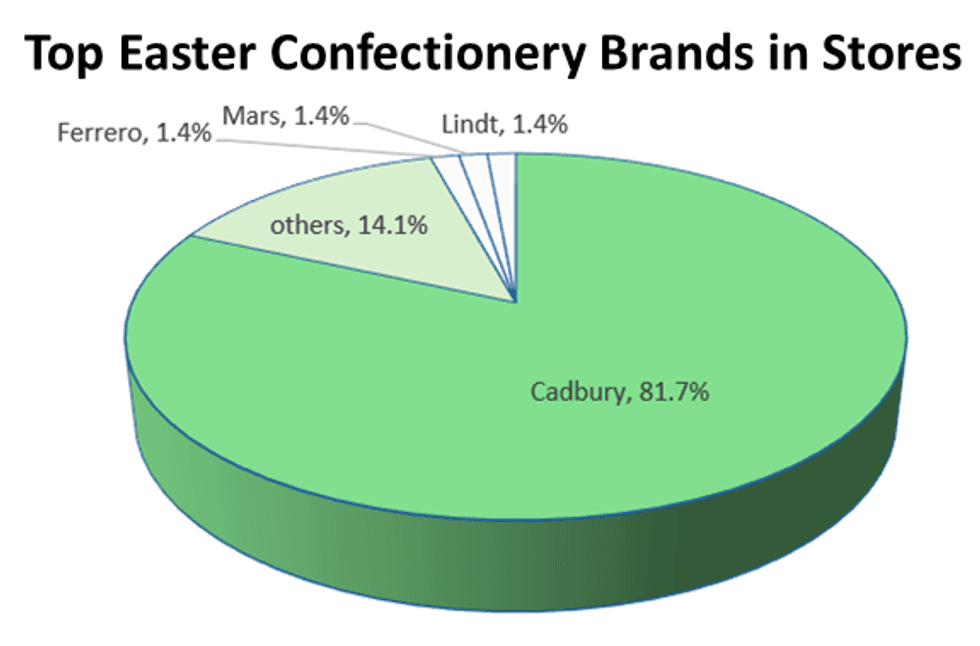 Cadbury was cited by 81.7% of retailers as the strongest-performing Easter confectionery brandPhoto: Asian Trader
Looking ahead to the season, most retailers are taking a cautious approach to range planning. Nearly half (47.9%) say they will keep their Easter confectionery range unchanged this year. Around 28.8% plan to expand their selection, while 23.3% intend to reduce it.
Forecourts appear the most optimistic, with 46.2% increasing their Easter range, reflecting confidence in impulse-driven seasonal sales. Supermarket Local/Express retailers are more stable in their approach, while Bakery/Confectionery stores are the most conservative, with some scaling back their seasonal offering.
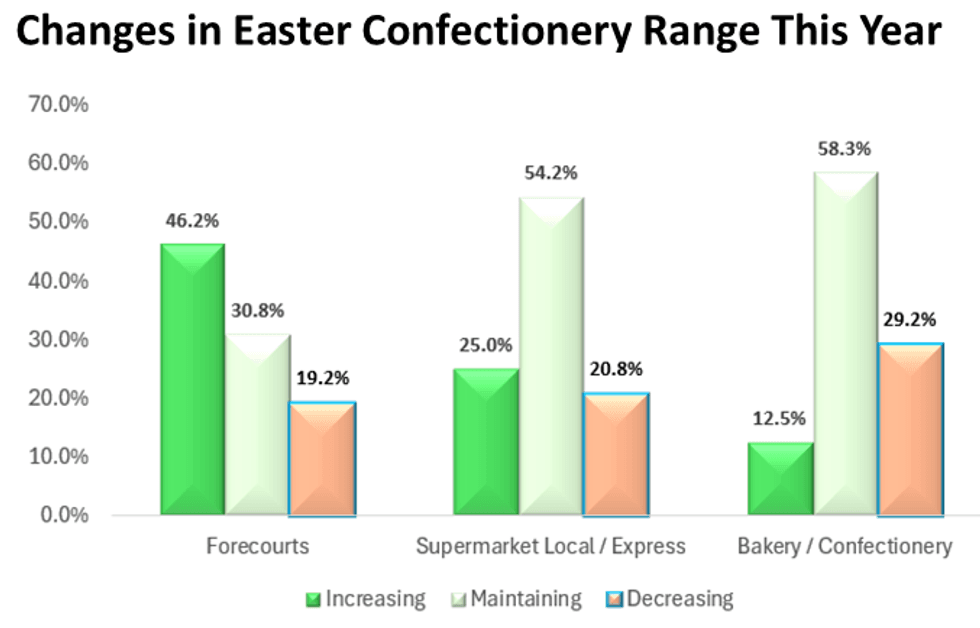 Nearly half say they will keep their Easter confectionery range unchanged this yearPhoto: Asian Trader
Overall, retailer feedback suggests a steady but cautious outlook for Easter confectionery in the convenience sector. Many expect sales to mirror last year’s performance, although several anticipate an uplift as the season progresses. With demand typically building closer to Easter, retailers remain watchful of pricing, promotional activity and consumer momentum as the holiday approaches.