





For years, convenience retailers have been told that they are more expensive. Not always in reality, but almost always in perception.
And perception is everything.
While the multiples battle it out with loyalty cards, app pricing and deep-funded promotions, the independent sector is left to do something far harder to prove value, every single day, on every single shelf.
That is where one of the simplest tools in retail continues to punch above its weight. A number, printed on a pack, a declaration of intent. It says, we are not going to overcharge shoppers.
Price-marked packs, popularly known as PMPs, have become one of the most transformative mechanics in British convenience sector.
Every convenience retailer knows this drill. A shopper picks up a product, pauses, checks the price, hesitates and sometimes puts it back.
That hesitation is where sales are lost. Not because the product is wrong, but because the price feels wrong. PMPs remove that hesitation before it even begins.
In a cost-conscious market, PMPs are a clear signal of value – catching shoppers’ attention, reassuring them on price, and giving retailers greater control.
The place of PMPs in the British convenience sector is evident from industry data.
One in three UK adults say that knowing a convenience store sells price-marked packs makes them more likely to shop there. About 47 per cent of baskets now include PMPs and 82 per cent of shoppers are actively looking for value and deals.
Unitas’ Plan for Profit's Focus On: Value & PMP guide sharpens the picture considerably. It says 50 per cent of shoppers are more likely to visit stores with a strong PMP range.
PMPs drive confectionery, making up nearly half of all sales. Crisps and snacks are a core part of the convenience mission, appearing in one in five.
Over two-thirds of soft drink sales are PMPs. Over half of alcohol shoppers now purchase PMPs, with uptake continuing to grow year-on-year. PMPs drive 50 per cent of spirit sales despite making up only five per cent of the range.
Crunching the price
Snacks are the PMP heartland: six out of 10 purchases in convenience are unplanned. In that environment, price visibility at the fixture is not merely helpful; rather it is a purchase trigger.
That is exactly where suppliers are leaning in.
Tayto Group has “Snacking Sorted” with its portfolio of brands including Golden Wonder, as well as being Britain’s leading supplier of pork snacks.
PMPs are one of their most powerful weapons.
Sharing PMPs (£1+) are worth over half of all snack sales, with Golden Wonder £1 Sharing PMPs outperforming the market and growing at +24.2 per cent vs. mkt growth at +0.4 per cent.
Phil Holford, Senior Brand Manager Golden Wonder, explains: “We know that many shoppers are still struggling financially, so we’re sticking with the all-important £1 price-point, making sure that we continue to deliver great tasting, great value snacks.”
Shoppers are continuing to turn to familiar flavours, choosing snacks that feel reliable: classic favourites, now with a new range in PMP format.
In snacks, PMPs don’t just sit on shelf; they do the selling.
Few companies illustrate this better than KP Snacks, which has built its entire convenience strategy around the format.
KP Snacks’ extensive PMP portfolio spans everything from entry-level price points through to premium sharing formats, designed to capture impulse purchases while keeping pace with evolving shopper expectations.
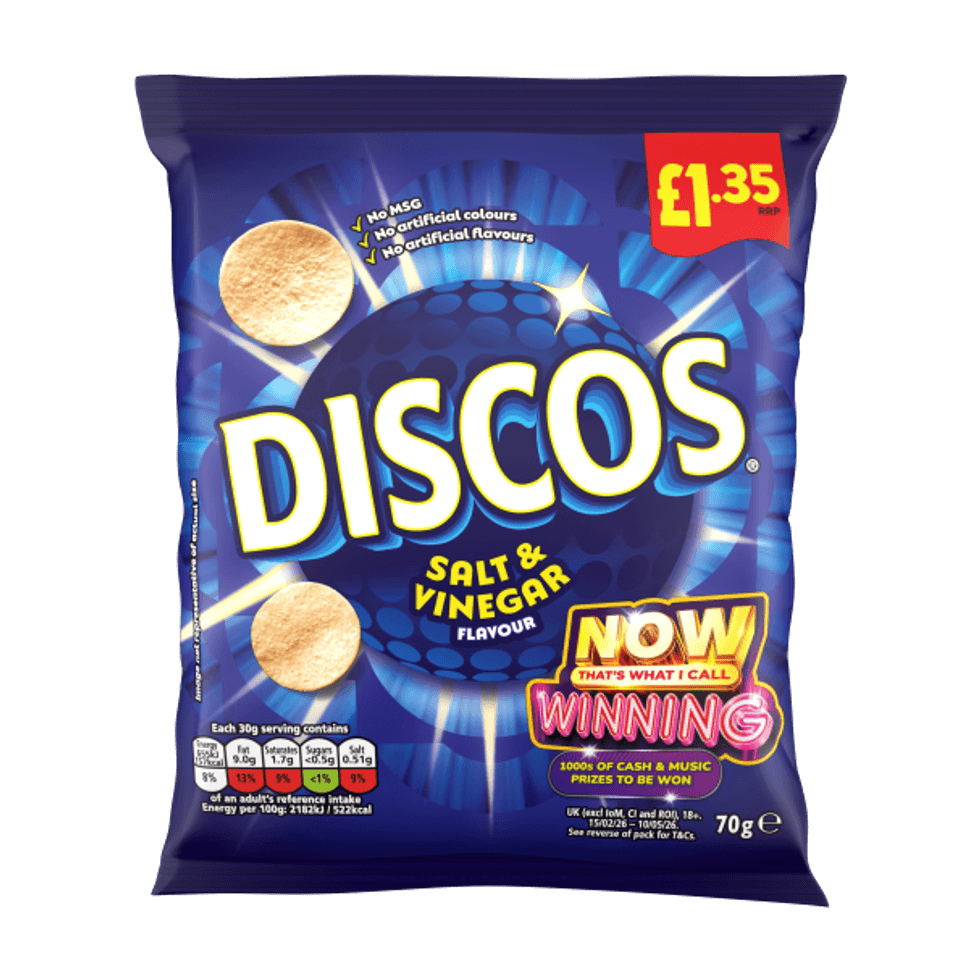 KP Snacks on-pack promo with Now That's What I Call Music Image: KP Snacks
Stuart Graham, Head of C&I and Value channel at KP Snacks, explains why, “With clear pricing and strong value perception appealing to cost conscious consumers, PMPs help retailers better serve shoppers at a time in which cost-of-living pressures still dictate consumer spending.”
KP Snacks holds a commanding 36.9 per cent share of the large PMP segment, with four of the top 10 best-selling SKUs coming from its portfolio, including Hula Hoops Big Hoops BBQ Beef, McCoy’s Flame Grilled Steak, Nik Naks Nice N Spicy and Big Hoops Salted.
“Our PMP portfolio features some of the best-selling CSN SKUs and spans a wide range of price points, from 40p to £1.35,” says Graham.
“Now more than ever, consumers are looking for products that represent great value for money. Retailers are telling us that their customers are actively seeking deals, and our PMP range is perfectly positioned to meet that demand.”
While value is the entry point, flavour still seals the deal. Snacks remain a category driven first and foremost by taste, with bold, punchy flavours continuing to perform strongly
“We recently launched Nik Naks Xtra Hot ‘N’ Fiery £1.35 PMP, the brand’s spiciest, boldest flavour yet,” he concludes.
Feeling nostalgic
Nostalgia is a powerful undercurrent: 78 per cent of consumers say the flavours they enjoyed as children remain favourites, hence brands are visiting their archives.
That is where products like Space Raiders come into their own. Positioned firmly around value, but backed by strong brand recognition, they continue to resonate with shoppers looking for affordable, familiar treats. Available in 50p PMPs, they remain the UK’s number one singles PMP, with flavours ranging from Pickled Onion to Saucy BBQ and Beef.
Last year, the Discos range saw the return of a fan-favourite flavour, Discos Pickled Onion, which hadn’t been on shelves since 2005. Delivering a sharp, zingy flavour, Discos Pickled Onion expands KP Snacks’ number two Everyday Value (EDV) brand, providing consumers with a classic flavour in a new format.
Earlier this year, Skips Salt & Vinegar made a long-awaited comeback af ter a decade, launching in a £1.35 PMP and 35g Grab Bag. The return taps into the demand for classic flavours in CSN, while delivering on the brand’s iconic light and melty texture.
And there is KP Nuts, perfect for consumers looking for a natural protein boost post-workout as well as an evening savoury treat.
This year, McCoy’s has also entered into the Tasty Nuts category with the launch of brand-new McCoy’s Coated Peanuts. Available in McCoy’s two most popular and iconic flavours, Flame Grilled Steak and Salt & Malt Vinegar, the new range, rolling into stores from mid-March, available in a £1.35 PMP, is sure to be an exciting addition to the category.
Pouring out value
If there is one category where PMPs are indispensable, it is soft drinks.
This is where price perception is immediate, visible – and unforgiving. Shoppers know what a can or bottle should cost and know when it feels off.
Soft drinks PMPs are worth £1.3bn [Nielsen], presenting a significant opportunity for indies. Sports and energy is also a key sector, delivering £86.6 million in value growth year-on-year, and contributing 82 per cent of all PMP growth within soft drinks.
CCEP has doubled down on PMPs across its large PET Coca-Cola bottle range, available across convenience.
The move sees reduced PMP pricing rolled out across key 1.75L and 2L formats, precisely the packs that anchor take-home missions
More broadly, around two-thirds of all soft drinks sold in convenience are PMPs, underlining the importance of clear on-pack pricing in the channel to drive visible value to the shopper.
The PMP bottles are available now across Coca-Cola Original Taste, Diet Coke and Coca-Cola Zero Sugar – including Coca-Cola Zero Sugar Cherry Float, a brand-new flavour innovation.
“PMPs are a proven driver of sales in independent convenience, offering clear value for shoppers and helping retailers sell more,” said Ruth Fawcett, Wholesale Associate Director at Coca Cola Europacific Partners in GB.
“Launching ahead of key sharing occasions like Easter, summer BBQs and major sporting moments including the FIFA World Cup, this initiative is designed to help retailers maximise sales when demand peaks.”
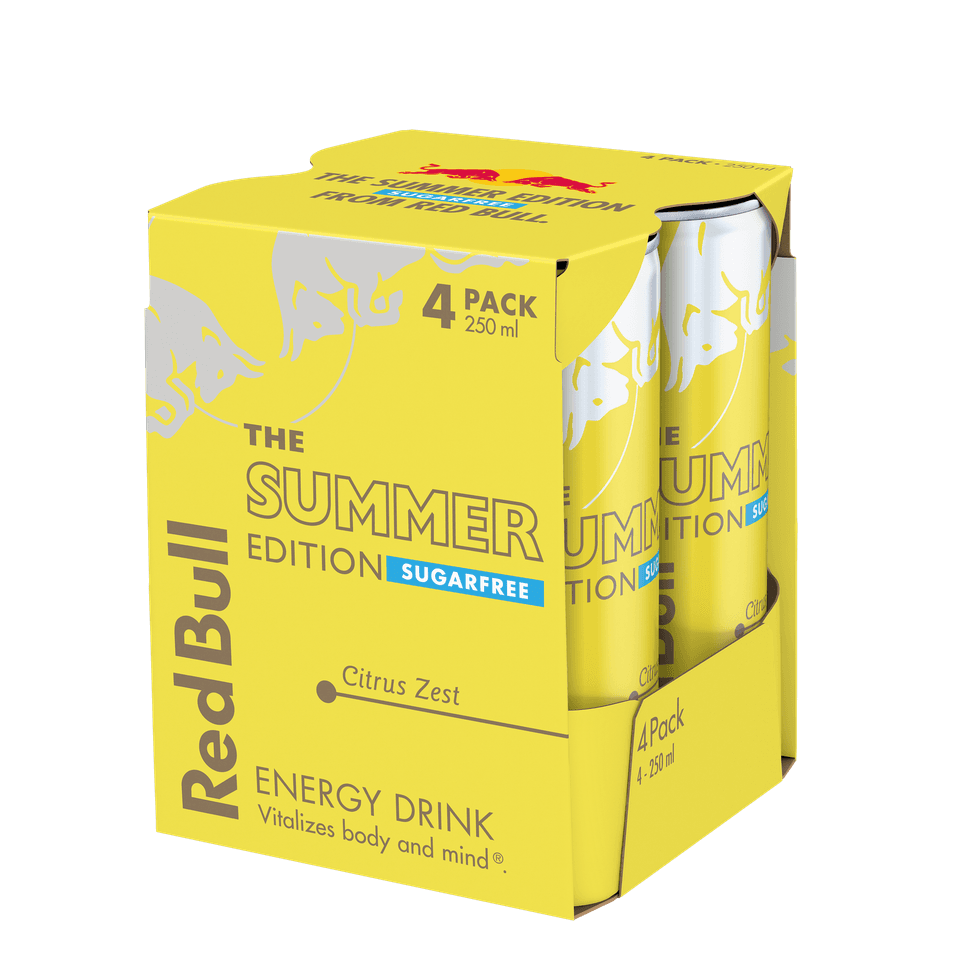 Red Bull launches new summer edition with Citrus Zest Image from Red Bull
That logic plays out even more strongly in energy drinks.
Here, PMPs are not just effective, they are also expected. Functional energy alone accounts for 62 per cent of sales through such formats, said a Red Bull spokesperson.Recently, Red Bull launched first ever Spring Edition: Cherry Sakura.
The brand has established a strong base using the 250ml can as the hero PMP format to drive trial.
Now, for the first time, the brand offers a 473ml Price-Marked Multipack on its editions range as well as 250ml. This maintains the entry point for new consumers as well as providing loyal shoppers the opportunity to trade up.
Beyond traditional soft drinks, PMPs are opening doors in emerging categories as well.
As the UK’s leading RTD protein brand with a 30 per cent market share, UFIT is at the forefront of the category. Its new PMP range is available across all UFIT 22g Protein 310ml bottles in core flavour shakes at £1.79 fixed price point.
Flavoured water is also following a similar path.
Last year, Radnor Splash entered the PMP space with an 85p price-marked bottle, using clear pricing to differentiate itself in a crowded, health-led segment.
“It’s the first time we’ve launched a PMP and we’re excited to see how it performs in the convenience sector offering great margins for wholesalers and independent retailers,” Simon Knight, Managing Director of Radnor Hills, said at the time of the launch.
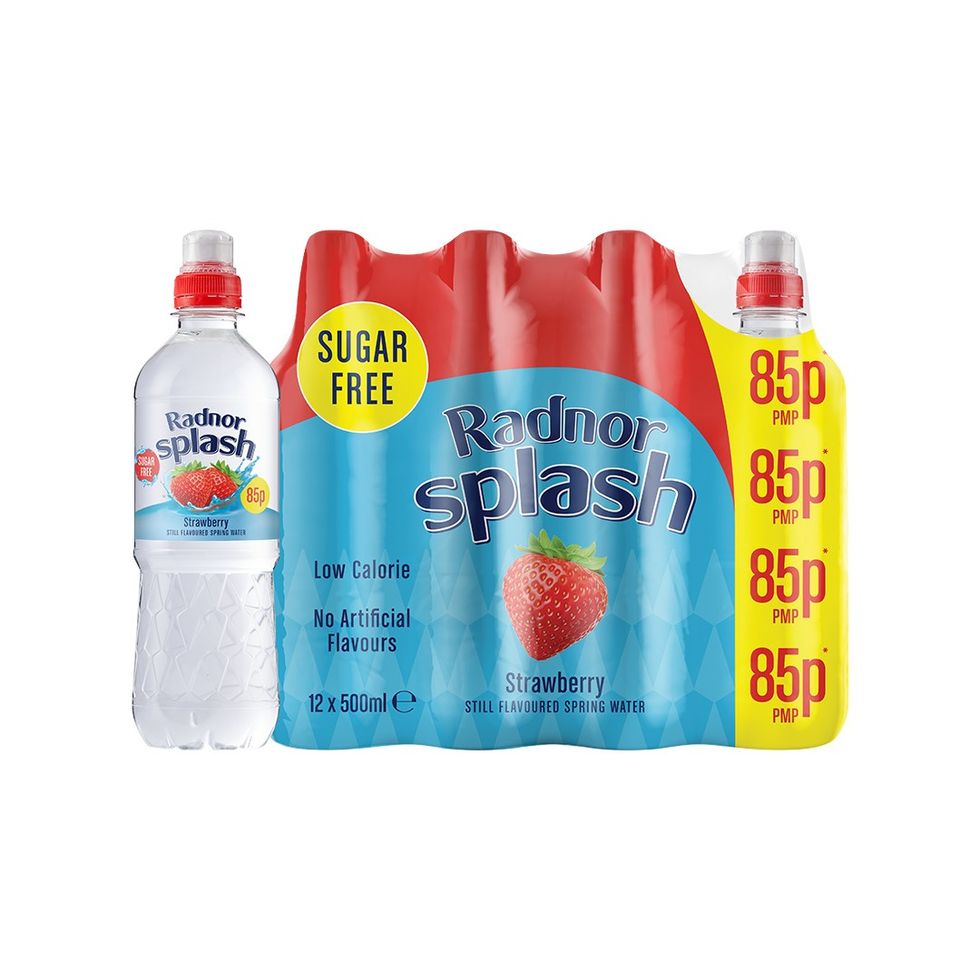 Radnor Splash PMP Radnor Splash
Upgrading its PMP offer in March this year, Radnor Hills launched high Profit on Return (POR) on the PMPs of its new juicy carbonated soft drink, Radnor Spring, now available in 12x500ml formats in a £1 PMP bottle, with POR.
Sweetening the deal
If snacks are driven by impulse, confectionery is driven by temptation.
A shopper might only be spending a pound or two, but they still want to feel they are getting a fair deal.
“In recent years, PMPs have become even more relevant as shoppers increasingly look for reassurance around price when making purchasing decisions,” said Lauren George, External Communications Manager at Mars Wrigley.
“Despite wider economic pressures and inflation affecting price points across the market, PMPs continue to perform strongly. Their ability to clearly signal value means they remain a trusted format for both retailers and shoppers.”
Mars Wrigley continues to support the convenience channel through a range of PMP formats across its confectionery portfolio.
One recent example is the return of Maltesers White Chocolate, available in a 54g treat-size PMP.
Another great addition to the convenience stores are Perfetti Van Melle’s eye-catching price marked packs that offers delicious treats at great price points.
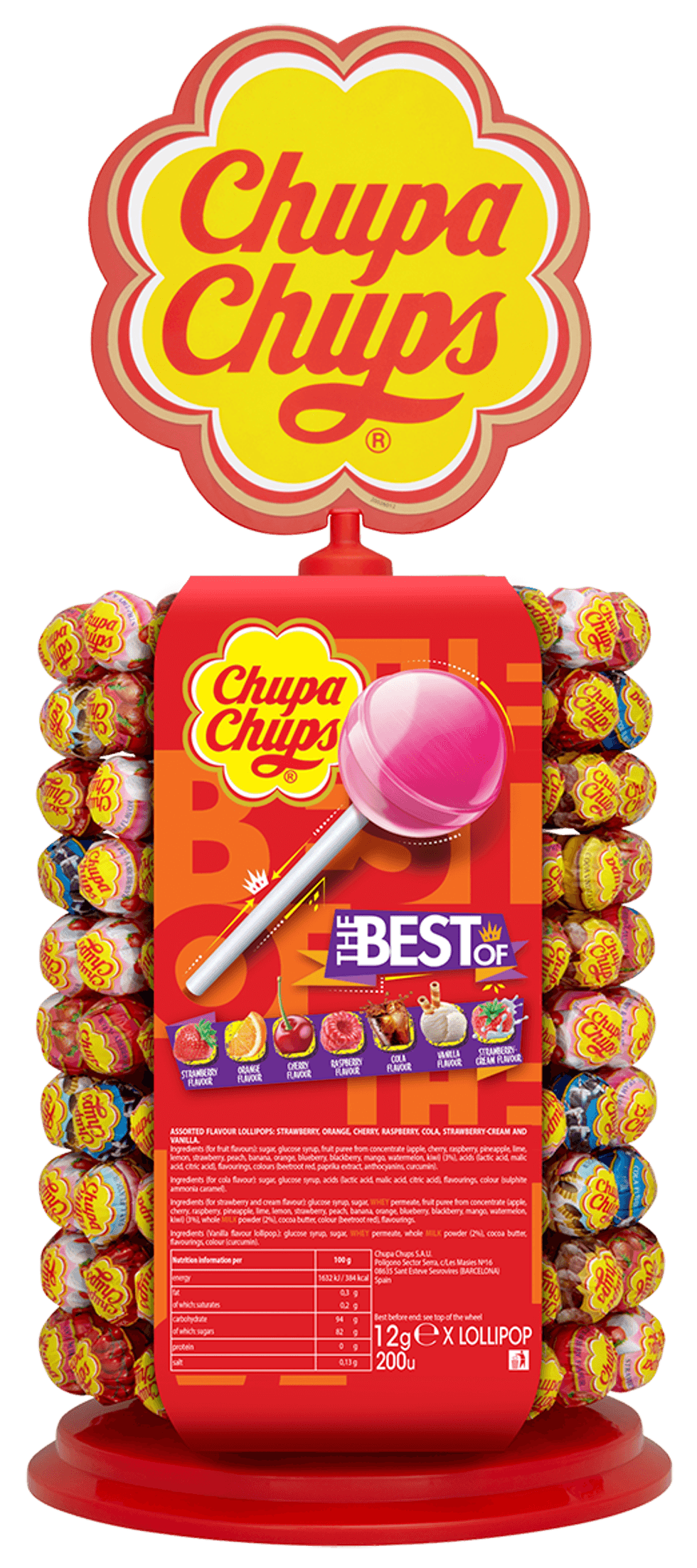 Perfetti Van Melle reach £100 million milestone www.asiantrader.biz
As Marketing & Trade Marketing Director Mark Roberts explained, innovation remains central to the strategy.
“Chupa Chups is targeting existing consumers who know and trust the quality of its products but want to experiment with new candy formats.
“Having forayed into the jellies space this year, the brand extended its sell-out range with new Chupa Chups Bites and Tubes. New Bites and Tubes are available in 120g PMPs, for the affordable price of £1.25, attracting Chupa Chups’ target audience of teens seeking affordable treats,” says Roberts.
The idea of PMP attracts many brands aspiring to make it big in convenience stores. Even brands that traditionally operated outside the format are beginning to shift.
The move by Tony's Chocolonely into PMPs is an example, with its launch of a flashed £2.25 bar.
Biscuit breaks
Biscuits, meanwhile, tell a similar story, but with a slight nuance. Here, PMPs are helping to bridge the gap between everyday treat and affordable indulgence.
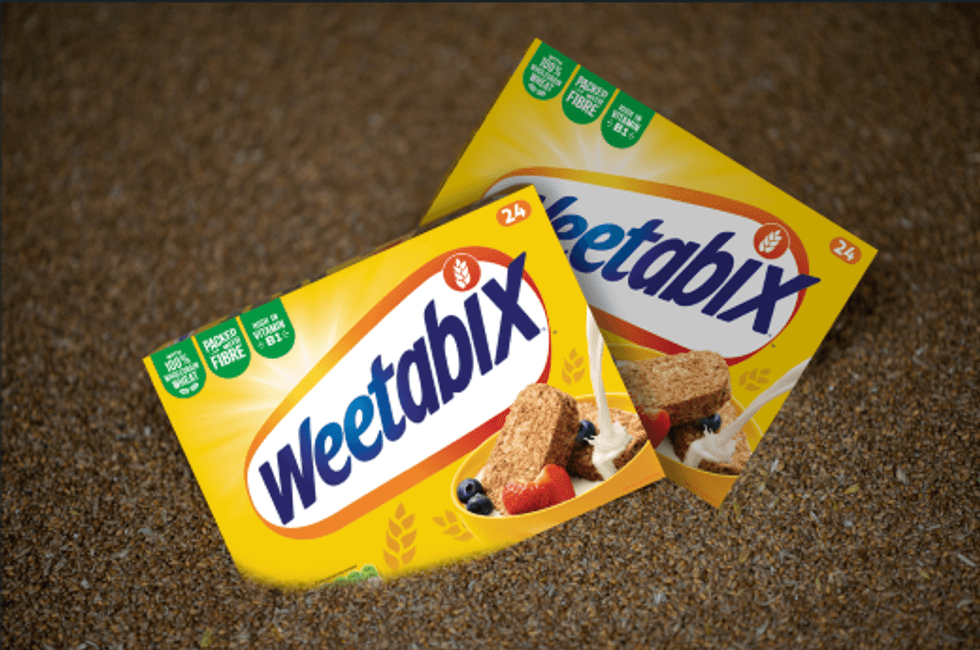
Products like Weetabix Crispy Minis Caramelised Biscuit, already a standout performer in the cereal category, are now being brought into PMP formats to build trust and encourage trial in convenience.
Weetabix Crispy Minis Caramelised Biscuit is now available in a new PMP edition for convenience retailers. The incredibly popular flavour that landed on shelf earlier this year is inspiring trust with this new pack marked at a £3.89 price point.
As Brand Manager Emily Crowe explains, the goal is to give retailers the confidence to stock, and shoppers the confidence to buy.
“Price marked packs are a brilliant way to inspire trust and drive sales. We believe the price-marked pack variant of our latest Crispy Minis variant will encourage more shoppers to try this delicious cereal.”
 Weetabix clears path to Net Zero Image: Weetabix Food Company UK & Ireland
Premium biscuits, in particular, benefit from this approach. Shoppers want them, but they still want to feel they are getting value. A clear price on pack speeds up that internal negotiation.
In convenience, Fox’s Chocolatey Rounds by Fox's Burton's Companies are a must-stock, being worth £1.3m and growing rapidly after launching in a PMP last year.
“There will always be a balance for retailers between stocking PMPs and non-PMPs as they strive to manage margins and keep their business healthy,” said Jo Harwood, Chief Sales and Trade Marketing Director at FBC.
“Premium-tier biscuits in PMP formats lend themselves to driving up basket spend and impulse purchases as shoppers want to easily and visibly see the price.
“It’s no surprise that PMPs in these formats are growing at 8.7 per cent YOY, whereas mid-tier biscuits in PMPs strike a balance between indulgence and affordability by offering a visible value-for-money proposition that makes ‘everyday treating’ more accessible for shoppers.”
Cheers to clear pricing
If PMPs build trust in impulse categories, in alcohol they unlock bigger baskets.
This is where the stakes are higher. Purchases are planned, spend is larger, and shoppers are far more conscious of what they are paying. In that context, PMPs anchor the entire decision.
The numbers reflect just how dominant PMPs have become. In the convenience channel, beer and cider PMPs are worth approximately £376m, accounting for 48.7 per cent of total category value sales. Drill down further, and the picture is even clearer, with PMPs holding a 48.4 per cent share in beer and 50.3 per cent in cider.
It is wise for retailers to stock PMPs, especially multi-packs, in the beer section, where multi-pack formats play a central role in take-home occasions. That is where the right PMP range does its best work.
As Alexander Wilson, Category & Commercial Strategy Director at HEINEKEN UK, says, “Retailers should stock up on small- and mid-sized packs to ensure they are catering to all occasions.
“All pack formats in beer and cider experience a massive jump in sales during peak seasons, including summer occasions, such as sporting events and festivals, alongside Christmas and New Year, where premium nights in come into the spotlight.”
The bestselling HEINEKEN UK PMPs are Cruzcampo (4x568ml), Fosters 4 x 568ml, Strongbow Original (4x440ml) and Inch’s Medium Apple (4x440ml).
HEINEKEN UK is introducing a brand-new variant from the UK’s fastest growing beer brand, Cruzcampo. Cruzcampo Sevilla Orange, a crisp and refreshing 3.3% ABV available across grocery and convenience channels in a 4x440ml can format.
It is also launching Inch’s Reserve, a premium apple cider with the recognisable signature apple-y taste of Inch’s Medium, but elevated for sipping and savouring.
The balance between value and trade-up is also playing out in craft brews.
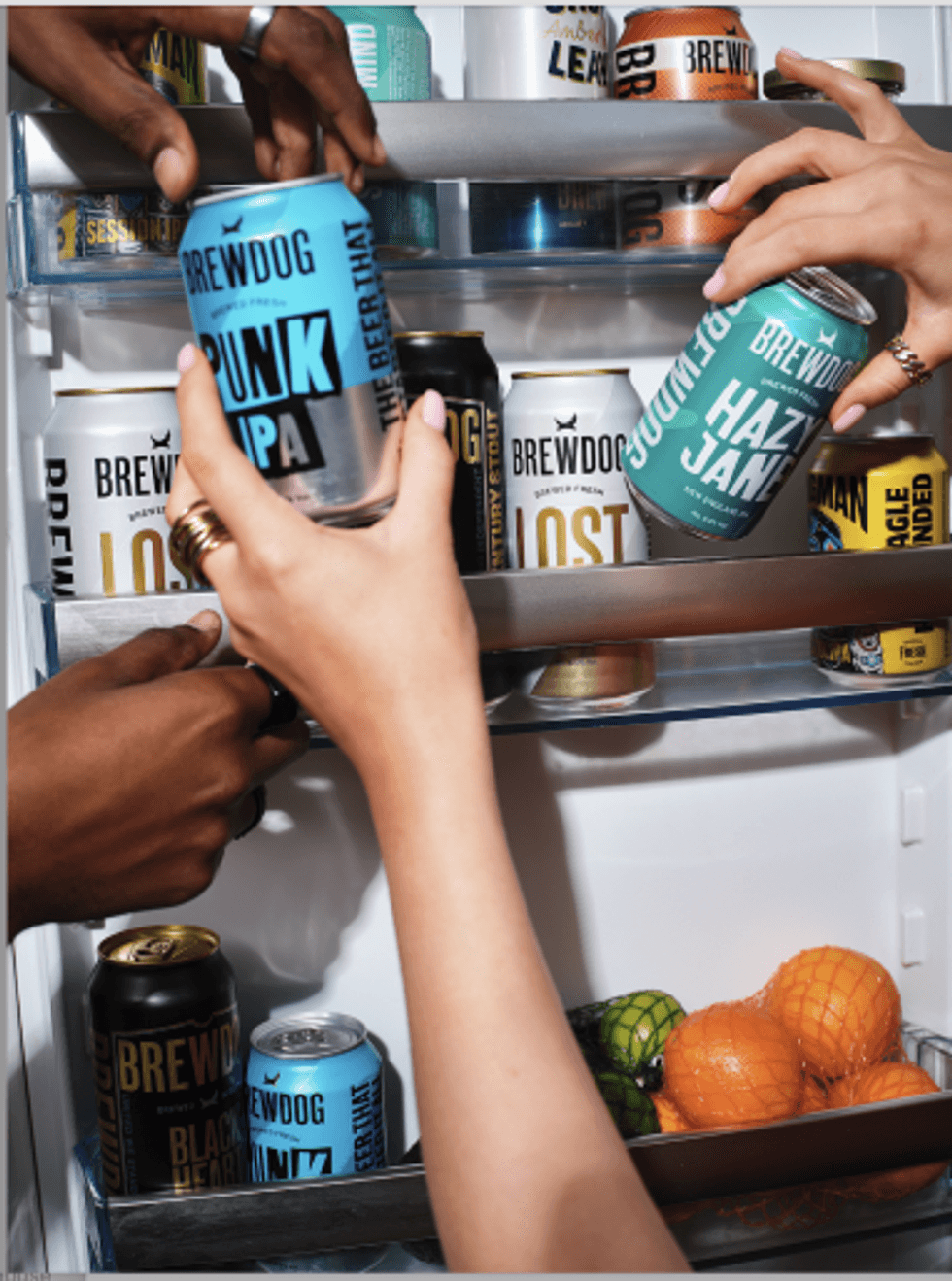 Image: BrewDog
Following the success of its headline price-marked four-pack launch last year, BrewDog has also extended its PMP range, with its Lost Lager and Cold Beer pint can 4-pack PMP.
Cold Beer (3.4% ABV) is be price-marked at just £5.49 for 4 x 568ml cans, and BrewDog Lost Lager (4.5% ABV) also for 4 x 568ml cans, price-marked at £7.25 – and both are both available across the convenience channel now.
Riding the PMP wave, CCEP launched PMPs for its Jack Daniel’s and Coca-Cola alcohol ready-to-drink (ARTD) range in 2024 to help convenience retailers provide visible value to shoppers and drive sales.
The 330ml price-marked cans of Jack Daniel’s and Coca-Cola Original Taste and Jack Daniel’s and Coca-Cola Zero Sugar will roll out across GB from today with a price-mark of £2.39.
Quick bites, clear prices
If PMPs drive impulse at the front of store, in meals they do something more deliberate.
This is where shoppers pause, even if only briefly. The mission may be quick, such as food to go or meal for tonight, but the expectation is clear: it has to feel worth it.
Rustlers, the £109m chilled ready-meals brand from Kepak, has built much of its convenience success around that exact proposition, value that is visible, immediate and easy to understand.
As Ross Davison, Head of Convenience at Kepak Foods Division, explains, the strength of PMPs lies in how naturally they fit into the products that weren’t originally on their shopping list.
“With Rustlers catering to the food-to-go, meal for tonight, big night in and top up shopper missions, secondary sitings of Rustlers PMP’s in high footfall areas will also boost impulse sales.
“The days when price-marked packs appealed primarily to people on modest budgets are long since gone,” adds Davison. “PMPs help to attract new customers, boost overall basket spend and encourage repeat purchase among both brand loyalists and those consumers looking for value-priced products which don’t compromise on quality.”
The appeal of Rustlers PMPs has been boosted by a recent brand refresh which has improved the clarity of messaging on pack, driving clearer differentiation between Rustlers Burgers, Sandwiches and Subs.
The opportunity extends beyond chilled.
Frozen, in particular, is benefiting from the rise of “meal for tonight” missions, where shoppers are looking for quick, no-fuss solutions. In these moments, decision-making is compressed, and clarity becomes critical.
That is where PMPs come into their own again.
 Dr. Oetker Classic Pancake Mix PMP Photo: Handout
According to Amanda Barker Convenience Strategy & Activation Manager at Dr Oetker, PMPs help boost sales by clearly communicating price, building trust, and encouraging footfall.
Barker points out, “PMPs reduce the perception that convenience stores are more expensive, which is especially important for independents with limited marketing budgets.
“Their ability to stand out on-shelf and signal clear value remains particularly powerful in convenience settings, where shoppers are often time-pressed and making quick decisions.”
In symbols and independents, Chicago Town remains the number one brand, with nine out of ten products sold through wholesalers being price-marked, demonstrating that convenience retailers clearly see the value of stocking PMPs in-store.
PMPs are also effective in ambient categories.
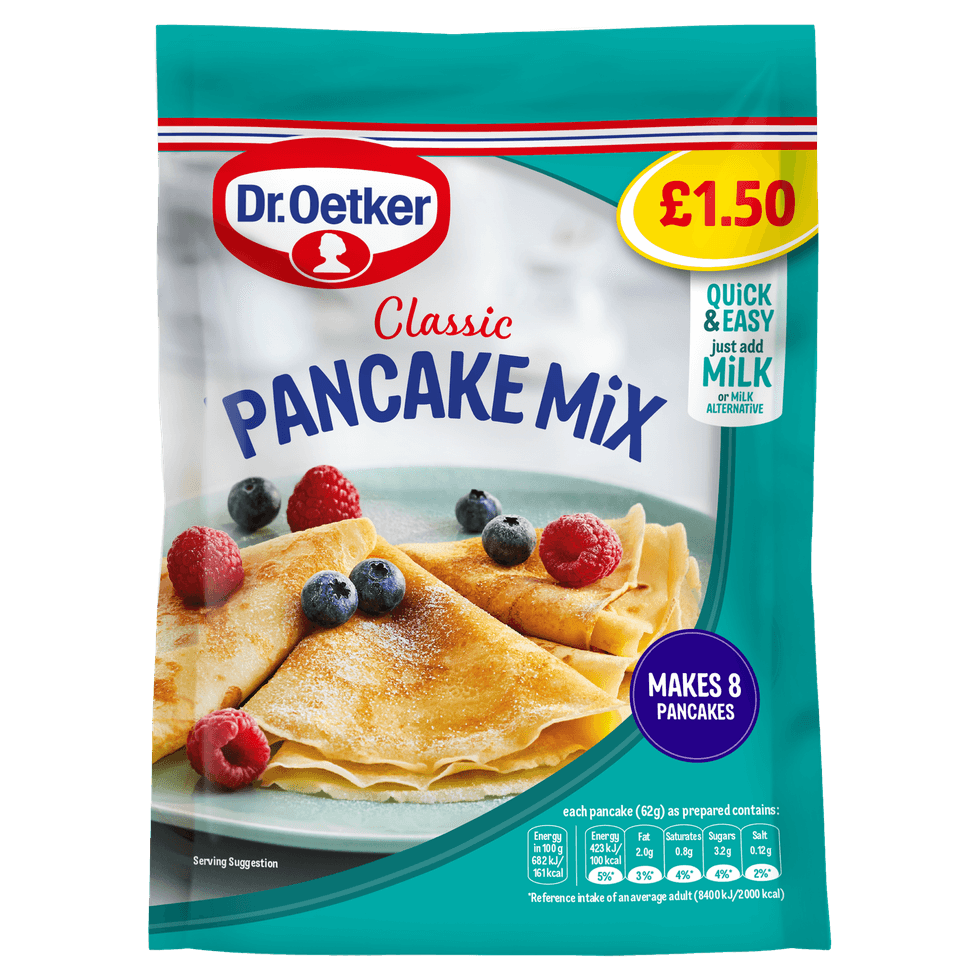
Barker says, “This year at Dr. Oetker launched we launched our first PMP pack in the Baking Category – Classic Pancake Mix in time for Pancake day in February.
“With Pancake Day the biggest baking event in convenience, and many purchases distress driven, the Dr. Oetker Classic Pancake Mix PMP helped convenience retailers capitalise on this occasion.”
Making PMPs work
The most straightforward strategy is also the most effective: ensuring your best-selling lines in the most price-sensitive categories are available in PMP format.
PMPs are twice as likely to be picked up on impulse when placed in high-traffic areas. A PMP on a shelf at eye height in the main bay performs well.
George from Mars Wrigley puts it clearly, “Visibility is key when it comes to maximising the impact of PMPs.
“Retailers should consider placing price-marked confectionery in prominent impulse locations, such as near the checkout or at the end of aisles, where shoppers are most likely to make spontaneous purchasing decisions.
“Secondary displays, including shippers or free-standing units, can also help highlight PMP ranges and attract attention in high-traffic areas of the store.”
Retailers may also benefit from cross-merchandising products linked to common occasions, like placing sharing bags near drinks or snacks to encourage additional purchases.
As Barker points out, PMPs are a tool for independents to compete with larger retailers.
“By clearly displaying price, they give shoppers confidence that they are getting a fair deal, helping to challenge the perception that convenience stores are more expensive.
“They also act as a visible value signal on shelf, often being interpreted as a promotion, which can capture shopper attention, help drive sales and increase shopper trust,” she says.
“PMPs also offer operational advantages to independents as there is no need for constant price changes, or shelf-edge-labelling updates. They also result in fewer questions being asked of staff updates at the till."
Trust matters
Supermarket price wars signal that competitive intensity will only grow. For convenience retailers, this makes the PMP proposition even more important.
Manufacturers are doubling down as well.
The pipeline of new PMP launches across 2025 and 2026 – from Tony's Chocolonely's debut format to KP Snacks' expanded McCoy's range, to Radnor Splash's first-ever price-marked bottle – signals that brands across the value spectrum now regard PMPs as the default convenience format.
When it comes to the convenience channel, PMPs clearly rule the roost in small and mid-sized stores. But they do come at a cost.
PMPs offer value perception to customers, but they also squeeze their margins, especially on high-cost categories, say some retailers.
While plain pack branded products usually deliver 30 per cent to convenience retailers, the PMP lines mostly slash it to 15-20 per cent. This is in stark contrast to the own labels that mostly offer 33 to 40 per cent margin and even fresh produce that comes with up to 35 per cent margin.
John Kinney, Managing Director at Unitas Wholesale, has been clear on where responsibility lies. Brands, he argues, need to revisit PMP margin strategies to maintain retailer support and prevent a shift back towards straight packs.
It is a debate that is unlikely to disappear. But neither is the format.
Even as price points move beyond traditional thresholds like £1, the core appeal of PMPs remains intact. Research from TWC shows that 78 per cent of retailers still believe PMPs demonstrate good value for money to shoppers.
That perception continues to carry weight.
Shoppers want to feel they are paying a fair price. Retailers want to sell more, more often, without losing trust. PMPs sit squarely in the middle of that equation.
In the end, PMPs are not really about price. They are about trust. And for convenience retailers, that is the one currency that never goes out of stock.