



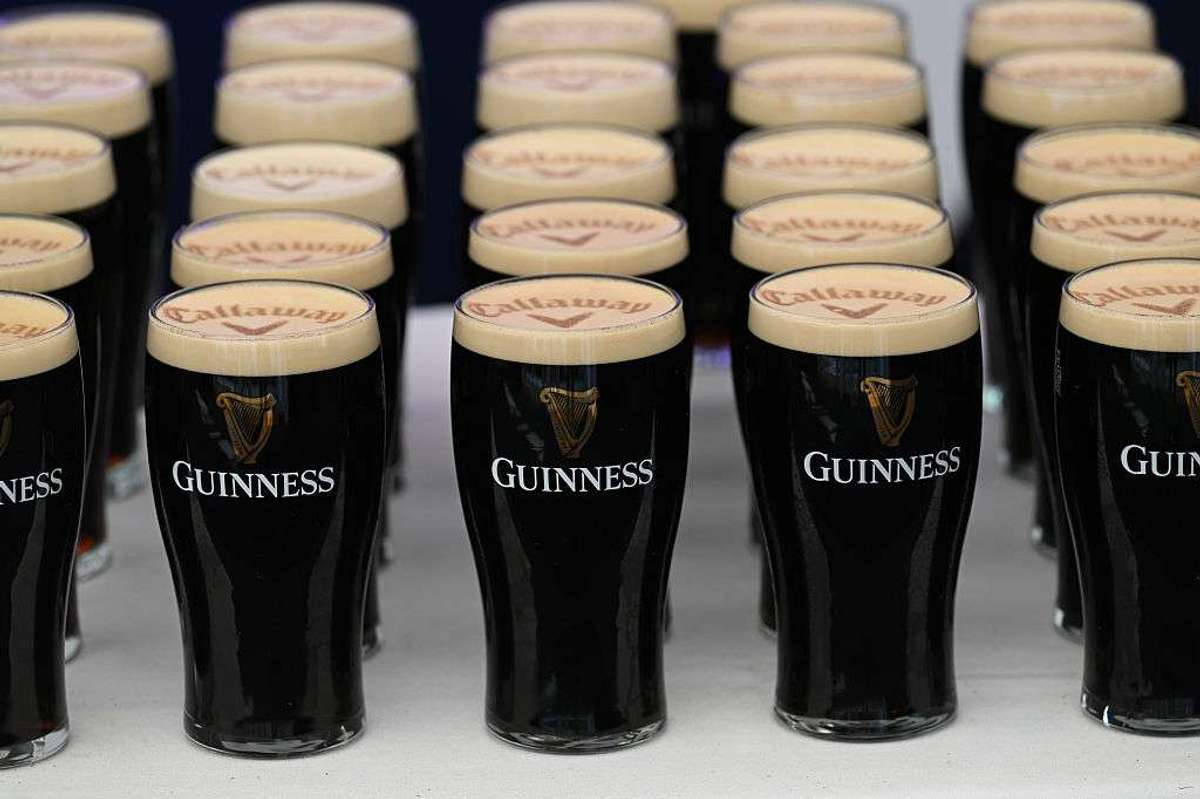

Diageo reported a strong performance in Britain during its 2026 financial year, with double-digit growth for Guinness helping offset weaker spirits sales, as the drinks giant outlined plans to return to sustainable growth through a major cost-saving programme.
In its preliminary results for the year ended 30 June 2026, the company said Britain delivered 2.9 per cent organic net sales growth, driven primarily by double-digit growth for Guinness.
Guinness continued to gain share in the on-trade and significantly outperformed the wider beer category, while Guinness 0.0 recorded double-digit growth in both volume and net sales, reinforcing its position as Britain's fastest-growing non-alcoholic beer.
Across Europe, organic net sales rose 3.4 per cent, supported by strong performances in Britain and Türkiye, while organic operating profit increased 15.7 per cent as cost efficiencies and targeted pricing initiatives boosted margins.
Group-wide, however, Diageo reported net sales of $19.6 billion (£14.5bn), down 3.0 per cent on a reported basis, while organic net sales fell 2.0 per cent. Operating profit declined 27.2 per cent to $3.16bn, largely reflecting restructuring costs and impairment charges, although operating profit before exceptional items increased 2.0 per cent.
The maker of Don Julio tequila and Smirnoff vodka took a $1.5-billion impairment on its operations largely related to Türkiye, which has been hit by hyperinflation.
It also took a writedown on its Don Papa rum brand, with profits hit also by restructuring charges.
The latest annual performance was impacted by weak sales in North America despite businesses stocking up ahead of the World Cup matches held in the US, Canada and Mexico that ended last month.
Diageo, whose brands include Johnnie Walker whisky and Baileys liqueur, said it saw weakness also in the Asia Pacific market, which offset growth in Europe, Latin America and the Caribbean as well as across Africa.
“We are focused on recovering our competitiveness in [North America] and we are working through the consequences of government policy in Chinese white spirits,” chief executive Dave Lewis said.
China last year banned alcohol at official events, affecting Diageo's brand of baijiu, a popular liquor.
Target $1 billion in savings
Alongside the results, Diageo used its Capital Markets Day to set out plans to build “a more competitive business”, targeting around $1 billion in cost savings over the next three years through changes to its operating model and supply chain. The company said approximately $850m would come from redesigning its operating framework and a further $150m from supply chain initiatives.
For the 2027 financial year, Diageo expects broadly flat organic net sales growth, with low- to mid-single-digit organic operating profit growth and around $2bn in free cash flow after exceptional restructuring costs. Over the medium term, it is targeting low-single-digit annual organic net sales growth and mid-single-digit organic operating profit growth.
Lewis said the new strategy and operating model would allow Diageo to strengthen its premium portfolio while reaching more consumers across different drinking occasions.
“This new strategy, executing with a new, more agile, competitive and cost-effective operating model, gives us confidence that we can return Diageo to a business consistently creating value for shareholders,” he said.
“We remain a business with a very strong premiumisation agenda, but by activating our wider portfolio, we will be able to serve more consumers, across a variety of occasions.”
Diageo's share price jumped seven percent to top London's top-tier FTSE 100 as investors welcomed news of further planned cuts to costs.
“There is hard work ahead, particularly in North America, where improving performance is a clear priority, but we are confident we can deliver without taking a step back in operating profit,” Lewis said.
Lewis, a former CEO of British supermarket giant Tesco, had in January replaced Debra Crew, who struggled against weak sales in the US and China amid president Donald Trump's tariffs onslaught.