



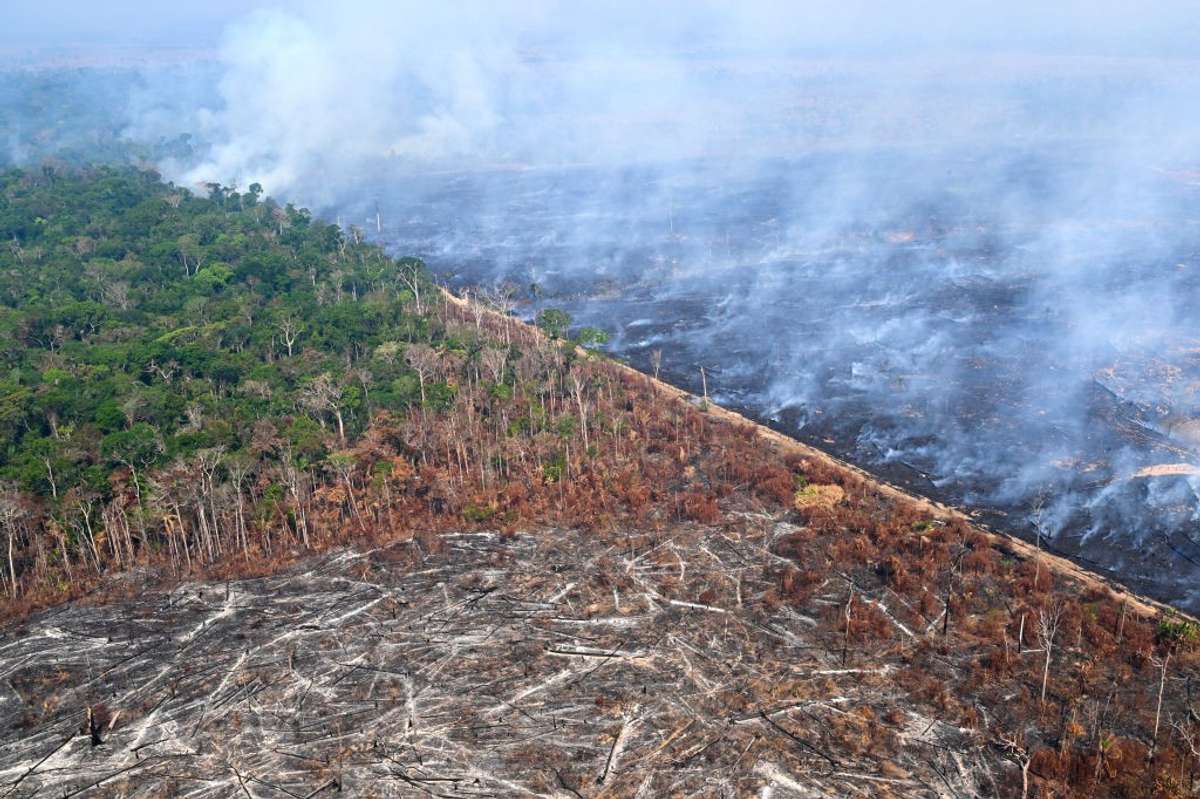

Retailers and suppliers could face new due diligence requirements under government plans to crack down on products linked to illegal deforestation in global supply chains.
Announced during the ongoing London Climate Action Week, the proposed measures would require businesses trading in commodities such as soy, palm oil, cocoa and rubber to check that their supply chains are not contributing to illegal deforestation.
The commodities are widely used in everyday consumer goods sold across the retail sector, including chocolate, confectionery, cooking oils, bakery products, cosmetics and personal care items.
The government said it will consult later this year on introducing mandatory due diligence requirements in Britain using powers under the Environment Act, alongside measures to strengthen the UK Timber Regulation.
Ministers said the proposals would improve the transparency, traceability and resilience of UK agricultural commodity and timber supply chains, while helping consumers avoid inadvertently supporting rainforest destruction through their purchasing choices.
According to government figures, around 90 per cent of global deforestation is driven by agricultural expansion, much of it linked to internationally traded commodities. UK consumption of these goods was associated with an estimated 29,000 hectares of deforestation worldwide in 2023, generating around 9.4 million tonnes of carbon emissions.
Nature minister Mary Creagh said the move would help businesses scrutinise their supply chains and reduce links to illegal deforestation.
"Tackling global deforestation is one of the most effective ways we can address climate change and protect some of the world's most unique and precious wildlife," she said.
"Eliminating products linked to illegal deforestation not only helps to protect precious ecosystems but is good for our collective resilience and long-term prosperity."
The retail industry broadly welcomed the announcement, with the British Retail Consortium arguing that regulation would help support existing commitments made by retailers to remove deforestation from their supply chains.
Andrew Opie, director of food and sustainability at the British Retail Consortium, said: "Retailers welcome today's announcement. We have long called for UK deforestation regulation as an important step in driving forest conservation across retail supply chains in line with business commitments, while supporting alignment with the EU where possible to avoid unnecessary costs and complexity for retailers and their customers."
However, he warned that implementation would need to be handled carefully to avoid disruption as new rules come into force.
The consultation is expected to propose that Britain's regime covers the same core commodities and information requirements as the EU Deforestation Regulation, which will begin applying in Northern Ireland from December 2026 under the Windsor Framework.
The government said aligning requirements across the UK would help minimise administrative burdens and support smooth trade with the EU by creating consistent data and traceability standards.
The government said its longer-term ambition is to move towards a fully deforestation-free standard for relevant products, building on efforts across global supply chains to decouple agricultural production from forest loss.