




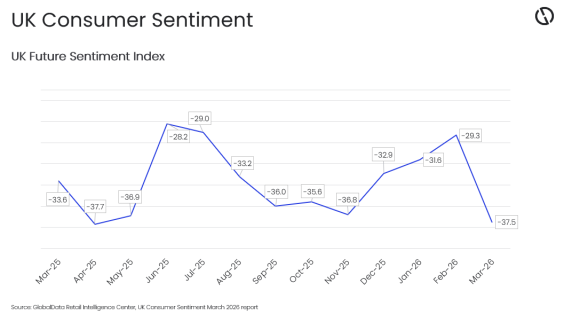
UK future consumer sentiment fell 8.2 points in March, the sharpest month‑on‑month drop since the first UK lockdown six years ago, signalling that rising uncertainty caused by the Middle East conflict could further strain an already pressured UK retail sector.
GlobalData’s latest sentiment data, collected at the beginning March, immediately after US and Israel strikes on Iran began, indicates that UK consumers are worried about the impact on the UK economy with 63.3% expecting the economy to worsen over the next six months.
GlobalData’s latest monthly UK Consumer sentiment report published in March 2026 reveals that UK consumer sentiment has slumped below the levels seen around the budget announcement in November 2025.
This highlights that those in the UK fear the impact of worsening international relations even more so than when they expected potential tax changes in the UK.
Sofie Willmott, Associate Director of Retail at GlobalData, comments: “The significant fall in consumer confidence will be a real concern for UK retailers who have faced years of challenges post-COVID and will have been hoping to see consumer sentiment rise in 2026.
"Uncertainty around the economy and their personal finances is likely to lead consumers to pull back on discretionary spending causing more pain for struggling non-food retailers."
Almost half of UK consumers now expect a rise in interest rates this year and although this will benefit savers, it adds more pressure for mortgage holders who are coming to the end of fixed term deals, first time buyers trying to secure deals and those intending to move house.
Willmott continues, “The Middle East war has triggered a change in direction for UK interest rates which will encourage more affluent consumers to continue saving, rather than spending on retail.
"It will also mean more of consumers’ monthly outgoings will be swallowed up by interest paid on mortgages, as borrowers change deals, once again diverting funds that could be spent on retail products.”
The initial shock of the conflict may ease over time, softening the impact on consumer confidence and in turn retail spending, but until there is an end to the war, some level of uncertainty will remain and will put UK consumers off making big financial decisions.
"Weak consumer confidence in 2026 will hinder retail spending and while some level of uncertainty remains, shoppers are likely to focus their buying on essential products like groceries and health & beauty items," Willmott concludes.