



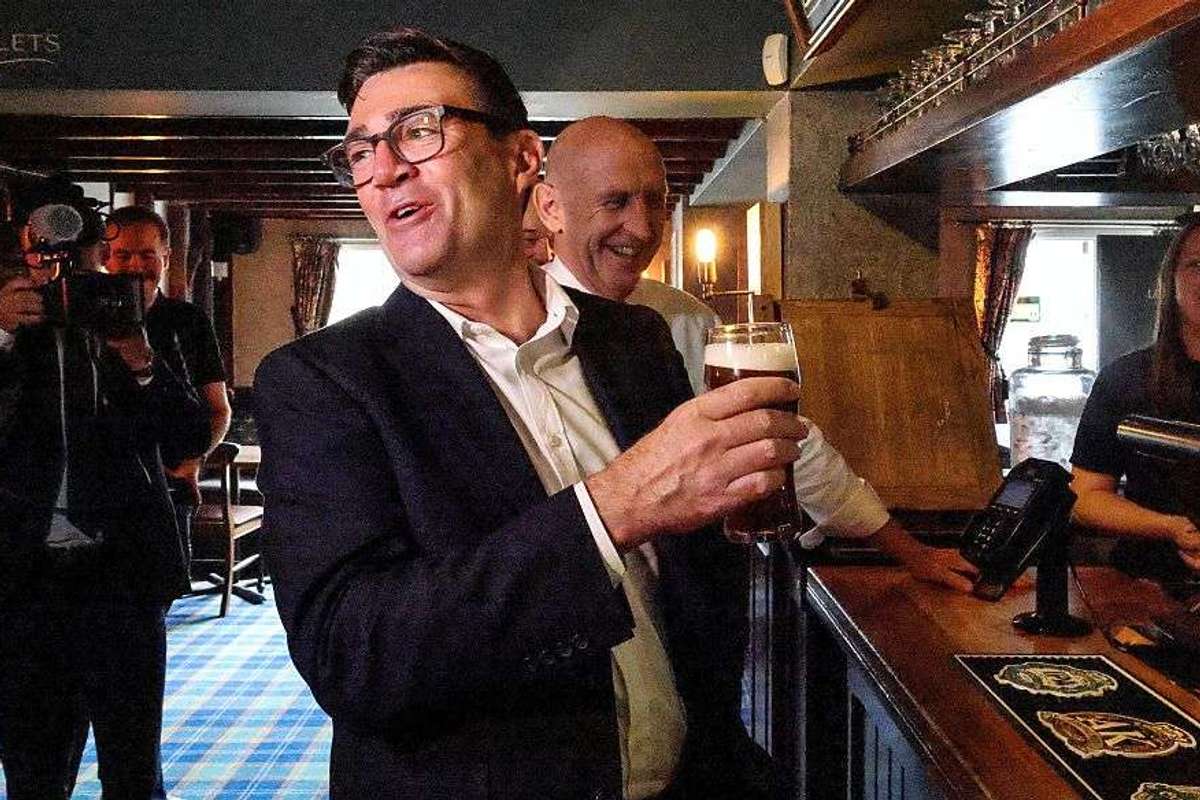

Prime minister Andy Burnham has pledged a “new offer” to British businesses, promising to reduce costs, reform business rates and give firms a stronger voice in policymaking, following his first meeting with leading business representative organisations.
In calls held on Friday (24 July), Burnham spoke with organisations including the CBI, British Chambers of Commerce, Federation of Small Businesses, Make UK, Small Business Britain and Startup Coalition, outlining what the government described as a fresh partnership aimed at driving investment, job creation and economic growth.
The organisations collectively represent hundreds of thousands of businesses, ranging from large manufacturers and employers to start-ups, high street firms and small businesses.
Acknowledging that many businesses have felt overlooked by previous governments, Burnham said his administration would act as a “circuit breaker” by creating a more supportive environment for businesses to invest and grow.
The government's new approach promises greater policy certainty, clearer long-term direction, faster decision-making and a stronger business voice. It also includes plans to devolve more economic decision-making to local communities in a bid to accelerate investment and regeneration.
For retailers, Burnham highlighted measures announced earlier this week, including a 20 per cent business rates relief for pubs, clubs and music venues from April 2027, describing it as an early signal that the government is “on the side of Britain's businesses”. He also reiterated a commitment to reform the wider business rates system and reduce barriers to hiring and investment.
The prime minister said he wanted businesses to work more closely with government on tackling youth unemployment, addressing skills shortages and improving living standards.
“For too long, businesses have been carrying the burden of rising costs while working people have paid the price. We’ve all seen the consequences on our high streets with boarded-up shops, struggling local businesses, and employers feeling like they haven’t been heard across Whitehall,” Burnham said.
“We'll bring down costs, reform business rates and use the power of government to back British business. We'll listen, we'll act and we'll give firms the backing they need to reindustrialise Britain.”
The government also reaffirmed its intention to strengthen international trade relationships despite fresh US tariffs announced on Friday, pointing to its recently agreed Economic Prosperity Deal, which it said maintains zero tariffs on UK whisky and medical technology exports.
Ministers also pledged to deliver workers' rights reforms in partnership with employers and trade unions, while using public procurement to support British businesses, apprenticeships and skills.
Michelle Ovens, founder and chief executive of Small Business Britain, welcomed the discussions, particularly the focus on small business growth and youth employment.
“It was heartening to speak with our new prime minister today, and to see small business growth and helping young people so high on his agenda,” she said.
Ovens said small businesses across the UK had no shortage of ambition but needed more tailored support and greater consideration in policymaking.
She added that stronger business skills programmes, delivered jointly by the public and private sectors, could help tackle youth unemployment by encouraging entrepreneurship.
“Small businesses and those with an entrepreneurial drive provide vital growth in their local communities, which in turn boosts the national economy. We look forward to seeing the positive impact of these proposals,” she said.