



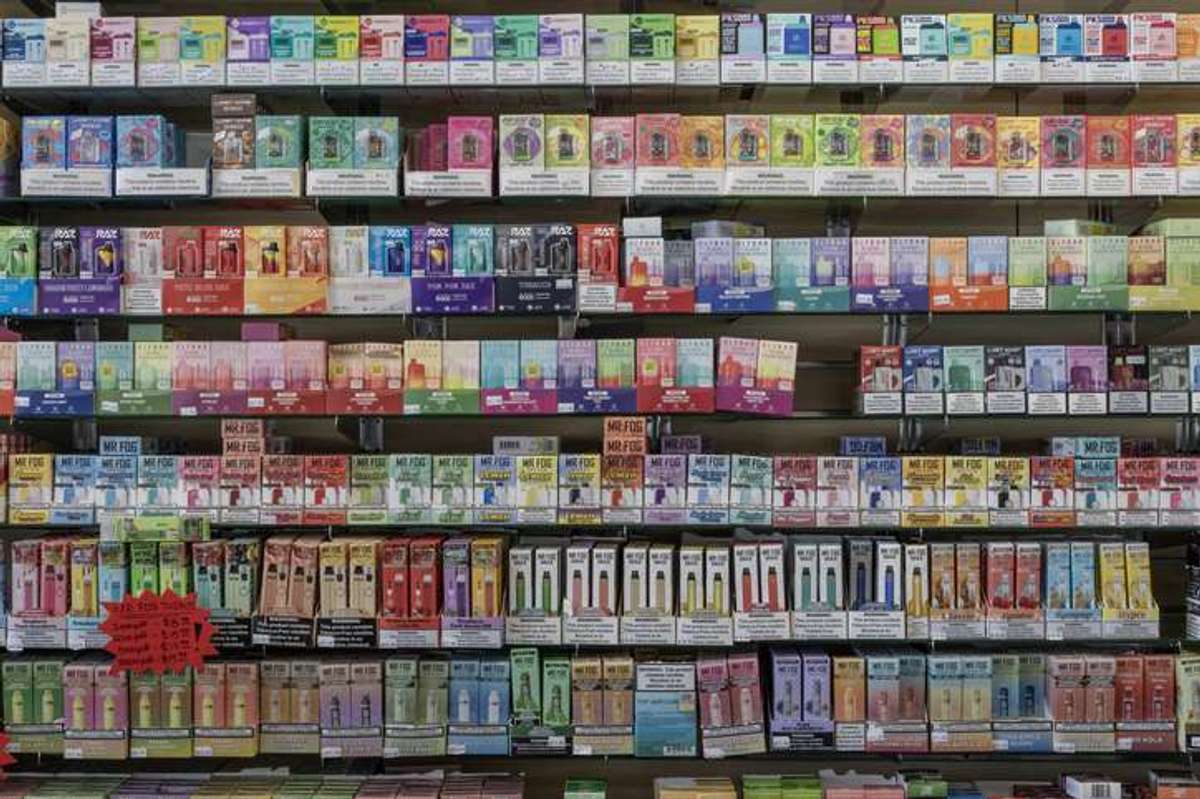

Sales of “big puff” vapes have soared 70 per cent since the disposable vape ban, sparking fresh fire fears, a leading fire safety expert today warns.
After the government banned the sale of disposable vapes in 2025, so-called big puff devices - which produce a minimum of 1001 smokes or the same as roughly five packs of cigarettes - have sky-rocketed in popularity.
Now experts warn the disposable vapes ban has had no impact on consumption, with producers exploiting regulation loopholes to flood the market with big puff alternatives.
According to new industry analysis, 6.5 million ml of big puff vape liquid was sold in January 2025, rising to approximately 15.5 million by May 2026.
In comparison, sales of disposable vape liquid fell from 6.7 million ml in January 2025 to almost zero over the same period.
The surge has also sparked fresh fears over the risk of fires caused by the device’s larger lithium batteries - despite the ban being introduced in part to combat waste blazes.
Laurie Pollard, Managing director of Firechief Global, which supplies fire blankets and extinguishers to the NHS and London Underground, said: “Since disposable vapes were banned, higher-capacity big puff devices have become far more popular, and the fire risk has risen with them.
“Fires that start with lithium batteries are usually rapid and often explosive. Devices offering more than 1,000 puffs need larger batteries than standard vapes, and those bigger batteries are more likely to cause severe fires that are harder to control.
“Thrown away incorrectly, these devices become a serious fire hazard, as the sharp increase in reported fires in waste processing facilities shows. People need to understand these risks, and policymakers have an essential role in managing them.”
According to the latest data from Material Focus, 6.3 million vapes are being thrown away every week and “fires in bin lorries and waste and recycling centres are continuing to cause major problems” - despite Labour’s disposable ban.
Scott Butler, Material Focus’ Executive Director, said following the release of its fourth Vape Research report: “The vapocalypse continues, as we see a rise in battery fires in bin lorries and at waste and recycling centres across the UK.
“The single-use vapes ban has had an impact, but 6 million vapes and pods are still being thrown away a week and this is still a massive waste of valuable materials and a major fire risk.”
Meanwhile recycling company Suez has revealed there were 670 recorded fires across its UK sites in 2025, with 368 confirmed to be caused by batteries or vapes and 176 suspected to be linked to the devices.
Operations manager Steve Daniels warned that since the disposable ban Suez is processing more and more big puff vapes, with larger batteries.
Cllr Dr Wendy Taylor MBE, Chair of the Local Government Association’s Health and Wellbeing Committee, defended Labour’s disposable vapes ban, but admitted taxpayers are carrying the cost of fires caused by the millions of vapes disposed of incorrectly each week.
She said: “A year on [from the ban], the volume of vapes in our bins has dropped, but industry has moved faster than regulation – the products causing fires in our bin lorries today are effectively the same disposables in a different shell.
“Councils are bearing the cost of contaminated recycling and dangerous fires, with residents ultimately paying through council tax instead of producers and retailers.”
She added: “Year one of the ban has shown what regulation alone can achieve. Year two must focus on enforcement, producer responsibility, and closing this industry loophole to keep rechargeable vapes out of our waste system, preventing further fires and reducing unnecessary local resource drain.”