



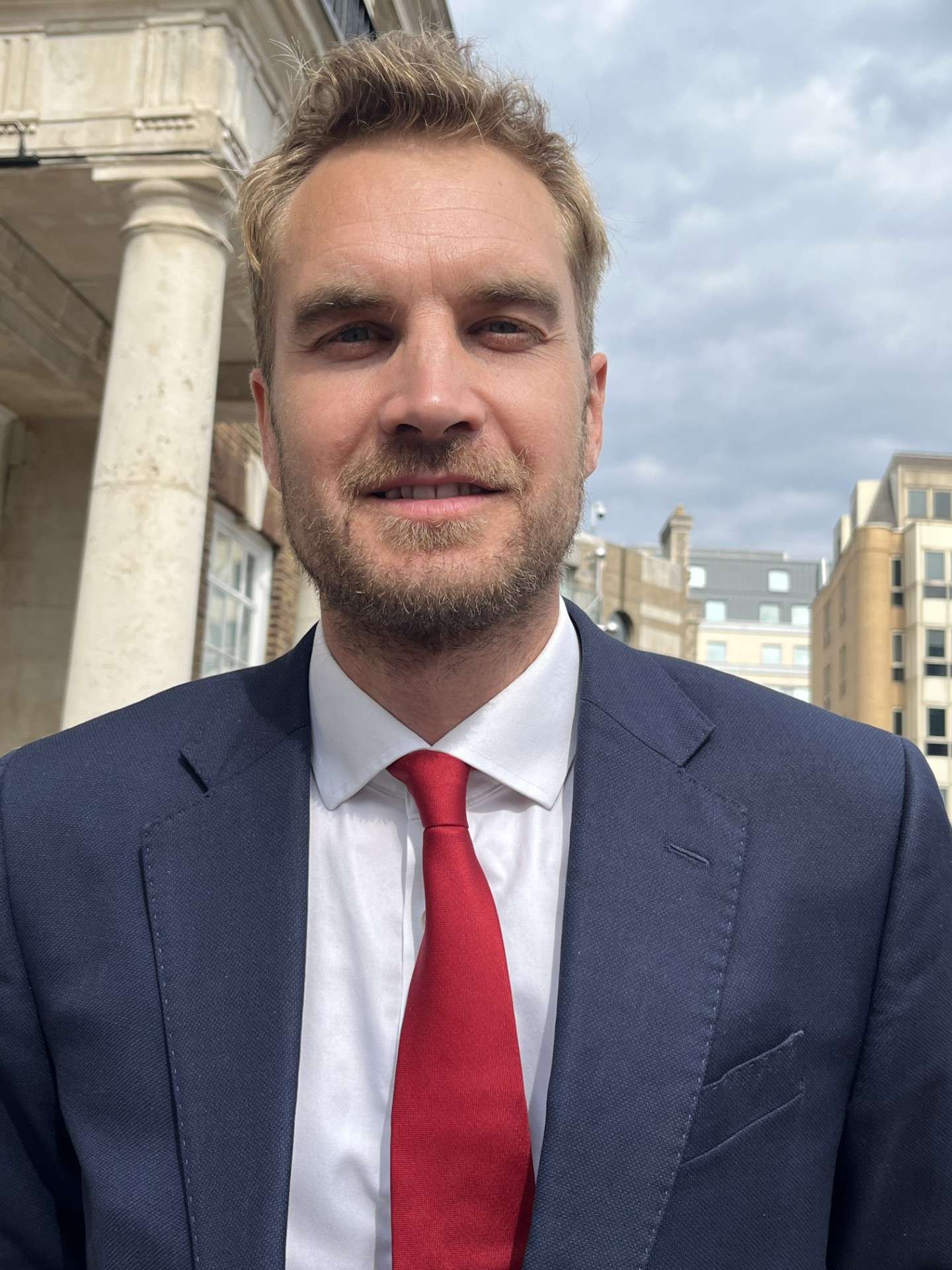

Mark Oates is, by his own description, "a big pouch advocate." But that, he's quick to point out, is the product of a long journey – one that started not with a nicotine pouch, but with a cigarette in Beijing.
"I was living in China, smoking cigarettes that cost about 50 pence a pack, inhaling the Beijing smog on top of it," he recalls. "Then I flew home via Sweden, and I picked up some Swedish snus. I absolutely loved it." Snus, for the uninitiated, is pasteurised tobacco sealed into small pouches, not unlike a teabag, that sit under the top lip. Crucially, Oates explains, the pasteurisation process destroys the nitrosamines responsible for oral cancers, which is part of why Sweden has both a strikingly low smoking rate and correspondingly low rates of lung and oral cancer.
Britain, of course, banned snus outright. Nicotine pouches, which are the tobacco-free descendants of snus and have exploded in popularity on UK shelves, occupy a legal grey area precisely because they contain no cut tobacco at all. "They go in the same place in the mouth, but they don't contain tobacco," says Oates. "They are vastly, vastly safer than smoking."
Asked whether pouches are actually safer than snus itself, Oates is characteristically candid: the jury, he says, is still out. Pasteurised snus retains trace nitrosamines, even though its cancer risk profile is barely different from not using it at all. "You'd think it's better for you to use a product that doesn't contain tobacco," he says, although he's just as happy to draw a taste comparison: "Snus is more like a fine wine; nicotine pouches are more like a lager."
Absurdity of the snus ban
Possessing snus in the UK isn't illegal, only selling it is. That is a distinction Oates has exploited for years by stocking up whenever he visits Sweden. But the goalposts are moving. Under the recent Tobacco and Vapes Bill, possession with intent to supply now carries a fine of up to £20,000 or two years in prison, with no legal definition of what "intent to supply" actually means.
"I'm worried that if they looked in my freezer (because I keep it fresh in there) they'd think I'm intending to supply," he jokes, though the underlying point is serious: it is an ambiguous law handed to enforcement agencies with no clear threshold.
The policy incoherence, in Oates's view, runs deeper than one product category. Heated tobacco – itself an engineered, pasteurised tobacco product – is perfectly legal in the UK. Nicotine pouches, containing no tobacco at all, are legal too. Snus sits in an illogical no-man's-land between the two, banned purely because the original legislation defined "tobacco" broadly enough to catch it. "The ban on Swedish snus is, within the European Union, the law that has killed the most people," Oates argues bluntly, pointing to the mountain of public health evidence from Sweden's near smoke-free status.
He's equally sceptical about the motives behind bans elsewhere in Europe, France's hostility to pouches among them. "A few weeks after one recent regulatory crackdown, the company that owns Nicorette announced it was expanding a factory," he notes drily.
“The pharmaceutical industry doesn't like these products, because they cut into the market for medicinal quitting aids. But consumers don't want to be treated as patients. They're not patients; they just want a consumer product that works."
He cites a Canadian pharmacist's observation from a recent conference: in Sweden, buying a nicotine pouch product may still require speaking to a pharmacist first, an extra hurdle, friction that puts people off. "Any barrier you put between someone and the safer product they want pushes them back towards the combustible one, which is far easier to buy and far more likely to kill them," Oates says. "It's sheer madness in policy terms to make the safer product harder to get than the dangerous one."
(SUBHEAD) From snus to vaping – and back to smoking
Oates's own journey wasn't a straight line from cigarettes to pouches. When UK supplies of snus dried up, he went back to smoking, and it’s a point he returns to repeatedly as evidence of unintended consequences. "The government effectively kept me smoking for a long time," he says. He tried vaping, initially sticking to tobacco-flavoured liquids because he considered fruit and dessert flavours frivolous. It was only once he abandoned that mindset and switched to flavoured e-liquids that he stopped smoking for good.
Today he moves between vaping, pouches and snus depending on circumstance – a pattern he thinks retailers need to understand. "Nicotine consumers are multifaceted now. There'll be times they vape, times they use pouches, and more vapers are going to start trying pouches too. It's increasingly going to be a category sold across your shops."
He's also tried heated tobacco and rates it highly as an option for smokers who find vaping doesn't suit them. "Ultimately, government should be giving smokers as many routes out as possible: heated tobacco, snus, pouches, vaping. It's not about prescribing one solution. It's about letting the consumer choose whichever harm reduction tool works best for them."
Harm reduction: the libertarian case
Oates describes himself as something of a libertarian, and he's unapologetic about tracing the current wave of restrictions back to a broader shift in political philosophy, one where the old "your pleasure, your business, so long as it doesn't harm others" bargain has quietly been abandoned.
Why does government keep reaching for prohibition? Oates's diagnosis is structural rather than ideological. "Ultimately, the government got a taste for banning things. The British state is in such a mess that government is incapable of doing anything that actually improves our lives. It can't announce big infrastructure projects, big spending, big tax cuts to grow the economy. So it's left pressing buttons that supposedly cost nothing." That's an illusion, he argues: impact assessments for the current proposals on plain packaging and display bans put the cost to industry at roughly £1.5 billion, with around £350 million falling directly on retailers. "It’s a little bit-by-bit destruction of our economy. Each individual measure looks affordable in isolation. Do that hundreds of times and you've made it harder to be a shopkeeper, harder to employ people – while simultaneously taxing employers more through National Insurance. That in turn strips government of the tax revenue it would need to do anything meaningful. It's a symptom of fiscal incontinence."
He also thinks vaping has simply become an easy political football, a low-cost way of generating headlines regardless of underlying evidence. "Whenever there's been a scandal, ministers have reached for the vaping lever, because it gets tabloid clicks." He contrasts today's moral panic over teenage vaping with the near-total public indifference to teenage smoking a generation ago. "When I was 16, pretty much everyone smoked, and nobody wrote outraged articles about it,” says Mark. “The rates of youth vaping now are similar to youth smoking rates back then. It's already illegal to sell vapes to under-18s. The government is doing little to nothing to actually enforce that law. They're just adding more legislation that again won't be enforced.
Who's really to blame
Pressed on whether the established tobacco companies bear some responsibility for the current climate – having largely acquiesced to restriction after restriction rather than defending their legal products – Oates draws a distinction between the big multinationals and the wave of Chinese manufacturers now dominating the disposable vape market.
"The recent problems haven't really come from the big tobacco companies," he argues. "They've come from Chinese manufacturers entering the market, breaking the rules, focused entirely on the short term." He traces the rise of disposable vapes directly to US legislation that outlawed certain pod systems, prompting manufacturers to engineer products that sidestepped America's Premarket Tobacco Product Application process – then look for new markets, the UK among them. "They haven't been wise to the long-term consequences. But they don't care. If this market closes to them, they'll simply move to the next one."
He credits those same companies, belatedly, with becoming far more sophisticated on public relation and repeats his message for independent retailers during the recent vape consultation period as a strategy for carrying on as well: "Get involved in the process. Are you part of a trade association? Legislation matters directly to you, because you're the ones who'll bear the cost of a display ban. If every convenience store and vape shop in the UK responded, it would have a real impact on shaping government's decision."
Does consultation change anything?
Asian Trader pushes back here: hadn't the consultation ahead of the original Tobacco and Vapes Bill been widely seen as a formality, with the bill emerging essentially unchanged regardless of the responses received?
Oates concedes there's truth in that but isn't entirely pessimistic. He points to the flavour debate specifically: a majority of respondents to the earlier consultation opposed an outright flavour ban, warning it would simply push vapers towards the black market, meaning homemade e-liquids, illegal imports, unregulated products of unknown provenance. "All of that would be very bad for your readers," he notes.
As things currently stand, the government's proposal has shifted from an outright ban towards changes to flavour naming and descriptors – which Oates reads as evidence that sufficient consultation pressure can, at least sometimes, move the needle. "If 80 or 90 per cent of respondents say no to a proposal, government has room, between consultation and the bill reaching Parliament, to quietly change course or drop it altogether. It's in our hands to have some effect on public policy. Whether that effect is as strong as we'd like, I can't say. But make your voice heard."
The new e-liquid tax
With this interview landing in Asian Trader's Diwali issue, Oates is asked pre-emptively to look back to how the new e-liquid duty, which was introduced on 1 October, will have played out by the time readers pick up the magazine. His assessment, based on conversations with specialist vape shops and manufacturers, is blunt: implementation has been "a bit of a failure," with a transition period that HMRC has already had to extend once. Industry voices, he says, are calling for a further pause.
"There's a real risk that by the end of the transition period, in April, there simply won't be product on shelves, and that's what pushes people towards the black market," he warns. "Once consumers have gone there, it's very hard to bring them back. HMRC will actually lose out on long-term revenue if this isn't implemented properly. Either they need to commit far more resources to getting the deadlines right, or they need to allow more time."
The tax, alongside the looming display-ban and plain-packaging proposals, raises an obvious question for Asian Trader's readership: what happens to the independent retailers and specialist vape shops who've built meaningful revenue streams around these products?
"Britain is a nation of shopkeepers; hardworking, honest people running small businesses, paying their taxes, employing people," Oates says. "This will damage them. Margins will shrink because more of the retail price has to go towards tax, and retailers won't be able to pass the full increase on to customers." He expects a shift in purchasing patterns towards pod systems and away from bottled e-liquid, which is potentially a modest silver lining for convenience stores but bad news for specialist vape stores. "Ask any vape shop how many people they think they've helped quit smoking, and you'll hear numbers like 600, or a thousand. The contribution specialist vape shops have made to public health is enormous – bigger than the state's."
He's equally clear that convenience stores and specialist shops serve complementary rather than competing roles. Some smokers, often older ones, find a dedicated vape shop intimidating. "But what a convenience store offers is exactly that: convenience. Vapes need to be available wherever cigarettes are available. There's been talk – and I've fought against it – of restricting vape sales to pharmacies or specialist retailers only. That would be absurd if cigarettes remain freely available on every corner. Both channels have played their part in this country's huge reduction in smoking."
Hiding the safer product
Turning to the proposed display ban, which would force vapes behind opaque cabinets in the manner of cigarettes, Oates is unequivocal. "It can only be detrimental. If you treat vaping exactly like smoking, as the current Secretary of State wants to, you're making a fundamental mistake, because vaping is not smoking. It's vastly healthier. There should be a visible difference between the product that kills you and the one that doesn't. Hide the safer product, and a smoker who might have been tempted to switch today simply won't see it – and forty years into a smoking habit, they'll just carry on smoking. Why would you hide the safer product? It's madness."
Asked why the underlying science on relative risk seems to carry so little political weight, not least at the World Health Organization, Oates points to a familiar dynamic: governments taking their cues from tabloid coverage rather than evidence, while ignoring youth smoking for years in favour of manufactured panic over youth vaping. "The real focus should be on adult smokers, two-thirds of whom are still going to die from it. That's where the energy should go." On the WHO specifically, he notes its substantial funding from the philanthropist Michael Bloomberg, whose opposition to vaping is well documented and, in Oates's view, disproportionately influential on the organisation's positioning.
He's equally sceptical of suggestions that Chinese manufacturing interests are shaping WHO policy in vaping's favour. "China makes far more money from cigarettes than vapes ever could. Male smoking rates there are over 50 per cent, and the tobacco trade is a state monopoly. Vapes don't carry anything like the same profit margin, because they're relatively expensive to produce."
In developing markets, he argues, vapes simply can't compete on price with 50p packs of cigarettes. It’s a dynamic that makes nicotine pouches, cheap enough to be produced at prices closer to cigarettes, potentially transformative. "This is why China is pursuing a monopoly position on nicotine pouches too. And look at Australia, which banned vaping outright and has significant state interests in tobacco. Or India, which banned vapes and derives huge government revenue from tobacco. Follow the money, and the pattern isn't subtle."
A recurring frustration for Oates is the conflation, in public and political discourse, of nicotine itself with the harms of smoking. "Nicotine doesn't cause cancer. It's a safe stimulant, not unlike caffeine. Nobody's calling for plain packaging on a cup of coffee, and we shouldn't be calling for it on nicotine products either." The actual killer, he stresses, was always combustion – inhaling burning tobacco – not the nicotine that delivered the habit. "Once you remove combustion from the equation, the core problem disappears. But that's inconvenient for parts of the public health and research establishment, because if the market and the consumer have effectively solved the problem, some of those jobs become harder to justify." He's watched, he says, as tobacco-control researchers and lobbyists have pivoted their funding streams towards obesity and alcohol as smoking rates fell – and, more recently, towards vaping itself.
We Vape and the fight ahead
We Vape, the consumer group Oates founded, exists to get ordinary vapers engaged: "Our members know how hard quitting smoking really is. They've done it. And they care about the smokers who haven't managed it yet. They want to make sure the products that helped them stay available, because most current smokers still wrongly believe vaping is just as dangerous as smoking.”
He points to COVID as a contrast in how seriously government can treat a health message when it wants to. "If this were treated with anything like the urgency and funding the vaccine rollout received, the picture would look very different."
Retailers wanting to get involved, he says, can simply join We Vape's mailing list via its website, or its retailer WhatsApp group by emailing Oates directly – support that's aimed particularly at smaller shops unable to justify membership fees for bodies like the UK Vaping Industry Association. "I can send marketing materials, get them plugged into campaigns. It doesn't need to cost anything to have your voice counted."
Asked for a single slogan to counter the persistent myth that vaping is just as harmful as smoking, Oates doesn't hesitate: "Vaping saves lives."
On nicotine pouches specifically, his enthusiasm is undimmed. "They could be the greatest invention of the twenty-first century. A billion people this century will die from smoking-related causes, seven or eight million a year. Pouches solve that problem, and because they're cheap to produce, they can reach the developing world with nicotine and none of the harm. They could be the vaccines of this era. It's up to governments to get out of the way and draught sensible regulation to keep the product safe, yes, but with genuine availability, especially in the developing world, because lower and middle-income countries look to Britain for leadership, and they will follow whatever lead we set." He warns that Bloomberg-funded advocacy is actively pushing low- and middle-income governments towards bans – with, in his view, deadly consequences.