



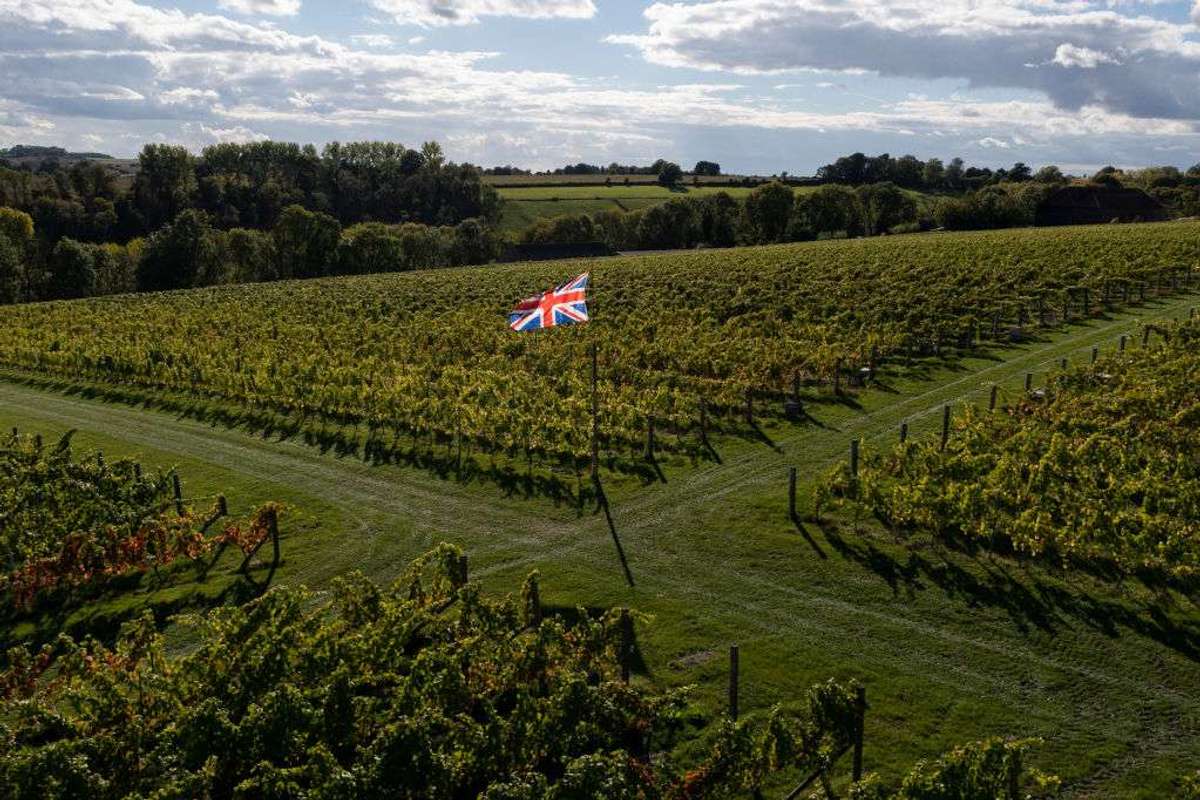

WineGB has called on the chancellor to provide targeted support for England and Wales’ growing wine industry in the Autumn Budget, warning that rising costs and a lack of government assistance are limiting the sector’s ability to invest and compete internationally.
In its Budget submission, the trade body is seeking the introduction of Wine Tourism Relief, a freeze or cut in wine excise duty, and changes to the Small Producer Relief scheme to reflect the characteristics of wine production.
WineGB said the measures would help “level the playing field” with established wine-producing countries that provide financial support to their domestic industries.
The English and Welsh wine sector now comprises more than 1,150 vineyards and 280 wineries, with more than 4,800 hectares under vine, of which almost 3,750 hectares are in active production. Wine sales have risen by 200 per cent since 2018 to 9.1 million bottles, while land used for wine production has increased by 510 per cent since 2005.
Nicola Bates, WineGB CEO, said the sector was “one of the UK’s fastest-growing rural industries” but warned that its momentum could be lost without targeted Budget measures.
“We simply seek to level the playing field with the support funding that importing other country wine regions have access to, so we can continue to deliver jobs, investment and tax revenue across the country,” she said.
The submission highlights the sector’s contribution to the Exchequer, with WineGB estimating that English and Welsh wine generated more than £115m in tax revenues in 2024, including excise duty, VAT and employment taxes. Excise duty alone rose from £8.97m in 2018 to an estimated £25.21m in 2025.
Employment has also increased, with the industry reporting 3,300 full-time equivalent roles in 2024, up more than 40 per cent from 2023, alongside 13,000 seasonal temporary positions, a 56 per cent increase. WineGB said 90 per cent of its members expect to increase full-time employment by a further 21 per cent by 2028, while longer-term modelling points to a sector employing 30,000 people by 2040.
However, WineGB said producers face higher costs than established international competitors, including labour, equipment, marketing and distribution, as well as some of the highest wine duty rates in the world. Yields in England and Wales are also estimated to be 30-50 per cent lower than in established wine regions such as France, Spain and Australia.
One of its key proposals is Wine Tourism Relief, which would return a portion of excise duty on domestically produced wine sold directly to consumers through vineyard and winery “cellar doors”. WineGB said 1.73 million bottles of UK-produced wine were sold through cellar doors in 2024, representing around 19 per cent of the domestic wine market. It estimates the proposed relief would cost the Exchequer around £5-6m.
Bates said the measure, alongside a wine duty freeze and reforms to Small Producer Relief, would strengthen rural economies, boost exports and support the industry at a pivotal stage of its development.
The current Small Producer Relief rules use an 8.5 per cent ABV threshold, which WineGB said effectively excludes most wine producers, as standard wine typically ranges from 11 per cent to 14.5 per cent ABV. The organisation is calling for category-specific thresholds so smaller wine producers can access the relief without having to alter their products.
WineGB is also seeking government-backed export marketing support, arguing that its members have grown exports from 4 per cent of overall sales in 2021 to around 9 per cent in 2024 without comparable state support to that available to wine producers in the EU.
“The chancellor now has a clear opportunity to back a sector that is delivering growth in rural postcodes,” Bates said. “With the right support, our producers can continue to grow, innovate and contribute even more to the UK’s economic future.”